
Primary Super Austenitic & Alloy Tubing Solutions
Direct mill supply of high-molybdenum and heat-resistant alloy tubes optimized for Houston EPC contracts, Gulf Coast marine environments, and severe chemical process units.




Houston's Industrial Landscape & The Demand for Super Austenitic Steels
As the undisputed Energy Capital of the World, the Greater Houston metropolitan area—spanning the Houston Ship Channel, Pasadena, Baytown, Freeport, and Texas City—houses the densest concentration of petrochemical refining, LNG export facilities, and offshore engineering firms on the planet.
The Houston Corrosion Reality: Why Standard 316L Fails
Industrial processing in the Texas Gulf Coast faces a severe triple threat: high ambient humidity, elevated chloride levels from seawater cooling loops, and aggressive process fluids containing sour gas (H₂S), hot sulfuric acid, and organic chlorides. Standard austenitic alloys like 316L (UNS S31603) quickly succumb to pitting corrosion, crevice attack, and Chloride Stress Corrosion Cracking (CSCC).
Super Austenitic Steels—characterized by high Chromium (20-25%), elevated Nickel (18-25%), high Molybdenum (4.5-7.0%), and deliberate Nitrogen additions—provide an engineered metallographic solution. Delivering a Pitting Resistance Equivalent Number (PREN) exceeding 43, these alloys bridge the operational and financial gap between conventional stainless steel and nickel-base superalloys.
Microstructural Mechanics of Super Austenitics
The addition of 6% Molybdenum combined with Nitrogen in grades like 254SMO (UNS S31254) and 904L (UNS N08904) stabilizes the passive chromium oxide film in highly acidic and hyper-saline conditions.
- Suppressed Sigma Phase Formation: Optimized heat treatments ensure balanced microstructures resistant to intergranular corrosion.
- High Yield Strength: Nitrogen additions increase mechanical yield strength to nearly double that of standard 300-series stainless steels.
- Unmatched Chloride Pitting Resistance: Critical Pitting Temperature (CPT) exceeding 60°C in standard testing regimes.
Global Alloy Dynamics & Technical Performance Matrix
Selecting the correct tube specification requires comparing microstructural limits against operational thresholds. Below is an engineering comparison of standard vs. super austenitic and high-performance alloys.
| Alloy Grade | UNS / EN Standard | Nominal Chemistry (Cr-Ni-Mo-N) | PREN Index | CPT (°C) | Primary Houston Application Field |
|---|---|---|---|---|---|
| Super Austenitic 904L | UNS N08904 / 1.4539 | 20Cr - 25Ni - 4.5Mo - 1.5Cu | ≥ 35 | 40°C | Sulfuric Acid Piping, Chemical Process Tanks |
| Super Austenitic 254SMO | UNS S31254 / 1.4547 | 20Cr - 18Ni - 6.1Mo - 0.2N | ≥ 43 | >60°C | Seawater Cooling, LNG Vaporizers, Offshore Topsides |
| Austenitic 316H | UNS S31609 / 1.4919 | 16Cr - 10Ni - 2.0Mo (High Carbon) | ~25 | 15°C | High-Temperature Refinery Heat Exchangers (>500°C) |
| Austenitic TP310S | UNS S31008 / 1.4845 | 25Cr - 20Ni (High Heat) | ~26 | 18°C | Ethylene Cracking Furnaces, Radiant Tubes |
| Nickel Alloy 600 | UNS N06600 / 2.4816 | 72Ni - 15Cr - 8Fe | N/A (Ni-Base) | High Temp | Severely Corrosive Gas Streams & Caustic Evaporators |
| Super Duplex 32760 | UNS S32760 / 1.4501 | 25Cr - 7Ni - 3.5Mo - 0.2N - W - Cu | ≥ 42 | >55°C | Deepwater Umbilicals, High Pressure Sour Gas Lines |
Strategic Engineering Insight for Gulf Coast Buyers:
While Nickel-base alloys like Alloy 625 or Alloy C276 offer exceptional corrosion resistance, their high nickel content drives exponential material costs. Super Austenitic Steels (specifically 6% Molybdenum grades like 254SMO / UNS S31254) deliver equal or superior pitting and crevice corrosion resistance in high-chloride marine environments at 40% to 55% lower raw material cost, optimizing EPC capital expenditure without compromising service life.
China Mill Efficiency & Advanced Manufacturing Advantage
Combining state-of-the-art vacuum metallurgy with streamlined mill throughput, Chinese advanced tubing manufacturing offers unmatched precision, scale, and cost performance for global supply chains.
1. Vacuum Refining & Purity
Utilizing VOD (Vacuum Oxygen Decarburization) and AOD (Argon Oxygen Decarburization) refining processes, our factories minimize non-metallic inclusions, sulfur content (<0.005%), and dissolved gases, securing ideal hot workability and pristine internal tube surfaces.
2. Cold Drawing & Bright Annealing
Multi-pass high-precision cold drawing combined with continuous protective atmosphere bright annealing guarantees smooth surface finishes (Ra < 0.4 μm) eliminating pickling scale, preserving exact micro-grain structures and peak corrosion resistance.
3. Houston Port Logistics Integration
Factory-direct integration with major container and breakbulk shipping hubs enables direct freight routes from Shanghai/Ningbo ports directly to the Port of Houston, Bayport Container Terminal, or Galveston, delivering seamless duty-paid logistics for major turnarounds.
Localized Engineering Applications across Texas Gulf Coast
Super Austenitic Steels manufactured by our mills are built to perform in Houston’s most challenging industrial environments.
Pasadena & Baytown Olefins & Ethylene Plants
In high-temperature ethylene cracking and chemical processing lines, custom heat-resistant austenitic tubes such as 316H, 321H, and TP310S provide high creep-rupture strength, carburization resistance, and thermal stability in furnace reboilers, superheaters, and transfer line exchangers (TLEs).
Deepwater Gulf of Mexico Subsea Topside Skids
Offshore production platforms operating off the Louisiana-Texas shelf require hydraulic control tubing, chemical injection lines, and seawater firewater loops capable of resisting marine atmosphere pitting and sour crude contamination. 254SMO and Super Duplex S32760 offer absolute reliability under cyclic pressure variations.
Freeport & Sabine Pass LNG Liquefaction Hubs
Cryogenic liquefaction trains and seawater-cooled LNG regasification heat exchangers utilize continuous 904L and ASME SA269 UNS N08904 tubing due to its retention of impact toughness at cryogenic temperatures (-196°C) combined with immune performance against warm brackish water bio-fouling.
Houston Ship Channel Environmental FGD Scrubbers
Flue Gas Desulfurization (FGD) systems on coastal refineries process sulfur-laden exhaust gases forming concentrated hot sulfuric and hydrochloric condensate. Super austenitic 6Mo alloys resist crevice corrosion beneath wet gypsum deposits where standard metals fail in weeks.
Industry Trends: The Role of Super Austenitic Alloys in Energy Transition
As Houston transitions toward clean energy leadership—including Hydrogen Hubs, Carbon Capture, Utilization, and Storage (CCUS), and industrial decarbonization—material specifications are evolving rapidly.
Clean Hydrogen Transportation
High-pressure hydrogen transport lines require alloys immune to Hydrogen Embrittlement (HE). High-nickel, high-nitrogen austenitic structures (such as UNS N08904 and 316H) maintain stable face-centered cubic (FCC) lattices that resist hydrogen diffusion even under high cyclic pressures.
Carbon Capture & Storage (CCUS)
Wet CO₂ streams captured from industrial smokestacks form highly acidic carbonic acid solutions. Super Austenitic Steels provide critical long-term resistance against carbonic acid corrosion in compression cooling heat exchangers prior to sub-surface injection.
Circular Plastics & Advanced Chemical Recycling
Pyrolysis oil refining and chemical recycling facilities across the Gulf Coast handle unpredictable halide-contaminated feedstocks. Super Austenitic 254SMO and Titanium Grade 1 tubing provide the microstructural barrier needed to prevent stress corrosion cracking.
Complete Specialty Alloy & Tube Lineup
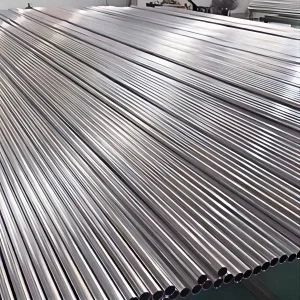
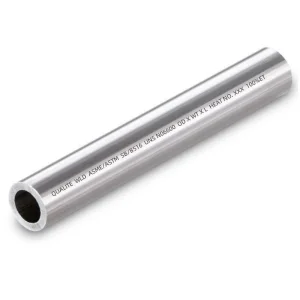
Explore our full range of certified heat exchanger, process, and structural tubing engineered for critical industrial service in Houston and globally.






Global Procurement Demands & Quality Assurance Standards
Procurement managers and piping stress engineers in Houston demand uncompromising quality compliance. Every foot of tube shipped from our factories undergoes rigorous testing to meet international standards.
International Standard Compliance
Our Super Austenitic, Austenitic, Nickel Alloy, and Titanium tubes are certified to major global codes:
- ASTM / ASME: ASTM A213, A249, A269, A312, B676, B704; ASME SA213, SA249, SA312.
- EN / DIN: EN 10216-5, EN 10217-7, EN 10357, DIN 17456, DIN 17458.
- NACE Inspection: NACE MR0175 / ISO 15156 compliance for sour oilfield service.
Factory Non-Destructive Testing (NDT) Protocol
To eliminate premature field failures in Gulf Coast chemical plants, 100% of manufactured tubes undergo comprehensive non-destructive examination:
- Hydrostatic Testing: Pressures up to 300 bar (4,350 psi) per ASTM A1016.
- Eddy Current Examination (ET): Full perimeter testing per ASTM E426 to detect micro-surface flaws.
- Positive Material Identification (PMI): XRF spectrographic verification of chemical element limits on every length.
- Intergranular Corrosion Testing: ASTM A262 Practice C (Huey Test) and Practice E.
Frequently Asked Questions (FAQ) for Houston Buyers
Key metallurgical and commercial insights for engineering firms, stockists, and EPC contractors procuring Super Austenitic alloys.
254SMO contains 6% Molybdenum and 0.20% Nitrogen, yielding a PREN (Pitting Resistance Equivalent Number) of ≥43, compared to 316L's PREN of ~25. In the warm, high-chloride seawater conditions of the Gulf Coast, 316L suffers rapid pitting and crevice corrosion. 254SMO remains virtually immune to chloride pitting at temperatures well above 60°C, delivering significantly longer service life.
Yes. 904L (UNS N08904) exhibits excellent weldability using conventional Gas Tungsten Arc Welding (GTAW/TIG) or Gas Metal Arc Welding (GMAW/MIG). However, to maintain optimal corrosion resistance in the weld zone, matching or over-alloyed filler metals (such as ERNiCrMo-3 / Alloy 625 filler) should be specified, accompanied by low heat input to prevent micro-fissuring.
Standard production cycles for custom cold-drawn or welded & drawn tubes range between 3 to 5 weeks depending on quantity and size specification. Transit via direct sea freight to the Port of Houston typically takes 22 to 28 days. Express air freight options are available for emergency shutdown or turnaround requirements.
ASME SA269 N08904 (904L) is engineered primarily for severe liquid aqueous corrosion, specifically sulfuric acid, phosphoric acid, and high-chloride liquids. ASME SA213 TP310S is a high-temperature heat-resistant alloy designed to withstand oxidation, scaling, and carburization in high-temperature gas environments up to 1100°C (such as ethylene furnace tubes).
Yes. All shipments standardly include EN 10204 3.1 Mill Test Certificates. Independent third-party inspection (EN 10204 3.2 certification) by recognized international agencies such as Lloyd's Register, TÜV, Bureau Veritas, or DNV can be arranged upon project request for Houston clients.
Direct factory procurement allows EPC contractors and OEMs to secure custom non-standard wall thicknesses, exact cut-to-length tolerances (eliminating field scrap), and specialized U-bend radii certified from a single heat lot. Economically, factory-direct pricing yields material cost savings of 25% to 40% compared to local distributor warehouse markups.
Request Factory Direct Pricing for Houston Projects
Partner with an industry-leading Super Austenitic Steels manufacturer. Contact our engineering sales team today to request material datasheets, mill test samples, or a firm quote tailored to your project schedule.
