
Featured Corrosion-Resistant Alloys Available for Hungarian Delivery
Factory-direct supply lines optimized for Central European industrial compliance, including EN 10204 3.1/3.2 certification and PED 2014/68/EU standards.

High-Quality Ferritic & Martensitic Steels 410 • UNS S41000 • 1.4512 Suppliers for Hungary
View Product Specs
Custom Titanium Tubes • Grade 1 • UNS R50250 Products for Hungarian Power Plants
View Product Specs
Custom Austenitic steel ASME SA213 · TP316LN · UNS S31653 Tubes for MOL Refining
View Product Specs
High-Quality Austenitic steel ASME SA269 · TP321 Heat Exchanger Tubes Hungary
View Product SpecsHungary's Evolving Industrial Sector & Demands for Advanced Alloys
Hungary has emerged as a premier manufacturing engine in Central and Eastern Europe (CEE). With massive investments across petrochemical hubs, electric vehicle (EV) battery gigafactories, nuclear energy expansion, and geothermal heating grids, the nation requires ultra-reliable corrosion protection materials.
Petrochemical & Refining (Tiszaújváros & Százhalombatta)
Hungary's chemical industry—led by energy giants like MOL Group and BorsodChem—operates complex cracking units, polyol complexes, and fertilizer synthesis facilities. Corrosive media such as hot organic acids, hydrogen sulfide ($H_2S$), and high-concentration chlorides demand alloys beyond standard 316L stainless steel. Super austenitic grades like UNS S31254 (254SMO) and Alloy 904L prevent severe pitting and crevice corrosion during high-temperature cracking processes.
Nuclear & Energy Infrastructure (Paks II Project)
The multi-billion euro expansion of the Paks Nuclear Power Plant (Paks II VVER-1200 reactors) requires stringent material security for auxiliary heat exchangers, cooling water pipes, and condensate handling. Super austenitic steels provide exceptional resistance to localized chloride attack from Danube River cooling circuits, meeting the 60-year structural life requirement set by the Hungarian Atomic Energy Authority (OAH).
Geothermal Energy & Lithium Extraction
The Pannonian Basin endows Hungary with some of Europe's richest geothermal reserves. However, geothermal fluids in regions like Szeged and Miskolc contain elevated Total Dissolved Solids (TDS) and harsh brine chemistry. Standard metals suffer rapid scaling and pitting. Super austenitic stainless steels deliver the high Pitting Resistance Equivalent Number (PREN ≥ 43) needed for subterranean heat exchangers.
Super Austenitic Steels Metallurgy: Chemistry, PREN & Corrosion Resistance
Understanding why 6% Molybdenum (6Mo) and high-nitrogen super austenitic alloys surpass standard 300-series stainless steels in aggressive Hungarian chemical and thermal processes.
The Metallurgy Behind Super Austenitic Stainless Alloys
Super austenitic stainless steels are engineered by heavily alloying an iron-base matrix with high concentrations of Chromium (19-24%), Nickel (17-26%), Molybdenum (4-7.5%), and Nitrogen (0.15-0.50%). Unlike standard 316L (UNS S31603) or 304L (UNS S30403), these high-alloy formulations effectively eliminate the risk of Stress Corrosion Cracking (SCC), Pitting Corrosion, and Crevice Attack in warm chloride and acidic environments.
The mathematical evaluation of pitting resistance is governed by the Pitting Resistance Equivalent Number (PREN) formula:
While standard 316L yields a PREN of ~25, super austenitic grades such as UNS S31254 (254 SMO / 1.4547) and UNS S32654 (654 SMO / 1.4652) achieve PREN values ranging from 43 to over 56. This renders them virtually immune to pitting in brackish river water, industrial wastewater, and acidic process solutions encountered in Hungarian manufacturing facilities.
Chemical Composition & Performance Breakdown
| Alloy Grade | UNS / EN Designation | Chromium (Cr) % | Nickel (Ni) % | Molybdenum (Mo) % | Nitrogen (N) % | PREN Value | Primary Industrial Service in Hungary |
|---|---|---|---|---|---|---|---|
| 254 SMO | UNS S31254 / 1.4547 | 19.5 - 20.5 | 17.5 - 18.5 | 6.0 - 6.5 | 0.18 - 0.22 | ≥ 43 | MOL Danube Refinery, Flue Gas Desulfurization (FGD), Seawater/Brine Heat Exchangers |
| Alloy 904L | UNS N08904 / 1.4539 | 19.0 - 23.0 | 23.0 - 28.0 | 4.0 - 5.0 | - | ≥ 35 | Sulfuric & Phosphoric Acid Processing, Pannonia Bio Ethanol Plant Dunaföldvár |
| AL-6XN | UNS N08367 / 1.4501 | 20.0 - 22.0 | 23.5 - 25.5 | 6.0 - 7.0 | 0.18 - 0.25 | ≥ 45 | Pharmaceutical Reactors (Richter Gedeon, Egis), High-Pressure Chemical Tubing |
| 654 SMO | UNS S32654 / 1.4652 | 24.0 - 25.0 | 21.0 - 23.0 | 7.0 - 8.0 | 0.45 - 0.55 | ≥ 56 | Ultra-Aggressive Hydrometallurgy, Geothermal Deep Well Heat Transfer Loops |
China Manufacturing Mastery Meets Hungarian Logistics Precision
Bridging high-volume, state-of-the-art Chinese metallurgical production with localized Hungarian logistics to deliver uncompromised quality at optimal total cost of ownership (TCO).
Advanced Manufacturing & Quality Assurance in China
- VOD/AOD Refining Precision: Ultra-low carbon melt control eliminates intergranular carbide precipitation during welding.
- Cold Pilgering & Drawing: Superior dimensional precision (OD & WT tolerances to EN ISO 1127 D4/T4).
- 100% Non-Destructive Testing (NDT): Integrated Eddy Current Testing (ECT), Ultrasonic Testing (UT), and Hydrostatic testing up to 300 bar.
- Bright Annealing Capability: Hydrogen-atmosphere heat treatment guarantees a mirror-smooth oxide-free inner and outer surface.
Seamless Central European & Hungarian Logistics Hub
- China-Europe Railway Express (BUD Terminal): Direct freight connection from Chinese mills straight to Budapest BILK logistics centre in 14-16 days.
- Piraeus-Budapest Land-Sea Corridor: Maritime freight via Mediterranean ports ensuring economic transport for large-diameter project piping.
- Customized Export Packaging: Wooden cases with VCI anti-corrosion film wrapping and plastic end caps for international transit.
- Flexible Incoterms: Full support for DDP Budapest, CIF Koper/Rijeka, or FOB Shanghai/Ningbo.
Strict Compliance with EU Directives & Hungarian Standards
Engineering materials delivered to Hungarian job sites must pass rigid EU regulatory frameworks. We guarantee full compliance with design codes and independent certification bodies.
PED 2014/68/EU Annex I, Sec 4.3
Pressure Equipment Directive certification ensuring material safety for high-pressure vessels, heat exchangers, and process piping installed across the European Union.
EN 10204 3.1 & 3.2 Mill Certificates
Complete mechanical property and chemical analysis heat traceability. Third-party inspection reports issued by TÜV Rheinland, Bureau Veritas, or Lloyd's Register on request.
AD 2000-Merkblatt W2 / W10
German/Austrian/Central European standard compliance for pressure vessel materials operated at sub-zero temperatures or elevated thermal ranges.
Localized Hungarian Application Scenarios & Engineering Case Studies
Real-world deployment of our super austenitic and high-alloy tubing across key industrial projects in Hungary.
Tiszaújváros Petrochemical Expansion: 254SMO Heat Exchanger Tubes
Challenge: An engineering contractor building an advanced polymer chemical line in Tiszaújváros experienced premature severe crevice corrosion on standard 316L heat exchanger U-tubes due to high chloride process catalysts at 140°C.
Solution: We supplied 48 metric tons of UNS S31254 (254SMO) ASTM A249 / EN 10217-7 Bright Annealed U-bent tubes with EN 10204 3.2 TÜV certification. The 6% Molybdenum content eliminated crevice corrosion completely, extending equipment maintenance cycles from 12 months to over 60 months.
Geothermal District Heating Network in Szeged: Alloy 904L Piping
Challenge: A renewable energy municipal project in Szeged tapped deep saline geothermal wells containing 28,000 ppm chloride ions and dissolved hydrogen sulfide gas ($H_2S$), which rapidly pitted standard austenitic steels.
Solution: Engineered and delivered Alloy 904L (UNS N08904 / 1.4539) seamless process pipes meeting ASTM A312 specifications. The high nickel (25%) and chromium (20%) composition provided total immunity to stress corrosion cracking, supporting Szeged's clean energy transition.
Full Engineering Range of Stainless, Duplex & Super Austenitic Steel Products
Explore our comprehensive inventory of tubes, pipes, and custom fabrications crafted for heavy-duty industrial applications in Hungary.

High-Quality Austenitic Steels 321 • UNS S32100 • 1.4541 Manufacturers for Hungary
View Product Specs
Custom Austenitic steel ASME SA213 · TP304LN Tubes Hungary Factory
View Product Specs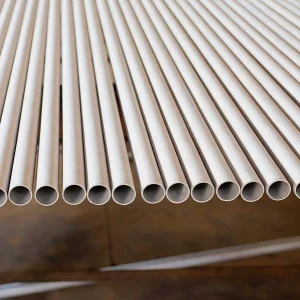
Custom Super austenitic steel ASME SA213 · S31254.SMO254 Pipe Manufacturers Hungary
View Product Specs
Custom Austenitic Steels 316Ti • UNS S31635 • 1.4571 Manufacturer Products Hungary
View Product Specs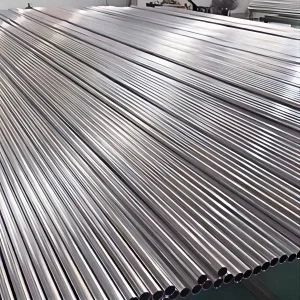
Custom Austenitic steel ASME SA213 · TP310S High Temp Tubes Hungary
View Product Specs
High-Quality Austenitic steel ASME SA269 · TP304 Factories Products Hungary
View Product Specs
Custom Austenitic Steels 310S • UNS S31008 • 1.4845 Supplier Suppliers Hungary
View Product Specs
High-Quality Super Duplex Steels 32760 • S32760 • 1.4501 Manufacturers Suppliers Hungary
View Product SpecsFrequently Asked Questions for Super Austenitic Steels in Hungary
Expert insights addressing specification requirements, lead times, welding protocols, and certifications for Hungarian engineering teams.
