
Singapore Grade Titanium Tubing Portfolio
Manufactured to rigorous international standards (ASTM B338, ASME SB338, DIN 17861) for extreme corrosion resistance and structural efficiency.
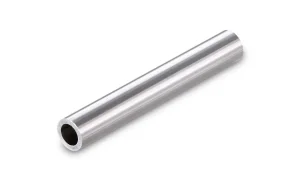
High-Quality Titanium Tubes • Grade 2 • UNS R50400 (Singapore Market Spec)
View Grade 2 Specifications
Custom Titanium Tubes • Grade 12 • UNS R53400 Manufacturers for Singapore
View Grade 12 Specifications

Singapore's Industrial Landscape for Titanium Tubing & Advanced Metallurgy
Singapore stands as one of the world's most dense and sophisticated energy, chemical refining, marine engineering, and high-tech manufacturing hubs. Despite its compact geography, the island nation processes millions of barrels of crude oil daily on Jurong Island, operates state-of-the-art desalination infrastructure via PUB (Public Utilities Board), supports world-class offshore marine engineering yards (such as Seatrium), and anchors global semiconductor foundries in Tuas and Tampines. At the heart of these critical industrial operations lies a demand for specialized engineering materials capable of withstanding aggressive chemical environments, high temperatures, and severe marine chloride exposure.
Titanium tubing has emerged as an indispensable material specification across Singapore's industrial matrix. With an exceptional strength-to-weight ratio, immune resistance to localized pitting in seawater, and outstanding fatigue performance, titanium tubes (comprising Commercially Pure Grade 1, Grade 2, Grade 3, and alloyed Grade 12) solve complex material degradation problems that standard 316L stainless steel or conventional copper-nickel alloys cannot endure over multi-decade lifecycle spans.
Jurong Island Petrochemicals
Titanium Grade 2 and Grade 12 heat exchanger tubes handle aggressive organic acids, chlorine compounds, and high-temperature hydrocarbon streams without cracking or pitting.
Marine & FPSO Modules
Singapore marine yards specify thin-walled ASTM B338 titanium seamless tubes for topside seawater cooling systems, ballast water management, and offshore firewater lines.
Semiconductor Cleanrooms
Ultra-pure water (UPW) systems and corrosive gas transfer lines utilize electropolished high-purity titanium tubes to eliminate micro-particulate contamination in wafer fabs.
Information Gain Key Note: In tropical seawater conditions typical of the Singapore Strait (ambient temperatures averaging 28°C to 32°C with high salinity), standard 316L stainless steel suffers severe Microbiologically Influenced Corrosion (MIC) and pitting within 18–36 months. Titanium Grade 2 demonstrates a corrosion rate of effectively 0.000 mm/year, ensuring a 30+ year operating lifecycle for shell-and-tube condensers.
Global & Regional Titanium Supply Chain Dynamics
The global titanium tube manufacturing ecosystem has undergone structural shifts. Historically dominated by aerospace raw sponge producers in North America and Eastern Europe, the industrial tubing market has transitioned toward advanced Asian manufacturing centers operating state-of-the-art Vacuum Arc Remelting (VAR) furnaces, continuous cold-rolling mills, and bright annealing lines. For Singapore-based EPC contractors and procurement agencies, partnering with certified manufacturers capable of providing mill test certificates (EN 10204 3.1 and 3.2 third-party inspection by Lloyd's Register or DNV) is paramount to mitigating supply chain risk.
Metallurgical Breakdown & ASTM Material Specifications
Understanding the precise mechanical and chemical properties of commercial titanium grades allows Singapore plant managers and piping engineers to select the optimal alloy based on design temperature, pressure limits, and chemical media concentrations.
| Titanium Grade | UNS Designation | Tensile Strength (MPa) | Yield Strength (0.2% Offset, MPa) | Primary Application in Singapore |
|---|---|---|---|---|
| Grade 1 (CP Ti) | UNS R50250 | ≥ 240 | 170 – 310 | Plate heat exchangers, deep-drawn tubing, highly ductile cold-formed lines. |
| Grade 2 (CP Ti) | UNS R50400 | ≥ 345 | 275 – 450 | The global standard for seawater condensers, power plant surface exchangers, desalination. |
| Grade 3 (CP Ti) | UNS R50550 | ≥ 450 | 380 – 550 | High-pressure piping systems requiring moderate formability with elevated strength. |
| Grade 12 (Ti-0.3Mo-0.8Ni) | UNS R53400 | ≥ 483 | ≥ 345 | Severe chemical processing, hot dilute reducing acids, elevated temperature nitric/hydrochloric media. |
| Grade 7 (Ti-0.15Pd) | UNS R52400 | ≥ 345 | 275 – 450 | Extreme crevice corrosion prevention in hot acidic brine environments. |
ASTM B338 vs. ASTM B861: Selecting the Right Manufacturing Route
When specifying titanium tubes for project tenders in Singapore, engineering teams must differentiate between the primary ASTM standard specifications:
- ASTM B338: Standard Specification for Seamless and Welded Titanium and Titanium Alloy Tubes for Condensers and Heat Exchangers. This specification covers thin-walled tubing (typical OD 12.7 mm to 38.1 mm with wall thickness from 0.5 mm to 2.0 mm) designed specifically for thermal transfer performance. Welded tubes under ASTM B338 undergo 100% non-destructive testing (Eddy Current or Ultrasonic) and cold working to ensure weld-zone integrity identical to the parent metal.
- ASTM B861: Standard Specification for Titanium and Titanium Alloy Seamless Pipe. Designed for higher-pressure piping systems, thick-walled applications, and structural fluid lines where longitudinal welds are prohibited by design codes (e.g., ASME B31.3 Process Piping).
Localized Singapore Application Scenarios & Technical Roadmaps
Scenario A: Seawater Desalination Plants (Tuas & Marina East)
Challenge: Multi-Stage Flash (MSF) and Reverse Osmosis (RO) energy recovery systems suffer from severe erosion-corrosion caused by high-velocity saline flows (exceeding 2.5 m/s) and bio-fouling treatments.
Solution: Implementation of Grade 2 Titanium ASTM B338 welded & drawn tubes. The self-healing passive titanium oxide ($TiO_2$) film provides absolute resistance to velocity erosion up to 20 m/s, preventing unplanned shutdowns and maintaining heat transfer coefficients over decades.
Scenario B: Jurong Island Chemical Reactor Cooling Loops
Challenge: Exchangers using hot brackish water to cool acidic process streams experience severe crevice corrosion under tube-to-tubesheet joints when using standard duplex stainless steels (UNS S32205).
Solution: Retrofitting shell-and-tube bundles with Titanium Grade 12 (UNS R53400) tubes expanded into titanium-clad carbon steel tube sheets. The addition of 0.3% Molybdenum and 0.8% Nickel shifts the corrosion potential, arresting crevice attack at temperatures up to 260°C.
Technology Roadmap & Future Industry Outlook (2025–2035)
As Singapore advances toward its Green Plan 2030 and drives carbon neutrality across its industrial clusters, the role of high-performance titanium tubing is expanding into next-generation technology domains:
- Hydrogen Generation & Transport: Titanium Grade 1 and Grade 2 tubes are being integrated into Polymer Electrolyte Membrane (PEM) electrolyzer stack heat management systems, where ion leaching from conventional steel would poison expensive platinum-group catalysts.
- Carbon Capture, Utilization & Storage (CCUS): Amine-based carbon scrubbing plants on Jurong Island subject reboilers to severe wet $CO_2$ and amine degradation products. Titanium tubing prevents stress corrosion cracking in high-temperature amine regenerators.
- Additively Manufactured & Finned Titanium Tubes: Development of low-finned titanium tubes to increase outer surface heat exchange area by 200–300%, enabling smaller footprints for offshore FPSO modules where weight and space are severely constrained.
Require Technical Assistance for Your Singapore Project Tender?
Our engineering team assists Singapore EPCs, fabricators, and plant engineers with material grade selection, ASME design compliance, and custom fabrication drawings.
Send Inquiry NowComprehensive Testing & E-E-A-T Reliability Assurance
Every titanium tube manufactured for the Singapore market undergoes rigorous non-destructive and mechanical validation to exceed global quality thresholds.
100% Eddy Current (ET)
Detects surface and internal longitudinal flaws in accordance with ASTM E426 standards, ensuring zero defect rates prior to shipment.
Hydrostatic & Pneumatic
Each tube is pressure tested up to 17.2 MPa (2500 psi) or air-under-water tested to guarantee leak-tight operation under severe vacuum or pressure.
EN 10204 3.1 & 3.2 Traceability
Fully documented chemical analysis, microstructural verification, flare/flattening test results, and heat traceability certified by global inspection authorities.
Explore Our Full Range of Stainless & Nickel Alloy Tubing
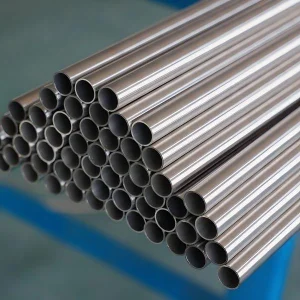
In addition to Titanium, we engineer heat exchanger and process tubing in super austenitic, duplex, and nickel alloys for Singapore industrial projects.







Frequently Asked Questions by Singapore Engineers & Buyers
In-depth responses covering procurement, technical compliance, and installation best practices for titanium tubing in Southeast Asia.
1. Why is Titanium Grade 2 preferred over 316L Stainless Steel for Singapore seawater applications?
Singapore's ambient seawater temperatures range from 28°C to 32°C year-round. Standard 316L stainless steel has a Pitting Resistance Equivalent Number (PREN) of approximately 24, which makes it susceptible to pitting and crevice corrosion in chloride concentrations exceeding 1,000 ppm at warm temperatures. Titanium Grade 2 forms an instantaneous, inert titanium dioxide ($TiO_2$) passivation layer that makes it completely immune to chloride pitting, crevice corrosion, and microbiologically influenced corrosion (MIC), regardless of salinity level or flow velocity.
2. Should I specify Seamless (ASTM B861) or Welded & Drawn (ASTM B338) Titanium Tubes for heat exchangers?
For shell-and-tube condensers and low-to-medium pressure heat exchangers, ASTM B338 Welded & Drawn titanium tubes are the industry standard worldwide. Modern autogenous TIG welding followed by cold drawing and bright annealing produces a weld zone with mechanical properties and corrosion resistance equal to the base metal, offering superior wall thickness concentricity and lower cost. Seamless ASTM B861 titanium tubes are recommended for extreme high-pressure piping circuits, hazardous process gas lines, or when specific design codes prohibit longitudinal welds.
3. How does Titanium Grade 12 (UNS R53400) compare with Titanium Grade 2 in chemical processing?
Titanium Grade 12 contains 0.3% Molybdenum and 0.8% Nickel. This micro-alloying significantly enhances corrosion resistance in hot dilute reducing acids (such as hydrochloric or sulfuric acid) and elevates crevice corrosion resistance at temperatures up to 260°C. Furthermore, Grade 12 provides higher tensile strength (≥ 483 MPa) than Grade 2 (≥ 345 MPa), allowing for thinner tube walls and increased thermal efficiency under high pressure.
4. What measures prevent galvanic corrosion when installing titanium tubes into steel tubesheets?
Titanium is noble on the galvanic series. When coupled directly with carbon steel or brass tubesheets in an electrolyte (seawater), the less noble metals will suffer accelerated galvanic attack. Recommended engineering practices include using titanium-clad tubesheets, solid titanium tubesheets, applying non-conductive epoxy coatings to the tubesheet face, or installing cathodic protection systems (sacrificial anodes or impressed current).
5. What typical dimensional ranges are available for Singapore industrial orders?
We supply titanium tubes in outside diameters (OD) ranging from 4.00 mm to 114.30 mm, wall thickness (WT) from 0.40 mm to 3.05 mm, and straight lengths up to 25,000 mm (25 meters). U-bent tube configurations for heat exchanger bundles are fully manufactured and heat-treated according to customer drawings.
6. What certification documents accompany shipments delivered to Singapore ports?
All shipments are delivered with full EN 10204 3.1 Mill Test Certificates (MTC) detailing melt heat numbers, chemical composition, mechanical properties (tensile, yield, elongation), hydrostatic test pressure, pneumatic test, and 100% Eddy Current test results. EN 10204 3.2 certificates endorsed by independent inspection agencies (DNV, Lloyd's Register, TUV, BV) are available upon request.
