
Featured Precision Alloy & Stainless Tubing Products
Explore our certified portfolio of seamless and welded high-performance stainless steel, titanium, and nickel alloy pipes engineered for extreme temperature and corrosive operational environments.






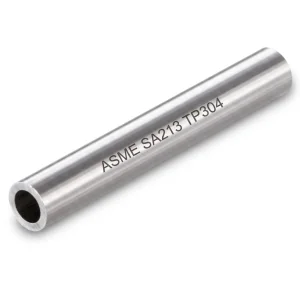

Executive Summary: Global Commercial & Industrial Landscape of Grade 304 Stainless Steel Pipes
Grade 304 (UNS S30400 / EN 1.4301) represents the foundational workhorse of the global industrial piping infrastructure. Accounting for over 55% of all stainless steel tubular production worldwide, 304 austenitic steel provides an optimal equilibrium of mechanical strength, ductility, thermal tolerance, and cost-effective corrosion resistance. As industrial decarbonization, chemical process intensification, and ultra-pure fluid handling expand globally, sourcing specialized, high-integrity 304 stainless steel piping has become a strategic priority for EPC contractors and OEMs alike.
The global stainless steel pipe market is projected to reach an estimated valuation of USD 38.5 Billion by 2030, registering a CAGR of 5.8%. Demand is predominantly driven by expanding LNG terminal networks, green hydrogen transport, biopharmaceutical cleanrooms, food processing infrastructure, and municipal wastewater modernizations. Within this commercial dynamic, procurement intent has shifted from commodity purchasing to sourcing highly specified, custom-engineered 304 steel pipe configurations featuring tight dimensional tolerances, customized heat treatments, and verified non-destructive testing (NDT) certifications.
From an metallurgical perspective, Grade 304 is an 18/8 chromium-nickel austenitic alloy that forms a self-healing, microscopic chromium oxide ($\text{Cr}_2\text{O}_3$) passive layer when exposed to oxygen. This passive film prevents continuous oxidation and galvanic degradation in moderate atmospheric, chemical, and aqueous environments. However, securing reliable long-term operational performance requires stringent manufacturing controls to avoid carbide precipitation, intergranular corrosion, and wall thickness variance.
Metallurgical Architecture: Specifications, Standards & Mechanical Performance
Engineered piping systems demand precise adherence to international standards. Custom 304 stainless steel pipes are fabricated under multiple manufacturing standardizations depending on fluid pressure, thermal shock potential, and sanitary level. Key specifications include ASTM A312 (seamless, welded, and heavily cold worked austenitic pipe), ASTM A269 (general service tubing), ASTM A249 (welded boiler and heat-exchanger tubing), and ASME SA312 / SA213 for pressure vessel applications.
| Steel Grade Standard | UNS Designation | Carbon (C) Max | Chromium (Cr) | Nickel (Ni) | Tensile Strength (MPa) | Yield Strength (MPa) | Hardness (HRB Max) |
|---|---|---|---|---|---|---|---|
| ASTM A312 TP304 | UNS S30400 | 0.08% | 18.0 - 20.0% | 8.0 - 11.0% | ≥ 515 | ≥ 205 | 90 |
| ASTM A312 TP304L | UNS S30403 | 0.035% | 18.0 - 20.0% | 8.0 - 12.0% | ≥ 485 | ≥ 170 | 90 |
| ASTM A312 TP304H | UNS S30409 | 0.04 - 0.10% | 18.0 - 20.0% | 8.0 - 11.0% | ≥ 515 | ≥ 205 | 90 |
| EN 10217-7 1.4301 | X5CrNi18-10 | 0.07% | 17.5 - 19.5% | 8.0 - 10.5% | 500 - 700 | ≥ 210 | 85 |
| EN 10216-5 1.4307 | X2CrNi19-11 | 0.030% | 17.5 - 19.5% | 9.0 - 12.0% | 450 - 650 | ≥ 180 | 85 |
Corrosion Resistance Profile
Grade 304 exhibits outstanding resistance to organic acids, atmospheric oxidation, and fresh water. Its Pitting Resistance Equivalent Number (PREN) averages ~19. For high-chloride environments (saline/seawater > 200 ppm), Grade 316 or Duplex grades are recommended to avoid localized crevice pitting.
Thermal & Cryogenic Tolerance
Demonstrates excellent toughness down to cryogenic liquid nitrogen temperatures (-196°C) while maintaining structural integrity under high heat service up to 870°C. Grade 304H is specifically tailored for elevated temperature creep resistance in power plant headers.
Austenitic Grain Refinement
Proper full solution annealing at 1040°C–1120°C followed by rapid water quenching ensures complete dissolution of chromium carbides, preventing sensitisation in the Heat-Affected Zone (HAZ) during subsequent field welding.
China's Advanced Manufacturing Advantage: Precision, Scale & Cost Efficiency
The global steel procurement market has undergone a paradigm shift. Leading Chinese custom 304 steel pipe manufacturers have integrated state-of-the-art cold pilgering, automated orbital TIG welding, continuous bright annealing, and real-time AI quality control lines. This integration delivers significant competitive advantages to international buyers seeking white-glove engineering compliance combined with optimized capital expenditure (CAPEX).
Fully Integrated Supply Chain
Direct upstream integration with mega stainless steel mills (such as Tsingshan, Tisco, and Baosteel) ensures guaranteed raw billet quality, tight chemistry control, and immunity to raw material price spikes.
Precision Cold Pilgering & Drawing
Advanced cold-reduction mills maintain tight outer diameter tolerances (±0.05 mm) and uniform wall thickness down to light-gauge instrumentation limits, eliminating concentricity flaws.
Hydrogen Bright Annealing (BA)
In-line continuous hydrogen atmosphere annealing produces mirror-bright, oxide-free internal and external pipe surfaces without the environmental hazard of acid pickling.
Comprehensive NDT & Quality QA
Every custom pipe batch undergoes 100% Eddy Current Inspection (ET), Hydrostatic Testing up to 30 MPa, Ultrasonic Flaw Detection (UT), and Positive Material Identification (PMI).
Direct Factory Procurement Impact: Commercial ROI Analysis
By contracting directly with premier Chinese custom 304 pipe suppliers, enterprise engineering buyers typically achieve a 22% to 35% reduction in total procurement costs while maintaining strict compliance with ASTM/ASME/EN specifications, supported by mill test certification per EN 10204 3.1 or third-party verified 3.2 inspection (TÜV, SGS, Lloyd's Register).
Localized Application Scenarios & Field Engineering Implementation
Custom 304 steel pipes are customized to suit distinct mechanical, sanitary, and thermodynamic operating conditions across global industrial sectors:
1. Petrochemical & Process Piping
Used extensively in refineries, organic chemical synthesis loops, and gas processing plants. Schedule 10S to Schedule 80S TP304 seamless pipes convey hydrocarbon fluids, weak nitric acid, and chemical intermediate solutions under high pressure.
2. High-Purity Sanitary & Biopharm
Mechanically polished or electropolished (EP) custom 304L tubing with surface roughness ($R_a < 0.38\,\mu\text{m}$) is mandatory for ultra-pure water (WFI) transport, CIP/SIP loops, dairy processing, and micro-brewery fluid networks.
3. Power Generation & Heat Transfer
Incorporated into feedwater heaters, shell-and-tube heat exchangers, economizers, and superheater coils. Grade 304/304H offers high thermal conductivity ($16.2\,\text{W/m}\cdot\text{K}$ at 100°C) and resistance to steam oxidation.
4. Architecture & Structural Modules
Architectural facade frameworks, heavy-duty structural trusses, and offshore platform handrails utilize custom heavy-wall 304 pipes for structural aesthetic appeal combined with low maintenance and corrosion resistance.
5. Automotive & Transportation Exhaust
Custom 304 welded tubes are formed into EGR cooler units, catalytic converter housings, and heavy-duty truck exhaust systems subject to thermal cycling and corrosive combustion condensation.
6. Desalination & Water Treatment
In reverse osmosis (RO) pre-treatment piping and municipal water purification facilities, 304 pipe systems deliver decades of reliable service without iron oxide contamination.
Enterprise Procurement Roadmap: Risk Mitigation & Supplier Audit Criteria
When procuring bulk or custom 304 stainless steel pipe quantities from international factory suppliers, global engineering firms must deploy a structured vendor evaluation framework to safeguard project schedules and quality compliance.
| Evaluation Pillar | Critical Inspection Focus | Acceptance Benchmark / Standard | Risk Avoided |
|---|---|---|---|
| Raw Material Traceability | Billet/Coil Heat Number verification | MTC per EN 10204 3.1 with original mill stamp | Substandard scrap contamination, chemistry mismatch |
| Dimensional Verification | Laser wall thickness scan, ovality check | ASTM A312 / A530 tight tolerance compliance | Field welding fit-up misalignment, pressure drop |
| Mechanical & NDT Testing | Hydrostatic, Eddy Current, Flattening & Flaring | 100% ET per ASTM E426; Hydro test ≥ 1.5x design pressure | Micro-cracks, pinhole leaks under pressure |
| Corrosion Testing | Intergranular Corrosion (IGC) test | ASTM A262 Practice E (Monypenny / Strauss test) | Grain boundary attack in aggressive service |
| Packaging & Protection | End caps, bevel protectors, wooden crate packing | Plywood cases, waterproof wrapping, seaworthy bundling | Transit dents, salt-air ocean freight corrosion |
Future Industry Trends: Green Metallurgy, Smart Mills & Ultra-Precision Tubing
The stainless steel pipe industry is undergoing rapid technology transitions. Forward-thinking suppliers and factories are implementing next-generation engineering methodologies:
Green Steel & Decarbonized Melt Shops
Transitioning from traditional Blast Furnace-Basic Oxygen Furnace (BF-BOF) steelmaking to Electric Arc Furnaces (EAF) powered by renewable energy. Modern 304 pipe mills leverage recycled scrap rates exceeding 80%, reducing embodied carbon footprint by up to 60%.
Industry 4.0 Automated Ultrasonic Testing
Integration of multi-channel phased array ultrasonic inspection (PAUT) and inline automated laser gauging systems allows continuous, real-time flaw detection during high-speed tube forming, eliminating human inspection oversights.
Nanoscale Surface Conditioning
Development of specialized inner-diameter (ID) mechanical honing and electrochemical polishing techniques yielding sub-0.15 µm $R_a$ surface finishes for semiconductor super-clean gas lines and advanced biotechnology applications.
Extended Alloy & Specialized Stainless Steel Catalog
Browse our additional specialized product lines including high-temperature austenitic, stabilized titanium-bearing stainless, duplex, super-duplex, and nickel alloy tubing options.








Technical FAQ: Engineering & Procurement Directives for 304 Steel Pipes
Comprehensive answers to complex metallurgical, manufacturing, standard compliance, and international purchasing queries.
The difference lies primarily in carbon content. Grade 304 contains a maximum of 0.08% carbon. Grade 304L (Low carbon) limits carbon content to ≤ 0.035%, which eliminates chromium carbide precipitation during welding and prevents intergranular corrosion without requiring post-weld heat treatment. Grade 304H (High carbon) contains 0.04% to 0.10% carbon, providing elevated creep and tensile strength at prolonged operating temperatures above 500°C.
Seamless pipes (ASTM A312 TP304 SMLS) have no longitudinal weld seam, making them ideal for high-pressure service (> 100 bar), extreme mechanical fatigue environments, and severe safety-critical applications. Welded pipes (ASTM A312 TP304 Welded) offer superior wall thickness uniformity, tighter outer diameter tolerances, faster lead times, and lower cost. When produced with 100% X-ray/radiographic testing or Eddy Current testing, welded pipes carry a joint efficiency factor of 1.0, matching seamless pressure ratings under ASME B31.3.
Key global standards include ASTM A312 / ASME SA312 (seamless and welded process piping), ASTM A269 (tubing for general corrosion service and instrumentation), ASTM A249 (welded heat-exchanger tubes), EN 10217-7 (European welded stainless pipe), EN 10216-5 (European seamless stainless pipe), and JIS G3459 (Japanese industrial piping standard).
During thermal forming or welding, chromium carbides precipitate along austenitic grain boundaries in the temperature range of 450°C to 850°C (sensitization), depleting adjacent zones of chromium and causing intergranular attack. Solution annealing heats the pipe to 1040°C–1120°C to dissolve these carbides completely into the austenitic matrix, followed by rapid quenching to lock in optimal corrosion resistance and ductility.
Our manufacturing capabilities cover outer diameters ranging from micro-bore tubing (OD 4.0 mm) up to large-diameter process piping (OD 114.3 mm and beyond). Wall thicknesses range from light-gauge precision walls (0.40 mm) up to heavy-wall Schedules (3.05 mm and heavier), with custom cut-to-length capabilities up to 25,000 mm (25 meters) for straight runs or coiled configurations.
Grade 304 performs reliably in potable and fresh water containing up to 200 mg/L (ppm) of chlorides at ambient temperatures. If chloride concentration exceeds 200 ppm or operating temperatures rise above 60°C, Grade 304 becomes susceptible to pitting and Stress Corrosion Cracking (SCC). In such environments, specifying Grade 316L (handles up to 1000 ppm chlorides) or 2205 Duplex stainless steel is recommended.
Every shipment is supplied with an official EN 10204 3.1 Mill Test Certificate (MTC) detailing raw material heat numbers, chemical ladle analysis, mechanical properties (tensile, yield, elongation), hardness values, NDT inspection outcomes, and hydrostatic test results. Independent third-party inspection certificates (EN 10204 3.2) issued by TÜV, SGS, DNV, or Bureau Veritas can be provided upon commercial request.
Standard options include As-Welded, Annealed & Pickled (AP), Bright Annealed (BA), Mechanical Polish (180, 240, 320, 400, or 600 Grit), and Electropolished (EP). Sanitary biopharm lines typically specify BA or EP finishes with internal surface roughness guaranteed below $R_a 0.4\,\mu\text{m}$.
Yes. Fully annealed 304 stainless steel features elongation values exceeding 40%, allowing for tight-radius mandrel bending, flaring, swaging, and U-tube fabrication without cracking. For tight U-bend heat-exchanger tubing, post-bending stress relief annealing is performed to restore grain symmetry.
Production testing protocols include 100% Eddy Current Testing (ECT) for surface and sub-surface flaw detection, Hydrostatic Testing to verify pressure boundary integrity, Ultrasonic Testing (UT) for wall thickness continuity, Liquid Penetrant Inspection (LPI) for weld ends, and Positive Material Identification (PMI) via XRF analyzers.
Tier-1 Chinese factories utilize dedicated stainless steel production bays equipped with synthetic sling hoists, rubber-coated storage racks, stainless-steel-only rolling tables, and isolated machining equipment. Carbon steel tools are strictly prohibited in processing zones to eliminate free-iron contamination.
Standard custom production lead times range from 15 to 30 days depending on order size and specification complexity. Export pipes are protected with plastic end caps, wrapped in waterproof poly-weave material, and packed inside fumigated seaworthy wooden cases or steel-framed bundles designed for containerized ocean transport.
