
Featured High-Temperature & Corrosion Alloy Tubing
Explore our specialized mill inventory and custom-engineered heat exchanger and pressure tube products engineered under strict ASTM & EN quality standards.

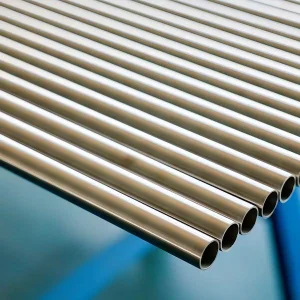

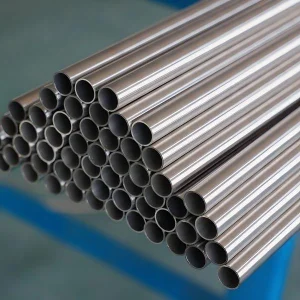



High-Quality Super Austenitic Steels 904L • UNS N08904 • 1.4539 Suppliers, Factory
View Specifications
310 Stainless Steel Tubing: Metallurgical Whitepaper & Engineering Overview
An authoritative analysis of 25Cr-20Ni high-alloy austenitic stainless steel tubing for extreme thermal processing, high-pressure boilers, and oxidation-critical environments.
Grade 310 stainless steel (UNS S31000 / EN 1.4841) and its specialized low-carbon variant 310S (UNS S31008 / EN 1.4845) alongside high-carbon derivative 310H (UNS S31009) represent the pinnacle of high-temperature austenitic stainless steel engineering. Formulated with a nominal chemical matrix of 25% Chromium and 20% Nickel, 310 tubing combines exceptional oxidation resistance with high creep strength and structural stability at temperatures reaching up to 1150°C (2100°F) in continuous service.
For chemical plant operators, power generation engineers, and OEM furnace designers, selecting the ideal tubing specification requires balancing thermodynamic oxidation resistance against mechanical stress limits, thermal fatigue, and microstructural phase stability. As a premier custom 310 stainless steel tube manufacturer, Spezilla integrates vacuum oxygen decarburization (VOD) melted raw materials, precision cold-drawing/pilgering, and controlled-atmosphere bright annealing to eliminate grain boundary precipitation and optimize creep-rupture performance.
1. Thermodynamic Stability & Oxidation Kinetics
The superior high-temperature performance of custom 310 stainless tubing is primarily driven by the formation of a dense, self-healing, scale-resistant Chromium Oxide (Cr₂O₃) surface passive film. Supported by the heavy 20% nickel content, the fully austenitic matrix remains microstructurally stable during rapid thermal cycling, mitigating the risk of protective oxide spallation that typically afflicts lower-alloy grades such as 304 or 316.
Extreme Oxidation Limits
Resists scaling up to 1150°C (2100°F) in continuous dry air, and up to 1035°C (1900°F) under severe thermal cycling conditions.
Carburization & Nitriding
High nickel and chromium content inhibits carbon ingress in petrochemical thermal cracking gas environments and ammonia atmospheres.
Creep-Rupture Endurance
310H variants, optimized with 0.04%–0.10% carbon and controlled grain sizing (ASTM No. 7 or coarser), offer superior creep strength above 650°C.
2. Chemical Composition & Grade Differentiation Matrix
Understanding the micro-alloying distinctions between 310, 310S, and 310H is vital for critical engineering procurement. The table below delineates chemical limits and property targets specified under ASME SA213 / ASTM A213 standards:
| Grade Designation | UNS / EN Number | Carbon (C) % | Chromium (Cr) % | Nickel (Ni) % | Silicon (Si) % | Tensile / Yield (MPa Min) | Primary Industrial Service |
|---|---|---|---|---|---|---|---|
| TP310 (Standard) | UNS S31000 / 1.4841 | ≤ 0.25 | 24.0 – 26.0 | 19.0 – 22.0 | ≤ 1.50 | 515 / 205 | High-temp furnace tubes, kiln liners, heat treat fixtures |
| TP310S (Low Carbon) | UNS S31008 / 1.4845 | ≤ 0.08 | 24.0 – 26.0 | 19.0 – 22.0 | ≤ 0.75 / 1.50 | 515 / 205 | Boiler superheaters, radiant tubes, welded assemblies |
| TP310H (High Carbon) | UNS S31009 / 1.4842 | 0.04 – 0.10 | 24.0 – 26.0 | 19.0 – 22.0 | ≤ 0.75 | 515 / 205 | Petrochemical reformer tubes, high-creep pressure piping |
| TP309S (Comparison) | UNS S30908 / 1.4833 | ≤ 0.08 | 22.0 – 24.0 | 12.0 – 15.0 | ≤ 1.00 | 515 / 205 | Moderate high-temp service (up to 1000°C), cost-effective alternative |
China's Advanced Manufacturing Infrastructure & Supply Chain Dominance
How Spezilla leverages China's world-class raw alloy metallurgy, integrated cold-drawing infrastructure, and cost efficiencies to deliver high-precision 310 stainless tubing globally.
Procuring specialized high-temperature alloy tubing requires absolute confidence in raw material purity, thermal processing execution, and supply resilience. Spezilla’s manufacturing complex in Huzhou, Zhejiang, integrated with our strategic Shanghai operations center, sits at the heart of the world’s most advanced stainless steel industrial cluster.
1. Integrated Master Alloy Feedstock
Our raw material billets are sourced exclusively from top-tier VOD/AOD refined steelmakers (such as Tsingshan and TISCO), ensuring ultra-low residual sulfur (S ≤ 0.015%) and phosphorus (P ≤ 0.030%). This prevents hot shortness and grain boundary embrittlement during tube extrusion and field welding.
2. Precision Cold Pilgering & Drawing
Utilizing multi-pass cold pilgering and ultra-precise hydraulic draw benches, Spezilla produces 310 seamless and welded-drawn tubes with exceptional wall uniformity, refined grain structures, and superior internal surface finish (Ra ≤ 0.4 µm available).
3. Atmosphere Hydrogen Bright Annealing
To restore peak corrosion and oxidation resistance, all 310S tubing undergoes continuous bright annealing in a 100% pure hydrogen atmosphere at 1080°C–1120°C, followed by rapid quenching to suppress chromium carbide precipitation without oxidation scaling.
By consolidating raw material procurement, thermal processing, and advanced testing under strict ISO 9001:2015 quality frameworks, Spezilla provides international OEMs with a 30%–40% total procurement cost advantage over Western mills while guaranteeing 100% compliance with ASTM, ASME, and EN standards.
Global Enterprise Procurement & Custom Dimensional Engineering
Meeting the strict technical specifications of multinational EPC contractors, power utilities, and chemical equipment fabricators.
Global procurement directors and project engineers face distinct engineering demands when sourcing 310 stainless steel tubing for international projects. Spezilla offers comprehensive custom tube manufacturing capabilities tailored to complex engineering drawings and project specifications:
- Outer Diameter (OD) Scope: Precision execution from 4.00 mm (micro-instrumentation) up to 114.30 mm (heavy-wall thermal process lines).
- Wall Thickness (WT) Capabilities: Ultra-thin 0.40 mm up to heavy-wall 3.05 mm, engineered to exact ASME SA213 schedules or EN 10216-5 tolerances.
- Extended Straight & Bent Configurations: Straight lengths up to 25,000 mm (25 meters) to reduce girth welds in long-run heat exchangers, alongside precision U-bent tube bundles.
- Execution Processing: Seamless (Cold Drawn / Cold Pilgered), Welded (TIG / Laser), and Welded & Drawn (W&D) with 100% bead-rolled internal seams.
- Surface Condition Options: Bright Annealed (BA), Annealed & Pickled (AP), Mechanically Polished (180 Grit to 400 Grit), and Electropolished (EP).
Rigorous NDT Quality Assurance & International Certifications
Every shipment of custom 310 stainless steel tubing undergoes multi-stage non-destructive testing (NDT) to ensure zero material defects and 100% pressure tightness under severe service conditions:
Hydrostatic Testing
100% pressure tested up to 20 MPa (3000 PSI) in accordance with ASTM A1016 / A999 specifications.
Eddy Current Inspection
Continuous online ET testing per ASTM E426 to detect surface and sub-surface longitudinal defects.
Ultrasonic Testing (UT)
Full wall thickness scanning per ASTM E213 for critical nuclear and aerospace high-pressure applications.
EN 10204 3.1 / 3.2 MTC
Full chemical, mechanical, intergranular corrosion (ASTM A262 Pr. E), and grain size certification provided.
Localized Application Scenarios & Emerging High-Temperature Trends
From European petrochemical retrofits to North American green energy conversion, custom 310 tubing empowers high-efficiency thermal infrastructure worldwide.
Petrochemical & Hydrogen Cracking
Used extensively in furnace radiant coil tubes, ethylene pyrolysis units, and hydrogen steam reformer recuperators. High nickel prevents carburization under hydrocarbon exposure at 900°C–1050°C.
Power Generation & Biomass Boilers
Specified for superheater and reheater tubes handling aggressive coal ash, municipal waste combustion gases, and high-temperature flue gases where lower chromium alloys suffer rapid oxidation wall loss.
Thermal Processing & Annealing Furnaces
Ideal for muffle tubes, thermocouple protection sheaths, conveyor roller tubes, and radiant heater elements requiring dimensional stability under repeated heating and cooling cycles.
Industry Macro Trends: Decarbonization & Green Thermal Engineering
As industrial manufacturing shifts toward net-zero carbon targets, high-temperature processes are undergoing radical transformations:
- Hydrogen Blending in Thermal Furnaces: Burning hydrogen increases flue gas moisture content dramatically, elevating high-temperature steam oxidation rates. Custom 310S tubing provides the critical chromium density required to withstand moist-oxidizing atmospheres.
- Concentrated Solar Power (CSP) & Molten Salt Storage: Next-generation CSP plants utilize molten nitrate salts at temperatures exceeding 600°C. 310H tubing provides the creep rupture resistance and salt-corrosion barrier necessary for heat transfer fluid loops.
- Waste-to-Energy & Syngas Recovers: Aggressive chloride-rich combustion environments in waste incinerators demand 310's balanced 25Cr composition to resist high-temperature chlorination attack.
Frequently Asked Questions: Custom 310 Stainless Steel Tubing
Expert technical answers covering metallurgical selection, welding procedures, manufacturing lead times, and global regulatory compliance.
The main distinction lies in their carbon content and targeted operational temperature regimes. Standard 310 (UNS S31000) permits up to 0.25% carbon, providing high general strength. 310S (UNS S31008) restricts carbon to ≤ 0.08%, making it ideal for welded assemblies as it minimizes chromium carbide precipitation at grain boundaries during welding. 310H (UNS S31009) controls carbon tightly between 0.04% and 0.10% alongside a required ASTM grain size of No. 7 or coarser, maximizing long-term creep-rupture strength above 650°C (1200°F).
The choice depends on your pressure design code and budget. Seamless 310 tubes (ASME SA213) are mandated for extreme high-pressure boilers and applications where longitudinal welds are prohibited by design codes. However, Welded & Drawn (W&D) 310S tubes offer superior wall thickness uniformity, tighter concentricity, smoother internal ID surfaces, and approximately 20-30% lower cost, making W&D the preferred choice for shell-and-tube heat exchangers operating under moderate pressures.
Matching composition AWS ER310 (bare wire) or E310-15/16 (coated electrodes) filler metals are recommended for welding 310 stainless tubing to maintain consistent oxidation and creep resistance across the joint. Low heat input must be maintained, and interpass temperatures should be kept below 100°C (212°F) to avoid hot cracking, to which fully austenitic stainless steel weld metals can be susceptible.
In oxidizing atmospheres containing sulfur dioxide (SO₂), 310 performs well due to its heavy protective chromia scale. However, in reducing atmospheres containing hydrogen sulfide (H₂S), high nickel content increases susceptibility to nickel-nickel sulfide eutectic formation at temperatures above 645°C. For reducing sulfidizing environments, high-chromium ferritic alloys or specialized nickel-chromium-silicon alloys may be recommended after consulting Spezilla’s engineering team.
We regularly accommodate independent third-party inspection (TPI) by globally accredited bodies, including Lloyd’s Register (LR), Bureau Veritas (BV), TÜV Rheinland, SGS, and DNV. TPI inspectors verify raw material heat numbers, oversee dimensional checks, witness hydrostatic/NDT testing, review PMI chemical analysis, and stamp EN 10204 3.2 inspection certificates prior to port dispatch.
Standard stock hollows can be cold-drawn, bright annealed, tested, and shipped within 15 to 20 days. Full custom mill runs requiring specialized heat billets, non-standard wall thicknesses, or long U-bend fabrications typically range from 30 to 45 days. Expedited air-freight dispatch for emergency plant shutdown replacements is also available.
Complementary High-Temperature & Corrosion Tube Portfolio
Discover additional high-nickel and heat-resistant stainless steel tube products manufactured to meet global industrial demands.


High-Quality Nickel Alloy Tubes 800HT • UNS N08811 • 1.4959 Manufacturer, Product
View Specifications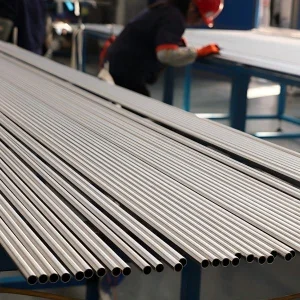




Request a Technical Quote & Mill Consultation
Partner with Spezilla Tube Co., Ltd. for certified custom 310 stainless steel tubing solutions tailored to your operational specifications and budget targets.
Our engineering sales team provides 24-hour response cycles for RFQs, datasheet evaluations, grade conversion recommendations, and global logistics coordination.
