
AD 2000 & ASTM/EN Approved Alloy Tubing Range
Explore our certified austenitic, duplex, super duplex, nickel alloy, and titanium pressure tubing manufactured under strict quality assurance frameworks.

Custom Austenitic Steels 321H • UNS S32109 • 1.4878 Manufacturer, Products
View Specifications
High-Quality Duplex Steels 2205 • S31803/S32205 • 1.4462 Manufacturer, Products
View Specifications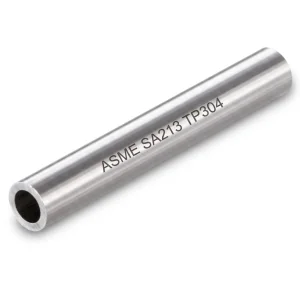
Custom Austenitic steel ASME SA312 · TP304 Stainless Steel Pipe Manufacturers, Supplier
View Specifications
High-Quality Super Duplex Steels 2507 • S32750 • 1.4410 Manufacturer, Factories
View Specifications
High-Quality Titanium Tubes • Grade 3•UNS R50550 Factories, Product
View Specifications
Custom Nickel Alloy Tubes 800 • UNS N08800 • 1.4876 Manufacturer, Products
View Specifications
High-Quality Austenitic Steels 316 • UNS S31600 • 1.4401 Factory, Product
View Specifications
High-Quality Ferritic & Martensitic Steels 410 • UNS S44000• 1.4512 Suppliers, Factories
View SpecificationsAD 2000-Merkblatt Approval Framework for High-Performance Nickel Tubing
Understanding the stringent German Pressure Vessel Code (AD 2000) requirements for nickel alloys operating under extreme thermal, pressure, and corrosive stresses.
AD 2000-W0 Certification
The baseline prerequisite for pressure vessel material manufacturers. AD 2000-W0 certifies that the supplier possesses the equipment, quality systems, qualified personnel, and testing facilities necessary to produce materials in accordance with European Pressure Equipment Directive (PED 2014/68/EU) Annex I, Section 4.3.
AD 2000-W2 & W10 Compliance
AD 2000-W2 governs austenitic steels, nickel, and nickel-base alloys for pressure vessel construction, specifying mechanical limits, heat treatment protocols, and non-destructive testing (NDT). AD 2000-W10 extends these specifications to low-temperature operations down to -196°C, ensuring impact resistance and ductility.
EN 10204 3.1 & 3.2 Traceability
Full material certification traceability is mandatory. We provide 3.1 Mill Test Certificates directly verified by internal certified inspectors, as well as 3.2 Certificates co-stamped by independent third-party inspection bodies such as TÜV SÜD, TÜV Rheinland, DNV, or Lloyd's Register.
Critical Information Gain: Why Standard ASTM Tubing Falls Short of AD 2000 Compliance
While standard ASTM specifications (e.g., ASTM B163, ASTM B167, ASTM B407) specify chemistry and basic tensile testing, AD 2000-Merkblatt approval mandates higher safety margins, specific wall thickness tolerance classes (EN 10216-5 D4/T4), mandatory high-temperature yield stress testing ($R_{p0.2}$ at elevated operating temperatures), and rigorous intergranular corrosion (IGC) qualification tests per ISO 3651-2 / ASTM G28. Sourcing from a verified AD 2000 approved nickel tube supplier mitigates the risk of catastrophic pressure envelope failure and guarantees smooth TÜV certification for European installations.
Engineering Specifications for AD 2000 Approved Nickel Alloys
A detailed chemical, mechanical, and thermodynamic evaluation of core nickel alloy grades supplied for extreme industrial applications.
| Alloy Designation | UNS / EN Number | AD 2000 Specification | Key Chemical Elements | Yield Strength $R_{p0.2}$ (MPa) | Primary Corrosion / Thermal Resistance |
|---|---|---|---|---|---|
| Alloy 600 | UNS N06600 / 2.4816 | AD 2000 W2 / W10 | Ni 72.0 min, Cr 14-17, Fe 6-10 | ≥ 240 | Resists chloride stress corrosion cracking & high-temp oxidation up to 1150°C. |
| Alloy 625 | UNS N06625 / 2.4856 | AD 2000 W2 / W10 | Ni 58.0 min, Cr 20-23, Mo 8-10, Nb 3.15-4.15 | ≥ 415 | Pitting resistance equivalent (PREN ≥ 50), exceptional strength & wet chemical resistance. |
| Alloy 800 / 800H / 800HT | UNS N08810 / 1.4958 / 2.4876 | AD 2000 W2 (High-Temp) | Ni 30-35, Cr 19-23, Fe 39.5 min, Al+Ti 0.85-1.20 | ≥ 205 | Creep-rupture strength above 600°C, carburization and sulfidation resistance. |
| Alloy 825 | UNS N08825 / 2.4858 | AD 2000 W2 | Ni 38-46, Cr 19.5-23.5, Mo 2.5-3.5, Cu 1.5-3.0 | ≥ 240 | Outstanding resistance to sulfuric, phosphoric acids & chloride stress cracking. |
| Alloy C276 | UNS N10276 / 2.4819 | AD 2000 W2 / W10 | Ni Bal, Cr 14.5-16.5, Mo 15-17, W 3-4.5 | ≥ 355 | Ultimate resistance to wet chlorine gas, hypochlorites, and strong oxidizing salts. |
| Alloy 20 | UNS N08020 / 2.4660 | AD 2000 W2 | Ni 32-38, Cr 19-21, Mo 2-3, Cu 3-4, Nb 8xC | ≥ 241 | Designed specifically to prevent acid attack in sulfuric acid pickling & chemical synthesis. |
Phase Stability & Microstructure
Nickel-base superalloys owe their elevated performance to solid-solution strengthening and precipitate control. For high-temperature grades like Alloy 800HT, precise control over titanium and aluminum contents ($Ti + Al = 0.85-1.20\%$) combined with high-temperature solution annealing (above 1140°C) ensures stable coarse grain structures (ASTM Grain Size 5 or coarser) for maximum creep-rupture life.
Pitting & Crevice Corrosion Mechanics
In marine, offshore, and flue-gas desulfurization (FGD) systems, localized corrosion poses severe risks. Alloys such as Alloy 625 and Alloy C276 utilize high Molybdenum ($15-17\%$) and Tungsten additions to form ultra-stable passive oxide films ($Cr_2O_3$ and $MoO_3$). Their PREN numbers range from 50 to over 68, effectively preventing chloride ion penetration under stagnant conditions.
Emerging Global Demand Drivers for Certified AD 2000 Nickel Tubing
How the global energy transition, stringent environmental regulations, and critical process safety codes are driving the shift toward high-reliability nickel alloy pressure systems.
Green Hydrogen & Electrolyzer Plants
Next-generation proton exchange membrane (PEM) and alkaline water electrolyzers require high-purity, corrosion-resistant nickel tubing for high-pressure hydrogen conveyance and oxygen-rich corrosive fluid lines. AD 2000 certified Nickel Alloy 600 and 825 tubes provide zero-leakage security under cyclic dynamic pressures.
LNG Regasification & Cryogenics
As global natural gas infrastructure expands, cryogenic heat exchangers processing liquid natural gas (LNG) at temperatures down to -162°C require AD 2000-W10 certified nickel alloy tubing. These alloys eliminate ductile-to-brittle transition failures inherent in conventional carbon steels.
CCUS & Chemical Decarbonization
Carbon Capture, Utilization, and Storage (CCUS) facilities extract wet $CO_2$ streams containing trace amine solvents, hydrogen sulfide, and organic acids. Standard stainless steel suffers rapid stress corrosion cracking; AD 2000 approved Alloy C276 and Alloy 625 tubing are essential for long-term operational integrity.
China Industry 4.0: Supply Chain Resilience & Technical Dominance
Combining state-of-the-art cold-drawing metallurgy, automated bright annealing, and digital quality control to deliver world-class AD 2000 approved nickel tubing.
Vacuum Bright Annealing (VBA) Technology
Our advanced continuous vacuum bright annealing furnaces operate under high-purity hydrogen gas atmospheres ($>99.999\%$). This process eliminates surface oxidation, preserves ultra-smooth internal bore surface roughness ($Ra \le 0.4 \mu m$), and restores maximum ductility and corrosion resistance without acid pickling.
Cold Cold Pilgering & Precision Drawing
Using high-precision multi-roll cold pilger mills and cold drawing benches, we achieve tight dimensional control. Outside diameters from 4.00 mm to 114.30 mm and wall thicknesses from 0.40 mm to 3.05 mm are produced with concentricity tolerances exceeding EN 10216-5 Class D4/T4 mandates.
End-to-End Raw Material Traceability
We source ultra-clean raw material ingots manufactured via Vacuum Induction Melting (VIM) followed by Electroslag Remelting (ESR) or Vacuum Arc Remelting (VAR). Every tube batch is directly traceable to the melt heat number with verified chemistry via Optical Emission Spectrometry (OES).
Manufacturing & Quality Control Flowchart
VIM / VAR Raw Billet Selection
Ultrasonically tested high-purity nickel alloy hollows verified for chemical composition and inclusions.
Precision Cold Pilgering / Drawing
Multi-pass cold reduction refining grain structure and achieving strict wall concentricity.
H2 Bright Annealing
Solution heat treatment at 1050°C–1180°C in protective atmosphere restoring corrosion resistance.
Automated NDT & Hydro Testing
100% Eddy Current (SEP 1914), Ultrasonic (EN ISO 10893-10), and Hydrostatic pressure testing.
Global Regional Application Scenarios
Deploying AD 2000 approved nickel tubing across major industrial hubs worldwide.
European Chemical Parks (Germany, Netherlands, Belgium)
In chemical hubs like Ludwigshafen and Rotterdam, TÜV compliance is mandatory. Our AD 2000-W0/W2 certified Alloy 825 and Alloy 625 tubes are directly integrated into shell-and-tube heat exchangers handling hot acetic acid, nitric acid, and chlorine derivatives under strict PED Module H oversight.
Middle East Desalination & Offshore Platforms
Thermal multi-stage flash (MSF) desalination units and Gulf offshore oil platforms require materials that resist warm, aerated seawater and sour gas ($H_2S$). Our AD 2000 certified Alloy 625 and Super Duplex 2507 tubing withstand crevice corrosion in high-salinity brine heaters.
North American Petrochemical & Refining Refits
Refineries along the US Gulf Coast undergoing revamp projects dual-specify ASME SB163/SB423 and AD 2000-W2 standards to ensure cross-border compliance. Our Nickel Alloy 800H u-bend tubes serve as high-efficiency feedwater heater bundles operating under intense thermal cycles.
Testing & Inspection Standards for AD 2000 Approved Tubing
Every meter of nickel alloy tube undergoes exhaustive non-destructive and destructive evaluation prior to release.
Eddy Current & Ultrasonic Testing
100% inline Eddy Current Testing (ECT) per ASTM E426 and SEP 1914 detects longitudinal and transverse surface flaws. Ultrasonic Testing (UT) per EN ISO 10893-10 ensures complete volumetric integrity for high-pressure wall thicknesses.
Hydrostatic Pressure Testing
Tubes are tested to pressures up to 300 bar (4350 psi) according to EN 10246-2. Test pressure is maintained to guarantee zero leakage and verify structural stress limits calculated under AD 2000-B1 / B9 rules.
Mechanical & Metallurgical Testing
Destructive tests include tensile at room temperature and elevated temperatures ($R_{p0.2}$, $R_m$, $A\%$), flattening, flaring (expansion), hardness, and intergranular corrosion testing per ASTM G28 Method A / ISO 3651-2.
Frequently Asked Questions by Technical Procurement Teams
Clear, definitive answers regarding AD 2000 approval, ASME compliance, lead times, and tube customization.
What is the difference between AD 2000-W0 and AD 2000-W2 approval?
AD 2000-W0 is a general manufacturer qualification certifying that the factory possesses suitable production equipment, quality systems, and inspection staff to manufacture materials for pressure equipment under PED 2014/68/EU. AD 2000-W2 defines the specific technical material requirements (chemical composition, heat treatment, mechanical properties, NDT) for nickel and nickel-base alloys used in pressure vessels.
Can your AD 2000 approved nickel tubing be dual-certified to ASME SB163 / SB423?
Yes. We routinely supply dual-certified tubing complying simultaneously with European AD 2000-W2 / EN 10216-5 and American ASME SB163 / SB167 / SB423 / ASTM B163 / B423 specifications. This enables global EPC contractors to standardize inventory across international projects.
What inspection document is provided with the shipment?
Every shipment comes standard with an EN 10204 3.1 Mill Test Certificate detailing chemical analysis, room and high-temperature mechanical properties, NDT results, grain size, and heat treatment parameters. On request, we supply EN 10204 3.2 certificates co-signed by TÜV or DNV inspectors.
Should I select welded & drawn or seamless nickel tubing for a pressure exchanger?
Welded & Drawn (W&D) tubes undergo cold working over a mandrel and bright annealing, resulting in an homogenized weld seam with uniform wall thickness and competitive cost under ASTM B704/B515. Seamless tubes (ASTM B163/B167) are mandatory when the design code or pressure class prohibits longitudinal welds or for extreme high-pressure services exceeding 200 bar.
What size limits and straight lengths can you manufacture?
We produce outside diameters from 4.00 mm to 114.30 mm, wall thicknesses from 0.40 mm to 3.05 mm, and straight lengths up to 25,000 mm (25 meters). Coiled tubing and custom U-bends with tight bending radii are also available.
How do I request a formal engineering quotation?
Send your material datasheet, required grade, dimensions (OD x WT x Length), quantity, design code (AD 2000 / ASME), and application details to [email protected]. Our engineering team will review your specification and provide a quote within 24 hours.
Explore Additional Certified Alloy Grades & Products
Complete product range covering high-temperature austenitic, super-austenitic, and specialized nickel alloy tubes.
High-Quality Austenitic steel ASME SA213 · TP304H Manufacturer, Products
View Specifications
Custom Austenitic steel ASME SA213 · TP317L Supplier, Suppliers
View Specifications
Custom Nickel Alloy Tubes 825 • UNS N08825 • 2.4858 Suppliers, Product
View Specifications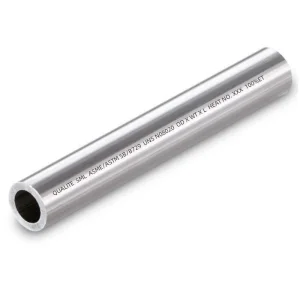
Custom Nickel Alloy Tubes 20 • UNS N08020 • 2.4660 Supplier, Product
View Specifications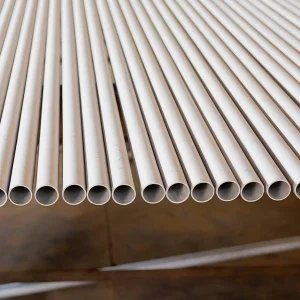
High-Quality Austenitic steel ASME SA269 · TP304 Factories, Products
View Specifications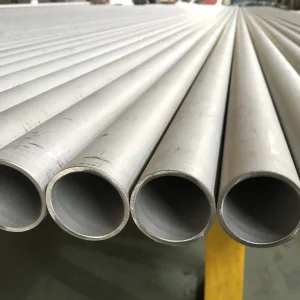
Custom Austenitic steel ASME SA312 · TP316L Manufacturer, Manufacturers
View Specifications
Custom Austenitic Steels 316H • UNS S31609 • 1.4919 Supplier, Product
View Specifications
