
Specialty Alloys for High-Temperature & Corrosion Service
Explore our top-tier certified tubes engineered to meet stringent thermal stress, oxidation resistance, and creep-rupture criteria under global boiler standards.



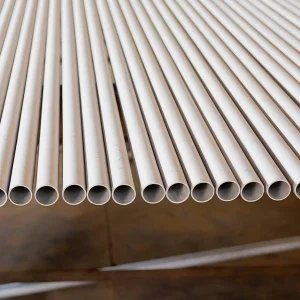
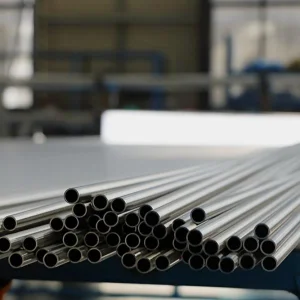



Next-Generation Boiler Tube Applications: Metallurgical Evolution & Thermodynamic Pressures
A comprehensive analysis of high-temperature alloy behavior, severe corrosion dynamics, and thermal efficiency optimization across global steam generation facilities.
Modern industrial steam generation, power utility operations, and chemical process plants operate under thermal and mechanical stresses unmatched in industrial history. As global energy infrastructure transitions toward higher thermodynamic efficiencies—moving aggressively from subcritical parameters into Supercritical (SC), Ultra-Supercritical (USC), and emerging Advanced Ultra-Supercritical (A-USC) operating regimes—the demands placed upon thermal pressure tubing have escalated exponentially.
In standard subcritical steam boilers, traditional carbon steels (such as SA192 or SA210) provided adequate yield strength and oxidation resistance. However, when operating temperatures exceed 540°C (1004°F) and internal pressures climb beyond 22.1 MPa (the thermodynamic critical point of water), conventional carbon and low-alloy chromium-molybdenum steels experience accelerated graphitization, hydrogen embrittlement, and rapid microstructural degradation through high-temperature creep rupture.
Deciphering Severe Failure Mechanisms in Boiler Heat Exchangers
Custom boiler tube manufacturing requires precise metallurgical engineering to mitigate four primary degradation vectors that plague high-pressure utility boilers, Heat Recovery Steam Generators (HRSGs), and waste-to-energy combustors:
-
1. High-Temperature Creep Rupture & Grain Boundary Degradation
Under prolonged exposure to stress at elevated temperatures, metal crystals deform along grain boundaries. Austenitic grades enriched with stabilizing elements—such as titanium in ASME SA213 TP321 / TP316Ti or niobium in 347H (UNS S34709)—form stable MX-type carbo-nitrides that pin grain boundaries, preventing dislocation movement and catastrophic stress-rupture failure. -
2. Fireside Ash Corrosion & Alkali Sulfate Attack
In coal-fired, biomass, and municipal solid waste (MSW) boilers, flue gas deposits low-melting-point molten salts (alkali iron trisulfates such as K3Fe(SO4)3). High-nickel alloys including Incoloy 800H / 800HT (UNS N08810 / N08811) and high-chromium austenitic steels like TP309S establish a dense, adherent chromia ($Cr_2O_3$) barrier scale that resists fluxing by molten sulfate slag. -
3. Steamside Oxide Exfoliation & Thermal Fatigue
Superheater and reheater tubes develop an internal magnetite/chromite scale due to steam-metal reactions. During thermal cycling and boiler trips, differences in the thermal expansion coefficient between the oxide scale and parent metal cause scale spallation (exfoliation). Fine-grained, bright-annealed austenitic tubing prevents thick, brittle scale formation, safeguarding downstream steam turbines from solid particle erosion. -
4. Chloride & Polythionic Acid Stress Corrosion Cracking (SCC)
During downtime, residual moisture combined with sulfur compounds or chlorides triggers rapid transgranular or intergranular SCC. The introduction of nitrogen-strengthened low-carbon alloys such as TP304LN and titanium-stabilized TP316Ti provides exceptional immunity to intergranular attack post-welding without requiring costly field post-weld heat treatment (PWHT).
SEO Information Gain Insight: Selecting boiler tubing is not merely a matter of matching room-temperature yield strength. True reliability requires evaluating the 100,000-hour stress-rupture value ($S_r$), the Pitting Resistance Equivalent Number (PREN), and internal oxide growth rates under continuous thermal cycling.
Global Enterprise Procurement Intent & Specifications Comparison
A rigorous metallurgical comparison mapping International Standards (ASME / ASTM / EN) against operational temperature, allowable design stress, and target boiler zones.
| Alloy Grade & Standard | UNS / EN Material No. | Max Temp (°C / °F) | Key Metallurgical Advantage | Primary Boiler Application Zone |
|---|---|---|---|---|
| ASME SA213 TP304LN | UNS S30453 / 1.4311 | 600°C / 1112°F | Nitrogen-enhanced strength; high resistance to sensitization during welding. | Superheater tubing, reheater headers, economizer coils. |
| ASME SA213 TP316Ti | UNS S31635 / 1.4571 | 650°C / 1202°F | Titanium stabilized; immunity to intergranular corrosion in acidic condensate. | HRSG high-pressure superheaters, chemical process boiler tubes. |
| ASME SA213 TP321 | UNS S32100 / 1.4541 | 815°C / 1500°F | Ti-stabilized austenitic steel; superior elevated-temperature creep rupture strength. | Radiant superheaters, steam platen elements, high-temp headers. |
| ASME SA213 TP347H | UNS S34709 / 1.4550 | 850°C / 1562°F | High-carbon Columbium/Niobium stabilized; maximum long-term creep ductility. | Ultra-supercritical power plant superheaters and main steam lines. |
| ASME SA213 TP309S | UNS S30908 / 1.4833 | 1000°C / 1832°F | High 23Cr-13Ni composition; exceptional resistance to high-temp scaling and oxidation. | Waste-to-energy furnace walls, incinerator boiler tube shields. |
| Incoloy 800H / 800HT | UNS N08810 / N08811 | 1100°C / 2012°F | Fe-Ni-Cr alloy; dual-certified for extreme creep strength and carburization resistance. | Ethylene cracking furnaces, steam methane reformers, nuclear boilers. |
| Super Duplex 2507 | UNS S32750 / 1.4410 | 300°C / 572°F | PREN ≥ 42; extreme yield strength with complete immunity to chloride SCC. | Seawater cooled steam condensers, geothermal heat extraction loops. |
| Titanium Grade 1 & 12 | UNS R50250 / R53400 | 300°C / 572°F | Ultra-lightweight; total immunity to marine bio-fouling and nitric/sulfuric condensates. | Coastal power plant surface condensers, desalination brine heaters. |
EPC & OEM Procurement Intent
Global Engineering Procurement Construction (EPC) firms require absolute compliance with ASME Code Section I and Section II Part A/B. Key requirements include full mill heat traceability, strict wall-thickness tolerance (OD and WT), and certified non-destructive testing (NDT) to prevent costly site rework during boiler field assembly.
MRO & Emergency Replacement Intent
Plant maintenance and turn-around teams demand rapid-dispatch custom seamless and welded tubing with exact dimensional matching. Key intent revolves around emergency availability, U-bent tube fabrication according to customer drawings, and pre-hydrotested bundles with EN 10204 3.1 documentation.
High-Corrosion Process Intent
Chemical plant engineers dealing with sour gas, sulfuric gas, or aggressive condensate require specialized alloys. Procurement focuses on high Nickel-Chromium-Molybdenum alloys (Incoloy 800H/800HT, TP317L) tested for intergranular corrosion per ASTM A262 Practice E.
Macro Industry Solutions: Targeted Boiler & Heat Exchanger Engineering
From utility scale thermal power stations to bio-energy combustors, our custom tube manufacturing processes are tailored to specific thermal and environmental challenges.
Utility Power Generation
Supplying seamless and cold-drawn welded tubes (ASTM A213 TP347H, TP321) for ultra-supercritical superheater loops, reheater pendants, and waterwall panels operating above 600°C.
Petrochemical & Refining
High-nickel 800H/800HT and 316Ti tubes engineered for steam methane reformers, ethylene pyrolytic furnaces, and hydrocracker heat recovery exchangers facing severe carburization.
Waste-to-Energy & Biomass
Utilizing high-chromium TP309S stainless steel and custom composite cladding to resist aggressive heavy-metal chloride salts and flue gas corrosion in incinerator furnace ceilings.
Marine & Desalination
Providing Grade 1 & 12 Titanium along with Super Duplex 2507 tubes for main propulsion marine steam condensers and multi-stage flash (MSF) desalination evaporator bundles.
Precision Manufacturing Engineering & Quality Assurance Framework
Our state-of-the-art mill facilities integrate automated cold drawing, controlled-atmosphere bright annealing, and 100% non-destructive testing to exceed international boiler codes.
Automated Cold Working & Bright Annealing
Tube hollows undergo precision cold pilgering or drawing to achieve tight dimensional tolerances. Subsequent Bright Annealing (BA) in a 100% pure hydrogen atmosphere eliminates internal stresses without surface oxidation, delivering a mirror-smooth bore that minimizes fluid drag and scale buildup.
100% Non-Destructive Inspection (NDT)
Every single length of boiler tube undergoes inline Eddy Current Testing (ECT) per ASTM E426 / EN 10246-2 and Ultrasonic Inspection (UT) per ASTM E213 to detect longitudinal, transverse, and wall-thickness flaws down to 5% of nominal wall thickness.
Full Hydrostatic & Destructive Validation
In addition to NDT, tubes are hydrostatically tested at pressures up to 30 MPa (4350 PSI). Destructive mechanical testing—including flare, flattening, reverse bend, grain size determination (ASTM E112), and intergranular corrosion testing (ASTM A262 Practice E)—ensures structural integrity.
Industry Trends: Decarbonization, Hydrogen Co-Firing & Smart Manufacturing
How emerging clean energy paradigms and digital manufacturing are revolutionizing the next generation of custom boiler tube production.
The global industrial heating landscape is undergoing a monumental shift driven by net-zero carbon targets, fuel switching, and digitalization. Boiler tube factories are adapting to three major technological trends:
1. Hydrogen & Ammonia Co-Firing Dynamics
As power utilities retrofit coal and natural gas boilers to co-fire green hydrogen ($H_2$) or ammonia ($NH_3$), combustion flame temperatures increase significantly while flue gas moisture levels rise. Higher hydrogen partial pressures escalate the risk of High-Temperature Hydrogen Attack (HTHA) and metal dusting in superheaters. Advanced nickel-base alloys like Incoloy 800HT and stabilized stainless steels like TP347H are becoming standard specifications to prevent atomic hydrogen permeation and embrittlement.
2. Nanostructured Surface Treatments & Internal Shot Peening
To resist steamside oxidation in ultra-supercritical steam environments operating above 620°C, custom boiler tube manufacturers are integrating specialized internal surface cold-working techniques. Controlled internal shot peening disrupts coarse grain structures at the bore surface, creating a ultra-fine grain layer. This sub-surface structure accelerates chromium diffusion during initial plant start-up, forming a protective, highly protective $Cr_2O_3$ film that prevents thick magnetite scale spallation.
3. Digital Material Passports & Smart AI Traceability
Procurement teams now demand full digital transparency across the supply chain. Leading factories are embedding QR-code based Digital Material Passports onto tube end caps and bundles. By scanning the passport, field engineers gain instant access to melt source raw material origin, continuous laser dimensional logs, heat treatment temperature curves, hydro-test charts, and EN 10204 3.1/3.2 test certificates verified via immutable digital records.
Localization Support, Regulatory Compliance & Supply Chain Logistics
Navigating complex international pressure vessel regulations with localized engineering documentation and heavy-duty protective export packaging.
Pressure Equipment Directive (PED) & ASME Code
All boiler tubing manufactured for export fully satisfies European PED 2014/68/EU Annex I standards as well as ASME Boiler and Pressure Vessel Code (BPVC) Section II (Materials) and Section I (Power Boilers). Inspection certificates include EN 10204 3.1 or 3.2 validated by independent third-party authorities (TÜV, Bureau Veritas, Lloyd's Register).
Indian Boiler Regulations (IBR) Approval
For industrial projects across South Asia, tubes can be certified under Form III-A by an approved inspecting authority recognized by the Central Boilers Board (CBB) under Indian Boiler Regulations (IBR), verifying raw material chemistry, mechanical properties, and drift expansion tests.
Custom Packaging & U-Bend Cold Fabrication
Tubes are available in straight lengths up to 25 meters or custom U-bent configurations with post-bend solution annealing in the bend area per ASTM A688 / A803. Export bundles are secured in sea-worthy fumigated wooden boxes, lined with plastic vapor corrosion inhibitor (VCI) bags and plastic end plugs.
Austenitic, Super Duplex & Titanium Boiler & Heat Exchanger Tubes
Complete your design specifications with our specialized corrosion-resistant stainless, duplex, and titanium tube products.







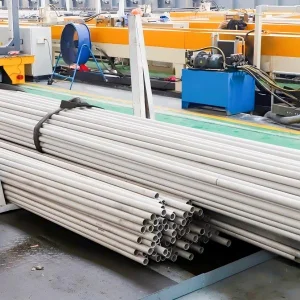
Technical Q&A: Custom Boiler Tube Specifications & Procurement
Expert engineering answers addressing material selection, non-destructive testing requirements, wall-thickness tolerances, and certification compliance.
What is the difference between ASME SA213 and ASME SA269 boiler tubes?
ASME SA213 is the standard specification specifically governing seamless ferritic and austenitic alloy-steel boiler, superheater, and heat-exchanger tubes designed for critical, high-temperature, and high-pressure service under ASME Code Section I. ASME SA269 governs general service seamless and welded austenitic stainless steel tubing focused on corrosion resistance and structural/fluid transport, where high-temperature creep rupture values are not the governing design criteria.
Why is Titanium stabilization (TP321 / TP316Ti) or Niobium stabilization (347H) essential for superheater elements?
When unstabilized austenitic stainless steels (like 304 or 316) are exposed to temperatures between 425°C and 850°C (800°F–1500°F), chromium carbides precipitate along grain boundaries, depleting adjacent areas of chromium. This process (sensitization) makes the steel vulnerable to severe Intergranular Corrosion (IGC). Titanium (in TP321/TP316Ti) and Niobium (in 347H) have a stronger affinity for carbon than chromium; they preferentially form stable TiC or NbC, preserving chromium levels throughout the matrix and maintaining maximum corrosion resistance and creep strength.
When should Incoloy 800H / 800HT nickel alloy tubes be selected over austenitic stainless steels?
Incoloy 800H (UNS N08810) and 800HT (UNS N08811) are iron-nickel-chromium alloys specifically designed for service environments exceeding 600°C (1112°F) where austenitic stainless steels lose structural creep strength or suffer severe oxidation and carburization. 800HT undergoes a controlled dual-heat treatment and tight aluminum+titanium chemistry control (0.85–1.20% Al+Ti) to optimize long-term creep-rupture properties in petrochemical steam cracking and high-temp power reheaters.
What non-destructive testing (NDT) standards apply to custom heat exchanger and boiler tubes?
Custom boiler tubing undergoes compulsory 100% Non-Destructive Testing. This includes Eddy Current Inspection according to ASTM E426 / EN 10246-2 for defect detection, Ultrasonic Testing (UT) per ASTM E213 for longitudinal and wall-thickness verification, and Hydrostatic Pressure Testing per ASME A1016/A1016M. On request, air-under-water pneumatic testing or helium leak testing is conducted for critical condenser tubing.
Can Spezilla manufacture U-bend tubes with local heat treatment per ASME SA688?
Yes. We supply custom U-bend boiler and feedwater heater tubes engineered to ASME SA688 / SA803 specifications. Following precision cold bending, the U-bend area plus 150mm of adjacent straight leg undergo rapid electric-resistance or inductive bright solution annealing in a protective atmosphere to stress-relieve cold-worked zones and restore maximum resistance to stress corrosion cracking.
