
Featured Marine & Specialty Stainless Tubing - Batch 1
Explore our precision-drawn seamless, welded, and bright annealed alloy tubing inventory manufactured for harsh marine environments.

High-Quality Austenitic steel ASME SA213 · TP309S Suppliers, Product
View Product Details
Custom Austenitic Steels 316Ti • UNS S31635 • 1.4571 Manufacturer, Products
View Product Details
Custom Nickel Alloy Tubes 20 • UNS N08020 • 2.4660 Supplier, Product
View Product Details
Custom Titanium Tubes • Grade 12 • UNS R53400 Manufacturers, Product
View Product Details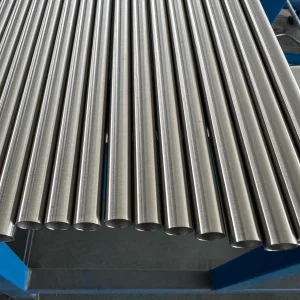
High-Quality Austenitic steel ASME SA269 · TP316L Manufacturers, Factories
View Product Details
High-Quality Ferritic & Martensitic Steels 410 • UNS S41000• 1.4512 Suppliers, Factories
View Product Details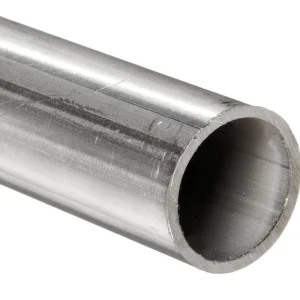
Custom Austenitic steel ASME SA312 · TP304H Manufacturers, Factories
View Product Details
High-Quality Austenitic steel ASME SA269 · TP304 Factories, Products
View Product DetailsThe Engineering Reality of Marine Grade Stainless Steel Tubing
Marine infrastructure, offshore energy extraction platforms, naval architecture, and coastal desalination facilities operate in one of the planet's most aggressive electrochemical environments. The severe synergy of high sodium chloride (NaCl) concentration, dissolved oxygen, biological fouling, variable sea temperature, and high hydrodynamic pressure demands tubing materials with exceptional pitting resistance, structural integrity, and fatigue strength.
At Spezilla Tube Co., Ltd. (operating since 2007 with headquarters in Shanghai and state-of-the-art manufacturing facilities in Huzhou, Zhejiang), we specialize in the cold drawing, rolling, heat treatment, and precision finishing of custom marine stainless steel tubing. This monograph provides procurement directors, marine engineers, and metallurgical buyers with actionable technical criteria required to navigate material selection, standard compliance, and total lifecycle cost optimization.
Corrosion Kinetics: Pitting Resistance Equivalent Number (PREN) Explained
In marine environments, localized corrosion—specifically pitting corrosion and crevice corrosion—represents over 85% of unexpected tube failures. Metallurgical engineers evaluate alloy resistance using the empirical Pitting Resistance Equivalent Number (PREN):
PREN Formula: PREN = %Cr + 3.3(%Mo + 0.5%W) + 16(%N)
Higher PREN values correlate directly with extended resistance to chloride breakdown. Standard 304/L (PREN ~19) is vulnerable in direct seawater, whereas 316L (PREN ~24-25) serves splash zones, and Duplex 2205 (PREN ~35) or Super Duplex 2507 (PREN >42) offer complete immunity in marine immersion service.
Global Commercial & Industrial State of Marine Tubing (2026–2035)
The global demand for high-performance marine stainless steel tubing is undergoing a structural expansion driven by five macro-industrial catalysts:
Offshore Energy Transition
The rapid growth of floating offshore wind (FOWT), subsea carbon capture (CCUS), and deepwater oil & gas platforms has escalated the requirement for high-pressure hydraulic tubing, umbilical control lines, and subsea sampling lines capable of enduring 30-year design lifespans without replacement.
Desalination Infrastructure
Global freshwater scarcity has triggered massive capital expenditure in Reverse Osmosis (SWRO) desalination plants. High-pressure SWRO manifolds and heat recovery systems rely on Super Duplex (UNS S32750/S32760) and Super Austenitic (6Mo/UNS S31254) tubing to survive hyper-saline brine feeds.
Shipbuilding & IMO Directives
Strict International Maritime Organization (IMO) decarbonization standards require retrofitting ships with Exhaust Gas Cleaning Systems (EGCS scrubbers), LNG duel-fuel cryogenic lines, and Ballast Water Management Systems (BWMS), generating urgent procurement needs for 316L, 316Ti, and 904L tubing.
Metallurgical Selection Guide for Marine Alloys
Selecting the correct stainless steel or nickel alloy tubing specification balances upfront capital expenditure (CAPEX) with long-term maintenance expenditure (OPEX). The table below outlines nominal chemistry, mechanical strength, and target marine applications:
| Alloy Grade | UNS / EN Standard | PREN | Yield Strength (MPa) | Primary Marine Application Field |
|---|---|---|---|---|
| 316 / 316L | UNS S31600 / S31603 (1.4401 / 1.4404) | 23–25 | ≥ 205 | Deck handrails, mild seawater heat exchangers, potable water, instrumentation lines |
| 316Ti | UNS S31635 (1.4571) | 24–26 | ≥ 220 | Marine exhaust gas manifolds, elevated temperature marine boilers, welded hydraulic systems |
| Duplex 2205 | UNS S31803 / S32205 (1.4462) | 34–36 | ≥ 450 | Cargo piping on chemical tankers, high-pressure hydraulic lines, offshore topside process systems |
| Super Duplex 2507 | UNS S32750 (1.4410) | ≥ 42 | ≥ 550 | Deepwater subsea umbilical lines, SWRO high-pressure manifolds, firewater pump lines |
| Super Austenitic 6Mo | UNS S31254 (1.4547) | ≥ 43 | ≥ 300 | Flue gas desulfurization (FGD) scrubbers, marine chlorination cooling loops, pulp bleach equipment |
| Nickel Alloy 625 | UNS N06625 (2.4856) | ≥ 50 | ≥ 415 | Extreme subsea riser instrumentation, sour gas (H2S) marine wells, naval submarine exhaust silencers |
| Titanium Grade 2 | UNS R50400 (3.7035) | Immune | ≥ 275 | Coastal power plant surface condensers, titanium marine heat exchangers, ballast tanks |
Why Global EPCs & OEMs Procure Marine Tubing from China
China’s advanced industrial infrastructure has transformed the country into the world's premier manufacturing center for high-spec stainless steel and nickel alloy tubular products. Spezilla Tube Co., Ltd. exemplifies how Chinese production efficiency combines with stringent international quality standards to deliver unmatched buyer value:
1. Vertical Supply Chain Integration
Located in the Huzhou manufacturing hub adjacent to major raw material refineries and Shanghai Port logistics, Spezilla controls the complete manufacturing route—from certified mother hollow pierces to cold pilgering, cold drawing, bright annealing, and final non-destructive testing (NDT).
2. Cold Working Precision & Yield Strength
Our multi-pass cold drawing and cold pilgering technology achieves outside diameter (OD) tolerances down to ±0.05 mm and wall thickness tolerances to ±7.5%. Cold worked and bright annealed (BA) tubing delivers exceptionally mirror-smooth internal surfaces (Ra < 0.4 μm) crucial for hydraulic flow efficiency.
3. Rapid Customization & Flexible Order Scale
Unlike traditional Western mills requiring multi-ton minimum order quantities (MOQs) and 26-week lead times, Spezilla provides custom wall thicknesses, specialized U-bending (radius down to 1.5xD), straight continuous lengths up to 25 meters, and rapid dispatch within 3 to 5 weeks.
Seamless vs. Welded & Drawn (W&D) Tubing Manufacturing Routes
A critical decision for marine engineering procurement is choosing between Seamless (ASTM A213/A312) and Welded & Cold Drawn (ASTM A249/A269/A688) tubing. Both manufacturing paths possess distinct mechanical characteristics:
Seamless Stainless Steel Marine Tubing
Manufactured by extruding solid steel billets over a piercing mandrel, seamless tubing contains no longitudinal weld seam. It is the mandatory choice under ASME Boiler and Pressure Vessel Codes for high-pressure hydraulic lines (pressures > 400 bar), ultra-critical subsea umbilicals, and extreme-temperature marine superheaters.
- Zero longitudinal seam risk under severe cyclic pressure vibration
- Fully compliant with ASTM A213, ASME SA213, and EN 10216-5
- Available in OD 4.00 mm to 114.30 mm, WT up to 3.05 mm
Welded & Cold Drawn (W&D) Marine Tubing
Produced from continuous precision-rolled stainless strip, TIG or plasma welded, and subsequently cold drawn over a plug or mandrel. Cold drawing homogenizes the weld structure, recrystallizing the grain matrix during bright annealing until the weld seam becomes metallurgically indistinguishable from the parent metal.
- Superior wall thickness concentricity and tightest OD tolerances
- Cost-effective choice for long-length marine heat exchangers & condensers
- Fully compliant with ASTM A249, ASTM A688, and EN 10217-7
Localized Application Scenarios for Custom Marine Tubing
Marine tubing operates across diverse shipboard, topside, and subsea sub-systems. Spezilla's custom products are engineered to excel in specific localized environments:
1. Shell & Tube Heat Exchangers
Straight and U-bent tubes (TP316L, Duplex 2205, Titanium Gr.2) utilized in engine cooling loops and auxiliary condensers. Our tubes undergo 100% hydrostatic testing and pneumatic underwater bubble testing to ensure zero leak risk.
2. Hydraulic & Control Line Bundles
Bright annealed seamless 316L and 2507 tubing installed across steering gears, cargo winch controls, and subsea wellhead safety valves (SSCSV), featuring plug-drawn smooth internal bores to prevent valve contamination.
3. Marine Exhaust Scrubber Systems
High-temperature acidic condensate lines exposed to sulfuric exhaust gases. Super Austenitic 25-6Mo (UNS N08367) and Alloy C276 tubes provide complete resistance to low-pH pitting and stress corrosion cracking.
4. Luxury Yacht Deck Architectural Fitouts
Mirror-polished 316L and 316Ti structural tubing (Grit 400/600 polished) crafted for exterior yacht rails, davits, and stanchions, providing high aesthetic brilliance and salt-spray stain resistance.
5. Subsea Umbilicals & Flowlines
Continuous orbital welded and drawn Super Duplex 2507 long coils (up to 1,000+ meters without intermediate fittings) encapsulated into subsea umbilical bundles for deepsea oilfield chemical injection.
6. LNG Cryogenic Transfer Tubing
Low-temperature austenitic stainless tubes (304L/316L) certified for cryogenic temperatures down to -196°C, retaining high impact toughness without ductile-to-brittle phase transformation.
Technical Horizons in Marine Tubing Metallurgy
As naval architecture advances toward zero-emission hydrogen propulsion, deep-ocean exploration, and autonomous maritime vessels, tubing technology is evolving along four critical vectors:
Hyper-PREN Super Austenitic & Lean Duplex Alloys
The development of nickel-optimized Lean Duplex grades (e.g., UNS S32101) allows cost-effective replacement of 316L in structural marine frames, while Hyper-Duplex steels (PREN > 48) enable deeper ocean exploration under extreme hydrostatic pressure.
Advanced Automated Eddy Current Testing (ET)
Integration of digital multi-frequency Eddy Current and Ultrasonic testing directly into continuous bright annealing lines ensures 100% micro-crack detection down to 5% of wall thickness, guaranteeing zero leakage in offshore oilfield installations.
Eco-Friendly Closed-Loop Bright Annealing
Eliminating traditional acid pickling through 100% pure hydrogen atmosphere bright annealing furnaces reduces environmental footprint while yielding ultra-clean, passivated metallic outer and inner surfaces.
Custom Pre-Bent & Orbital Welded Assemblies
Global shipyards are shifting from buying straight tubes to ordering pre-bent, pre-flanged tubing manifolds delivered ready for modular assembly, cutting shipyard installation labor by over 40%.
Global Procurement Quality Assurance & Certification Standards
To satisfy international engineering procurement standards, every tubing batch produced by Spezilla undergoes exhaustive metallurgical verification backed by complete material traceability.
EN 10204 3.1 & 3.2 Certification
All shipments are accompanied by EN 10204 3.1 Mill Test Certificates detailing heat chemistry, mechanical yield/tensile tests, elongation, hardness, and NDT compliance. Third-party inspection (TÜV, DNV, ABS, Lloyd's Register) for EN 10204 3.2 certification is standard upon request.
ASTM G48 Pitting & Crevice Testing
For high-alloy marine products (Duplex 2205, 2507, 6Mo, Alloy 625), sample coupons undergo rigorous ASTM G48 Method A/B ferric chloride immersion testing to prove zero pitting initiation at elevated critical pitting temperatures (CPT).
100% Positive Material Identification (PMI)
Prior to final wooden crate packaging, every single tube is verified using handheld XRF spectrometry to guarantee zero grade mix-ups across Chromium, Nickel, Molybdenum, and Titanium elemental specifications.
Featured Marine & Specialty Stainless Tubing - Batch 2
Explore our high-temperature, ferritic, martensitic, and nickel-alloy specialized tubing solutions engineered for demanding industrial procurement.

High-Quality Nickel Alloy Tubes 800HT • UNS N08811 • 1.4959 Manufacturer, Product
View Product Details
High-Quality Austenitic steel ASME SA213 · TP304H Manufacturer, Products
View Product Details
Custom Austenitic steel ASME SA213 · TP347H Product, Products
View Product Details
Custom Austenitic steel ASME SA213 · TP316LN.UNS S31653 Manufacturers, Factory
View Product Details
Custom Austenitic steel ASME SA213 · TP304 Seamless Tube Manufacturer, Supplier
View Product Details
Custom Ferritic & Martensitic Steels 405 Stainless Steel Tubes, UNS S40500, 1.4002 Suppliers, Products
View Product Details
Custom Austenitic steel ASME SA312 · TP304L Suppliers, Factories
View Product Details
Custom Austenitic Steels 316H • UNS S31609 • 1.4919 Supplier, Product
View Product DetailsFrequently Asked Questions (Q&A) for Marine Tubing Procurement
Detailed answers addressing technical specifications, standard compliance, lead times, and manufacturing options.
What is the fundamental difference between 316L and 316Ti in marine applications?
While both alloys contain 2-3% Molybdenum for chloride pitting resistance, Grade 316Ti (UNS S31635 / 1.4571) contains Titanium stabilization equal to at least 5x (%C + %N). This Titanium addition binds carbon as Titanium Carbides (TiC), preventing Chromium Carbide precipitation in the heat-affected zone (HAZ) during heavy welding or elevated-temperature marine boiler service (up to 800°C). 316L relies instead on ultra-low carbon (≤0.03%) to avoid sensitization.
Why specify Super Duplex 2507 over Standard 316L for seawater reverse osmosis (SWRO)?
Standard 316L has a PREN of ~24-25, which makes it susceptible to pitting in seawater at temperatures above 15-20°C. Super Duplex 2507 (UNS S32750 / 1.4410) has a PREN ≥42 and nearly double the yield strength (550 MPa vs 205 MPa). This allows SWRO design engineers to reduce tube wall thickness, minimizing equipment weight while ensuring complete immunity to chloride stress corrosion cracking under operating pressures up to 80 bar.
What non-destructive testing (NDT) methods does Spezilla perform on marine tubes?
Every production heat undergoes 100% Non-Destructive Examination. Depending on the ordering code (ASTM A213, A249, EN 10216-5, EN 10217-7), we execute continuous Eddy Current Testing (ET) per ASTM E426 / EN 10246-2, Ultrasonic Testing (UT) per ASTM E213, Hydrostatic Pressure Testing up to 300 bar, and pneumatic underwater air-decay testing.
Can Spezilla supply long continuous U-bent tubing bundles for heat exchangers?
Yes. Spezilla operates dedicated CNC U-bending lines capable of bending stainless, duplex, and nickel alloy tubing into exact U-tube configurations according to ASTM A688 / A803 and customer engineering drawings. U-bends are heat treated (solution annealed) in the bend zone upon request and 100% hydrostatically tested prior to specialized wooden box packaging.
What surface finish options are available for hydraulic and instrumentation lines?
We offer four standard surface conditions: Bright Annealed (BA) featuring a mirror-bright internal and external surface, Annealed & Pickled (AP), Mechanical Polished (Grit 180 to Grit 600), and Electro-Polished (EP) with internal surface roughness Ra < 0.25 μm for ultra-pure fluid systems.
Partner with Spezilla for Custom Marine Tubing Solutions
Whether you require high-pressure seamless hydraulic tubing, 25-meter straight heat exchanger bundles, or custom Super Duplex coils, our engineering sales team is ready to review your project datasheets, MTO lists, and drawings.
