
Precision Austenitic & Specialty Alloy Tubes
Explore our primary manufacturing series conforming to ASTM A270, ASME BPE, EN 10357, and ISO 1127 standards for critical hygienic and corrosion-resistant environments.
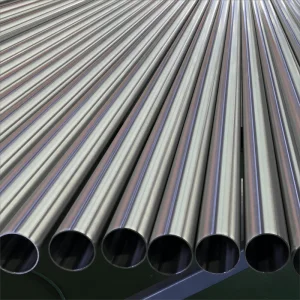


Custom Ferritic & Martensitic Steels 405 Stainless Steel Tubes, UNS S40500, 1.4002 Suppliers
Inspect Specifications
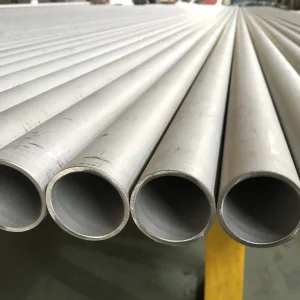
High-Quality Ferritic & Martensitic Steels 410 • UNS S41000• 1.4512 Suppliers, Factories
Inspect Specifications


The Engineering Standard for Custom Sanitary Stainless Steel Tubing
Understanding the metallurgical, mechanical, and surface finishing imperatives that define high-purity, bio-clean fluid transfer infrastructure.
Surface Roughness & Electropolishing
In biopharmaceutical and ultra-pure processing, surface topography directly dictates bacterial adhesion and biofilm formation. We deliver inner surface roughness (Ra) down to < 0.25 µm (10 µin) through state-of-the-art mechanical polishing (MP) followed by automated electropolishing (EP), eliminating micro-crevices and achieving superior chromium-to-iron oxide surface ratios.
Metallurgical Ferrite Control
Strict chemistry control is paramount for orbital weldability. Our 316L sanitary tubing is melted with controlled sulfur content (0.005% to 0.017% per ASME BPE guidelines) and low magnetic permeability, preventing rouging in high-temperature Water-for-Injection (WFI) loops while guaranteeing repeatable automatic field welds.
Full Traceability & EN 10204 3.1/3.2
Every single sanitary tube manufactured at our facility undergoes non-destructive Eddy Current Testing (ECT), hydrostatic testing, and dimensional laser verification. Shipped with comprehensive EN 10204 3.1 or third-party 3.2 mill test certificates documenting heat number, mechanical metrics, and chemical composition.
Hygienic Alloy Grade & Finish Technical Matrix
Comparative technical data for specifying custom sanitary tubing across critical processing sectors.
| Alloy Grade | UNS / EN Standard | Surface Finish Designation | Typical Internal Ra (µm / µin) | Primary Industrial Application |
|---|---|---|---|---|
| Sanitary 316L (Low Carbon) | UNS S31603 / 1.4404 | ASME BPE SF4 (Electropolished) | Ra ≤ 0.375 µm (15 µin) | Biopharma WFI, Purified Water (PW), Fermentation Lines |
| High-Purity 316L UHP | UNS S31603 / 1.4435 | ASME BPE SF5 / SF6 (EP) | Ra ≤ 0.25 µm (10 µin) | Semiconductor Gas Distribution, API Synthesis Systems |
| Hygienic 304L | UNS S30403 / 1.4307 | ASTM A270 Mechanical Polish | Ra ≤ 0.51 µm (20 µin) | Dairy Processing, Brewery CIP/SIP, Food Processing |
| Super Austenitic 904L / 6Mo | UNS N08904 / S31254 | Custom Passivated / Polished | Ra ≤ 0.40 µm (16 µin) | High-Chloride Media, Acidic Beverage Processing |
| Duplex 2205 Hygienic | UNS S32205 / 1.4462 | Bright Annealed + Passivated | Ra ≤ 0.50 µm (20 µin) | Brine & High-Pressure Food Sterilization Skids |
Global Procurement Needs & Supply Chain Resilience
Global pharmaceutical EPC contractors, OEM skid builders, and food processing plant engineers face growing pressures: strict regulatory scrutiny from regulatory authorities, volatile alloy surcharges, and stringent delivery windows. Procuring custom sanitary stainless steel tubing requires a manufacturer capable of guaranteeing tight wall tolerance (T3/D4 per EN 10217-7), uniform orbital weldability, and complete material certification without lead-time bottlenecks.
In response to international demand for risk mitigation, our engineering infrastructure combines raw material batch selection, continuous bright annealing in pure hydrogen atmospheres, and precision cold drawing to ensure zero micro-structural defects across long straight lengths (up to 12 meters) or coiled configurations.
China Industry 4.0 Manufacturing Edge
- Automated Cold Drawing Lines: Servo-driven hydraulic draw benches delivering precise dimensional concentricity and inner bore smoothness.
- Hydrogen Bright Annealing: Inline furnace processing under pure H2 atmosphere prevents oxide scale formation, retaining maximum passive chromium layer.
- Real-Time Laser Profilometry: Continuous outer diameter and wall thickness tracking along the entire length of every tube.
- Integrated Supply Chain: Direct raw material sourcing from tier-1 stainless steel mills guarantees heat-to-heat chemical stability and competitive cost structures.
Localized Application Scenarios
Our custom sanitary stainless steel tubing is deployed in high-consequence processing systems across continents.
Biopharma WFI & Sterile Process Loops
High-purity 316L electropolished tubing ensures zero rouging and minimal endotoxin retention under continuous 80°C hot WFI recirculation, conforming to ASME BPE testing specifications.
Aseptic Dairy & Beverage Processing
Mechanically polished 304L/316L sanitary tubes designed for Clean-In-Place (CIP) and Sterilize-In-Place (SIP) systems, withstanding aggressive caustic wash solutions and steam thermal cycling.
Semiconductor Ultra-Pure Gas Line
Electropolished Ra < 0.18 µm tubing processed in cleanroom environments, preventing outgassing and particle generation in ultra-pure bulk gas delivery systems for microchip manufacturing.
High-Temperature & Corrosion Alloy Tubing Series
Specialized heat-exchanger, super austenitic, and nickel-alloy custom tubing for rigorous thermal and aggressive chemical handling environments.
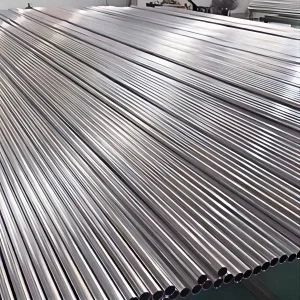

High-Quality Austenitic Steels 321 • UNS S32100 • 1.4541 Manufacturers, Factories
Inspect Specifications
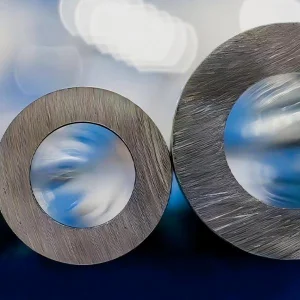


High-Quality Super Austenitic Steels 904L • UNS N08904 • 1.4539 Suppliers, Factory
Inspect Specifications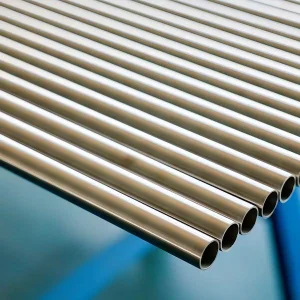

Custom Sanitary Stainless Steel Tubing Questions Answered
In-depth technical clarifications for piping design engineers, procurement specialists, and quality assurance managers.
What is the key difference between ASTM A270 sanitary tubing and standard ASTM A269 structural/instrumentation tubing?
While both specifications govern seamless and welded austenitic stainless steel tubing, ASTM A270 is specifically written for sanitary service in dairy, food, and pharmaceutical industries. ASTM A270 mandates stringent inner diameter (ID) surface smoothness controls (often Ra ≤ 0.8 µm down to Ra ≤ 0.25 µm), specialized chemical cleaning/passivation, strict wall thickness tolerances, and mandatory mechanical or electropolishing. ASTM A269 focuses primarily on general corrosion resistance and structural soundness without guaranteeing inner bore finish limits required for hygienic washdown.
Why is controlled sulfur content critical for 316L sanitary tubes in orbital welding applications?
Per ASME BPE standards, sulfur content for 316L sanitary tubing intended for automatic orbital welding is restricted to a precise range of 0.005% to 0.017%. If sulfur is too low (< 0.003%), the weld pool surface tension causes Marangoni convection currents that result in wide, shallow weld beads and incomplete penetration. If sulfur is too high (> 0.030%), it creates hot-cracking vulnerabilities and reduces corrosion resistance. Controlling sulfur ensures consistent weld penetration, flat bead profiles, and reliable field installation.
How does Electropolishing (EP) enhance corrosion resistance compared to Mechanical Polishing (MP)?
Mechanical polishing physically grinds down surface peaks, which can leave microscopic micro-scratches, cold-worked stress layers, and embedded abrasive particles. Electropolishing is an electrochemical process that selectively dissolves surface iron atoms, smoothing microscopic peaks while enriching the surface layer with chromium (achieving a Cr/Fe ratio > 1.5). This results in a featureless passive chromium-oxide layer that dramatically reduces microbial retention, prevents rouging, and optimizes Clean-in-Place (CIP) performance.
What documentation and certification accompany custom sanitary stainless steel tube shipments?
All shipments are dispatched with full EN 10204 3.1 Mill Test Certificates (MTC) detailing heat numbers, chemical composition (ladle analysis), mechanical strength (yield, tensile, elongation), hardness values, inner/outer surface Ra measurements, eddy current test results, and hydrostatic test records. EN 10204 3.2 certification co-signed by independent third-party inspection agencies (such as TÜV, SGS, or Lloyd's Register) is available upon request.
Request a Custom Sanitary Tubing Quote & Technical Datasheet
Partner with a trusted China Industry 4.0 manufacturer. Our engineering team reviews your drawings, surface roughness requirements, and alloy specifications within 24 hours.
