
Premium Corrosion-Resistant Tubing Products
Explore our certified range of seamless and precision-engineered alloy tubes manufactured under strict ASTM, ASME, and EN technical standards.


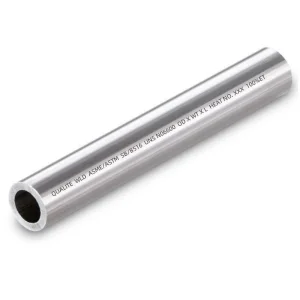





Global Demand Dynamics for Seamless Titanium Tubing
An in-depth metallurgical and economic analysis of how custom titanium seamless tubing is redefining life-cycle resilience in critical processing sectors.
In modern process metallurgy, thermal engineering, and aerospace fluid dynamics, the specification of structural and transport materials is no longer driven solely by initial procurement cost. Instead, asset owners and chief engineering officers prioritize Life-Cycle Cost (LCC) minimization, resistance to catastrophic localized corrosion, and high strength-to-weight efficiency. Within this paradigm, custom titanium seamless tubes stand as the definitive benchmark for hyper-aggressive chemical, marine, and high-pressure fluid environments.
Unlike welded alternatives that inherently introduce a microstructural heat-affected zone (HAZ) prone to preferential attack in severe chloride or acidic services, seamless titanium tubes offer a continuous, isotropic crystallographic structure. This structural homogeneity guarantees uniform mechanical behavior under cyclic fatigue, thermal shocking, and severe internal hydraulic pulses. As global industries accelerate toward decarbonization, seawater desalination expansion, deepwater hydrocarbon extraction, and high-efficiency power generation, the market footprint of custom titanium seamless tubing continues to experience structural growth.
Cold Pilgering & Vacuum Heat Treatment Technology
Precision manufacturing routes engineered to deliver precise dimensional tolerances, defect-free surfaces, and optimized grain boundary structures.
Hot Extrusion & Piercing
Production begins with vacuum-arc remelted (VAR) titanium sponge billets. Billets undergo high-temperature rotary piercing or hot extrusion at temperatures above the alpha-beta transus to create flawless hollows free from center-burst defects.
Multi-Pass Cold Pilgering
Custom outside diameters (OD) and wall thicknesses (WT) are achieved via cold pilgering (rocking mill). This progressive compressive deformation refines grain size, improves wall concentricity, and imparts superior surface finish down to Ra < 0.4 µm.
High-Vacuum Annealing
To eliminate interstitial hydrogen embrittlement and relieve cold-work residual stresses, tubes undergo bright vacuum annealing at pressures below 10⁻⁴ mbar, maintaining an oxygen-free optical surface mirror finish.
Non-Destructive Testing (NDT) & QA Protocols
Every length of custom titanium seamless tube must pass mandatory volumetric non-destructive examination. Quality assurance pipelines integrate concurrent Eddy Current Testing (ECT) per ASTM E426 for surface and sub-surface flaw detection, coupled with high-frequency Ultrasonic Testing (UT) per ASTM E213 to ensure total wall integrity. Hydrostatic proof testing up to 100 MPa or pneumatic pressure testing guarantees zero-leakage compliance under operational hoop stress.
Comprehensive Titanium Grade Selection Guide
Evaluate chemical compositions, mechanical thresholds, and targeted industrial applications across commercially pure (CP) and alloyed titanium grades.
| Titanium Grade | UNS / EN Standard | Yield Strength (MPa) | Tensile Strength (MPa) | Key Corrosion & Physical Features | Primary Industry Target |
|---|---|---|---|---|---|
| Grade 1 (CP Ti) | UNS R50250 / 3.7025 | 170 - 310 | 240 min | Highest formability, maximum ductility, excellent resistance to oxidizing media. | Plate heat exchangers, delicate tube bending, plate-frame coolers. |
| Grade 2 (CP Ti) | UNS R50400 / 3.7035 | 275 - 450 | 345 min | Industrial workhorse; optimum balance of moderate strength and extreme ductility. | Power plant condensers, seawater evaporators, CPI tubing. |
| Grade 5 (Ti-6Al-4V) | UNS R56400 / 3.7165 | 828 min | 895 min | Alpha-Beta alloy; ultra-high structural strength and fatigue endurance limit. | Aerospace hydraulics, offshore subsea pressure housings. |
| Grade 7 (Ti-0.15Pd) | UNS R52400 / 3.7235 | 275 - 450 | 345 min | Palladium micro-alloyed; immune to crevice corrosion in hot reducing acids. | Chemical process plants handling hydrochloric and sulfuric acid vapors. |
| Grade 9 (Ti-3Al-2.5V) | UNS R56320 / 3.7195 | 483 min | 620 min | Medium strength alloy with high cold workability and hydraulic burst limits. | High-pressure aircraft fuel/hydraulic lines, sports engineering. |
| Grade 12 (Ti-Mo-Ni) | UNS R53400 / 3.7105 | 345 min | 483 min | Enhanced crevice corrosion resistance in high-temperature brine environments. | Geothermal steam lines, salt refining heat exchangers. |
* Note: Custom wall thicknesses (from 0.40 mm to 5.00 mm) and non-standard outer diameters (from 4.00 mm to 114.30 mm) can be cold-pilgered upon request under ASTM B338 / ASME SB338 standards.
Industry-Specific Deployment Blueprints
How seamless titanium tubes solve critical failure modes across major global infrastructure and manufacturing projects.
Seawater Desalination & Marine Power
In thermal Multi-Stage Flash (MSF) and Reverse Osmosis (RO) energy recovery units, high velocity seawater induces rapid erosion-corrosion in standard copper-nickel alloys. Grade 2 Seamless Titanium Tubes provide an inert self-healing TiO₂ passive layer that resists biofouling cleansers, sulfide contamination, and velocity impact up to 20 m/s.
Chemical Process Industries (CPI)
Handling wet chlorine gas, nitric acid, terephthalic acid (PTA), and organic chlorides rapidly causes pitting in 316L or duplex stainless steels. Utilizing Grade 7 and Grade 12 custom seamless titanium tubes eliminates tube-sheet crevice failure, allowing continuous chemical synthesis at elevated temperatures without unscheduled shutdowns.
Aerospace & High-Pressure Hydraulics
Weight reduction is directly tied to fuel efficiency in aerospace design. Grade 9 (Ti-3Al-2.5V) seamless tubes allow engineers to reduce wall thickness while maintaining hydraulic impulse pressure resistance up to 5,000 PSI (34.5 MPa), serving as flight control line tubing in modern commercial and defense aircraft.
Global Compliance & Custom Sourcing Ecosystem
Ensuring complete material traceability, rigorous international certification, and rapid regional delivery networks.
Procuring engineered alloy tubing requires rigorous adherence to international standards and material verification. Every batch of custom titanium seamless tubes manufactured by our facilities is dispatched with comprehensive documentation compliant with EN 10204 3.1 Mill Test Certificates detailing actual melt chemistry, room-temperature tensile properties, flattening tests, flaring tests, and 100% NDT inspection logs. Third-party inspection (TPI) by independent agencies such as TÜV, SGS, Lloyd's Register, or DNV is routinely facilitated under EN 10204 3.2 protocol.
Compliance Standards Framework
- ASTM B338 / ASME SB338: Standard specification for seamless and welded titanium and titanium alloy tubes for condensers and heat exchangers.
- ASTM B861 / ASME SB861: Standard specification for titanium and titanium alloy seamless pipe for general corrosion-resisting and elevated-temperature service.
- AMS 4943 / AMS 4944: Aerospace material specifications for Ti-3Al-2.5V seamless hydraulic tubing.
- ISO 9001 & AS9100 Alignment: Complete quality management systems covering heat treatment control, calibration, and mill traceability back to original titanium sponge lots.
Future Trends in Seamless Titanium Tubing Fabrication
Innovative manufacturing paradigms driving ultra-thin walls, additive preforms, and surface functionalization.
Ultra-Thin Wall Cold-Pilgering
Next-generation cold-pilger mills are achieving outer-diameter-to-wall-thickness ratios (OD/WT) exceeding 40:1, enabling ultra-lightweight titanium tubing for high-efficiency aerospace and hydrogen cooling matrices.
Advanced Surface Oxidation & Anodizing
Proprietary thermal oxide coating and electrochemical anodization technologies enhance surface hardness, reduce friction coefficients for mechanical push-pull lines, and eliminate galling tendencies during tube installation.
Hydrogen Transport Safety Engineering
Research into interstitial micro-alloying and barrier surface treatments ensures zero hydrogen absorption and embrittlement, qualifying titanium seamless lines for future high-pressure green hydrogen infrastructure.
Related Corrosion-Resistant Product Range
Complete your engineering project requirements with our specialized nickel alloy, high-temperature austenitic, and custom titanium products.







Frequently Asked Technical & Sourcing Questions
Expert answers addressing metallurgical selection, processing capabilities, quality verification, and customization options for procurement leads.
