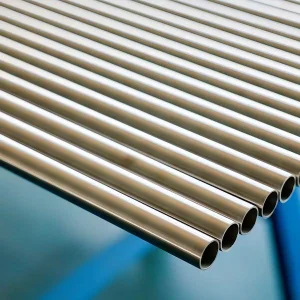
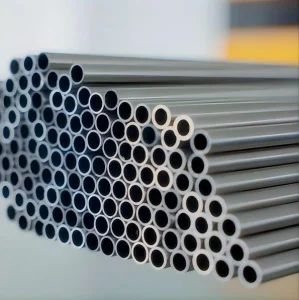
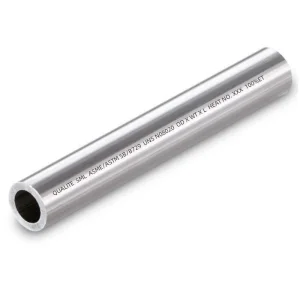
High-Performance Custom Austenitic & Alloy Tubing
Certified corrosion-resistant tubing engineered for heat exchangers, high-pressure process systems, and sanitary pipelines.

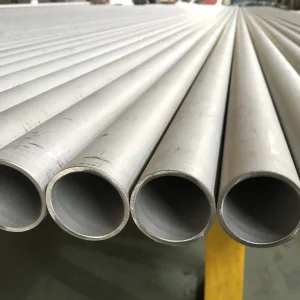
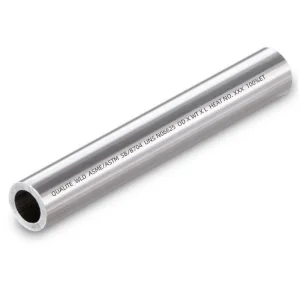
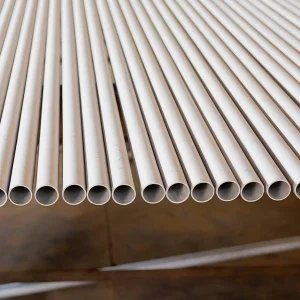




Executive Overview: The Evolution of Custom 304 Stainless Steel Tubing
Navigating global supply chain shifts, decarbonization directives, and advanced cold-working technologies in precision tubular manufacturing.
Global Market Dynamics & Material Demands
The global demand for custom Grade 304 (UNS S30400 / EN 1.4301) and Grade 304L (UNS S30403 / EN 1.4307) stainless steel tubing is experiencing a structural pivot. Driven by the expansion of green chemical processing, pharmaceutical bioproduction, modular LNG terminals, and hydrogen infrastructure, engineering procurement teams are no longer satisfied with off-the-shelf commodity pipe. Modern processing facilities demand strict control over wall concentricity, microstructural homogeneity, inner surface roughness (Ra), and tailored mechanical strength.
Manufacturers are responding by deploying advanced cold-drawing (DOM) and cold-pilgering technologies that achieve dimensional tolerances far tighter than standard ASTM A269 or EN 10216-5 tolerances. Additionally, macro-economic fluctuations in raw nickel and chromium spot prices have compelled tier-1 factories to optimize yield efficiencies through automated laser-guided wall monitoring and scrap-reduction forming lines.
Decarbonization & Clean Energy Integration
The transition toward net-zero manufacturing has placed stainless steel tubing factories under intense scrutiny regarding carbon intensity and lifecycle sustainability. Leading custom tubing factories are integrating electric arc furnaces (EAF) powered by renewable microgrids, utilizing up to 85% recycled scrap metal to produce high-purity 304 mother hollows.
Furthermore, the rapid rise of cryogenic liquid hydrogen transport and ultra-low temperature heat exchanger loops requires custom 304H (UNS S30409) variants optimized for grain boundary stability at -196°C. Factory metallurgy teams must ensure controlled carbon contents (0.04% to 0.10%) alongside complete carbide solution annealing to prevent embrittlement under extreme thermal cycling.
TP304 / TP304L / TP304H Grade Selection & Chemical Physics
Understanding element ratios, crystal lattice structures, and intergranular corrosion mitigation in custom austenitic stainless steel tubing manufacturing.
Type 304 stainless steel is an austenitic 18/8 chromium-nickel alloy that forms the foundation of the corrosion-resistant tubular industry. However, custom manufacturing requires precise tailoring of minor alloying elements—specifically Carbon (C), Nitrogen (N), and Silicon (Si)—to balance weldability, high-temperature creep strength, and resistance to localized pitting.
| Grade Designation | UNS / EN Standard | Carbon (C) % | Chromium (Cr) % | Nickel (Ni) % | Nitrogen (N) % | Yield Strength (MPa) | Tensile Strength (MPa) |
|---|---|---|---|---|---|---|---|
| TP304 Standard | UNS S30400 / 1.4301 | 0.08 max | 18.0 - 20.0 | 8.0 - 10.5 | 0.10 max | ≥ 205 | ≥ 515 |
| TP304L (Low Carbon) | UNS S30403 / 1.4307 | 0.030 max | 18.0 - 20.0 | 8.0 - 12.0 | 0.10 max | ≥ 170 | ≥ 485 |
| TP304H (High Carbon) | UNS S30409 / 1.4948 | 0.04 - 0.10 | 18.0 - 20.0 | 8.0 - 10.5 | - | ≥ 205 | ≥ 515 |
| TP304LN (Enhanced N) | UNS S30453 / 1.4311 | 0.030 max | 18.0 - 20.0 | 8.0 - 10.5 | 0.10 - 0.16 | ≥ 240 | ≥ 550 |
Sensitization & Intergranular Corrosion (IGC)
When Grade 304 is exposed to temperatures between 425°C and 860°C (such as during welding or slow cooling), chromium carbides ($Cr_{23}C_6$) precipitate along grain boundaries. This depletes the adjacent matrix of chromium below the 10.5% threshold necessary for passivation, causing severe intergranular attack in acidic environments.
Custom 304L manufacturers mitigate this by capping carbon below 0.030%, eliminating the thermal window for carbide precipitation during field welding. For critical duty, full solution annealing at 1040°C–1120°C followed by rapid water quenching is mandatory.
Pitting Resistance Equivalent Number (PREN)
While Grade 304 excels in potable water and mild atmospheric service, its Pitting Resistance Equivalent Number (PREN) sits at approximately 19.0 to 20.0, calculated via:
PREN = %Cr + 3.3(%Mo) + 16(%N)
Because standard 304 contains no deliberate Molybdenum addition, factory customizers often offer micro-alloyed 304 variants with controlled Nitrogen additions to boost localized resistance against chloride-induced stress corrosion cracking (SCC) in industrial heat exchangers.
Austenite Phase Stability & Stacking Fault Energy
The nickel content (8.0% to 10.5%) stabilizes the face-centered cubic (FCC) austenite phase down to cryogenic temperatures. Cold drawing alters stacking fault energy, inducing deformation-induced martensite ($\alpha'$) which increases magnetic permeability and work hardens the tube.
Precision factories implement bright annealing in pure hydrogen atmospheres to fully re-transform martensite back into pristine austenite, ensuring zero residual stress and non-magnetic performance for sensitive instrument lines.
Manufacturing Methodologies: Seamless vs. Welded vs. Cold Drawn (W&D)
Choosing the optimal production route for your mechanical pressure rating, wall uniformity requirements, and budget constraints.
| Manufacturing Route | Primary Standards | Wall Thickness Uniformity | Surface Roughness (ID/OD) | Pressure Rating Ratio | Cost Efficiency Index |
|---|---|---|---|---|---|
| Seamless (SMLS) Hot Extrusion + Cold Pilgering |
ASTM A213 / ASME SA213 ASTM A312 / EN 10216-5 |
± 10% to ± 12.5% (Eccentricity variance) |
Ra 0.8 - 1.6 µm (Pickled & Annealed) |
100% (No weld joint efficiency factor) | High Capital Investment (Ideal for High Pressure) |
| Welded (As-Welded) TIG / Laser Automated Roll Form |
ASTM A249 / ASME SA249 ASTM A312 / EN 10217-7 |
± 3% to ± 5% (Superior strip consistency) |
Ra 0.4 - 0.8 µm (Except weld seam bead) |
85% - 100% (Depends on NDT & Longitudinal factor) |
Highly Economical (Large Volume Supply) |
| Welded & Cold Drawn (W&D) Welded + Plug / Mandrel Draw |
ASTM A269 / ASME SA269 ASTM A688 / EN 10357 |
± 5% max (Weld seam completely recasts) |
Ra 0.2 - 0.4 µm (Bright Annealed finish) |
100% (Recrystallized weld zone matching parent metal) | Balanced Premium (Heat Exchanger Benchmark) |
The 6-Stage Precision Manufacturing Process at Custom Factories
Mother Coil Inspection
PMI spectral verification, chemical ladle analysis, and edge shearing for perfect square alignment.
Autogenous Welding
Multi-torch TIG, Plasma, or Fiber Laser welding in inert Argon gas shields with zero filler wire.
Precision Cold Drawing
Drawing over stationary tungsten carbide plugs (DOM) to reduce OD/WT and eliminate internal weld beads.
Bright Annealing
Continuous inline furnace heat treatment at 1080°C under pure dry $H_2$ gas dewpoint -50°C.
NDT & Pressure Test
100% inline Eddy Current flaw detection (ASTM E426) and hydrostatic pressure testing up to 30 MPa.
Final Finishing & MTC
Rotary straightening, mechanical polishing, ultrasonic cleaning, plastic end capping, EN 10204 3.1 certification.
Custom Engineering Options for Global Procurement Officers
Tailoring dimensions, tolerances, U-bend geometries, and protective packaging for international freight reliability.
Dimensional Capabilities & Micro-Tolerances
- Outside Diameter (OD): From capillary sizes 0.50 mm up to 114.30 mm (4.5 inches).
- Wall Thickness (WT): Ultra-thin walls from 0.10 mm up to heavy walls of 6.35 mm.
- Length Capabilities: Straight lengths up to 25 meters (82 feet) or continuous seamless coils up to 2,000 meters for umbilical control lines.
- Ovality & Straightness: Tight straightness tolerances down to 1:1000 mm/m, with ovality held under 50% of total OD tolerance band.
Surface Morphology & Heat Exchanger U-Bending
- Mill Finish (AP): Annealed & Pickled for industrial chemical transport.
- Bright Annealed (BA): Mirror-like internal and external surface finish ($Ra \le 0.4 \mu m$).
- Electropolished (EP): Ultra-high purity (UHP) gas piping with $Ra \le 0.15 \mu m$ for semiconductor cleanrooms.
- Custom U-Bending: Precision bending radius (R = 1.5D to 1500mm) per ASTM A688 / A803, with automated electric resistance stress relieving on the bend zone.
Sector-Specific Solutions for Custom 304 Tubing
Deploying high-integrity tubular products across demanding operational environments globally.
Refinery Heat Exchangers
Custom ASTM A249 TP304/304L welded & drawn tubes are engineered to withstand ambient steam condensate attack, chloride trace ions, and shell-side vibrational fatigue in shell-and-tube heat exchangers and overhead condensers.
Clean-in-Place (CIP) Lines
Compliant with 3-A Sanitary Standards and DIN 11850 / EN 10357 specifications, electropolished custom 304L tubing prevents bacterial adhesion, ensuring sterile fluid flow in dairy processing, brewery boiling systems, and pharmaceutical skid lines.
Feedwater Preheaters
High-carbon 304H tubes deliver elevated thermal creep rupture strength for high-pressure fossil and nuclear power station feedwater heater trains operating at temperatures exceeding 500°C.
EGR Coolers & Fuel Rails
Thin-walled, highly formable custom 304 tubes allow tight radius bending and flanging without micro-cracking, serving as high-performance Exhaust Gas Recirculation (EGR) cooler tubes and high-pressure gasoline direct injection (GDI) fuel rails.
Impulse & Hydraulic Lines
Seamless ASTM A269 TP304 tubing processed via precision cold drawing provides flawless flareability, perfect concentricity, and smooth internal bores required for leak-free compression fitting connections in off-shore control panels.
LNG & Liquid Hydrogen Storage
Austenitic stability of custom low-magnetic 304 tubing ensures zero ductile-to-brittle impact transition down to liquid nitrogen (-196°C) and liquid helium (-269°C) temperatures, powering rocket fuel lines and cryogenic dewars.
Global Compliance, Inspection Frameworks & ESG Integrity
Verifying metallurgical compliance through rigorous third-party testing protocols and transparent carbon auditing.
EN 10204 3.1 & 3.2 Inspection Certificates
Every batch of custom 304 tubing manufactured at certified factories is issued an EN 10204 Type 3.1 Material Test Certificate (MTC) direct from the mill quality manager. The certification details ladle chemical analysis, mechanical tensile and yield results, hardness values (HRB/HV), flattening and flaring test results, grain size determination (ASTM E112), and NDT confirmation.
For critical nuclear, marine, or pressure vessel projects under Pressure Equipment Directive (PED 2014/68/EU) or ASME Section VIII, independent third-party inspectors (TUV, Lloyd’s Register, Bureau Veritas, SGS) perform witnessing and co-sign EN 10204 Type 3.2 MTCs.
Corrosion Testing & Quality Audits
- ASTM A262 Practice E: Copper-Copper Sulfate-16% Sulfuric Acid test for detecting susceptibility to intergranular corrosion in austenitic stainless steels.
- ASTM A262 Practice A: Oxalic acid etch screening for microstructural classification of grain boundary carbide precipitation.
- Hydrostatic Testing: Every tube is tested to design pressure calculated via Barlow's Formula: $P = \frac{2St}{D}$, holding pressure for a minimum of 5 seconds.
- Surface Profilometry: Digital stylus profilometers verify internal surface roughness ($Ra$) prior to final cleanroom double-bagging.
The Future of Custom 304 Tubing Manufacturing
Integrating AI quality control, ultra-clean melting, and additive hybrid tube fabrication technologies.
AI-Driven Laser Wall Concentricity Control
Next-generation factories are embedding real-time multi-axis laser interferometers along the continuous cold-drawing bench. AI algorithms analyze micro-variations in wall thickness at 1,000 Hz, automatically adjusting draw die hydraulic actuators to maintain wall concentricity within ±1.5%—virtually eliminating wall thinning during downstream tube bending.
Vacuum Oxygen Decarburization (VOD) Purity
Advanced secondary refining via VOD and Electroslag Remelting (ESR) reduces non-metallic oxide inclusions and sulfur levels down to < 0.003%. Ultra-clean 304 chemistry drastically enhances pitting corrosion resistance and improves electropolishing response for ultra-clean semiconductor gas transport.
Digital Material Passports & Blockchain Traceability
To combat counterfeit mill test certificates and meet stringent EU ESG supply chain laws, custom tubing manufacturers are embedding laser-engraved QR codes on each tube length. Scanning links directly to a blockchain-verified mill test certificate, detailing exact heat furnace logs, scrap origin, and carbon footprint metrics.
Frequently Asked Questions (FAQ) for Custom 304 Tubing Procurement
Addressing critical metallurgical, specification, and procurement queries from mechanical engineers and buyers.
Specialized Alloy & High-Temperature Tubing Lineup
Explore our complete range of ASME SA312, SA213, SA249, Titanium, and Nickel Alloy tubular solutions.