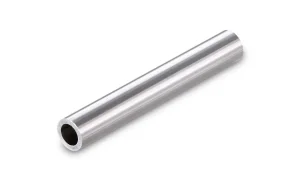
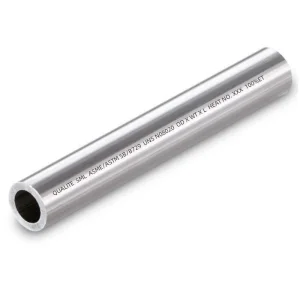
Featured Annealed Precision Alloys (Series I)
Explore our flagship heat-treated austenitic and duplex stainless steel tubing, manufactured to global ASTM, ASME, and EN specifications with full mill certification.








The Metallurgical Foundation of Annealed Stainless Steel Tubing
A Technical Whitepaper on Phase Stability, Grain Refining, and Microstructural Homogenization in Corrosion-Resistant Tubular Products.
Annealing is not merely a post-forming heat treatment process; it is the definitive metallurgical transformation that governs the chemical, mechanical, and thermodynamic performance of stainless steel tubing in severe operating environments. When stainless steel undergoes cold working—such as cold pilgering, cold drawing, or roll forming—the crystalline lattice experiences significant strain hardening. Dislocation density increases dramatically, resulting in elevated yield strength at the expense of ductility, toughness, and localized corrosion resistance.
To restore the metal to its optimal thermodynamic state, high-precision thermal processing must be executed. As tier-1 annealed stainless steel tubing manufacturers, our production facilities utilize rigorous atmosphere-controlled solution annealing and bright annealing techniques tailored specifically to austenitic (304/L, 316/L, 317L, 321, 347H, 310S), duplex (S31803/S32205), super duplex (S32750/2507), nickel alloys, and titanium grades.
Solution Annealing vs. Bright Annealing: Physical Chemistry & Phase Equilibrium
In austenitic stainless steel tubing, exposure to temperatures between $450^\circ\text{C}$ and $850^\circ\text{C}$ causes chromium carbides ($\text{Cr}_{23}\text{C}_6$) to precipitate along grain boundaries. This phenomenon—known as sensitization—depletes the adjacent matrix of chromium below the critical 10.5% threshold required for passivation, rendering the tube extremely susceptible to intergranular corrosion (IGC) and stress corrosion cracking (SCC).
1. Solution Annealing (AP - Annealed & Pickled): The tubing is heated into the single-phase austenite region ($1040^\circ\text{C}$ to $1150^\circ\text{C}$), completely dissolving chromium carbides back into the solid solution lattice. Following adequate soak time, the material is rapidly quenched in water or forced air to "freeze" the solid solution and prevent carbide re-precipitation. Subsequent chemical pickling removes the external chromium-depleted oxide scale, leaving a uniform matte surface finish.
2. Bright Annealing (BA): Performed in an ultra-pure, dry atmosphere of hydrogen ($\text{H}_2$) or dissociated ammonia ($\text{N}_2/\text{H}_2$) with a dew point below $-50^\circ\text{C}$. At these elevated temperatures, hydrogen acts as a powerful reducing agent, preventing oxidation and maintaining an atomic-level smooth, mirror-like surface ($R_a \le 0.2\,\mu\text{m}$). Bright annealed stainless steel tubing eliminates the need for acid pickling, providing superior cleanability and reduced fluid friction—critical for ultra-high purity (UHP) gas distribution lines in semiconductor and bio-pharmaceutical manufacturing.
| Alloy Grade | UNS / EN Designation | Annealing Process | Thermal Spec (°C) | Yield Strength (MPa) | Tensile Strength (MPa) | PREN Value |
|---|---|---|---|---|---|---|
| TP316L | UNS S31603 / 1.4404 | Bright Annealed (BA) / AP | 1040 - 1100 | ≥ 205 | ≥ 515 | ~24.0 |
| TP316Ti | UNS S31635 / 1.4571 | Stabilized Solution Anneal | 1050 - 1120 | ≥ 220 | ≥ 520 | ~24.5 |
| TP310S | UNS S31008 / 1.4845 | High Temp Solution Anneal | 1050 - 1150 | ≥ 205 | ≥ 515 | ~25.0 |
| Duplex 2205 | UNS S32205 / 1.4462 | Water Quenched Solution Anneal | 1020 - 1100 | ≥ 450 | ≥ 655 | ~35.0 |
| Super Duplex 2507 | UNS S32750 / 1.4410 | Rapid Quench Solution Anneal | 1050 - 1120 | ≥ 550 | ≥ 750 | ≥ 42.0 |
| Alloy 825 | UNS N08825 / 2.4858 | Stabilized Annealing | 940 - 980 | ≥ 240 | ≥ 580 | ~31.0 |
Localized Application Engineering Scenarios
Tailored stainless steel and nickel alloy tube solutions configured for specific operational hazards across diverse industrial domains.
Petrochemical & Hydrocarbon Processing
High-temperature hydrotreatment, catalytic cracking, and sour gas handling require tubing capable of resisting hydrogen embrittlement, polythionic acid stress cracking, and wet $\text{H}_2\text{S}$ pitting. Solution annealed TP316Ti (UNS S31635) and TP347H (UNS S34709) feature titanium and niobium carbide stabilization, maintaining microstructural integrity up to $850^\circ\text{C}$.
Semiconductor & Ultra-Clean Gas Distribution
Fabrication of integrated circuits and photolithography equipment demands ultra-high purity (UHP) seamless and welded & drawn bright annealed tubing. Featuring internal surface roughness values of $R_a \le 0.15\,\mu\text{m}$, our electropolished and bright annealed TP316L (ASME SA269/SA632) tubing eliminates particulate outgassing and moisture entrapment.
Subsea Umbilicals & Marine Desalination
Deepwater oil gas injection, hydraulic control umbilical lines, and reverse osmosis seawater desalination require extreme chloride pitting resistance ($\text{PREN} \ge 42$). Water-quenched solution annealed Super Duplex 2507 (UNS S32750) and Titanium Grade 2 (UNS R50400) provide immune performance against crevice corrosion under hydrostatic pressures exceeding 10,000 PSI.
Green Hydrogen Infrastructure & Fuel Cells
Extreme pressure storage systems (up to 70 MPa / 700 bar) and proton exchange membrane (PEM) electrolyzers demand structural material stability under continuous hydrogen exposure. Cold-drawn, bright annealed austenitic TP316/316L and nickel alloy Alloy 825 (UNS N08825) tubing ensure minimal hydrogen permeation and zero embrittlement failures.
China Factory Supply Chain Resilience & Cost-Efficiency Advantages
Vertical Integration, Advanced Metallurgical Engineering, and Agile Global Distribution Networks.
In the contemporary global industrial landscape, procurement executives and EPC engineers face the dual imperative of securing uncompromising material quality while managing capital expenditures (CAPEX) and lead-time risks. As a premier hub for high-grade tube manufacturing, China's specialized stainless steel industrial clusters (centered in Zhejiang and Jiangsu provinces) have evolved into world-class metallurgical centers.
1. Complete Vertical Upstream-to-Downstream Integration
Our manufacturing matrix benefits from direct raw material partnerships with tier-1 primary melt suppliers (such as Tsingshan, TISCO, and Yongxing Special Stainless). By securing pristine continuously cast billets and hot-rolled mother tubes with guaranteed low-sulfur ($S \le 0.005\%$) and controlled inclusion chemistry, we eliminate raw material defects at the source.
2. High-Precision Cold Pilgering & Automated Bright Annealing Infrastructure
Our facilities house multi-stand high-speed cold pilger mills and automated continuous atmosphere-controlled roller hearth bright annealing furnaces. Cold pilgering applies compressive stresses that refine grain structures and optimize wall thickness uniformity ($\pm 5\%$ tolerance control). Combined with automated temperature pyrometers that regulate heat within $\pm 2^\circ\text{C}$, we ensure total batch-to-batch metallurgical consistency.
3. Total Quality Assurance & Total Cost of Ownership (TCO) Dominance
By coupling localized supply chain efficiency with advanced automation, our factory offers international buyers a 25% to 40% TCO advantage compared to European or North American mills, without sacrificing compliance. Every order undergoes 100% non-destructive testing (Hydrostatic + Eddy Current), accompanied by EN 10204 3.1 or 3.2 mill test certificates verified by independent third-party agencies (TÜV, SGS, DNV, Lloyd's Register).
Global Commercial & Industrial Market Analysis
Regulatory Alignment, Regional Standard Harmonization, and Supply Chain Diversification.
Standard Harmonization (ASTM vs. EN/DIN)
Navigating cross-border projects requires strict adherence to international material equivalents. Our production lines are dual-certified to meet both American (ASTM A213, A249, A269, A312, A688, ASME SA213/SA249) and European standards (EN 10216-5, EN 10217-7, EN 10357). This ensures seamless interchangeability for global engineering contractors.
Energy Transition & LNG Expansion
The global shift toward liquified natural gas (LNG) bunkering and cryogenic transport has driven exponential demand for ASTM A269/A213 TP316L bright annealed seamless coil and straight tubing. Capable of maintaining impact ductility at cryogenic temperatures down to $-196^\circ\text{C}$, our annealed tubing prevents brittle fracture under extreme thermal cycling.
Supply Chain De-risking & Stockholding
To mitigate geopolitical and logistics disruptions, we maintain a robust global inventory footprint in Shanghai and regional hubs. With over 5,000 tons of ready-to-draw hollows and standard size bright annealed tubes (OD 6mm to 76.2mm) in stock, we offer rapid 7-to-14 day dispatch for urgent shutdown and maintenance projects.
Compliance, Quality Assurance & Regulatory Safeguards
Comprehensive Destructive and Non-Destructive Inspection Protocols Ensuring Zero-Defect Delivery.
Quality reliability is the cornerstone of high-pressure and corrosive fluid systems. Every length of annealed stainless steel tube manufactured in our facilities undergoes rigorous testing protocols compliant with PED 2014/68/EU (Pressure Equipment Directive), AD 2000-W0, and ISO 9001:2015 quality management systems.
Non-Destructive Testing (NDT)
- 100% Eddy Current Testing (ECT): Executed in accordance with ASTM A1016 / EN 10246-2 to detect longitudinal and transverse surface imperfections.
- Hydrostatic Pressure Testing: Up to 300 bar (4,350 PSI) holding pressure with automated pressure-time decay recording.
- Ultrasonic Testing (UT): For critical wall thickness verification and internal flaw detection per ASTM E213.
Destructive & Metallurgical Testing
- Intergranular Corrosion (IGC): Tested per ASTM A262 Practice E (Monypenny Strauss Test) and Practice A/C to verify zero sensitization.
- Mechanical Flare, Flange & Flattening: Verifying high ductileness for sub-component tube bending and expansion.
- Microstructural Grain Size: Grain size determination per ASTM E112 (typically size 7 or finer).
Technology Roadmap & Future Outlook (2025–2035)
Pioneering Innovations in AI-Driven Pyrometry, Ultra-Clean Surface Engineering, and Green Metallurgy.
AI-Monitored Thermal Annealing
Integrating closed-loop artificial intelligence and optical pyrometry into continuous bright annealing lines. Real-time machine vision monitors grain boundary kinetics during heating, dynamically adjusting induction power to guarantee exact microstructural phase equilibrium.
Next-Gen Hydrogen-Resistant Alloys
Development of ultra-low inclusion austenitic grades with engineered nitrogen additions ($N \ge 0.15\%$). These alloys offer doubled yield strengths while eliminating phase transformations into strain-induced martensite during high-pressure hydrogen service.
Green Hydrogen Bright Annealing
Transitioning furnace shielding gas supplies from conventional fossil-fuel-derived hydrogen to 100% green hydrogen produced via solar electrolysis. This initiative slashes the carbon footprint of bright annealed tube production by over 60%.
Frequently Asked Questions (Technical & Procurement Q&A)
In-Depth Technical Answers for Materials Engineers, Quality Managers, and Sourcing Specialists.
Featured Annealed Precision Alloys (Series II)
Explore our specialized range of titanium, high-temperature nickel alloy, and heavy-wall stainless steel tubing.