
High-Pressure Stainless & Alloy Tubing Solutions
Precision-manufactured seamless, welded, and cold-drawn alloy tubes certified for extreme pressure tolerance, tight dimensional concentricity, and zero-defect thermal service.

Custom Ferritic & Martensitic Steels 405 Stainless Steel Tubes, UNS S40500, 1.4002 Suppliers, Products
View Product Details

High-Quality Ferritic & Martensitic Steels 410 • UNS S41000• 1.4512 Suppliers, Factories
View Product Details
High-Quality Nickel Alloy Tubes 825 • UNS N08825 • 2.4858 Manufacturers, Products
View Product Details
High-Quality Super Duplex Steels 32760 • S32760 • 1.4501 Manufacturers, Suppliers
View Product Details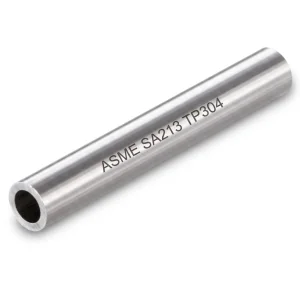
Custom Austenitic steel ASME SA312 · TP304 Stainless Steel Pipe Manufacturers, Supplier
View Product Details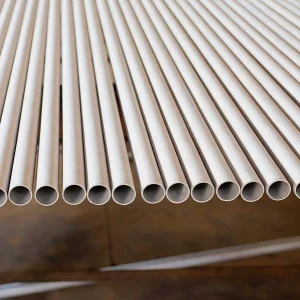
Custom Super austenitic steel ASME SA213 · S31254.SMO254 pipe Manufacturers, Products
View Product DetailsGlobal Industrial Landscape & Extreme Pressure Demand Analysis
The modern industrial infrastructure requires materials capable of withstanding unprecedented mechanical loads, severe fluid turbulence, and ultra-high hydrostatic pressures.
Ultra-Deep Offshore & Subsea
Modern ultra-deepwater oil and gas extraction operates under extreme hydrostatic pressures exceeding 15,000 psi (1,000+ bar) at temperatures above 200°C (HPHT conditions). Tubing used in subsea hydraulic umbilicals and chemical injection lines requires zero longitudinal weld defects and superior pitting resistance to prevent catastrophic burst failure.
Hydrogen & Clean Energy Transition
High-pressure gaseous hydrogen storage and refueling infrastructure demands tubes capable of resisting Hydrogen Embrittlement (HE) at operating pressures ranging from 35 MPa to 100 MPa. Austenitic grades such as TP316L and high-performance Super Duplex alloys provide the required face-centered cubic (FCC) lattice stability under high cyclic pressures.
Supercritical Power Generation
Ultra-Supercritical (USC) steam boilers and feedwater heaters operate under extreme thermal-mechanical stress profiles. Micro-alloyed stabilized heat-resistant steels, such as ASME SA213 TP347H and TP321, ensure long-term creep rupture strength and prevent high-temperature oxidation in critical power generation loops.
Engineering Evaluation: Material Selection for Severe Mechanical Stress
Selecting the optimal tubing alloy under high pressure requires balancing yield strength ($R_{p0.2}$), ultimate tensile strength ($R_m$), and pitting resistance equivalent number (PREN).
| Alloy Grade | UNS / EN Number | Yield Strength (MPa) | Tensile Strength (MPa) | PREN Rating | Primary Extreme Pressure Application |
|---|---|---|---|---|---|
| Super Duplex 32760 | UNS S32760 / 1.4501 | ≥ 550 | 750 – 1000 | ≥ 41.0 | Subsea Umbilicals, Deep Well HPHT Injection, Desalination UHP Lines |
| Nickel Alloy 825 | UNS N08825 / 2.4858 | ≥ 240 | ≥ 586 | ≥ 31.0 | Severe Sour Gas ($H_2S$/$CO_2$) Downhole Tubing & Acid Gas Scrubbers |
| Super Austenitic 254SMO | UNS S31254 / 1.4547 | ≥ 300 | 650 – 850 | ≥ 42.0 | High-Pressure Marine Coolers, Flue Gas Scrubber Heat Exchangers |
| Stabilized TP347H | UNS S34709 / 1.4912 | ≥ 205 | ≥ 515 | ~ 19.0 | Supercritical Boiler Tubes, Petrochemical Creep-Resistant Lines |
| Titanium Grade 3 | UNS R50550 / 3.7055 | ≥ 380 | ≥ 450 | N/A (Oxide Passive) | Aerospace High-Pressure Hydraulic Tubing, Seawater Condensers |
| Austenitic TP316L | UNS S31603 / 1.4404 | ≥ 170 | ≥ 485 | ≥ 23.0 | Hydrogen Fuel Station Tubing, High-Pressure Instrumentation Lines |
Mathematical Verification: Lame's Equation for High-Pressure Thick-Walled Tubing
In extreme pressure engineering design, the maximum allowable internal working pressure ($P$) is calculated according to ASME B31.3 and Lame's formula for thick-walled cylinders:
P = S × [ (D² - d²) / (D² + d²) ]
Where S represents the allowable stress value at design temperature, D is the nominal outside diameter, and d is the inside diameter. SPEZILLA's cold-drawn manufacturing ensures near-perfect concentricity, reducing localized stress concentration points that cause premature pressure fatigue.
Chinese Factory Resilience & Industrial Scale Efficiency
Combining world-class raw material integration in the Yangtze River Delta with advanced manufacturing automation to deliver custom extreme-pressure tubing with unmatched speed and structural reliability.
Upstream Raw Material Synergies
Direct strategic sourcing of ultra-pure master heats from top domestic steelmakers ensures full heat traceability from raw billet/strip to finished tube, drastically minimizing non-metallic inclusions and gas porosity.
Precision Cold-Drawing & Pilgering
Equipped with multi-stage cold-pilgering mills and high-tonnage cold-drawing machines, allowing micro-refinement of the grain structure. This process increases yield strength by up to 35% over conventional hot-finished tubing.
Continuous Bright Annealing
In-line protective hydrogen-nitrogen atmosphere bright annealing furnaces heat-treat tubes at temperatures up to 1150°C without surface oxidation, preserving passivated oxide films crucial for extreme pressure corrosion resistance.
Agile Lead-Times & Cost Optimization
Leveraging specialized industrial clusters in Huzhou and logistics hubs in Shanghai, SPEZILLA offers international clients custom non-standard wall-thickness manufacturing with lead-times up to 40% shorter than European mills.
Next-Generation Engineering & Metallurgical Outlook
Strategic technology developments driving the future of high-pressure fluid power, extreme thermal boundary systems, and sustainable metallurgy.
AI-Driven Quality Assurance & Inspection
Integration of real-time 3D laser ultrasonic scanning and automated AI eddy-current crack detection during the drawing process. Instant machine-learning wall-thickness verification eliminates sub-surface micro-voids prior to heat treatment.
Nanostructured High-Entropy Alloy (HEA) Tubing
Development of multi-principal element alloys designed to deliver yield strengths surpassing 900 MPa without sacrificing cryogenic ductility. These materials target future 120 MPa hydrogen refuelers and deep-space propulsion fluid circuits.
Zero-Carbon Hydrogen Annealing
Transitioning heat-treatment facilities to 100% green hydrogen protective atmosphere furnaces, eliminating scope-1 process emissions while producing bright-annealed tubes with zero carbon residue on internal tube walls.
Localized Application Scenarios for Extreme Pressure Tolerant Tubing
Examining field performance, operational conditions, and alloy performance in real-world extreme environments.
Scenario A: Deepsea Subsea Umbilical Control Tubing
Environment: North Sea Subsea Tieback at 2,200m depth, exposure to seawater and pressurized hydraulic fluid (10,000 psi hydrostatic).
Material Specified: SPEZILLA Super Duplex UNS S32760 / 1.4501 Seamless Bright Annealed Coils.
Engineering Solution: Extended-length continuous orbital welded coils subjected to 100% hydrostatic testing at 1.5× working pressure. High PREN (>41) prevents crevice corrosion under subsea clamps while elevated yield strength reduces line weight by 22%.
Scenario B: High-Pressure Hydrogen Dispensing Lines
Environment: 70 MPa Heavy-Duty Vehicle Hydrogen Fueling Stations in Western Europe.
Material Specified: Precision Cold-Drawn ASME SA213 TP316L (UNS S31603) Seamless Tubing with 2.5% Min Nickel content.
Engineering Solution: Smooth bore surface finish ($Ra \le 0.4 \mu m$) reduces localized strain hardening. Controlled chemical composition prevents hydrogen-induced cracking during rapid high-pressure thermal cycling (-40°C to +85°C).
Scenario C: Supercritical Fossil Fuel Power Generation
Environment: Main Steam Boiler Reheater Tubes operating at 580°C and 28 MPa steam pressure.
Material Specified: Custom Heat-Treated ASME SA213 TP347H (UNS S34709) Austenitic Steel.
Engineering Solution: Niobium stabilization prevents intergranular corrosion in weld heat-affected zones (HAZ). Precision high-temperature creep testing guarantees a 200,000-hour design lifecycle under extreme boiler pressure fluctuations.
Scenario D: High-Pressure Carbamate Reactor Exchanger
Environment: Petrochemical Urea Plant High-Pressure Condenser Loop.
Material Specified: Nickel Alloy 825 (UNS N08825 / 2.4858) Welded & Drawn Tubes.
Engineering Solution: Cold-drawn after welding to achieve seamless-equivalent mechanical properties. The high nickel-molybdenum matrix withstands violent carbamate corrosion under 200 bar operating pressure.
High-Performance Austenitic & Titanium Product Matrix
Precision-engineered tubing variants tailored for extreme pressure hydraulic circuits, heat exchangers, food processing, and marine applications.

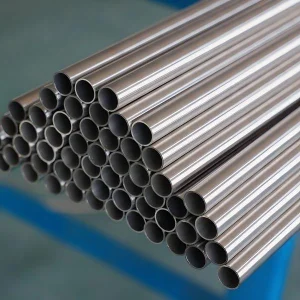



High-Quality Austenitic Steels 304H • UNS S30409 • 1.4948 Manufacturer, Supplier
View Product Details
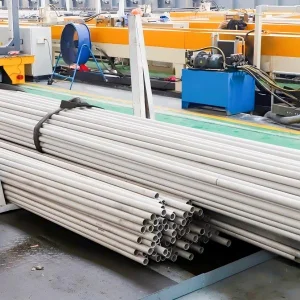

Global Compliance, Quality Control & Localized Technical Support
SPEZILLA ensures absolute mechanical integrity through rigorous non-destructive examination (NDE) and strict alignment with international pressure vessel codes.
Mill Test Certification (EN 10204 3.1 / 3.2)
Every shipment is accompanied by a comprehensive EN 10204 3.1 Mill Test Certificate details heat chemical composition, mechanical yield/tensile values, hardness, flattening/flaring tests, and hydrostatic pressure test logs. Independent 3.2 inspection by TUV, SGS, DNV, or Lloyd's is available upon request.
International Pressure Standards Alignment
Products strictly conform to global technical specifications including ASME SA213, SA312, SA249, ASTM A269, A270, A789, B515, B338, as well as European Pressure Equipment Directive (PED 2014/68/EU) and AD 2000-W0 standards for pressure equipment manufacturing.
Export Packaging & Local Logistics Support
Tubes are packaged in custom ISPM-15 compliant seaworthy wooden cases, plastic end-capped, and wrapped in protective vapor-corrosion-inhibitor (VCI) film. SPEZILLA offers direct DDP/CIF delivery into key ports in Europe, North America, the Middle East, and Asia-Pacific.
Frequently Asked Questions on Extreme Pressure Tolerant Tubing
Expert engineering insights regarding material selection, hydrostatic testing pressure, and manufacturing route optimization.
What is the difference between Welded & Drawn (W&D) and Seamless tubes under extreme pressure?
Seamless tubes (manufactured under ASTM A213) are produced from solid hollow billets without a longitudinal weld line, making them the preferred choice for ultra-high-pressure applications (above 10,000 psi) and critical codes where longitudinal seams are prohibited. Welded & Drawn (W&D) tubes (ASTM A249 / A688) are cold-worked after welding to eliminate the cast weld microstructure, offering superior wall thickness uniformity and concentricity at a lower cost, highly suitable for shell-and-tube heat exchangers.
How does SPEZILLA calculate the maximum working hydrostatic test pressure for custom orders?
Hydrostatic test pressures are calculated according to ASTM A450/A1016 or ASME Section VIII guidelines using the formula: $P = (2 \cdot S \cdot t) / D$, where $S$ is 80% of the minimum yield strength, $t$ is the nominal wall thickness, and $D$ is the outside diameter. SPEZILLA can perform hydrostatic testing up to 30 MPa (4,350 psi) or non-destructive Eddy Current Testing (ECT) per ASTM E426.
Why is UNS S32760 Super Duplex preferred over standard 316L for subsea extreme pressure lines?
Super Duplex S32760 provides approximately double the yield strength (≥ 550 MPa vs. ≥ 170 MPa) of 316L, allowing engineers to design thinner tube walls while maintaining equal or superior pressure containment. Additionally, its PREN value exceeding 41 offers immunity to chloride stress corrosion cracking (SCC) and pitting in subsea seawater environments.
What surface finishes are recommended to maximize high-pressure fatigue resistance?
A Bright Annealed (BA) finish or mechanically polished internal surface ($Ra < 0.4 \mu m$) is strongly recommended. Micro-smooth internal walls eliminate stress raisers and surface micro-notches, significantly extending cyclic fatigue life under pulsating hydraulic pressures.
