
Featured Precision Alloy & Polished Tubing Products
Explore our factory-direct inventory of high-purity polished austenitic, duplex, nickel alloy, and titanium tubing certified to ASTM, ASME, and EN international standards.







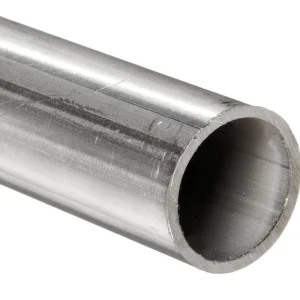
Metallurgical Architecture & Surface Engineering of Polished 316/316L Tubing
In critical industrial fluid transfer systems, surface topography and localized alloy chemistry determine overall corrosion resistance, bio-fouling rates, and fluid purity levels. Polished 316 and 316L (UNS S31600 / S31603, EN 1.4401 / 1.4404) stainless steel tubing represent the benchmark engineering choice for aggressive chemical, marine, and ultra-hygienic media.
Molybdenum-Enhanced Chemistry
Unlike standard 304 austenitic steel, Grade 316 incorporates 2.0% to 3.0% Molybdenum (Mo) alongside 16.0% to 18.0% Chromium (Cr) and 10.0% to 14.0% Nickel (Ni). Molybdenum significantly elevates the steel's Pitting Resistance Equivalent Number (PREN ≥ 25.0), stabilizing the chromium oxide (Cr₂O₃) passive film in the presence of chloride ions, acidic solutions, and harsh halogen salts.
Mechanical Polishing (MP) vs Electropolishing (EP)
We supply two distinct surface conditioning regimes. Mechanical Polishing utilizes multi-stage rotary abrasive belts (Grit 180 up to 600) to achieve internal surface roughness ratings from Ra ≤ 0.8 µm down to Ra ≤ 0.4 µm. Electropolishing (EP) uses an electrochemical anodic dissolve process, yielding a mirror-like smoothness of Ra ≤ 0.15 µm (6 µin) while maximizing the surface Cr/Fe elemental ratio to over 1.5.
Intergranular Corrosion Immunity
By enforcing low-carbon limits in 316L (Carbon ≤ 0.030%), chromium carbide precipitation at grain boundaries during welding or bright annealing is completely eliminated. This prevents sensitization and guarantees long-term immunity against intergranular attack in aggressive thermal and chemical processing loops.
| Specification Parameter | Standard Commercial 316 (MP) | Sanitary Grade 316L (ASTM A270) | High-Purity Electropolished 316L (EP) |
|---|---|---|---|
| Internal Roughness (Ra) | 0.8 µm (32 µin) Max | 0.4 µm (15 µin) to 0.5 µm (20 µin) | ≤ 0.13 µm to 0.25 µm (5 to 10 µin) |
| Surface Finish Grade | 180 / 240 Grit Mechanical | 320 / 400 Grit Mechanical (ASME BPE SF1) | Anodic Electrochemical Polish (ASME BPE SF4) |
| Passive Layer Composition | Standard Passive Air Layer | Chemical Passivation (Citric/Nitric) | Ultra-Enriched Cr₂O₃ / FeO (Cr/Fe Ratio ≥ 1.5) |
| Applicable Standards | ASTM A269, ASTM A312, EN 10217-7 | ASTM A270, DIN 11850, EN 10357 | ASTM A270-S2, ASME BPE, ISO 1127 |
| Primary Target Service | General Chemical / Marine Lines | Biopharm Dairy, Food & Beverage | Semiconductor Gas, Ultra-Pure Water (WFI) |
Global Commercial & Industrial Status of Polished 316 Stainless Tubing
The global market for high-precision polished stainless steel tubing is experiencing accelerating demand, driven by strict contamination controls in pharmaceutical manufacturing, rapid expansion of semiconductor fabrication plants (Fabs), and green energy transitions worldwide.
North American Biopharm & Tech Expansion
Driven by heavy investments in domestic pharmaceutical infrastructure, cell therapy research, and onshore semiconductor wafer manufacturing under the CHIPS Act, North America demands extreme volumes of ASME BPE compliant 316L electropolished tubing. Buyers focus heavily on strict compliance with ASTM A270 S2 and complete Material Test Report (MTR) verification.
European High-Regulated Process Industries
European engineering firms (EPCs) across Germany, Switzerland, Italy, and Scandinavia maintain strict adherence to EN 10217-7, EN 10216-5, and DIN specifications. Demand is heavily concentrated on high-purity chemical heat exchangers, offshore platform hydraulic lines, and hydrogen distribution networks requiring EN 10204 3.1 and 3.2 certified tubing.
Asia-Pacific Manufacturing Powerhouse
As the world's epicenter for electronics manufacturing, energy storage, and industrial chemical synthesis, the Asia-Pacific region consumes over 55% of global 316 polished tubing production. Key growth drivers include LNG transport vessels, seawater desalination installations, and mega-scale food processing facilities.
China Factory Efficiency & Supply Chain Leadership
China's modern specialized tubing manufacturers have evolved from low-cost producers into world-class precision engineering hubs, offering unmatched economies of scale, vertical supply chain integration, and rapid production cycles.
Raw Material Upstream Integration
By securing direct billet and strip partnerships with tier-one primary steel mills (such as Tisco and Tsingshan), Chinese tube mills maintain absolute control over chemical purity, ensuring low inclusion rates, consistent wall tolerances, and traceable heat numbers from raw melt to finished tube.
Advanced Cold Pilgering & Drawing
State-of-the-art multi-roll cold pilgering mills reduce tube dimensions with extreme grain structure refinement. Combined with automated cold drawing lines, factory operations produce seamless and welded-drawn tubes with wall thickness uniformity under ±5% and surface eccentricity near zero.
Hydrogen Bright Annealing Lines
Continuous inline bright annealing furnaces utilize high-purity 100% pure hydrogen shielding gas at temperatures exceeding 1050°C. This eliminates surface oxidation without the need for chemical acid pickling, preserving a micro-smooth, pristine metallic finish directly prior to mechanical polishing.
Rigorous Automated QC & Cleanroom Packaging
100% online Eddy Current flaw detection, hydrostatic pressure validation, laser OD monitoring, and optical surface profilometry ensure zero defect delivery. Tubing is capped, nitrogen-purged, double-bagged in Class 10/100 cleanrooms to preserve surface integrity during ocean transport.
Localized Application Scenarios & Engineering Deployments
Polished 316 and 316L stainless steel tubing serves as the structural and operational backbone for critical environments where fluid contamination, corrosion failure, or system downtime are unacceptable.
1. Biopharmaceutical & High-Purity Water (WFI)
In Water-For-Injection (WFI) loops, purified steam systems, and cell culture bioreactors, micro-roughness leads to bacterial adhesion and biofilm formation. Electropolished 316L tubing (Ra ≤ 0.38 µm / 15 µin) compliant with ASME BPE SF4 prevents bio-burden accumulation, withstands aggressive Clean-In-Place (CIP) and Sterilize-In-Place (SIP) cycles utilizing sodium hydroxide and nitric acid.
2. Semiconductor & Microelectronics Ultra-High Purity (UHP) Gas
Sub-nanometer microchip manufacturing requires ultra-high purity gas distribution piping (Silane, Ammonia, Specialty Dopants). EP 316L tubing guarantees near-zero outgassing, extremely low moisture retention, and zero particulate shedding under vacuum or elevated pressures up to 3000 PSI.
3. Petrochemical Processing & Heat Exchanger Bundles
In marine refining, offshore platforms, and acid synthesis plants, shell-and-tube heat exchangers operate under elevated thermal gradients and chloride exposure. Cold drawn, polished 316/316L U-bend and straight tubes offer high thermal efficiency, tight wall tolerances for tube-sheet expansion, and severe resistance to pitting and crevice corrosion.
4. Food, Dairy, Beverage & Commercial Brewery Piping
Sanitary mechanical polished 316 tubing (Grit 320 / Ra ≤ 0.5 µm) according to ASTM A270 ensures complete compliance with FDA and 3-A Sanitary Standards. It eliminates flavor cross-contamination, provides seamless cleanability, and resists organic acid attack in milk, fruit juice, and beer processing lines.
Industry Trends & Technological Innovations in Precision Tubing
The stainless steel tubing industry is undergoing a paradigm shift driven by digital quality tracking, green electropolishing chemistries, and ultra-precision surface engineering demand.
Next-Generation Zero-VOC Electropolishing
Traditional electropolishing relies heavily on concentrated phosphoric and sulfuric acid baths, posing environmental disposal challenges. Modern facilities are rapidly adopting closed-loop electrolyte recycling and eco-friendly acidic formulations that reduce hazardous waste by over 80% while enhancing passive layer Cr depth.
Industry 4.0 Smart Inline Flaw Detection
Leading tube mills integrate real-time multi-channel laser profilometry and high-frequency ultrasonic testing (UT) directly into the cold-drawing and polishing lines. Digital twins record wall thickness, roundness, and surface defect profiles millisecond by millisecond for total quality traceability.
Ultra-Clean Cleanroom Packaging Standards
Driven by semiconductor sub-2nm chip node requirements, demand for ultra-pure cleanroom packaging has spiked. Tubing must undergo multi-stage ultra-pure water (UPW) ultrasonic washing, hot precision N₂ purging, and dual-vacuum sealing inside ISO Class 5 cleanrooms prior to dispatch.
Global Enterprise Sourcing Criteria & Quality Auditing Guide
Procurement directors and engineering teams evaluating polished 316 tubing suppliers must establish rigorous quality verification matrices. Beyond simple price-per-meter comparisons, robust quality assurance requires verifying five key compliance pillars.
1. International Standard & Specification Alignment
Ensure the manufacturer fully complies with the exact governing standard for your industry: ASTM A270 / A270-S2 (Sanitary & EP Tubing), ASTM A269 (General Corrosion Service), ASTM A213 / ASME SA213 (Seamless Boiler & Heat Exchanger Tubes), or EN 10217-7 / EN 10216-5 (European pressure equipment directive).
2. Mill Test Certificate (MTC) & Traceability
Every shipment must be accompanied by an authentic EN 10204 3.1 MTC (or 3.2 certified by independent third parties such as SGS, TUV, or Lloyd's Register). MTCs must detail ladle chemical analysis, mechanical tension tests, flattening/flaring tests, intergranular corrosion test results (ASTM A262 Practice E), and non-destructive test certificates.
3. Quantitative Surface Profilometry Reports
Do not accept vague descriptions such as "mirror polished." Require calibrated stylus profilometer or optical interferometer test certificates stating exact maximum surface roughness parameters (Ra, Rz, and Rmax) measured across multiple internal locations of the tubing batch.
4. Dimensional & Ovality Tolerance Guarantees
For automated orbital welding on construction sites, wall thickness variation (eccentricity) and outer diameter (OD) tolerances must be exceptionally tight. Verify that the factory guarantees tolerances within ASME BPE Table DT-3-1 or ASTM A1016 strict limits to eliminate weld mismatch or burn-through risks.
Frequently Asked Technical & Procurement Questions
Detailed technical answers to common engineering questions regarding polished 316 stainless steel tubing selection, surface treatment, and manufacturing standards.
Explore Complete Corrosion-Resistant Product Lines
In addition to standard 316/316L tubing, our facility manufactures specialty super-austenitic, nickel alloy, and titanium tubes engineered for extreme operating environments.








