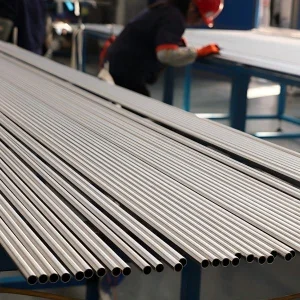
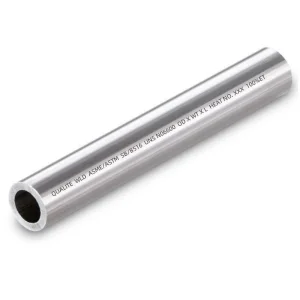
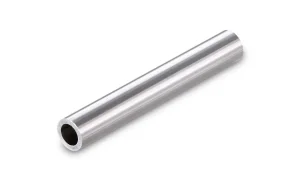
High-Precision Instrument & Process Tubing Solutions
Engineered for leak-free performance, high-pressure containment, and severe corrosive environments.

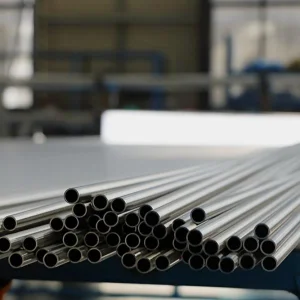

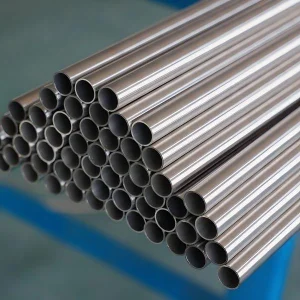



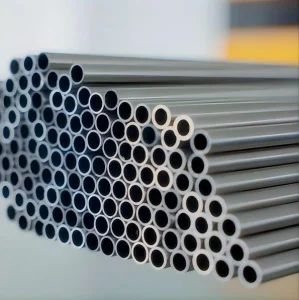
1. Global Landscape of Precision Fabricated Stainless Steel Instrument Tubing
Analyzing modern industrial transition, high-pressure containment safety, and zero-emission fluid control requirements.
In contemporary process engineering, high-precision instrument tubing acts as the nervous system of industrial processing facilities. From subsea hydrocarbon extraction platforms and liquefied natural gas (LNG) regasification terminals to green hydrogen refueling infrastructure and semiconductor fabrication cleanrooms, instrument tubing is charged with conveying toxic, volatile, high-pressure, and ultra-pure fluids without a single point of failure.
As global industrial standards shift toward zero-leakage mandates, reduced fugitive emissions, and extended operating cycles, traditional commercial-grade piping systems are rapidly being superseded by custom precision-fabricated stainless steel, nickel alloy, and titanium instrument tubing. Modern processing environments subject fluid lines to combined mechanical stresses, vibration, thermal cycling, and highly aggressive chemical media (including hydrogen embrittlement risks, sour gas H₂S cracking, and marine chloride pitting).
As a leading precision fabricated stainless steel instrument tubing manufacturer and supplier, our engineering paradigm is built on eliminating micro-structural defects, optimizing surface passivity, and guaranteeing extreme dimensional consistency. This technical whitepaper delves deep into metallurgy, fabrication methodologies, international compliance, and localized application frameworks to guide engineering, procurement, and construction (EPC) professionals worldwide.
Fugitive Emission Control
Tight dimensional tolerances (OD ± 0.05 mm) ensure optimal seal integrity when integrated with double-ferrule compression fittings, eliminating VOC and hazardous gas leakage.
Severe Media Resilience
Extensive selection of Super Austenitic 904L, Nickel Alloys (825, 600), and Super Duplex S32760 grades engineered to resist pitting, crevice corrosion, and stress corrosion cracking (SCC).
Cold Drawn Precision
Bright Annealed (BA) and Cold Drawn & Plug Redrawn (CDBA) routes eliminate surface scale and maintain structural wall uniformity across long continuous coils or straight lengths.
2. Technical Specifications, Alloys & Fabrication Engineering
A comprehensive examination of material selection, mechanical strength, and surface integrity standards.
Selecting the correct precision instrument tube involves analyzing operating temperatures, internal line pressures, external atmospheric exposure, and chemical concentration. The table below outlines the core metallurgical compositions and performance metrics engineered in our facility:
| Alloy Grade | UNS / EN Designation | PREN Value | Yield Strength (MPa) | Primary Industrial Service |
|---|---|---|---|---|
| 316L / 1.4404 | UNS S31603 / EN 10216-5 | ~24.0 | ≥ 220 | General Process Instrumentation, Oil & Gas Control Lines, Hydraulic Systems |
| 321 / 1.4541 | UNS S32100 / ASME SA213 | ~19.5 | ≥ 205 | High-Temperature Steam Systems, Heat Exchangers, Engine Exhaust Sensors |
| 304H / 1.4948 | UNS S30409 / ASME SA213 | ~19.0 | ≥ 205 | Elevated Temperature Creep Resistance, Boiler Instrumentation |
| 904L / 1.4539 | UNS N08904 / ASME SA269 | ~35.0 | ≥ 220 | Sulfuric & Phosphoric Acid Lines, Seawater Scrubbers, Chemical Dosing |
| Incoloy 825 | UNS N08825 / 2.4858 | ~32.0 | ≥ 240 | Downhole Sour Gas (H₂S) Instrumentation, Phosphoric Acid Production |
| Super Duplex 32760 | UNS S32760 / 1.4501 | ≥ 41.0 | ≥ 550 | Subsea Umbilicals, High-Pressure Marine Lines, Desalination Pumps |
| Titanium Grade 2/3 | UNS R50400 / R50550 | N/A (Passive Oxide) | ≥ 275 - 380 | Chlor-Alkali Plants, Marine Surface Condensers, Aerospace Fluid Power |
Pressure Containment Mechanics & Barlow's Calculation
For precision instrument lines operating under severe hydraulic or pneumatic pressure, wall thickness ($t$) and outer diameter ($D$) ratios determine safety boundaries. Maximum allowable working pressure is derived using Barlow's Formula adjusted for design factors ($S$ = Allowable Stress, $E$ = Longitudinal Weld Joint Efficiency, $Y$ = Temperature coefficient):
Our cold-drawing process increases yield strength via controlled work hardening while retaining optimal ductility (elongation ≥ 35%), allowing field technicians to execute tight, wrinkle-free 90° and 180° bends using standard tube benders without ovality degradation.
Surface Passivity and Inner Diameter Integrity
Microscopic surface flaws, draw marks, or iron contamination can act as initiation sites for pitting corrosion. We utilize Bright Annealing (BA) in a pure hydrogen atmosphere and optional Electro-Polishing (EP) to achieve an inner surface roughness of Ra < 0.25 µm (10 µin). This eliminates micro-crevices, reduces fluid shear stress, and prevents particulate entrapment in ultra-pure semiconductor gas distributions.
3. Sector-Specific Solutions & Engineering Deployment
Custom fabricated instrument tubing tailored to the unique mechanical and environmental challenges of global industries.
Hydrogen Economy & Fuel Cell Infrastructure
High-pressure hydrogen refueling stations operating at 700 bar (10,000 psi) require tubing immune to hydrogen embrittlement. Our specialized cold-worked 316L and 316/316L dual-certified tubing featuring high nickel (>12%) and chromium content provides an impenetrable crystal structure, maintaining fatigue strength across thousands of thermal compression cycles.
Offshore Oil & Gas / Subsea Umbilicals
Subsea control lines operate under extreme hydrostatic pressures in aggressive marine environments. Utilizing Super Duplex S32760 and Nickel Alloy 825, our continuous length coiled and straight instrument tubes prevent chloride-induced stress corrosion cracking (SCC) while maintaining zero-leakage interfaces with subsea manifolds.
Semiconductor & Ultra-Pure Gas Lines
In microelectronics fabrication, trace micro-contaminants can ruin multi-billion dollar wafer batches. Our electro-polished (EP) stainless steel tubing undergoes multi-stage ultrasonic cleaning and high-purity hot DI water rinsing, packaged in Class 10 cleanroom environments with nitrogen purge.
Thermal Power & Boiler Superheaters
For high-temperature steam metering and pressure sensor lines in power generation plants, TP304H, TP321H, and TP310H alloys offer creep rupture strength up to 650°C. Heavy-wall precision tubing prevents steam oxidation scaling and micro-structural phase breakdown.
4. Non-Destructive Testing & Regulatory Compliance Framework
Every millimeter of our precision tubing is subjected to rigorous testing to meet strict global engineering codes.
To uphold E-E-A-T (Experience, Expertise, Authoritativeness, and Trustworthiness) standards, our manufacturing processes strictly adhere to international quality management protocols. Traceability is established from the raw melt stage through finished bundle shipment.
100% Eddy Current Testing (ECT)
Automated inline ECT per ASTM A1016 / EN 10246-2 detects surface and sub-surface longitudinal or transverse flaws without damaging the tube geometry.
Hydrostatic & Pneumatic Verification
Hydrostatic testing at pressures up to 500 bar combined with pneumatic underwater leak testing guarantees complete wall sound integrity under severe hoop stress.
EN 10204 3.1 & 3.2 Certification
Full material mill test certificates detailing chemical heat analysis, mechanical yield/tensile testing, intergranular corrosion tests (ASTM A262 Pr. E), and grain size analysis (ASTM E112).
Our quality management systems maintain full compliance with: ISO 9001:2015, PED 2014/68/EU (Pressure Equipment Directive), ASME Boiler & Pressure Vessel Code Section III/VIII, NACE MR0175 / ISO 15156 (Sour Gas Service), and NORSOK M-650 / M-630 for offshore marine applications.
5. Localized Support & Precision Installation Guidelines
Standardized procedures for field bending, fitting alignment, and preventing gal-induced galling.
The operational lifespan of a precision instrument loop depends significantly on handling practices during field deployment. Our technical support team works alongside regional contractors across North America, Europe, Asia-Pacific, and the Middle East to implement strict installation guidelines:
Best Practices for Instrument Tubing Assembly:
- Tube Cutting & Deburring: Always use a dedicated wheel cutter or fine-toothed hacksaw. Complete internal and external deburring with a precision reamer is critical; metal burrs can detach and damage sensitive solenoid valves or score compression fitting seats.
- Bending Radius Integrity: Maintain a minimum bend radius equal to $3 \times \text{Nominal Tube OD}$ to prevent wall thinning or excessive ovality. Never attempt hand bending without a calibrated lever tube bender.
- Fitting Makeup & Anti-Galling: Insert the tube firmly against the shoulder of the double-ferrule fitting body. Tighten the nut $1 \frac{1}{4}$ turns from finger-tight for sizes above $1/4"$ ($6\text{ mm}$). For high-alloy materials like Incoloy 825 or Super Duplex, anti-galling lubricants should be verified for compatibility with system process media.
- Thermal Expansion Loops: Integrate expansion bends in long straight runs subject to thermal fluctuation to avoid mechanical fatigue stress on fixed instrument manifolds.
6. Technology Roadmap & Industry Vision (2025–2035)
Pioneering advancements in smart alloy metallurgy, digital quality twins, and sustainable green manufacturing.
Green Hydrogen & Cryogenic Alloys
Developing ultra-low temperature austenitic and high-entropy alloys capable of conveying liquid hydrogen at -253°C without brittle transition.
AI Surface Profilometry
Implementing real-time machine vision laser interferometry to inspect 100% of internal bore surfaces down to sub-micron resolution during cold drawing.
Low-Carbon Tube Fabrication
Transitioning manufacturing furnaces to 100% renewable electricity and utilizing zero-carbon recycled scrap stainless steel feedstocks.
7. Frequently Asked Questions (FAQ)
In-depth technical answers for procurement teams and systems design engineers.
Specialized Alloy & Titanium Instrument Tubing Catalog
Explore our high-performance titanium, super austenitic, and heat-resistant stainless steel tube offerings.