
Featured Specialty Alloy & Stainless Steel Products
Precision-engineered seamless and welded tubing manufactured under rigorous ASTM, ASME, and EN international quality standards.

Custom Titanium Tubes • Grade 12 • UNS R53400 Manufacturers, Product
View Product Details →
High-Quality Super Duplex Steels 2507 • S32750 • 1.4410 Manufacturer, Factories
View Product Details →
Custom Austenitic steel ASME SA213 · TP304LN Manufacturer, Factory
View Product Details →
Custom Austenitic steel ASME SA213 · TP347H Product, Products
View Product Details →
High-Quality Austenitic Steels 347 • UNS S34700 • 1.4550 Suppliers, Product
View Product Details →
Custom Austenitic steel ASME SA213 · TP317 Manufacturers, Products
View Product Details →
High-Quality Austenitic steel ASME SA213 · TP309S Suppliers, Product
View Product Details →
High-Quality Austenitic Steels 309H • UNS S30909 Product, Products
View Product Details →Metallurgical Whitepaper: Engineering SS 316 Seamless Pipe Integrity
Austenitic Stainless Steel Grade 316 (UNS S31600 / EN 1.4401) and its low-carbon derivative Grade 316L (UNS S31603 / EN 1.4404) represent the premier material standard for industrial fluid delivery, heat exchanger systems, and structural pressure containment operating under aggressive chemical conditions. As a leading SS 316 seamless pipe manufacturer, our engineering framework integrates advanced metallurgy with high-precision pilgering and cold-drawing processes to deliver piping solutions that withstand pitting corrosion, intergranular degradation, and extreme hydrostatic loads.
Chemical Composition Balance
The addition of 2.0% to 3.0% Molybdenum (Mo) combined with 16.0% to 18.0% Chromium (Cr) and 10.0% to 14.0% Nickel (Ni) forms a stable passive chromium-molybdenum oxide film ($Cr_2O_3 / MoO_3$) on the inner and outer surfaces, offering superior resistance against chloride ion pitting and crevice corrosion compared to Grade 304.
Zero Weld-Line Vulnerability
Unlike longitudinal welded pipes, seamless pipes are extruded from solid stainless steel round billets through rotary piercing and cold pilgering. This produces a continuous, isotropic grain structure without heat-affected zones (HAZ), eliminating structural anisotropy, stress concentration, and weld-line decay.
Intergranular Corrosion Prevention
By controlling carbon content to ultra-low levels (C ≤ 0.030% in 316L) or adding Titanium stabilization (316Ti / UNS S31635), carbide precipitation at grain boundaries during thermal exposure (425°C to 866°C) is effectively eliminated, assuring compliance with ASTM A262 Practice E.
SS 316 / 316L / 316Ti Chemical & Mechanical Specifications Comparison
| Material Grade | UNS / EN Standard | Cr (%) | Ni (%) | Mo (%) | Tensile Strength (MPa) | Yield Strength (MPa) | Max Temp (°C) |
|---|---|---|---|---|---|---|---|
| SS 316 | UNS S31600 / 1.4401 | 16.0 - 18.0 | 10.0 - 14.0 | 2.00 - 3.00 | ≥ 515 | ≥ 205 | 870 °C |
| SS 316L | UNS S31603 / 1.4404 | 16.0 - 18.0 | 10.0 - 14.0 | 2.00 - 3.00 | ≥ 485 | ≥ 170 | 800 °C |
| SS 316Ti | UNS S31635 / 1.4571 | 16.5 - 18.5 | 10.5 - 13.5 | 2.00 - 2.50 | ≥ 500 | ≥ 200 | 900 °C |
| SS 316H | UNS S31609 / 1.4919 | 16.0 - 18.0 | 10.0 - 14.0 | 2.00 - 3.00 | ≥ 515 | ≥ 205 | 1000 °C |
Global Commercial & Industrial Landscape of SS 316 Seamless Piping
The international demand for high-grade austenitic seamless piping continues to expand, driven by heavy industrial modernizations, offshore oil & gas exploration, green hydrogen transition, and high-purity chemical processing across North America, Europe, the Middle East, and Asia-Pacific regions.
Market Valuation & Drivers
The global stainless steel seamless pipe market exceeds $5.8 Billion USD, with Grade 316/316L accounting for over 38% of total volume consumption. The primary growth drivers include stringent environmental safety regulations requiring zero-leakage fluid transfer and rising capital expenditure in LNG liquefaction plants.
Regional Demand Distribution
Middle East & North America: High demand for heavy-wall ASTM A312 TP316L seamless pipes for sour gas processing and offshore drilling. Europe & East Asia: Accelerated adoption of high-precision bright annealed (BA) and electropolished (EP) SS 316L tubing for pharmaceuticals, semiconductor fabrication, and clean energy systems.
Pitting Resistance Metric (PREN)
Pitting Resistance Equivalent Number (PREN) is the critical engineering metric evaluating stainless alloys in chloride environments:
While SS 304 yields a PREN of ~19, SS 316 seamless pipe achieves a PREN of 23.0 - 25.0, providing immunity to micro-pitting in brackish water and industrial effluent.
China Factory Efficiency & Supply Chain Leadership
As a premier China-based SS 316 seamless pipe manufacturer, our integrated production ecosystem delivers unmatched manufacturing speed, cost efficiency, and rigorous dimensional adherence compared to Western traditional mills.
Vertical Integration & Raw Material Access
Our direct partnership with major primary stainless steel smelters (such as Tsingshan, Yongxing, and TISCO) ensures guaranteed access to high-purity master billets with low residual S and P content, shielding global customers from raw material supply bottlenecks and raw nickel price volatility.
Advanced Cold Pilgering & Drawing Technology
Equipped with multi-roll cold pilger mills and automated hydraulic cold draw benches, we achieve extreme wall concentricity (outer diameter ratio OD/WT up to 100:1) and internal surface roughness down to $Ra < 0.4 \mu m$ without micro-cracking.
High-Speed Continuous Bright Annealing
Our inline hydrogen atmosphere bright annealing furnaces heat tubes to 1050°C - 1150°C followed by rapid gas quenching, restoring maximum ductility and corrosion resistance without scale formation, eliminating acid pickling waste.
Localized & Industry-Specific Application Scenarios
SS 316 seamless pipes serve as critical infrastructure components across diverse engineering sectors where fluid purity, high pressure, and environmental endurance are paramount.
Oil & Gas, Offshore Marine
Used extensively in subsea hydraulic control lines, umbilical tubing, offshore platform topside processing piping, and heat exchangers exposed to marine spray and high concentrations of dissolved hydrogen sulfide ($H_2S$).
Chemical & Petrochemical Processing
Transports hot acetic acid, organic solvents, dilute sulfuric acid mixtures, and chloride compounds in reactor vessels, condensers, and reboilers without risking catastrophic pinhole leakage.
Pharmaceutical & Ultra-Clean Biotech
Clean-in-Place (CIP) and Sterilize-in-Place (SIP) water-for-injection (WFI) loop systems require electropolished SS 316L seamless pipes to prevent bacterial biofilm adhesion and maintain micro-smooth cleanliness.
Industry Development Trends & Next-Generation Manufacturing
The seamless stainless steel pipe industry is undergoing rapid technological transformations driven by global decarbonization mandates, Industry 4.0 digitizations, and requirements for ultra-high purity gas containment.
- Green Steel & Carbon Footprint Reduction: Adoption of Electric Arc Furnaces (EAF) powered by renewable energy and high scrap metal recycling rates (up to 85%), reducing embodied carbon ($CO_2$) per ton of finished SS 316 pipe.
- Ultra-High Vacuum (UHV) & Hydrogen Transport Compatibility: Development of specialized internal surface passivations to prevent hydrogen embrittlement in high-pressure hydrogen refueling infrastructure operating at up to 700 bar.
- AI-Powered Automated Ultrasonic & Eddy Current NDT: Real-time digital defect detection systems scanning 100% of the pipe body for sub-surface flaws, ensuring compliance with strict nuclear and aerospace code specifications.
- Smart Traceability & Digital Material Passports: QR-code laser marking directly on every pipe joint providing complete heat number traceability, chemical mill test reports, and dimensional inspection logs stored on secure cloud databases.
Global Enterprise Procurement Needs & Quality Verification Framework
International engineering procurement contracts (EPC) require absolute compliance with international material standards, non-destructive testing protocols, and third-party inspection certifications.
1. Mill Test Certificates (MTC)
All shipments are delivered with original Mill Test Certificates compliant with EN 10204 3.1 or EN 10204 3.2 issued by accredited independent inspection agencies (SGS, TÜV, DNV, Bureau Veritas, Lloyd's Register).
2. Non-Destructive Testing (NDT)
100% Hydrostatic testing per ASTM A530/A999, combined with Eddy Current Examination (ASTM E426) and Ultrasonic Testing (ASTM E213), guarantees complete pressure envelope integrity.
3. Dimensional & Surface Control
Strict dimensional tolerances adhering to ASTM A312 / ASME SA312 and EN ISO 1127. Outer Diameter (OD) tolerance within ±0.75%, Wall Thickness (WT) tolerance within ±10%, and straightness better than 1.0mm/m.
Comprehensive Stainless Steel & Nickel Alloy Catalog
Explore our full portfolio of high-temperature austenitic steels, nickel alloys, and custom welded and drawn tubing.

Custom Austenitic Steels 304 • UNS S30400 • 1.4301 Manufacturer, Factories
View Product Details →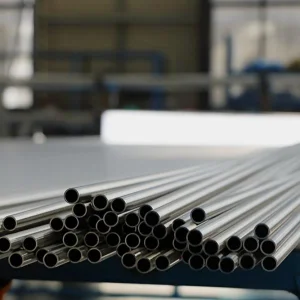
High-Quality Austenitic steel ASME SA213 · TP321 Manufacturer, Supplier
View Product Details →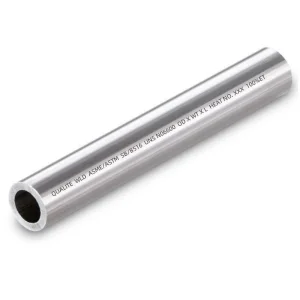
High-Quality Nickel Alloy Tubes 600 • UNS N06600 • 2.4816 Manufacturer, Manufacturers
View Product Details →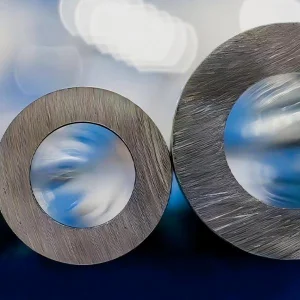
Custom Austenitic steel ASME SA213 · TP316H Manufacturers, Products
View Product Details →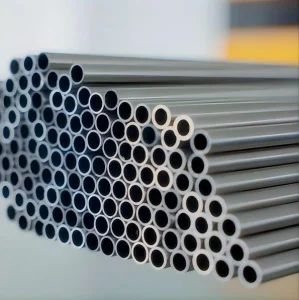
High-Quality ASME SA249 TP304 Welded Stainless Steel Tubes Manufacturer, Suppliers
View Product Details →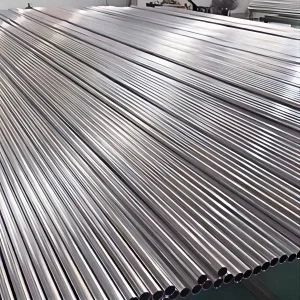
Custom Austenitic steel ASME SA213 · TP310S Manufacturer, Products
View Product Details →
Custom Austenitic Steels 316Ti • UNS S31635 • 1.4571 Manufacturer, Products
View Product Details →
Custom Austenitic Steels 310H • UNS S31009 Manufacturers, Products
View Product Details →Technical Frequently Asked Questions (FAQ)
Detailed engineering answers regarding material selection, testing standards, manufacturing tolerances, and procurement guidelines.
