
Featured Austenitic, Duplex & Alloy Products
Engineered for severe process environments, ultra-high temperatures, and corrosive chemical media.

High-Quality Austenitic steel ASME SA269 · TP321 Supplier, Products
View Product Specifications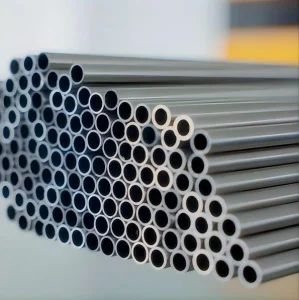
High-Quality ASME SA249 TP304 Welded Stainless Steel Tubes Manufacturer, Suppliers
View Product Specifications
Custom Austenitic Steels 310S • UNS S31008 • 1.4845 Supplier, Suppliers
View Product Specifications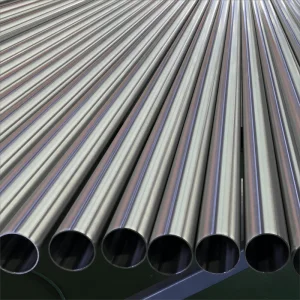
High-Quality Austenitic Steels 316 • UNS S31600 • 1.4401 Factory, Product
View Product Specifications
High-Quality Nickel Alloy Tubes 276 • UNS N10276 • 2.4819 Suppliers, Products
View Product Specifications
High-Quality Austenitic Steels 347 • UNS S34700 • 1.4550 Suppliers, Product
View Product Specifications
High-Quality Super Duplex Steels 32760 • S32760 • 1.4501 Manufacturers, Suppliers
View Product Specifications
Custom Nickel Alloy Tubes 800 • UNS N08800 • 1.4876 Manufacturer, Products
View Product SpecificationsThe Global Landscape of Seamless SS Tubing Engineering
Analyzing supply chain transitions, critical failure avoidance, and the shift toward high-PREN alloys in energy and chemical infrastructures.
In contemporary industrial engineering, the demand for seamless stainless steel pipes (SS Pipe Seamless) has evolved far beyond standard fluid transport. Critical sectors—including deep-water oil and gas extraction, nuclear power generation, petrochemical refining, green hydrogen electrolysis, and semiconductor chemical delivery systems—require tubular geometries capable of enduring extreme mechanical stress, thermal cycling, and aggressive chemical degradation.
Unlike longitudinal or spiral welded pipes, seamless stainless steel pipes are manufactured without a seam or weld joint, eliminating the localized heat-affected zone (HAZ) microstructural inhomogeneity that frequently serves as the initiation point for stress corrosion cracking (SCC), intergranular attack (IGA), and pressure boundary failure under burst strain.
Supply Chain Resilience
Global EPC contractors are standardizing on fully certified mill sourcing with EN 10204 3.1/3.2 dual verification. Sourcing seamless pipes from dedicated manufacturers eliminates project risk, ensuring rigorous dimensional tolerances and material heat traceability.
Severe Corrosion Thresholds
Rising operating temperatures in coastal desalination and sour gas wells demand alloys with high Pitting Resistance Equivalent Numbers (PREN). From 316L (PREN ~25) to Super Duplex 2507 (PREN ≥42) and Hastelloy C276 (PREN ≥68), precision alloy matching minimizes downtime.
Energy Transition Needs
Decarbonization drives high demand for specialized seamless pipes. Green hydrogen transport requires ultra-smooth inner diameter (ID) surfaces to avoid embrittlement, while Small Modular Reactors (SMRs) mandate titanium-stabilized grades like TP321 and TP347.
Seamless Manufacturing Engineering & Microstructural Phase Science
A deep dive into cold pilgering, hot extrusion, solution annealing, and grain boundary preservation.
The Seamless Production Route
Seamless stainless steel pipe manufacturing starts with solid round billets subjected to rotary piercing or hot extrusion at temperatures exceeding 1200°C. To achieve ultra-precise outer diameters (OD) and wall thicknesses (WT), cold reduction techniques—specifically cold pilgering and multi-pass cold drawing over a floating mandrel—are utilized.
Cold pilgering uses stationary mandrels and ring dies to apply compressive stress, refining the grain structure, eliminating micro-voids, and achieving precise wall uniformity (tolerance within ±7.5% of WT).
Heat Treatment & Passivation
Cold working induces strain hardening and martensitic transformation in austenitic matrixes. To restore full corrosion resistance, seamless pipes undergo solution annealing at 1040°C to 1150°C, followed by rapid water quenching or hydrogen atmosphere cooling.
This process dissolves chromium carbides back into the austenitic solid solution, preventing intergranular corrosion. For critical applications, Bright Annealing (BA) in a pure hydrogen environment prevents oxidation, delivering a mirror-like finish with surface roughness Ra < 0.4 µm.
Information Gain: PREN & Critical Pitting Temperature (CPT) Dynamics
The pitting resistance of seamless pipes is quantified by the Pitting Resistance Equivalent Number (PREN) formula:
PREN = %Cr + 3.3(%Mo + 0.5%W) + 16%N.
While standard 304L yields a PREN of ~19 and 316L achieves ~24, advanced Super Duplex UNS S32750 exceeds 42. In marine and sour gas applications, selecting a pipe with an inadequate PREN leads to localized passive film breakdown, forming micro-pits that rapidly propagate into wall perforations under pressure.
Comprehensive Seamless SS & Alloy Grade Matrix
Comparing UNS/EN designations, mechanical properties, PREN index, and international design standards.
| Material Grade | UNS / EN Standard | PREN Rating | Yield Strength (MPa) | Tensile Strength (MPa) | Key International Standards | Primary Industrial Service |
|---|---|---|---|---|---|---|
| TP304 / 304L | S30400 / 1.4301 | ~19.0 | ≥ 205 | ≥ 515 | ASTM A213, A269, A312, EN 10216-5 | General fluid handling, food & beverage, structural tubing |
| TP316 / 316L | S31603 / 1.4404 | ~24.5 | ≥ 220 | ≥ 520 | ASTM A213, A269, A312, EN 10216-5 | Chemical processing, heat exchangers, marine instrumentation |
| TP321 / 321H | S32100 / 1.4541 | ~20.0 | ≥ 205 | ≥ 515 | ASME SA213, SA269, EN 10216-5 | High-temp superheaters, refinery manifolds (Ti-stabilized) |
| TP347 / 347H | S34700 / 1.4550 | ~21.0 | ≥ 205 | ≥ 515 | ASTM A213, A312, ASME SA312 | High-pressure steam systems, power generation (Nb-stabilized) |
| Duplex 2205 | S32205 / 1.4462 | ≥ 35.0 | ≥ 450 | ≥ 655 | ASTM A789, A790, EN 10216-5 | Oil & gas separators, chloride SCC environments |
| Super Duplex 2507 | S32750 / 1.4410 | ≥ 42.0 | ≥ 550 | ≥ 750 | ASTM A789, A790, ASME SA789 | Subsea flowlines, offshore platforms, seawater cooling |
| Nickel Alloy C276 | N10276 / 2.4819 | ≥ 68.0 | ≥ 355 | ≥ 750 | ASTM B167, B622, ASME SB622 | FGD systems, sour gas wells, aggressive acid digestion |
| Incoloy 800H | N08810 / 1.4958 | ~22.0 | ≥ 170 | ≥ 450 | ASTM B407, B163, ASME SB407 | Ethylene cracking furnaces, high-temp gas cooling |
Localized Industrial Application Scenarios
How leading engineering firms deploy seamless stainless steel and nickel alloy pipes across demanding operating environments.
Offshore Subsea Umbilicals & Flowlines
Environment: High chloride hydrostatic pressure (up to 300 bar) combined with internal $\text{H}_2\text{S}$ sour gas exposure.
Material Selected: Super Duplex UNS S32750 / S32760 Seamless Tubing.
Performance Benefit: The balanced 50/50 austenitic-ferritic microstructure delivers yield strength double that of conventional austenitic steels. High PREN (>42) eliminates pitting corrosion under subsea bio-fouling layers.
Nuclear Power Feedwater Heaters
Environment: Extreme thermal cycling, high pressure steam, and potential intergranular stress corrosion risk in carbon-sensitive zones.
Material Selected: ASME SA213 TP321 / TP347 Bright Annealed U-Bent Tubes.
Performance Benefit: Titanium and Niobium stabilization ties up carbon as TiC/NbC precipitates, preventing chromium depletion at grain boundaries during high-temperature service up to 800°C.
Semiconductor Gas Handling Lines
Environment: Ultra-high purity (UHP) silane, ammonia, and corrosive dopant gas transport requiring zero outgassing.
Material Selected: ASTM A269 TP316L Electro-Polished (EP) Seamless Tubing.
Performance Benefit: Electrolytic surface finishing achieves an internal surface roughness Ra ≤ 0.13 μm (5 μin), eliminating microscopic crevices where moisture or particulates can lodge.
Zero-Defect Quality Verification & Certification Framework
How advanced Non-Destructive Testing (NDT) guarantees pressure boundary integrity across global supply chains.
Hydrostatic & Pneumatic Burst Testing
100% hydrostatic testing at pressures up to 500 bar per ASTM A1016 / A999 ensures structural integrity. Pneumatic underwater bubble testing is performed for high-purity gas lines to verify zero pinhole leakage.
Eddy Current & Ultrasonic NDT
Automated Eddy Current Testing (ECT) per ASTM E426 detects surface flaws, while Ultrasonic Testing (UT) per ASTM E213 scans the full wall thickness to identify internal voids, inclusions, or wall thinning.
Intergranular Corrosion & Microstructure
Every heat batch is subjected to IGC testing per ASTM A262 Practice E (Copper-Copper Sulfate-16% Sulfuric Acid Test) and metallurgical grain size evaluation per ASTM E112 to ensure proper solution annealing.
Full EN 10204 3.1 & 3.2 Mill Test Certification
All shipments are accompanied by mill test certificates (MTC) documenting chemical analysis (PMI), mechanical tensile/yield data, hardness testing, hydrostatic test results, and non-destructive eddy current / ultrasonic verification. Independent third-party inspection (TUV, SGS, DNV, Lloyd's Register) is supported under EN 10204 3.2.
Next-Generation Seamless Tubing Horizons (2025–2035)
Exploring advanced metallurgy, intelligent manufacturing, and sustainable tubing technologies.
AI-Assisted Ultrasonic Defect Recognition
Integrating deep-learning vision models with phased-array ultrasonic testing (PAUT) during cold pilgering enables real-time identification of micro-laminations, eliminating sub-surface flaws before final annealing.
Hydrogen Permeation Barrier Surfaces
Development of internal nano-oxide coatings and vacuum bright annealing processes that reduce hydrogen permeability in high-pressure 700 bar refueling station lines, preventing embrittlement in 316L alloys.
Additive-Seamless Hybrid Fittings
Combining seamlessly drawn straight tubes with additive-manufactured complex manifold junctions using identical heat-matched alloy powders, enabling compact heat exchanger designs with lower pressure drop.
Macro-Engineering Solutions & Value-Added Processing
From custom U-bending to ultra-long continuous coils, tailored for seamless integration into OEM equipment.
Bespoke U-Bent Heat Exchanger Bundles
Precision cold U-bending of seamless tubes (radius from 1.5 × OD up to 1500 mm) per TEMA R/B/C and ASTM A556/A688 standards. Bends are post-bend stress relieved via localized resistance annealing to prevent stress corrosion cracking during service.
Continuous Bright Annealed Long Coils
Seamless coiled tubing supplied in continuous lengths up to 2,500 meters without orbital welds. Ideal for subsea hydraulic control lines, chemical injection umbilicals, and downhole monitoring systems.
Specialty Seamless & Alloy Pipe Lineup
Browse our extended product portfolio including Super Duplex, Titanium, and Ferritic steel tubing.
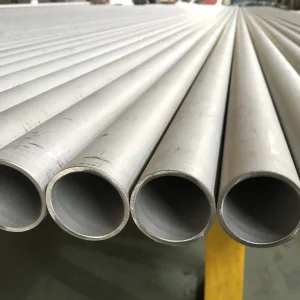
Custom Austenitic steel ASME SA312 · TP316L Manufacturer, Manufacturers
View Product Specifications
High-Quality Super Duplex Steels 2507 • S32750 • 1.4410 Manufacturer, Factories
View Product Specifications
Custom Austenitic Steels 316Ti • UNS S31635 • 1.4571 Manufacturer, Products
View Product Specifications
High-Quality Austenitic steel ASME SA269 · TP304L Suppliers, Product
View Product Specifications
Custom Austenitic steel ASME SA213 · TP304LN Manufacturer, Factory
View Product Specifications
Custom Nickel Alloy Tubes 800H • UNS N08810 • 1.4958 Factory, Products
View Product Specifications
High-Quality Ferritic & Martensitic Steels 410 • UNS S41000• 1.4512 Suppliers, Factories
View Product Specifications
High-Quality Titanium Tubes • Grade 3•UNS R50550 Factories, Product
View Product SpecificationsFrequently Asked Questions on Seamless SS Tubing Specification
Direct answers to metallurgical, pressure rating, and compliance questions faced by procurement engineers.
What is the key metallurgical difference between seamless (ASTM A213/A312) and welded (ASTM A249/A312) stainless steel pipes?
Seamless pipes are produced by rotary piercing or hot extrusion without any longitudinal weld seam. This eliminates the Heat-Affected Zone (HAZ), which can exhibit alloy element segregation, chromium depletion, and directional grain coarsening. Seamless pipes offer higher internal working pressure capacity, superior fatigue resistance under cyclic pressure pulses, and complete microstructural isotropy around the entire circumference. Welded and drawn pipes, while cost-effective for lower pressure applications, rely on post-weld cold work and annealing to approximate seamless properties.
How does maximum allowable working pressure (MAWP) differ between TP304L, TP316L, and Super Duplex S32750 seamless pipes?
According to ASME B31.3 process piping design codes, MAWP is directly proportional to the material's allowable stress value ($S$) at design temperature. Super Duplex S32750 exhibits a minimum yield strength of 550 MPa—more than double that of 316L (220 MPa) and 304L (205 MPa). As a result, an engineer can specify a significantly thinner wall thickness for S32750 to achieve the same burst pressure rating, reducing total skid weight while increasing flow capacity.
Why is titanium (TP321) or niobium (TP347) stabilization necessary for high-temperature seamless pipes?
When standard austenitic grades (such as TP304 or TP316) are exposed to service temperatures between 450°C and 850°C, chromium carbides ($M_{23}C_6$) precipitate at the grain boundaries. This depletes the adjacent matrix of chromium below the 10.5% threshold required for passivity—a phenomenon known as sensitization. Titanium in TP321 (minimum 5 × %C) and Niobium in TP347 (minimum 10 × %C) have a higher thermodynamic affinity for carbon than chromium. They form stable TiC or NbC carbides, preserving chromium within the matrix and eliminating intergranular corrosion (IGC).
What non-destructive testing (NDT) steps are required for ASTM A213 heat exchanger tubes?
ASTM A213 mandates that every tube undergo either 100% Hydrostatic Pressure Testing or automated Eddy Current Testing (ECT) per ASTM E426. For critical nuclear, aerospace, or deep-water applications, buyers frequently specify supplemental Ultrasonic Testing (UT) per ASTM E213 to scan for internal radial wall discontinuities and longitudinal defects down to 5% or 10% notch depth ratios.
What documentation accompanies an EN 10204 3.2 certified seamless pipe shipment?
An EN 10204 3.2 certificate requires independent dual verification. It includes chemical melt composition verified via Positive Material Identification (PMI), heat treatment chart recordings, mechanical tensile and hardness test reports, flattened and flaring test results, NDT inspection logs, and dimensional tolerance checks signed off by both the manufacturer's QA inspector and an independent third-party inspection agency (e.g., TUV, DNV, SGS, or Lloyd's Register).
