

Custom Austenitic Steels 310S • UNS S31008 • 1.4845 Supplier, Suppliers

Custom Austenitic Steels 316L • UNS S31603 • 1.4404 Manufacturer, Factories
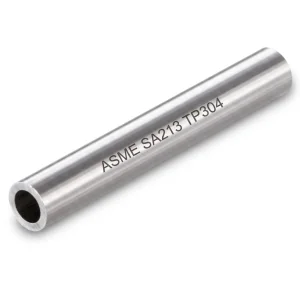
Custom Austenitic steel ASME SA312 · TP304 Stainless Steel Pipe Manufacturers, Supplier

Custom Austenitic Steels 304 • UNS S30400 • 1.4301 Manufacturer, Factories
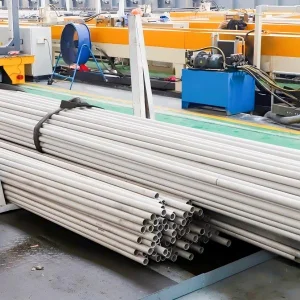
Custom Austenitic steel ASME SA213 · TP317L Supplier, Suppliers

Custom Nickel Alloy Tubes 400 • UNS N04400 • 2.4360 Manufacturer, Products

High-Quality Austenitic Steels 347 • UNS S34700 • 1.4550 Suppliers, Product

Custom Austenitic Steels 309S • UNS S30908 • 1.4833 Factories, Products
1. Executive Overview & Technical Fundamentals of Stainless Steel 304 (UNS S30400 / EN 1.4301) Tubing
In the domain of modern industrial infrastructure, Austenitic Stainless Steel Grade 304 (designated as UNS S30400 under ASTM standards and 1.4301 under European EN 10088 specifications) remains the global benchmark material for liquid, gas, and structural containment systems. Composed fundamentally of an 18% Chromium and 8% Nickel face-centered cubic (FCC) crystal lattice, Grade 304 tubing combines superior cryogenic toughness, high ductility, exceptional formability, and reliable oxidation resistance up to 870°C (1600°F).
Standard Specification Cross-Reference Framework
Global procurement directives require rigorous verification across international standard equivalencies to ensure mechanical, dimensional, and chemical compliance:
| Standard Specification | Manufacturing Route | Primary Application Scope | Key Tolerance / Quality Standard |
|---|---|---|---|
| ASTM A213 / ASME SA213 TP304 | Seamless Cold Drawn / Cold Rolled | Boiler, Superheater, and Heat-Exchanger Tubes | ASTM A1016 / ASME SA1016 (Wall Thickness & OD) |
| ASTM A249 / ASME SA249 TP304 | Welded & Cold Worked (W&D) | Welded Boiler, Superheater, Heat Exchanger Tubes | 100% NDT Eddy Current + Bead Reduction |
| ASTM A269 / A269M | Seamless & Welded | General Service & High-Purity Instrumentation | Pneumatic Air Under Water / Hydrostatic Test |
| ASTM A312 / ASME SA312 TP304/304L | Seamless, Welded, Heavy Cold Worked | High-Temperature & General Corrosive Piping | ASME B36.19M Schedules (10S, 40S, 80S) |
| EN 10217-7 / EN 10216-5 | Welded (10217) / Seamless (10216) | European Pressure Equipment Directive (PED 2014/68/EU) | EN ISO 1127 Tolerances & Surface Classes |
2. Global Enterprise Procurement Demand & Total Cost of Ownership (TCO) Analysis
Corporate procurement officers and global supply managers evaluating SS304 tubing suppliers must balance unit purchase price against long-term lifecycle performance, compliance risk, and geopolitical tariff structures. Global procurement of SS304 tubes currently exceeds 4.2 million metric tons annually, driven by expansion in renewable energy, biopharmaceutical capital expenditure, automotive decarbonization, and modular chemical plant skid fabrication.
LME Commodity Hedging
SS304 tube price structure is heavily tied to London Metal Exchange (LME) primary Nickel cash contracts and High-Carbon Ferrochrome indices. Strategic mills utilize alloy surcharge indexing to allow global buyers to lock in base metal costs up to 12 months in advance for long-term project execution.
Manufacturing Process TCO: Seamless vs. Welded & Drawn
Choosing between ASTM A213 Seamless and ASTM A249 Welded & Drawn (W&D) tubing alters capital efficiency. W&D tubes deliver superior wall concentricity (±5% vs ±10% in seamless) and surface smoothness at a 20–30% lower acquisition cost, perfect for heat exchangers operating under 150 bar.
Unplanned Downtime Risk Mitigation
A single premature tube leak in a continuous chemical reactor can cost over $250,000 per day in lost output. Securing SS304 tubing manufactured with 100% online Eddy Current Testing and full EN 10204 3.1 heat traceability reduces zero-hour failure risks to near-zero levels.
3. Macro Industrial Solutions & Application-Specific Engineering Frameworks
High-quality SS304 tubing serves as the backbone across diverse harsh process environments. Engineers must specify correct heat treatments, surface roughness levels, and mechanical tolerance classes depending on the macro-industrial sector:
Thermal Power & Shell-and-Tube Heat Exchangers
Standards: ASTM A249 / ASTM A213 / ASME SA688
Engineering Challenge: Thermal stress cracking and tube-to-tubesheet joint fatigue during fast thermal cycling.
Solution: Bright Annealed (BA) SS304 U-bend heat exchanger tubes with extended straight lengths up to 25 meters. Stress-relief heat treatment applied specifically to U-bend tangents suppresses residual tension and prevents stress corrosion cracking (SCC) in feedwater heater trains.
Sanitary Food, Beverage & Bioprocess Lines
Standards: ASTM A270 / DIN 11850 / EN 10357
Engineering Challenge: Bacterial adherence and biofilm formation in internal surface micro-voids.
Solution: Mechanical polishing combined with internal electropolishing (EP) achieving an ultra-smooth internal surface roughness of Ra ≤ 0.38 µm (15 µin). Eliminates micro-cavities and optimizes Clean-In-Place (CIP) / Sterilize-In-Place (SIP) cycle efficiency.
High-Pressure Hydraulic & Instrumentation Lines
Standards: ASTM A269 / EN 10305-1
Engineering Challenge: High impulse vibration, fluid pulsation, and high-pressure fitting flare failures.
Solution: Seamless cold-drawn bright annealed SS304 tubing with controlled hardness max 80 HRB and strict OD/WT tolerances. Guarantees 37-degree flare integrity and zero-leakage compression fitting connections up to 600 bar working pressure.
Cryogenic Storage & Liquid Hydrogen / LNG Handling
Standards: ASME B31.3 / ASTM A312
Engineering Challenge: Ductile-to-brittle transition risk at sub-zero temperatures down to -196°C (-320°F).
Solution: Austenitic SS304 retains its non-magnetic FCC crystal matrix down to liquid nitrogen (-196°C) and liquid helium (-269°C) temperatures, delivering Charpy V-Notch impact absorption values exceeding 100 J, far outperforming carbon or ferritic steels.
4. Technical Roadmap, Emerging Metallurgical Advances & Future Outlook
The global stainless steel tube manufacturing landscape is undergoing significant technological shifts driven by decarbonization, digital quality assurance, and clean energy integration.
Ultra-Clean Melt & AOD / VIM Refinement
Modern SS304 tube production employs Electric Arc Furnace (EAF) melting coupled with Argon Oxygen Decarburization (AOD) and Vacuum Induction Melting (VIM). This secondary metallurgy purges non-metallic inclusions (sulfides, oxides), yielding an ultra-clean steel matrix that significantly elevates fatigue limit life under cyclical hydraulic loads.
Green Steel & Zero-Carbon Tubing
Leading European and Asian mills are integrating Direct Reduced Iron (DRI) powered by green hydrogen along with 100% renewable powered EAF furnaces. By 2030, carbon footprints for premium SS304 tube manufacturing will drop below 0.5 kg $CO_2$ per kg of steel, aligning with global Scope 3 emissions reporting mandates.
Orbital Welding Optimization
Advanced SS304 tubes now feature tightly controlled trace chemistry (specifically Sulfur content held within a narrow window of 0.005% to 0.015%). This precise sulfur window optimizes Marangoni convection currents inside the molten weld pool, assuring 100% full-penetration welds during automated orbital TIG welding.
5. Localization Support, Quality Testing Protocols & Compliance Safeguards
To guarantee seamless regulatory integration for international projects, verified suppliers execute rigorous Non-Destructive Testing (NDT) and destructive chemical/mechanical evaluations prior to dispatch:
1. Positive Material Identification (PMI)
X-ray Fluorescence (XRF) and Optical Emission Spectrometry (OES) verification performed on 100% of finished tube lengths to verify exact %Cr, %Ni, and %Mo composition before packing.
2. Hydrostatic & Eddy Current Testing
Online Eddy Current Inspection performed per ASTM E426 or EN 10246-2 detects longitudinal and transverse micro-defects. Hydrostatic testing up to 300 bar validates burst margin safety.
3. Corrosion Testing (ASTM A262)
Batch testing under ASTM A262 Practice E (Copper-Copper Sulfate-16% Sulfuric Acid Test) verifies immunity against intergranular sensitization and intergranular stress corrosion.
4. Mill Certification Transparency
Every lot is delivered with complete EN 10204 3.1 inspection certificates including heat number, raw melt source, mechanical test data, hardness, grain size (ASTM E112), and surface roughness test results. Third-party inspection (EN 10204 3.2) by TÜV, Lloyd's Register, or SGS is available upon project request.
6. Frequently Asked Questions (FAQ) — Engineering & Procurement

High-Quality Super Austenitic Steels 904L • UNS N08904 • 1.4539 Suppliers, Factory

High-Quality Austenitic steel ASME SA213 · TP310H Supplier, Suppliers
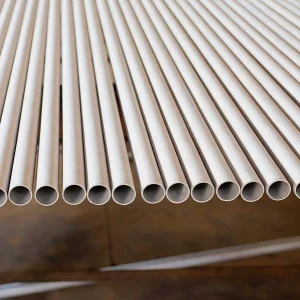
Custom Super austenitic steel ASME SA213 · S31254.SMO254 pipe Manufacturers, Products

Custom Nickel Alloy Tubes 825 • UNS N08825 • 2.4858 Suppliers, Product

High-Quality Super Austenitic Steels 254SMO • UNS S31254 • 1.4547 Factory, Factories

High-Quality Super Duplex Steels 32760 • S32760 • 1.4501 Manufacturers, Suppliers

Custom Ferritic & Martensitic Steels 405 Stainless Steel Tubes, UNS S40500, 1.4002 Suppliers, Products

