







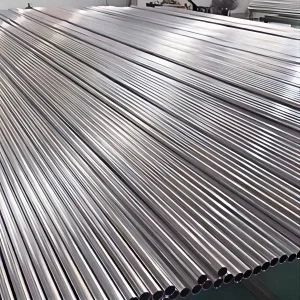
The Global Titanium Tubing Market: Strategic Supply Chains & Industrial Imperatives
In the contemporary industrial ecosystem, material selection directly determines plant operational lifespan, thermodynamic efficiency, and lifecycle capital expenditure (CAPEX). As global industries transition toward extreme operational envelopes—characterized by deeper subsea oil extraction, higher temperature chemical synthesis, and aggressive seawater desalination—the demand for advanced metallurgical solutions has surged. Among non-ferrous engineering alloys, titanium tubing represents the gold standard for corrosive service reliability.
Historically governed by aerospace requirements, the commercialization of commercially pure (CP) titanium grades and specialized alpha-beta titanium alloys has revolutionized energy generation, marine engineering, and chemical processing. According to global metallurgical market forecasts, the industrial demand for ASTM B338 and ASTM B861 titanium tubes is expanding at an unprecedented CAGR. This acceleration is driven primarily by the rapid expansion of offshore wind installations, coastal nuclear power thermal condensers, subsea hydrocarbon umbilical lines, and green hydrogen proton exchange membrane (PEM) electrolyzer arrays.
From a macroscopic supply chain perspective, specifying titanium tubes over traditional copper-nickel (Cu-Ni), austenitic 316L, or duplex 2205 stainless steels eliminates catastrophic corrosion failures caused by microbiologically influenced corrosion (MIC), sulfide stress cracking, and high-velocity erosion-corrosion. As a premier Titanium Tube Manufacturer, Spezilla Tube Co., Ltd. bridges the gap between raw titanium sponge reduction, vacuum arc remelting (VAR), precision cold pilgering, and rigorous quality certification, delivering engineered tubing that complies strictly with international ASME, ASTM, and EN standards.
Engineering Grade Breakdown: Titanium & Special Alloy Matrices
Understanding the microstructural phase transformations (alpha phase, near-alpha, and alpha-beta matrix) is vital for process engineers specifying tubing for critical applications. Titanium’s exceptional corrosion resistance stems from its immediate formation of a tenacious, self-healing passive TiO₂ oxide film when exposed to oxygen or water traces.
Titanium Grade 1 (UNS R50250)
Unalloyed Commercially Pure (CP). Grade 1 exhibits the highest formability, maximum cold drawability, and optimal impact toughness among CP grades. It is primarily specified for deep-drawn plate heat exchanger plates, fine diameter tubing, and complex tubular bends operating under moderate pressure.
- Minimum Yield Strength: 170 MPa
- Tensile Strength: 240 MPa
- Elongation: ≥ 24%
Titanium Grade 2 (UNS R50400)
The Industrial Workhorse. Grade 2 balances excellent strength with cold ductileness. It is universally specified for shell-and-tube heat exchangers, surface condensers, power generation cooling circuits, and chemical reaction vessels. Grade 2 is completely resistant to ambient seawater pitting.
- Minimum Yield Strength: 275 MPa
- Tensile Strength: 345 MPa
- Elongation: ≥ 20%
Titanium Grade 7 (UNS R52400)
Palladium-Enhanced (+0.12 to 0.25% Pd). Grade 7 is metallurgically identical to Grade 2 but contains a palladium micro-alloying addition. This drastically improves corrosion resistance in reducing acids (hydrochloric, sulfuric, phosphoric) and tight crevice environments at high temperatures.
- Minimum Yield Strength: 275 MPa
- Palladium Content: 0.12–0.25%
- Pitting Immunity: Severe Acidic Media
| Material / Standard | UNS / EN Number | Density (g/cm³) | Yield Strength (MPa) | Thermal Cond. (W/m·K) | Corrosion Resistance (Chloride & Acids) |
|---|---|---|---|---|---|
| Titanium Grade 2 | UNS R50400 / 3.7035 | 4.51 | 275 – 450 | 21.9 | Immune to seawater pitting & crevice attack < 260°C |
| Titanium Grade 7 | UNS R52400 / 3.7235 | 4.51 | 275 – 450 | 21.9 | Superior in reducing acid environments (HCl, H₂SO₄) |
| Titanium Grade 9 | UNS R56320 / 3.7195 | 4.48 | 483 – 620 | 17.0 | High-strength aerospace hydraulic & marine tubing |
| Titanium Grade 12 | UNS R53400 / 3.7105 | 4.51 | 345 – 520 | 19.0 | Resists high-temperature crevice corrosion (Mo/Ni added) |
| Stainless 316L | UNS S31603 / 1.4404 | 8.00 | 220 – 300 | 16.3 | Susceptible to pitting in hot seawater (PREN ~24) |
| Duplex 2205 | UNS S32205 / 1.4462 | 7.80 | 450 – 550 | 19.0 | Good chloride SCC resistance (PREN ~35) |
Advanced Production Routes: Seamless & Inert Gas Shielded Welded Tubes
Producing ultra-reliable titanium tubing requires rigorous thermal and mechanical control to avoid oxygen, nitrogen, and hydrogen interstitial contamination. Spezilla operates automated precision extrusion, cold pilgering, and TIG welding lines backed by high-vacuum heat treatment furnaces.
1. Seamless Titanium Tube Manufacturing (ASTM B861)
Seamless titanium tubes are fabricated starting from high-purity forged titanium billets. The billets undergo hot rotary piercing or hydraulic extrusion to yield heavy-wall hollows. Subsequently, the hollows are subjected to multiple cold pilgering and cold drawing passes over precision mandrels.
Between cold reduction steps, the tubes undergo vacuum bright annealing at temperatures exceeding 700°C under ultra-low vacuum pressures (< 10⁻⁴ Torr). This prevents oxidation, removes residual stress, and recrystallizes the alpha phase microstructure, ensuring isotropic mechanical strength and smooth inner wall surface finish (Ra < 0.4 µm).
2. Welded & Cold Drawn Titanium Tubing (ASTM B338)
Welded titanium tubing begins with cold-rolled titanium strip coils featuring precise thickness tolerances. The strip is continuously formed into a tubular shape through precision multi-stage roll forming stands.
Welding is performed using automated Gas Tungsten Arc Welding (GTAW / TIG) or High-Power Fiber Laser Welding under a 100% trailing shield of high-purity argon gas (99.999%). This inert gas shield protects the weld pool and heat-affected zone (HAZ) from atmospheric contamination. Post-weld, tubes are cold drawn (W&D) to refine the weld grain structure, eliminating the cast weld seam and ensuring 100% joint efficiency identical to seamless tubing.
Rigorous Non-Destructive Testing (NDT) & Inspection Protocols
Every single titanium tube manufactured by Spezilla undergoes non-destructive and destructive evaluation to confirm zero internal flaws, uniform wall thickness, and pressure boundary integrity prior to release.
Eddy Current Inspection (ASTM E426)
100% online high-frequency electromagnetic eddy current testing detects pinholes, longitudinal seams, wall thinning, and surface discontinuities across the entire tube circumference.
Hydrostatic & Pneumatic Testing
Tubes are hydrostatically proof tested at pressures up to 30 MPa (4,350 PSI) or air-under-water bubble tested to guarantee complete pressure boundary containment under code specifications.
Ultrasonic Wall Measurement (UT)
Precision multi-channel ultrasonic compression wave testing verifies wall concentricity, outer diameter (OD) tolerance, and inner diameter (ID) geometric precision.
Global Applications: Where Spezilla Titanium Tubing Executes
Titanium tubes are the foundational building block for equipment operating under hostile chemical environments, thermal stresses, and stringent safety protocols.
Seawater Desalination Plants (MED / MSF / RO)
In Multi-Stage Flash (MSF) and Multi-Effect Distillation (MED) desalination facilities, titanium Grade 2 tubing is used in heat rejection section condensers and brine heaters. It resists high-velocity seawater erosion, sulfide pollution, and ambient ammonia attack, ensuring 30+ year maintenance-free operation.
Power Generation Surface Condensers
Nuclear and fossil-fuel power stations located in coastal regions rely on thin-wall welded titanium tubes (ASTM B338 Grade 2) for steam turbine condensers. Titanium's immunity to cooling-water pitting prevents raw water leakage into clean boiler feedwater circuits, avoiding turbine trips.
Chemical & Petrochemical Processing
In Purified Terephthalic Acid (PTA), Chlor-Alkali synthesis, and organic intermediate plants, heat exchangers exposed to wet chlorine gas, nitric acid, organic acids, and chromic mixtures require titanium Grade 2 or Grade 7 tubing to prevent rapid acid attack.
Aerospace & Defense Hydraulic Lines
High-strength Titanium Grade 9 (Ti-3Al-2.5V) tubing is specified for aircraft hydraulic fluid conduits and environmental control systems (ECS). Offering a 45% weight saving over stainless steel with superior fatigue resistance at operating pressures exceeding 3,000 PSI.
Green Hydrogen Electrolyzer Modules
Next-generation Proton Exchange Membrane (PEM) water electrolyzers utilize titanium thin-wall tubing for high-purity water distribution and anode gas heat exchangers, standing up to oxygen-saturated electrochemical corrosive conditions without ion contamination.
Subsea Oil & Gas Umbilicals
Deepwater offshore developments deploy continuous coiled titanium tubing for chemical injection lines, hydraulic control conduits, and subsea risers subject to sour H₂S gas, high chloride brine, and extreme hydrostatic forces.
Global Standards Compliance & Material Test Certification
Procurement teams and engineering firms operating globally require full compliance with international standards, strict dimensional tolerances, and full material heat traceability.
International Specification Matrix
- ASTM B338: Standard Specification for Seamless and Welded Titanium and Titanium Alloy Tubes for Condensers and Heat Exchangers.
- ASTM B861: Standard Specification for Seamless Titanium and Titanium Alloy Pipe and Tube.
- ASME SB338 / SB861: Boiler and Pressure Vessel Code (BPVC) Section II Part B approved specifications.
- EN 10216-5 / DIN 17866: European standard for seamless titanium tubes for pressure purposes.
- NACE MR0175 / ISO 15156: Compliance for petroleum and natural gas industries in sour (H₂S-bearing) environments.
EN 10204 3.1 & 3.2 Certification
Every shipment of Spezilla titanium tubing is accompanied by an original EN 10204 3.1 Inspection Certificate containing comprehensive test results:
- Chemical Ladle and Product Analysis (C, Fe, N, O, H, Ti balance).
- Tensile, Yield, and Elongation mechanical test data at room & elevated temperatures.
- Flattening, Flaring, and Reverse Flattening mechanical deformation tests.
- 100% NDT (Eddy Current & Hydrostatic) test reports with calibration logs.
- Third-party inspection (TUV, DNV, Lloyd's Register, SGS) for EN 10204 3.2 certification available upon request.
Technological Roadmap: The Next Era of Titanium Metallurgy
Spezilla continues to invest in advanced metallurgical R&D to push the boundaries of tube performance in extreme environments.
Ultra-Fine Grain Nanostructured Alloys
By applying severe plastic deformation (SPD) during cold pilgering, our engineers are developing ultra-fine grain titanium tubes that exhibit up to 40% higher yield strength without compromising corrosion resistance or ductility.
Bimetallic Titanium Clad Tubing
To optimize thermal efficiency and capital cost, we are advancing explosive and cold-roll cladding techniques to produce titanium-lined carbon steel and titanium-duplex bimetallic tubes for ultra-high-pressure reactors.
Zero-Carbon Vacuum Refining
Partnering with clean energy grids, our manufacturing units are transitioning to 100% renewable-powered electron beam melting (EBM) and vacuum arc remelting, reducing the embedded carbon footprint of our titanium tubes.
Technical Insights & Specification Guidance
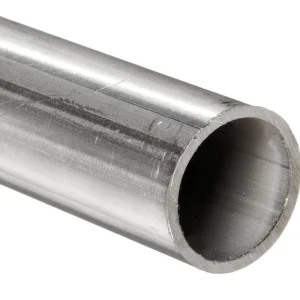







Partner with a Leading Titanium Tube Manufacturer
Whether you require custom dimensions, specialized U-bend tubing, or full EN 10204 3.2 certified titanium tubes for critical heat exchangers, Spezilla’s engineering team is ready to assist your procurement.
