
High-Performance Industrial Tubing Solutions
Precision-engineered titanium, austenitic, and nickel alloy tubing certified to ASTM, ASME, and EN standards.







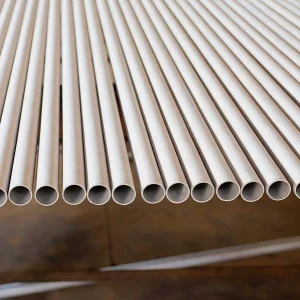
Global Market Landscape of Titanium & Precision Tubing
Examining market drivers, supply dynamics, raw material economics, and global growth trajectories across critical process sectors.
Market Size & Macro Drivers
The global titanium tubing market is experiencing unprecedented demand expansion, driven primarily by the rapid growth of industrial desalination facilities, chemical plant modernization, and marine power engineering. Projected to grow at a CAGR exceeding 6.4% through 2030, high-performance titanium tubing remains indispensable in environments where localized pitting, crevice corrosion, and stress corrosion cracking (SCC) compromise lesser alloys.
Raw Material & Sponge Economics
The supply chain integrity of titanium seamless and welded tubes relies heavily on primary titanium sponge production via the Kroll process. Variations in rutile ore processing, chlorination efficiency, and vacuum arc remelting (VAR) capacity dictate input billet costs. Tier-1 manufacturers mitigate market volatility by establishing direct integrations with certified sponge producers, ensuring consistent chemical purity and controlled interstitial gas levels (oxygen, nitrogen, hydrogen).
Decarbonization & Energy Transition
Global net-zero mandates are accelerating the deployment of titanium tubes in low-carbon infrastructures. From hydrogen production electrolyzers to advanced geothermal power stations and carbon capture, utilization, and storage (CCUS) scrubbers, titanium’s exceptional strength-to-weight ratio and immunity to oxidizing acids position it as a foundational structural metal for next-generation clean technology systems.
Titanium Tube Material Grades & Standards Compliance
A detailed technical breakdown of Commercially Pure (CP) and Alpha-Beta Titanium alloys for precision heat exchangers, condensers, and chemical process piping.
| Grade Designation | UNS / EN Number | Yield Strength (Min, MPa) | Tensile Strength (Min, MPa) | Primary Corrosion & Process Characteristics |
|---|---|---|---|---|
| Grade 1 Titanium | UNS R50250 / 3.7025 | 170 | 240 | Highest formability and ductility, superior resistance in mild oxidizing environments and deep-draw tubing. |
| Grade 2 Titanium | UNS R50400 / 3.7035 | 275 | 345 | The industrial standard workhorse. Optimal balance of strength, weldability, and exceptional seawater resistance. |
| Grade 3 Titanium | UNS R50550 / 3.7055 | 380 | 450 | Higher mechanical strength for pressure vessel tubes and high-load shell-and-tube heat exchanger bundles. |
| Grade 7 Titanium | UNS R52400 / 3.7235 | 275 | 345 | CP Titanium alloyed with 0.12–0.25% Palladium (Pd), providing maximum immunity to reducing acid crevice corrosion. |
| Grade 9 Titanium | UNS R56320 / 3.7195 | 483 | 620 | Ti-3Al-2.5V alloy offering 20–50% higher strength than CP grades, widely applied in aerospace hydraulic piping. |
| Grade 12 Titanium | UNS R53400 / 3.7105 | 275 | 483 | Ti-0.3Mo-0.8Ni alloy engineered specifically for elevated temperature severe brine and chlor-alkali service. |
Seamless vs. Welded Manufacturing Routes
Choosing between seamless (ASTM B861) and welded & cold-drawn (ASTM B338) titanium tubing requires balancing structural design codes against economic parameters. Seamless tubes are produced via rotary piercing or hot extrusion followed by cold pilgering, eliminating longitudinal weld seam discontinuities for ultra-high-pressure hydraulic circuits. Conversely, automated TIG (GTAW) welded titanium tubing undergoes continuous inline eddy-current testing, cold working, and vacuum bright annealing, delivering uniform wall thickness, exceptional concentricity, and tight dimensional tolerances ideal for surface condensers.
ASTM / ASME Standard Specifications
Leading tube titanium manufacturers adhere strictly to rigorous international specifications: ASTM B338 / ASME SB338 governs seamless and welded titanium and titanium alloy tubes for condensers and heat exchangers; ASTM B861 / ASME SB861 dictates seamless titanium pipe for general chemical processing; and ASTM B862 covers welded titanium pipe. Comprehensive compliance ensures that tensile, yield, flattening, flaring, hydrostatic, and non-destructive eddy-current testing parameters satisfy critical engineering standards.
Localized Application Scenarios & Industrial Solutions
Deploying high-integrity titanium tubing across complex operating environments demanding absolute leak tightness and zero degradation.
Desalination & Marine Power
In Multi-Stage Flash (MSF), Multiple-Effect Distillation (MED), and Reverse Osmosis (RO) plants, titanium Grade 2 and Grade 12 tubes exhibit total immunity to stagnant seawater, biofouling, and high-velocity impingement erosion. Unlike copper-nickel alloys, titanium withstands hydrogen sulfide contaminants, delivering a maintenance-free service life exceeding 30 years.
Chemical & Petrochemical Processing
Titanium tubing is essential in chlor-alkali cells, wet chlorine gas scrubbers, nitric acid production, and Terephthalic Acid (PTA) reactors. Its self-healing oxide film ($\text{TiO}_2$) repairs rapidly in oxidizing media, providing unmatched operational uptime compared to high-silicon stainless steels or nickel-chromium alloys.
Aerospace Hydraulic & Airframe Tubing
Utilizing high-strength Grade 9 (Ti-3Al-2.5V) seamless tubes, aerospace engineers achieve up to 40% weight savings over stainless steel hydraulic circuits operating at pressures up to 5,000 psi (34.5 MPa). The alloy’s high fatigue limits withstand continuous vibration in modern commercial and military aircraft structures.
Power Generation Condensers
Nuclear and fossil-fuel power plant surface condensers demand reliable thin-wall Grade 2 titanium tubing (0.5mm to 0.7mm wall thickness). Titanium’s ultra-thin wall capability compensates for its lower thermal conductivity relative to brass, matching total heat transfer performance while completely eliminating tube-leak forced outages.
Medical & Biomedical Engineering
Biocompatible Grade 1 and Grade 2 titanium tubing is universally specified for implantable medical devices, surgical instruments, and analytical instrumentation. Non-magnetic, non-toxic, and resistant to body fluids, titanium tubes pass ultra-strict ISO 10993 biocompatibility testing protocols.
Oil & Gas Sour Gas (H2S) Extraction
In deepwater offshore exploration and high-temperature sour gas wells containing severe $\text{H}_2\text{S}$ and $\text{CO}_2$ levels, titanium Grade 7 and Grade 12 tubes prevent sulfide stress cracking (SSC) and corrosion fatigue, outperforming standard duplex stainless steels in downhole control lines.
Technology Roadmap: Future Innovations in Titanium Fabrication
How advanced metallurgy, automated inline quality monitoring, and green processing are reshaping the next generation of industrial titanium tubing.
1. Advanced Cold Pilgering & Grain Structure Control
Future titanium seamless tube production centers on high-speed multi-roll cold pilgering processes with closed-loop laser wall thickness control. By precisely regulating Q-factors (ratio of wall reduction to outer diameter reduction), manufacturers optimize crystallographic texture and radial basal poles, significantly improving collapse resistance in deep-sea pipelines and enhancing burst pressure limits for aerospace applications.
2. Next-Gen Laser Welding & Vacuum Inert Shielding
Welded titanium tube manufacturing is shifting toward ultra-high-density fiber laser welding equipped with multi-stage argon trailing shields and inner diameter purging systems. Real-time optical emission spectroscopy detects minute atmospheric contaminants (oxygen/nitrogen absorption) in the weld pool instantly, achieving microstructural weld ductility equal to the base metal without vacuum furnace bright annealing.
3. Additive Manufacturing Integration & Micro-Tubing
The convergence of Direct Energy Deposition (DED) and micro-cold drawing allows custom titanium tubes with internal thermal fins, micro-channels, or variable wall profiles to be manufactured for high-efficiency space radiators and compact aerospace heat exchangers, reducing thermal resistance by up to 35% compared to smooth-bore tubing.
4. Eco-Friendly Pickle-Free Passivation Technologies
Environmental regulations are accelerating the removal of traditional hydrofluoric ($\text{HF}$) and nitric acid ($\text{HNO}_3$) pickling baths. Advanced electro-polishing and environmentally benign ultrasonic surface passivation methods are being deployed to produce pristine, hydrogen-free outer and inner surfaces, reducing industrial chemical waste by over 80% while enhancing oxide film stability.
Quality Control, Testing & Verification Protocol
Strict adherence to international inspection frameworks ensures zero-defect supply for mission-critical installations.
Non-Destructive Testing (NDT)
100% of finished titanium tubes undergo continuous inline Electromagnetic Eddy Current Testing per ASTM E426 or Ultrasonic Flaw Detection according to ASTM E213. Hydrostatic testing at pressure limits up to 20 MPa or pneumatic bubble testing ensures 100% pressure tightness under severe operating stresses.
Chemical & Mechanical Verification
Every raw heat is subjected to Positive Material Identification (PMI) via X-ray Fluorescence (XRF) and inert gas fusion analyzers for interstitial gas testing ($\text{O}, \text{N}, \text{H}, \text{C}$). Tensile, yield, elongation, flaring (ASTM A1016), and flattening tests verify full mechanical compliance prior to release.
EN 10204 3.1 / 3.2 Traceability
All shipments are dispatched with full Mill Test Certificates (MTC) in strict compliance with EN 10204 3.1. Independent third-party inspection (TUV, DNV, SGS, Lloyd's Register) is available upon request to certify EN 10204 3.2 compliance for offshore energy and nuclear installations.
Frequently Asked Questions (FAQ)
Expert answers to common engineering, procurement, and metallurgical questions regarding titanium tubing.
Specialized Corrosion & Heat Resistant Tubing
Explore our expanded collection of high-temperature austenitic, ferritic, duplex, and nickel alloy tubing products.








Request Custom Material Specifications & Technical Quotations
Partner with leading tube titanium manufacturers. Our metallurgical engineering team provides rapid datasheet reviews, material verification, and mill test certification support within 24 hours.
Consult An Engineer