
Top-Rated PED Approved Tube Alloys
Browse our core inventory of high-performance heat exchanger U-bend and straight tubes certified for critical industrial installations across Europe and globally.
-

Custom Austenitic steel ASME SA213 · TP316 Manufacturer, Product
-

High-Quality Austenitic steel ASME SA269 · TP321 Supplier, Products
-
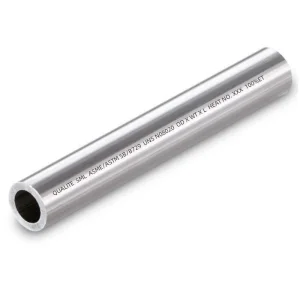
Custom Nickel Alloy Tubes 20 • UNS N08020 • 2.4660 Supplier, Product
-

Custom Austenitic Steels 310S • UNS S31008 • 1.4845 Supplier, Suppliers
-

Custom Titanium Tubes • Grade 12 • UNS R53400 Manufacturers, Product
-

Custom Austenitic steel ASME SA213 · TP304LN Manufacturer, Factory
-

Custom Austenitic Steels 310H • UNS S31009 Manufacturers, Products
-

Custom Austenitic steel ASME SA213 · TP317 Manufacturers, Products
Engineered for High-Pressure Heat Exchangers: The Science of U-Bend Precision
Heat exchangers operating in chemical processing, power generation, and marine refining represent the most thermally and mechanically stressed environments in process engineering. In a shell-and-tube bundle design, U-bend tubes accommodate differential thermal expansion without requiring expansion joints, drastically reducing potential mechanical failure points.
However, the U-bending process introduces complex metallurgical challenges. Bending cold-worked tubing induces localized strain hardening, wall thinning at the outer radius (extrados), micro-structural ovality, and residual tensile stresses. If left unaddressed, these localized stress concentrations accelerate Stress Corrosion Cracking (SCC), pitting, and premature bundle fatigue when exposed to aggressive industrial fluids.
As an established manufacturer specialized in corrosion-resistant tubing since 2007, Spezilla Tube Co., Ltd. implements state-of-the-art CNC cold bending technology paired with localized or full-length solution annealing. By strictly adhering to international standards such as ASTM A213, ASTM A249, ASTM A688, EN 10217-7, and EN 10216-5, our factory delivers U-bend tubes engineered for maximum fluid dynamics, zero leakage, and multi-decade service life.
EU PED 2014/68/EU Compliance & European Technical Standards
Exporting pressure tubing into the European Economic Area (EEA) requires total alignment with strict safety standards. The European Pressure Equipment Directive (PED 2014/68/EU) mandates rigorous material traceability, validated non-destructive testing (NDT), and certified quality management systems for components operating above 0.5 bar.
AD 2000-Merkblatt W0 / W2
Our manufacturing processes are certified to meet Germany's stringent AD 2000 pressure vessel standards. We maintain full material suitability verification for stainless steel, duplex, and nickel alloys operating under high thermal strain.
EN 10204 3.1 & 3.2 Traceability
Every shipment is delivered with comprehensive Material Test Certificates (MTC). For critical applications, we support independent third-party inspection (TPI) by TÜV, SGS, Lloyd's Register, or Bureau Veritas for EN 10204 3.2 verification.
Post-Bend Heat Treatment (PBHT)
To comply with ASTM A688 and DIN 28179, U-bends are heat treated (solution annealed for austenitic/duplex or stress relieved) in the bent region and 150mm of adjacent legs to restore microstructural passivity.
China Factory Supply Chain Advantages & Manufacturing Rigor
Spezilla Tube Co., Ltd. operates state-of-the-art production lines in Huzhou, Zhejiang, with a global logistics hub in Shanghai. China's integrated steel supply chain allows us to deliver high-precision U-bend tubes with significant cost efficiencies, uncompromised metallurgy, and fast delivery timelines.
Advanced Raw Material Sourcing
We source raw mother hollows and coils exclusively from top-tier raw material producers (such as Tsingshan, Yongxing, and Baosteel). Chemical composition is verified via Optical Emission Spectrometry (OES) prior to cold processing to ensure precise Cr, Ni, Mo, and N ratios.
- High PREN (Pitting Resistance Equivalent Number) compliance.
- Low S, P, and C content for superior weld integrity and corrosion immunity.
- Complete heat-number traceability from melt shop to final packaging.
Automated CNC U-Bending & Dimensional Control
Our computerized CNC U-bending machines execute exact leg length, radius, and leg pitch tolerances. We consistently maintain wall thinning below design limits (e.g., max 10–12% depending on R/D ratio) and control ovality within strict engineering parameters.
- Bending Radius Range: 1.5D to 1500mm.
- Straight Leg Lengths: Up to 25,000mm prior to bending.
- Hydrostatic pressure testing conducted on 100% of U-bend tubes after bending.
Seamless vs. Welded & Drawn U-Bend Tubes Comparison Matrix
Global procurement and EPC engineering teams face key choices when selecting between seamless and welded & cold drawn (W&D) heat exchanger tubes. The table below details critical performance and structural specifications to aid technical decision-making.
| Feature / Parameter | Seamless U-Bend Tubes (ASTM A213) | Welded & Cold Drawn U-Bend Tubes (ASTM A249 / A688) |
|---|---|---|
| Primary Process | Hot extruded or cold pilgered hollows without longitudinal seam. | Automated TIG/Laser welded strip, followed by cold drawing to refine weld. |
| Wall Thickness Uniformity | Standard tolerance (±10% to ±12.5%). | Exceptional uniformity (±5% to ±7.5%), enhancing heat transfer efficiency. |
| Surface Finish (ID/OD) | Smooth; Ra ≤ 0.8 μm achievable with bright annealing. | Ultra-smooth inner bore; Ra ≤ 0.4 μm, ideal for high-purity/sanitary media. |
| Maximum Design Pressure | Preferred for extreme high-pressure applications (> 250 bar). | Rated for medium to high pressure per ASME Sec VIII Div 1 design codes. |
| Cost & Lead Time Ratio | Higher material cost; standard production lead times. | Highly cost-effective (15-25% savings); faster mill throughput. |
| PED Compliance | Fully certified under PED 2014/68/EU Annex I. | Fully certified under PED 2014/68/EU with 100% NDT (Eddy Current). |
Industry Trends: Energy Transition, LNG, & Super Alloys
The global shift toward green hydrogen, carbon capture and storage (CCS), high-efficiency LNG liquefaction, and next-generation nuclear power is reshaping heat exchanger requirements. Standard austenitic 304L/316L grades are increasingly supplemented or replaced by advanced corrosion-resistant alloys (CRAs).
Duplex & Super Duplex (2205 / 2507)
Duplex stainless steels offer double the yield strength of 316L alongside exceptional chloride pitting resistance (PREN ≥ 42 for S32750). Widely specified in seawater-cooled condensers and offshore oil & gas platforms.
High-Nickel Alloys (Alloy 625 / C276)
Designed for severe chemical process equipment involving hot sulfuric, hydrochloric, or hydrofluoric acid streams. Nickel-chromium-molybdenum matrices prevent pitting, crevice corrosion, and intergranular attack.
Titanium (Grade 2 / Grade 12)
Titanium U-bend tubes offer near-immutability against coastal seawater corrosion and high galvanic stability. Ideal for power plant surface condensers and municipal desalination installations.
Field-Proven Performance Across Industrial Clusters
Spezilla’s PED-approved U-bend tubes are integrated into high-reliability thermal systems worldwide. Below are key regional application scenarios where our precision tubes deliver sustained operational excellence.
European Chemical & Petrochemical Parks
In chemical hubs across Germany (Rhine-Ruhr), the Netherlands (Rotterdam), and France, process heat exchangers require strict adherence to DIN/EN specifications and PED 2014/68/EU Module H certification. Our 316L, 321, and 904L U-tubes withstand severe nitric and organic acid media while maintaining strict zero-leakage compliance.
Middle East Desalination & Energy Infrastructure
Thermal desalination plants (MSF/MED processes) in the Gulf region demand heat exchanger tubes resistant to high-temperature hyper-saline brine. Spezilla supplies specialized Super Duplex UNS S32750 and Titanium Grade 2 U-bends designed to prevent severe erosion-corrosion and bio-fouling.
Power Generation Feedwater Heaters
High-pressure feedwater heaters in fossil fuel and nuclear power plants demand precision U-tubes with strict wall thinning control and post-bend stress relieving per ASTM A688. Spezilla’s TP304H and TP315H tubes ensure optimal creep-rupture strength at elevated temperatures.
HVAC & Refrigeration Shell-and-Tube Evaporators
Commercial refrigeration systems utilize smooth-bore austenitic stainless steel U-tubes to maximize refrigerant thermal conductivity while resisting chemical degradation from glycol and synthetic oils.
High-Precision Alloy & Stainless Steel Tubes
Explore our complete range of ASME/ASTM standard specialty tubes manufactured for heat transfer, hydraulic lines, and corrosive process systems.
-

High-Quality Austenitic steel ASME SA213 · TP310H Supplier, Suppliers
-

Custom Austenitic steel ASME SA312 · TP321 Suppliers, Product
-
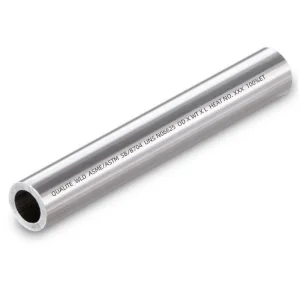
High-Quality Nickel Alloy Tubes 625 • UNS N06625 • 2.4856 Suppliers, Product
-
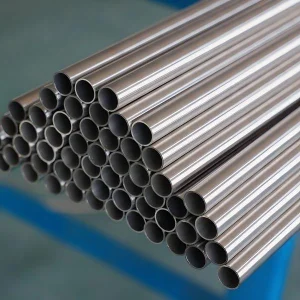
High-Quality Austenitic steel ASME SA213 · TP304H Manufacturer, Products
-
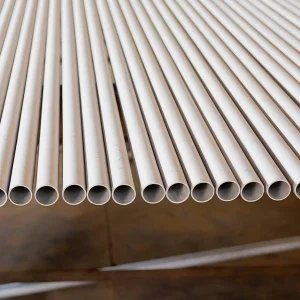
High-Quality Austenitic steel ASME SA269 · TP304 Factories, Products
-
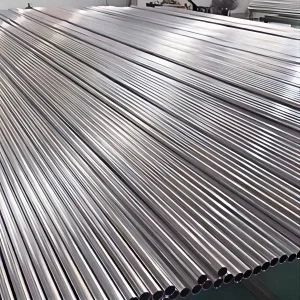
Custom Austenitic steel ASME SA213 · TP310S Manufacturer, Products
-

Custom Austenitic Steels 309S • UNS S30908 • 1.4833 Factories, Products
-

Custom Austenitic Steels 304 • UNS S30400 • 1.4301 Manufacturer, Factories
Technical FAQ: EU PED Heat Exchanger U-Bend Tubing
Engineering and procurement teams frequently consult our technical specialists regarding manufacturing limits, testing standards, and compliance details.
What does EU PED 2014/68/EU certification guarantee for U-bend tubes?
PED 2014/68/EU compliance confirms that the tubing manufacturer adheres to strict European safety standards for pressure equipment. It mandates verified chemical and mechanical properties, non-destructive testing (NDT), full heat traceability, and material supply under certified quality assurance systems (such as ISO 9001 and AD 2000-W0). Tubes certified under PED are authorized for installation in pressure vessels operating throughout the European Union.
Why is Post-Bend Heat Treatment (PBHT) critical for U-bend heat exchanger tubes?
Cold bending induces severe strain hardening and residual tensile stresses in the U-bend section, particularly at the extrados (outer radius). This localized stress makes the tube vulnerable to premature Stress Corrosion Cracking (SCC) and intergranular corrosion during operation. Post-bend heat treatment (solution annealing at 1040°C–1100°C for austenitic grades, followed by rapid quenching) relieves residual stresses and restores microstructural passivity.
How does Spezilla control wall thinning and ovality during U-bending?
We utilize precision multi-axis CNC bending machines equipped with internal mandrels and custom wiper dies. Wall thinning ($WT_{min}$) is controlled according to international formulas ($WT_{min} = WT_{nom} \times [1 - R/(2D)]$) and kept strictly within ASTM A688 / DIN 28179 tolerances. Ovality is maintained below 5% to 8% depending on the bending radius ratio ($R/D$).
What non-destructive testing (NDT) procedures are performed on U-bend tubes?
Every single U-bend tube undergoes 100% Eddy Current Testing (ECT) per ASTM E426 or EN 10246-2, followed by Hydrostatic Pressure Testing (up to 300 bar depending on size). For small radius bends, Liquid Penetrant Testing (PT) or Ultrasonic Testing (UT) is conducted on the bent section to verify zero micro-fissuring.
What packaging methods are used to protect U-bend tubes during international shipping?
Because U-bend tubes are highly sensitive to handling damage, Spezilla uses heavy-duty, wooden boxes reinforced with steel frames. Each U-bend tube layer is separated by custom-contoured wooden separator strips or high-density foam racks. Tube ends are fitted with plastic caps to prevent moisture ingress and mechanical contamination during ocean freight.
Can Spezilla support independent Third-Party Inspection (TPI) for EN 10204 3.2 certificates?
Yes. We routinely work alongside global inspection bodies including TÜV Rheinland, TÜV Süd, SGS, Bureau Veritas, and Lloyd's Register. Third-party inspectors witness PMI (Positive Material Identification), dimensional checks, hydrostatic tests, and mechanical testing before issuing EN 10204 3.2 certificates.
