




Engineering Custom Nickel Alloys Tubo & Precision Tubing: Comprehensive Metallurgical Overview
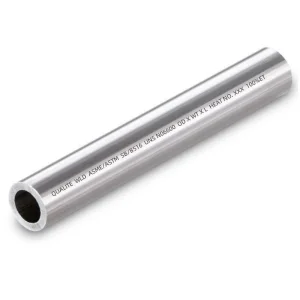
In modern industrial processing, standard stainless steels often reach their thermodynamic limit when exposed to aggressive halide solutions, extreme thermal cycling, and high-pressure media. Custom Nickel Alloys Tubo (Tubing) products represent the pinnacle of materials science, delivering an unyielding barrier against pitting, crevice corrosion, intergranular attack, and stress corrosion cracking (SCC).
By precisely controlling element ratios—primarily Nickel (Ni), Chromium (Cr), Molybdenum (Mo), Iron (Fe), and Copper (Cu)—our high-performance nickel alloy tubes maintain structural integrity up to cryogenic temperatures and elevated heat exceeding 1100°C (2012°F). The high nickel matrix acts as a solid stabilizer for the face-centered cubic (FCC) crystal structure, rendering the material immune to chloride-induced stress cracking that typically destroys conventional 300-series austenitic stainless steels.
Severe Corrosion Resistance
High concentrations of Molybdenum (Mo) and Chromium (Cr) generate a self-healing, nano-thin passive oxide layer. Alloys such as Hastelloy C-276 (UNS N10276) and Incoloy 825 (UNS N08825) resist aggressive reducing and oxidizing chemical mixtures.
Thermal & Creep Stability
Nickel-Chromium-Iron formulations like Inconel 600 (UNS N06600) resist carburization, oxidation, and thermal fatigue. Austenitic grain boundary controls prevent sensitization during high-temperature service.
Dimensional Tolerance Accuracy
Cold-pilgered and bright-annealed execution guarantees wall uniformity down to ±5% and surface roughness under Ra 0.4 µm, reducing bio-fouling and flow resistance in heat exchangers.
High-Performance Nickel Alloy & Specialty Alloy Selection Matrix
Determining the optimal tube grade requires balancing localized corrosion resistance (quantified by PREN values), thermal creep thresholds, and mechanical yield strength. Review our quantitative grade matrix below:
| Alloy Grade | UNS / EN Standard | Nominal Composition | PREN Value | Core Application Profile |
|---|---|---|---|---|
| Inconel 600 | UNS N06600 / 2.4816 | 72% Ni, 15.5% Cr, 8% Fe | ~18.5 | Nuclear steam generators, furnace retort tubes, chemical processing |
| Incoloy 825 | UNS N08825 / 2.4858 | 42% Ni, 21.5% Cr, 3% Mo, 2% Cu | ~31.0 | Phosphoric acid evaporators, sour gas (H2S) oil wells, marine piping |
| Hastelloy C-276 | UNS N10276 / 2.4819 | 57% Ni, 16% Cr, 16% Mo, 4% W | ~45.0+ | Flue gas desulfurization (FGD), wet chlorine gas, acetic acid reactors |
| Monel 400 | UNS N04400 / 2.4360 | 67% Ni, 30% Cu, 2% Fe | N/A (Cu-based) | Seawater valves, hydrofluoric acid alkylation plants, brine heaters |
| Duplex 2205 | UNS S31803 / 1.4462 | 22% Cr, 5% Ni, 3% Mo, 0.17% N | ~35.0 | Chloride environments, offshore oil separation, hydraulic tubing lines |
*PREN (Pitting Resistance Equivalent Number) = %Cr + 3.3(%Mo + 0.5%W) + 16%N. Higher values indicate greater resistance to localized pitting in seawater and acidic halide environments.
Strategic Advantages of Chinese Custom Tubing Manufacturing Supply Chains
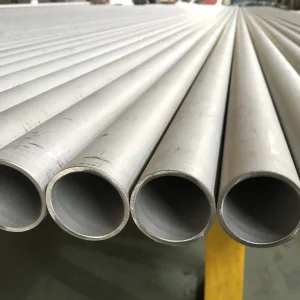
Procuring custom precision tubing for critical infrastructure requires balancing material authenticability, lead time, scalability, and financial prudence. China has evolved into a global titan for high-end alloy tube production, integrating raw material refining, advanced cold-pilgering, and rigorous non-destructive examination under one centralized ecosystem.
Vertical Raw Material Integration
By establishing direct supply corridors with leading raw nickel smelters and vacuum induction melting (VIM) / vacuum arc remelting (VAR) facilities, Chinese manufacturers secure high-purity master heats. This eliminates multi-tier middleman markups, protecting global buyers from raw material price volatility.
Advanced Precision Cold Pilgering & Annealing
Utilizing multi-roll cold pilgering mills and continuous inert-gas bright annealing furnaces, Chinese factories deliver nickel alloy tubes with tight wall tolerances (down to ±0.03mm) and ultra-clean inner diameters (ID), minimizing residual stress and grain coarsening.
Traceable Quality & International Certification
Every order is paired with comprehensive testing protocols: 100% Hydrostatic testing, Eddy Current Inspection (ET), Ultrasonic Inspection (UT), Positive Material Identification (PMI), and EN 10204 3.1/3.2 Mill Test Certificates validated by independent authorities (TÜV, SGS, Lloyd's Register).
Optimized Logistics & Export Hubs
Strategically located near major shipping hubs in Shanghai and Ningbo, Chinese tube mills offer seamless ocean and air logistics, packaged in customized sea-worthy wooden crates with protective end caps and moisture-barrier vacuum wrappings.
Localized Application Scenarios & Industrial Deployment
Custom nickel alloy tubing is essential across high-stakes industrial operations. Understanding localized application profiles allows EPC contractors and maintenance managers to choose the exact alloy formulation required for specified service media.
Offshore Oil & Gas / Subsea Hydraulics
Service Media: Sour gas (H2S), CO2, high-pressure brine.
Preferred Alloys: Incoloy 825, Duplex 2205, Inconel 625.
Engineering Impact: Used in control umbilical lines and downhole chemical injection systems. Resists sulfide stress cracking (SSC) under NACE MR0175/ISO 15156 guidelines.
Petrochemical & Chemical Synthesis
Service Media: Hydrochloric acid, sulfuric acid, acetic acid.
Preferred Alloys: Hastelloy C-276, Stainless 316L/316H.
Engineering Impact: Deployed in heat exchangers, reboilers, and reactor cooling coils where localized pitting and micro-cracking lead to catastrophic chemical leaks.
Power Generation & Nuclear Boilers
Service Media: Superheated steam, feed-water, nuclear coolant.
Preferred Alloys: Inconel 600, Stainless 321H, 347H.
Engineering Impact: U-bend tube bundles designed for feedwater heaters and steam generators, offering structural resistance against thermal expansion stress and vibration fatigue.
Future Directions in Alloy Tubing Metallurgy & Smart Manufacturing
As the world transitions toward green hydrogen energy, carbon capture and storage (CCUS), and ultra-high-efficiency chemical processes, nickel alloy tubing demand is shifting toward specialized performance criteria.
Hydrogen Embrittlement Resistance
Next-generation green hydrogen electrolyzers operating under extreme pressures require specialized nickel-base alloy tubes with optimized grain boundary chemistry to resist high-pressure hydrogen embrittlement (HE).
Ultra-Precision Small-Diameter Tubing
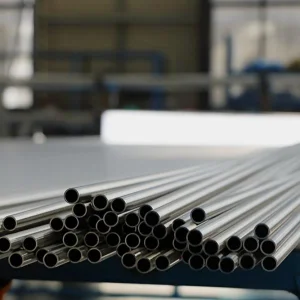
Micro-bore instrumentation tubing (OD 1.5mm to 6.0mm) with capillary tolerances is increasingly specified in semiconductor gas lines, chromatography, and aerospace fuel injection lines.
Digital Twin & Non-Destructive Testing AI
Factories are deploying real-time laser gauge sensors and automated Eddy Current AI algorithms during cold drawing, capturing 100% of surface flaws at zero process latency.
Localization Support, Quality Protocols & Global Regulatory Compliance
Navigating regional compliance codes is critical for global engineering firms. Our bespoke tubing solutions are engineered to meet strict international standards, guaranteeing effortless site integration and fast-track regulatory sign-offs.
International Standard Adherence
- ASTM Standards: B163, B167, B407, B444, B622, A213, A312, A249, A269
- ASME Boiler Code: Section II Part B/C, Section VIII Division 1 & 2
- European Directives: PED 2014/68/EU, AD 2000-W0, EN 10216-5, EN 10217-7
- NACE Compliance: NACE MR0175 / ISO 15156 for Sour Oilfield Service
Custom Fabrication & Value-Added Services
- U-Bend Engineering: Precision U-bending with post-bend stress-relief heat treatment
- Custom Lengths: Straight lengths up to 25,000mm (25m) without circumferential joints
- Surface Finishes: Bright Annealed (BA), Annealed & Pickled (AP), Electro-polished (EP)
- Third-Party Inspection: Witness testing by SGS, TÜV, BV, DNV, Moody International
Technical FAQ: Procurement & Engineering Insights
Direct answers to technical queries raised by global procurement officers, plant engineers, and materials specialists.








