
Featured Precision Polished Steel Tubing
Direct factory supply of certified austenitic, super austenitic, and nickel alloy tubing tailored for ultra-clean, corrosion-resistant applications.
-

Custom Austenitic steel ASME SA213 · TP316L Supplier, Factories
-

High-Quality Austenitic steel ASME SA213 · TP309S Suppliers, Product
-

High-Quality Nickel Alloy Tubes 800HT • UNS N08811 • 1.4959 Manufacturer, Product
-

Custom Austenitic steel ASME SA213 · TP304LN Manufacturer, Factory
-

High-Quality Austenitic Steels 321 • UNS S32100 • 1.4541 Manufacturers, Factories
-

Custom Austenitic Steels 321H • UNS S32109 • 1.4878 Manufacturer, Products
-

High-Quality Super Austenitic Steels 254SMO • UNS S31254 • 1.4547 Factory, Factories
-

Custom Nickel Alloy Tubes 400 • UNS N04400 • 2.4360 Manufacturer, Products
1. Next-Gen Industry Trends in Polished Stainless Steel Tubing
The global industrial paradigm is rapidly shifting towards higher purity, stricter surface topography specs, and zero-defect corrosion resistance.
Electropolishing (EP) Dominance
Mechanical polishing (MP) alone is no longer sufficient for Ultra-High Purity (UHP) fluid handling. Advanced electropolishing (EP) achieves an ultra-smooth surface profile below Ra 0.25 µm (10 µin), significantly enhancing chromium-to-iron (Cr/Fe) ratios to >1.5 for maximum passivation stability.
Biopharma & Semiconductor Demand
With massive capital investment in semiconductor fabrication plants (fabs) and biopharmaceutical facilities worldwide, the demand for ASME BPE compliant 316L and high-nickel alloy polished tubing has grown by over 14% annually, establishing high surface integrity as an imperative benchmark.
Hydrogen & Clean Energy Infrastructure
High-pressure hydrogen refueling stations and marine LNG fuel gas supply systems (FGSS) require smooth inner surface roughness (ID Ra < 0.4 µm) to mitigate hydrogen embrittlement risks, driving adoption of specialized 316/316L and Super Duplex 2507 alloys.
2. Surface Metallurgy & Polishing Technical Specifications
Understanding the relationship between mechanical grit size, electrochemical processing, and pitting resistance equivalent number (PREN).
Technical Benchmark: Roughness Average (Ra) vs Corrosion Resistance
Surface roughness directly influences bio-fouling, bacterial entrapment, and localized pitting corrosion. Lowering Ra values reduces micro-fissures where chloride ions concentrate. Combined with Bright Annealing (BA) or Electropolishing (EP), the natural passivation film ($\text{Cr}_2\text{O}_3$) is thickened, delivering superior resistance against aggressive chemical media.
| Finish Designation | Processing Method | Inner Diameter (ID) Ra | Outer Diameter (OD) Ra | Primary Target Industry |
|---|---|---|---|---|
| MP Grit 180 / 240 | Mechanical Polishing | 0.60 – 0.80 µm (24 – 32 µin) | 0.80 µm | Commercial Architectural & General Industrial |
| MP Grit 320 / 400 | Precision Mechanical Polish | 0.40 – 0.50 µm (16 – 20 µin) | 0.40 µm | Food & Beverage, Dairy Processing (3A Standard) |
| ASME BPE SF1 (MP 800) | Mechanical Polish + Bright Annealed | ≤ 0.50 µm (20 µin) | 0.40 µm | Sanitary Pharmaceutical & Cosmetics |
| ASME BPE SF4 (EP) | Electropolished (Chemical Anodizing) | ≤ 0.37 µm (15 µin) | 0.40 µm | Biopharmaceutical WFI Systems & High Purity |
| UHP Grade EP | Multi-stage EP + Cleanroom Cleaned | ≤ 0.13 – 0.25 µm (5 – 10 µin) | 0.25 µm | Semiconductor Special Gas (UHP) Lines |
Austenitic Grades (304L / 316L / 321 / 316Ti)
The core workhorses of liquid transport. Grade 316L contains 2.0-3.0% Molybdenum, delivering superior resistance to pitting and crevice corrosion compared to 304L. Stabilized grades like 321 (Titanium stabilized) and 316Ti prevent intergranular chromium carbide precipitation during welding at high temperatures.
Super Austenitic (254SMO / 904L)
Featuring high Nickel (24-26%) and Molybdenum (6-7%) with Nitrogen alloying, 254SMO delivers a PREN > 42. It is engineered specifically to replace titanium tubing in high-chloride sea water systems, flue gas desulfurization (FGD), and pulp mill bleach plants.
Nickel Alloys (Inconel 600 / 800HT / Monel 400)
Designed for severe thermal and corrosive stress. Alloy 800HT (UNS N08811) provides high creep-rupture strength above 600°C, while Monel 400 (UNS N04400) provides immunity to hydrofluoric acid and marine salt environments.
3. Global Procurement Strategy & Quality Compliance
How international EPC contractors, OEM purchasing officers, and QA directors mitigate supply chain risk and ensure total compliance.
Traceable Certification (EN 10204 3.1 / 3.2)
Global buyers enforce absolute material origin traceability. Every mill shipment must be accompanied by an EN 10204 3.1 MTC specifying chemical heat analysis, mechanical tensile/yield tests, hydrostatic or Eddy Current NDT testing, and dimensional compliance. Independent third-party inspection (TUV, SGS, Lloyd's) for 3.2 certificates is standard for offshore procurement.
Strict Dimensional & Ovality Tolerance
Automatic orbital welding machines used in field installations require tight wall thickness variations (≤ ±10%) and precise outer diameter tolerances per ASTM A269 or EN 10357 Schedule 1. Inconsistent wall thickness causes weld burn-through and inner bead misalignment, compromising sanitary flow.
Export Packaging & Cleanliness Preservation
Polished tubes are sensitive to sea freight corrosion and scratch damage. Global procurement guidelines mandate end-capping, individual PE sleeve wrapping, vacuum sealing for EP tubes, and heavy-duty ISPM-15 compliant wooden box casing to guarantee zero surface degradation upon site arrival.
4. China Industry 4.0: Supply Chain Resilience & Factory Efficiency
How modernized Chinese tube mills leverage intelligent manufacturing, end-to-end quality monitoring, and raw material integration to yield cost and lead-time advantages.
Automated Continuous Cold Drawing & Pilgering
Modern Chinese factories utilize high-precision multi-roll cold pilger mills and hydraulic cold drawing benches equipped with real-time laser wall thickness monitoring. This ensures uniform grain structure refinement and concentricity across long tube lengths up to 25 meters.
Online Bright Annealing (BA) Furnaces
By employing continuous atmosphere-controlled (Hydrogen/Nitrogen gas mix) bright annealing furnaces operating at 1050°C - 1150°C, mills rapidly cool the pipe without oxide scale formation. This eliminates the need for aggressive acid pickling, preserving a ultra-clean metallic luster.
Vertical Supply Integration & Cost Efficiency
China accounts for over 56% of global stainless steel production. Chinese custom factories benefit from direct access to premium mother coil and hollow billet suppliers (e.g., Tsingshan, Yongxing), shortening raw material procurement cycles and buffering global price volatility for end customers.
Total Cost of Ownership (TCO) Comparison: Custom Chinese Factory vs Regional Distributors
Sourcing directly from specialized Chinese custom polished stainless pipe factories delivers an average of 22% - 35% cost savings compared to regional stockists, while offering tailored length cuts, customer-specified surface finishes, and direct engineering collaboration for complex OEM drawings.
5. Critical Application Scenarios & Real-World Solutions
From extreme chemical exposure to ultra-pure fluid transfer, tailored polished tubing delivers proven operational longevity.
Biopharmaceutical Purified Water (PW) & WFI Loops
Challenge: Biofilm accumulation in water-for-injection loops causes contamination, leading to costly batch dumps.
Solution: Custom ASME SA269 / ASME BPE TP316L electropolished tubing with ID Ra < 0.37 µm. Smooth internal surfaces prevent micro-organism adhesion and facilitate effective Clean-in-Place (CIP) / Sterilize-in-Place (SIP) cycles.
High-Temperature Petrochemical Cracking Furnaces
Challenge: Oxidation, carburization, and thermal degradation of heat exchanger tubes operating at temperatures above 800°C.
Solution: High-Nickel, High-Chromium alloys such as TP309S, TP310S, and Nickel Alloy 800HT. Mechanical polishing reduces surface area exposure to corrosive syngas species, extending tube bundle service life by 3x.
Desalination & Marine Subsea Heat Exchangers
Challenge: Severe chloride pitting and stress corrosion cracking (SCC) in hot seawater environments.
Solution: Super Duplex 2507 (UNS S32750) and Super Austenitic 254SMO tubing. A high PREN (> 42) combined with a polished OD/ID finish prevents barnacle attachment and localized pitting under deposits.
Specialty Super Austenitic & Duplex Tubing Series
Complete product lineup manufactured to ASME SA213, SA269, SA312, and international equivalent standards.
-

High-Quality Austenitic steel ASME SA213 · TP316Ti Suppliers, Product
-

High-Quality Austenitic steel ASME SA269 · TP304L Suppliers, Product
-

High-Quality Super Duplex Steels 2507 • S32750 • 1.4410 Manufacturer, Factories
-
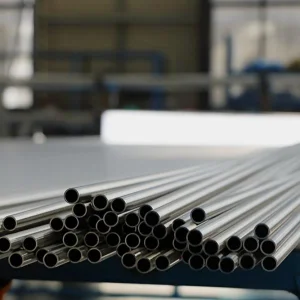
High-Quality Austenitic steel ASME SA213 · TP321 Manufacturer, Supplier
-

Custom Austenitic Steels 309S • UNS S30908 • 1.4833 Factories, Products
-

High-Quality Austenitic Steels 304H • UNS S30409 • 1.4948 Manufacturer, Supplier
-

Custom Austenitic steel ASME SA312 · TP321 Suppliers, Product
-
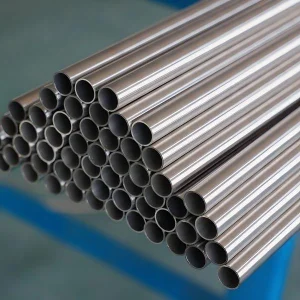
High-Quality Austenitic steel ASME SA213 · TP304H Manufacturer, Products
6. Technical FAQ & Purchasing Knowledge Base
Expert answers to critical engineering, metallurgical, and sourcing inquiries.
Q1: What is the difference between Mechanical Polishing (MP) and Electropolishing (EP) for stainless steel pipes?
Mechanical polishing uses abrasive wheels or belts to physically smooth the metal surface, creating a directional grain finish (e.g., 180, 320, or 600 grit). Electropolishing, by contrast, is an electrochemical process that acts as reverse electroplating. It removes microscopic high points uniformly, dissolves cold-worked surface contaminants, and enriches the chromium layer relative to iron, resulting in a non-directional, mirror-like finish with optimized corrosion resistance (Ra < 0.25 µm).
Q2: Why is TP316L preferred over TP304L for custom polished sanitary piping systems?
TP316L contains 2.0% to 3.0% Molybdenum and a lower carbon content (≤0.03%), significantly improving resistance to chloride-induced pitting and crevice corrosion compared to TP304L. In sanitary, pharmaceutical, and food processing applications exposed to cleaning chemicals (such as chlorine, caustic soda, or SIP steam), TP316L provides extended service reliability and prevents bio-film attachment.
Q3: How does custom Chinese manufacturing maintain consistency across large batch pipe orders?
Leading Chinese mills utilize fully automated, continuous bright annealing and orbital mechanical polishing lines equipped with online laser micrometer sensors. Statistical Process Control (SPC) tracks outer diameter, wall thickness, and surface roughness continuously. Furthermore, raw materials are sourced from single-heat master coils to eliminate batch-to-batch chemistry variations.
Q4: What non-destructive testing (NDT) standards apply to ASME SA213 and SA269 polished tubes?
Standard NDT protocols include 100% Eddy Current Testing (per ASTM E426 or EN 10246-2) to detect subsurface and seam flaws, hydrostatic testing (up to design pressure limits), dimensional laser verification, and surface roughness profilometer checks. For nuclear or critical high-pressure heat exchangers, ultrasonic testing (UT) and pneumatic under-water testing are also available.
Q5: What standard lengths and custom fabrication options are available from your factories?
Standard mill straight lengths are 6 meters (20 feet) or 12 meters. However, custom factory lines can produce continuous straight lengths up to 25 meters, or deliver pre-bent U-tubes for heat exchangers, custom coiled tubing, end-flanged pipes, and orbitally bevelled ends tailored to customer engineering drawings.
Q6: How do you prevent surface scratching and contamination during ocean transportation?
Each polished tube undergoes immediate end-capping with plastic plugs to preserve internal cleanliness. The outer surface is encased in individual plastic sleeve sheeting. Electropolished (EP) tubes are vacuum-sealed with desiccant in cleanroom conditions. The bundled tubes are then packed into heavy-duty, fumigated wooden boxes (ISPM-15 standard) with internal padding to prevent movement and moisture ingress during ocean transit.
