
Featured Heat Exchanger & Condenser Tube Products
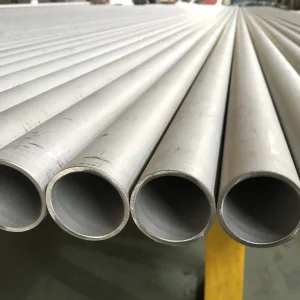
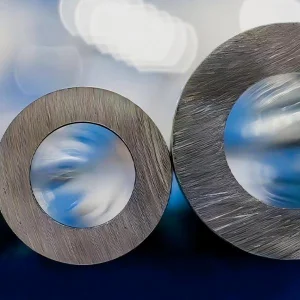
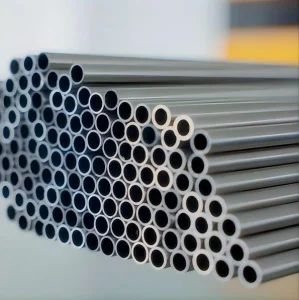
Explore our precision-manufactured stainless steel, super duplex, nickel alloy, and titanium tube selection engineered to ASTM/EN pressure directives.







Executive Summary & Global Condenser Market Dynamics
Analyzing the paradigm shift toward titanium tubing in modern high-efficiency surface condensers, thermal power generation, and coastal cooling infrastructure.
The Imperative for Titanium Condenser Tubing
Modern steam surface condensers operating in coastal fossil-fuel, combined-cycle gas turbine (CCGT), and nuclear power installations face unprecedented thermal and chemical stresses. Historically dominated by copper-nickel alloys (CuNi 70/30, 90/10) and conventional austenitic stainless steels (316L), these systems routinely suffered from wall degradation, erosion-corrosion, sulfide attack, and stress corrosion cracking (SCC).
Transitioning to custom seamless titanium tubing (ASTM B338 Grade 1 & Grade 2) fundamentally solves these structural failure modes. Titanium forms a tenacious, self-healing rutile passive oxide film ($TiO_2$) that renders the tube immune to chloride pitting, crevice corrosion, and microbiological-induced corrosion (MIC) up to velocities exceeding 10 m/s.
Life-Cycle Cost (LCC) & Thermal Gain Analysis
While the initial capital expenditure (CAPEX) for seamless titanium tubes is higher than standard stainless alloys, the total Life-Cycle Cost (LCC) over a 30-to-40-year power plant lifecycle demonstrates an extraordinary ROI. Seamless titanium eliminates costly retubing shutdowns, reduces condensate contamination risks to zero, and allows power station operators to reduce tube wall thickness down to 0.5mm or 0.7mm.
This ultra-thin wall capability offsets titanium's lower baseline thermal conductivity ($21.9 W/m\cdot K$), matching or exceeding the net heat flux coefficient of thicker copper-nickel tubing while dramatically reducing total bundle weight and structural load on tubesheets.
Engineering Blueprint & Chemical Metallurgy
A rigorous comparative analysis of seamless titanium grades against competitive heat exchanger alloys in aggressive water chemistry.
| Material Grade | UNS / EN Standard | Tensile Strength (MPa) | Yield Strength (MPa) | Thermal Cond. (W/m·K) | Chloride Resistance (Seawater) | Primary Condenser Application |
|---|---|---|---|---|---|---|
| Titanium Grade 1 | UNS R50250 / 3.7025 | ≥ 240 | 170 – 310 | 21.9 | Complete Immunity (<100°C) | High-formability U-bend condenser bundles |
| Titanium Grade 2 | UNS R50400 / 3.7035 | ≥ 345 | 275 – 450 | 21.9 | Complete Immunity (<120°C) | Global standard for power plant surface condensers |
| Titanium Grade 12 | UNS R53400 / 3.7105 | ≥ 483 | ≥ 345 | 19.0 | Immune + High Temp (<300°C) | Geothermal & sour gas refinery heat exchangers |
| Super Duplex 2507 | UNS S32750 / 1.4410 | 750 – 1000 | ≥ 550 | 14.2 | High (PREN ≥ 42) | High-pressure offshore process exchangers |
| Super Austenitic 254SMO | UNS S31254 / 1.4547 | ≥ 650 | ≥ 300 | 14.0 | High (PREN ≥ 43) | Coastal power plant brackish water systems |
| Copper-Nickel 90/10 | UNS C70600 / 2.0872 | ≥ 275 | ≥ 105 | 50.0 | Poor in polluted/sulfide water | Legacy marine & naval surface condensers |
Cold-Pilgering Seamless Process
Unlike longitudinal welded tubes, custom seamless titanium tubes are produced via multi-pass cold pilgering from vacuum arc remelted (VAR) titanium hollows. This process aligns grain boundary orientation, eliminates heat-affected zones (HAZ), and ensures perfectly concentric wall thickness across 25-meter continuous lengths.
Vacuum Annealing & Crystallization
Every batch undergoes full vacuum bright annealing at temperatures exceeding 700°C in an ultra-clean argon atmosphere. This relieves residual stresses from cold drawing while preventing hydrogen embrittlement and surface oxygen pickup (alpha-case formation).
Tube-to-Tubesheet Joint Integrity
Seamless titanium tubing exhibits optimal ductility and controlled yield strength (275-450 MPa for Grade 2), allowing flawless roller expansion or strength welding (TIG/laser) into solid titanium or titanium-clad steel tubesheets without springback leakage.
Localized Industrial Application Scenarios
Tailored seamless titanium condenser tubing engineered to withstand diverse regional water chemistry, bio-fouling, and thermal stresses.
Coastal Nuclear & Thermal Steam Turbine Condensers
Operating Environment: High-velocity raw ocean seawater with variable salinity, high silt load, and sodium hypochlorite chlorination treatments.
Engineering Value: Titanium Grade 2 seamless tubing completely halts erosion-corrosion at tube inlets where water turbulence is highest. Seamless construction guarantees absolute tightness to prevent raw seawater ingress into the pure condensate loop, protecting steam generators and turbines from catastrophic chloride contamination.
MSF & MED Desalination Evaporator Bundles (Middle East & North Africa)
Operating Environment: Concentrated, high-temperature brine (>90°C) with elevated dissolved oxygen and hydrogen sulfide ($H_2S$) content.
Engineering Value: Grade 12 (Ti-0.3Mo-0.8Ni) seamless tubes provide extended crevice corrosion resistance at high temperatures. Smooth internal bores ($Ra < 0.4 \mu m$) minimize scale deposition and biofouling, reducing chemical cleaning frequency and thermal performance decay.
Petrochemical & Refinery Condensers (Sour Gas / H2S Overhead)
Operating Environment: Heavy hydrocarbon condensates contaminated with ammonium chloride, sulfides, organic acids, and process stream steam.
Engineering Value: Titanium seamless tubes provide complete resistance to sulfide stress cracking (SSC) and polythionic acid attack where standard 304L/316L stainless steel tubes fail in under 18 months of continuous refining operations.
LNG Liquefaction & Cryogenic Surface Heat Exchangers
Operating Environment: Cryogenic liquid natural gas condensation loops subject to extreme thermal cycling and shock loads.
Engineering Value: Seamless titanium retains excellent impact toughness and mechanical ductility down to -196°C, eliminating the risk of brittle fracture inherent in carbon steels and lower-grade ferritic stainless tubings.
Technical Roadmap & Future Innovations in Titanium Tubing
Pioneering next-generation thermal efficiency and manufacturing technology for energy infrastructure through 2035.
Nano-Textured Dropwise Condensation Surfaces
Developing laser-textured hydrophobic outer tube surface patterns that promote dropwise steam condensation rather than filmwise condensation. This innovation boosts overall steam-side heat transfer coefficients by over 35%, allowing smaller condenser footprints in next-gen modular nuclear reactors (SMRs).
Ultra-Thin Wall Seamless Pilgering (0.35mm - 0.50mm)
Advancing multi-roll cold reduction technology to produce ultra-thin wall seamless titanium tubes with ultra-tight tolerance control ($\pm 0.02mm$). Reduces titanium material consumption per MW while enhancing overall heat flux coefficient across massive power station tube bundles.
AI-Driven Eddy Current & Ultrasonic Defect Detection
Integrating real-time machine learning algorithms with multi-channel eddy current (ECT) and phased array ultrasonic testing (PAUT) to detect micro-voids, inclusion defects, and sub-surface wall variations during continuous cold drawing runs.
China Supply Chain Resilience & Manufacturing Capacity
Leveraging integrated raw sponge reserves, advanced cold pilgering clusters, and direct Shanghai export logistics for unmatched global reliability.
Raw Sponge Integration
Spezilla leverages direct partnerships with premier domestic titanium sponge production centers (Baoji/Shaanxi). This ensures 100% virgin grade sponge feedstock, eliminating scrap contamination and securing raw material pricing stability against international market volatility.
Large-Scale Pilgering Capacity
Our Huzhou manufacturing facility features over 20 modern cold pilgering lines and automated vacuum heat treatment furnaces. We routinely manufacture seamless titanium tubes in continuous straight lengths up to 25 meters, eliminating intermediate weld joints in large-scale power plant condensers.
Shanghai Port Express Logistics
Located within immediate proximity to Shanghai's international shipping hubs, our streamlined export team provides custom seaworthy wooden box packaging, VCI anti-corrosion barrier wrapping, and direct container shipping with expedited customs clearance.
Global Standards Compliance & Quality Verification
Every tube is certified under strict international pressure equipment standards, ensuring zero-defect deployment upon arrival.
International Specification Compliance
Our custom seamless titanium tubes are manufactured, tested, and certified in full compliance with global pressure vessel codes:
- ASTM B338 / ASME SB-338: Standard Specification for Seamless and Welded Titanium and Titanium Alloy Tubes for Condensers and Heat Exchangers.
- DIN 17851 / EN ISO 17636: European pressure vessel and non-destructive testing directives.
- NACE MR0175 / ISO 15156: Compliance for sour oilfield and petrochemical hydrogen sulfide service.
- EN 10204 3.1 & 3.2: Complete heat traceability with independent third-party testing options (TÜV, SGS, Lloyd's Register).
100% Non-Destructive Testing (NDT) Suite
Prior to shipment, 100% of our condenser tubing undergoes rigorous verification:
- Full Eddy Current Testing (ECT): Detects internal and surface flaws down to ASTM standard calibration notches.
- Pneumatic Underwater & Hydrostatic Testing: Verified to pressures exceeding 15 MPa to ensure absolute wall integrity.
- Dimensional & Surface Roughness Inspection: Micrometer outer diameter, wall thickness, and inside bore roughness ($Ra < 0.4 \mu m$) verification.
- Flaring, Flattening & Bending Tests: Physical mechanical testing to verify tube cold-workability for tubesheet rolling.
Additional Corrosion-Resistant Tubing Solutions
Browse our extended range of austenitic, super austenitic, and specialized stainless steel tubes for auxiliary power and process plant applications.





Frequently Asked Technical Questions
In-depth responses to procurement and metallurgy questions regarding titanium condenser tubing deployment.
