
Explore our primary inventory and custom fabrication routes certified to ASTM, ASME, EN, and ISO standards with full EN 10204 3.1/3.2 traceability.





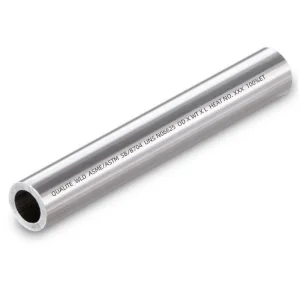


In modern heavy industry, high-performance corrosion-resistant tubing forms the literal circulatory system of energy plants, chemical refineries, aerospace machinery, and biopharmaceutical facilities.
Supply Chain & Geopolitical Resilience
The global demand for high-grade tubular products is experiencing a structural pivot. Transitioning from basic 304/306 commodity grades to specialized austenitic, duplex (UNS S32205), super duplex (UNS S32750), nickel alloys (Alloy 625, 800H), and titanium tubing (Grade 1 & 2), engineering buyers require high metallurgical purity and traceable manufacturing routes. Industrial engineering buyers face stricter environmental compliance laws, necessitating non-porous, crevice-resistant tubing that withstands extreme operating pressures and aggressive chemical media.
The Shift Toward Precision Cold Drawing (W&D)
While standard welded tubes offer commercial efficiency, high-gain thermal exchangers and high-pressure hydraulic lines mandate Welded & Drawn (W&D) or Seamless (SML) configurations. Cold drawing refines the grain structure across the fusion line, eliminating weld seam discontinuities, equalizing tensile yields, and creating an ultra-smooth internal surface finish ($Ra < 0.4 \mu m$). This structural homogeny is essential for preventing localized pitting and stress corrosion cracking (SCC).
| Alloy Classification | Representative Grades | PREN Rating | Primary Corrosion Advantage | Core Industrial Application |
|---|---|---|---|---|
| Standard Austenitic | 304L (1.4307), 316L (1.4404) | 19.0 – 25.0 | General oxidation & organic acid resistance | Food & Beverage, Sanitary Piping, General Fluid Lines |
| Stabilized Austenitic | 321 (1.4541), 347H (1.4878), 316Ti | 23.0 – 26.0 | Intergranular corrosion prevention (Ti/Nb stabilized) | High-Temp Exhaust, Petrochemical Heaters, Boiler Tubes |
| Super Austenitic | 904L (1.4539), UNS S31254 (6Mo) | 34.0 – 43.0 | Extreme chloride pitting & sulfuric acid resistance | Flue-gas desulfurization (FGD), Marine scrubbers, Phosphoric Acid |
| Duplex & Super Duplex | UNS S31803 / S32205 / S32750 | 35.0 – 43.0+ | High yield strength & resistance to Chloride SCC | Subsea Oil & Gas, Desalination Pressure Vessels |
| Nickel Superalloys | Inconel 625, Incoloy 800H, Hastelloy C276 | 50.0 – 68.0+ | High-temperature creep strength & severe acid duty | Nuclear Steam Generators, HPHT Chemical Synthesis |
| Titanium Alloys | Grade 1 (UNS R50250), Grade 2 | N/A (Passive Oxide) | Immune to seawater pitting & zero microbial bio-corrosion | Coastal Power Station Condensers, Aerospace Fluid Power |
Different engineering projects present distinct corrosive, thermal, and mechanical stress profiles. Our custom tubing manufacturing options directly solve specific macro-industry bottlenecks.
1. Offshore Oil & Gas and Sour Service Piping
In high-pressure, high-temperature (HPHT) subsea environments where hydrogen sulfide ($H_2S$), carbon dioxide ($CO_2$), and high-concentration chlorides coexist, standard stainless steels fail rapidly due to sulfide stress cracking (SSC). Spezilla engineers custom Duplex 2205 and Super Duplex 2507 seamless and W&D tubes. Controlled annealing ensures a precise 50/50 ferrite-austenite phase balance, optimizing mechanical yield strength (>550 MPa) and elevating PREN (>42) to withstand aggressive downhole conditions.
- Full compliance with NACE MR0175/ISO 15156
- High collapse resistance for deepwater umbilical bundles
- Continuous long lengths up to 25 meters eliminating field welds
2. Marine Desalination & Coastal Power Station Condensers
Reverse osmosis (RO) seawater desalination facilities and coastal power station condensers operate under continuous exposure to high-velocity saline water, leading to severe erosion-corrosion. Spezilla provides custom Titanium Grade 2 (UNS R50400) and Super Austenitic 6Mo (UNS S31254) tubes. Titanium’s self-healing surface passive film ($TiO_2$) provides virtual immunity to chloride pitting, guaranteeing a 30+ year operating lifecycle without micro-fouling breakdown.
- Thin wall options down to 0.40 mm for maximum thermal conductivity
- U-bend tubing with stress-relief heat treatment in the bend region
- Full hydrostatic testing up to 200 bar
3. High-Temperature Petrochemical Cracking & Exhaust Systems
Refineries, ethylene cracking furnaces, and high-performance automotive exhaust gas recirculation (EGR) systems operate at elevated temperatures ($600^\circ C - 1000^\circ C$), where sensitization and chromium carbide precipitation at grain boundaries cause catastrophic intergranular failure. We produce titanium-stabilized (321/321H) and niobium-stabilized (347H) as well as nickel alloys like Incoloy 800H to lock carbon atoms and preserve the protective chromium oxide layer.
- Creep-rupture resistance under continuous high thermal loads
- Bright Annealed (BA) internal bore for zero oxide scale shedding
- Custom expansion and flaring capability for easy installation
From raw mill strip selection to non-destructive testing, Spezilla enforces strict quality controls at every stage of production.
Spectrometric Strip Inspection
XRF and optical emission spectroscopy verify raw material chemical compositions before cold forming begins.
Automated TIG/Plasma Welding
Inert gas shielded autogenous welding achieves complete root penetration without filler metal contamination.
Precision Cold Drawing (W&D)
Tubes are drawn over dies and mandrels, reducing outer diameter and wall thickness to tight tolerances while homogenizing internal grains.
Inert Gas Bright Annealing
Heat treatment in pure hydrogen atmosphere ($1040^\circ C - 1150^\circ C$) restores ductility and yields a mirror-bright scale-free surface finish.
Comprehensive NDT Inspection
100% Eddy Current Testing (ECT), Hydrostatic testing, Ultrasonic testing (UT), and dimensional air-gauge verifications.
Information Gain Analysis: Welded & Drawn vs. Seamless Tubing Selection
A common engineering dilemma during procurement is choosing between Welded & Drawn (ASTM A249 / A688 / EN 10217-7) and Seamless (ASTM A213 / EN 10216-5) tubes. The decision impacts both structural performance and overall project economics:
- Wall Uniformity: Welded & Drawn tubes begin as precision cold-rolled strip, ensuring wall concentricity variance under $\pm 5\%$. Seamless tubes, formed by piercing solid billets, often exhibit concentricity variances up to $\pm 10\% - 12.5\%$. High concentricity in heat exchanger bundles guarantees uniform heat transfer dynamics and eliminates localized hot-spots.
- Surface Finish: W&D tubes boast extremely smooth internal bore profiles ($Ra \le 0.4 \mu m$), reducing fluid friction head-loss and resisting micro-bacterial fouling in food, beverage, and pharmaceutical sanitary applications (ASTM A270).
- Pressure Ratings & Code Compliance: Seamless tubing under ASTM A213 remains the industry standard for extreme pressure applications ($>350\text{ bar}$) or nuclear design codes where longitudinal welds are strictly prohibited by safety regulators. Spezilla maintains manufacturing capabilities across both technical pathways to support diverse engineering requirements.
As global industries transition toward zero-carbon emissions, the technical specifications for stainless steel tubing are evolving rapidly.
1. Hydrogen Infrastructure & High-Pressure Storage
The rise of the global hydrogen economy requires tube lines capable of handling gaseous hydrogen at operating pressures ranging from 350 bar to 1000 bar. Standard austenitic steels can suffer from hydrogen embrittlement. Spezilla is advancing high-nickel, high-manganese custom austenitic tubing (316L with >12% Ni content and modified 316LN) that resists atomic hydrogen permeation, enabling safer refuel stations and fuel-cell interconnects.
2. Ultra-High Purity (UHP) Tubing for Semiconductors
Next-generation semiconductor fabs demand Ultra-High Purity (UHP) stainless steel tubing with internal electropolished surface finishes down to $Ra \le 0.13 \mu m$ ($5 \mu\text{in}$). Residual moisture, outgassing, and particle generation must be virtually zero. Spezilla's dedicated cleanroom processing lines produce precision-cleaned 316L EP tubes packaged in double nitrogen-purged poly-bags for critical gas distribution systems.
3. Green Steel Production & ESG Sustainability
Reducing the carbon footprint of raw materials is a top priority for global EPC contractors. By pairing electric arc furnace (EAF) smelting with scrap-recycled raw materials and hydrogen-powered bright annealing furnaces, Spezilla works to continuously reduce Scope 1 and Scope 2 emissions across our manufacturing footprint.
Tailored engineering packages designed to resolve specific operational challenges across key industrial sectors.
Solution A: Thermal Exchanger Maintenance & Re-tubing Bundles
Overhaul down-time in chemical plants can cost millions daily. Spezilla delivers pre-bent, custom-length U-tubes manufactured strictly to ASTM A249 / A688 specifications. We provide exact U-bend radii tolerance control, heat-treatment on the bent portion to relieve residual stress, and color-coded end-caps for rapid installation.
Solution B: High-Vibration Hydraulic Fluid Lines
Vibration fatigue in heavy equipment, aerospace hydraulics, and marine propulsion systems causes micro-fissures along tube walls. Our precision cold-drawn seamless tubing undergoes 100% Ultrasonic Flaw Detection and mechanical flattening, flaring, and reverse bending tests to ensure reliable fatigue strength under cyclic shock loading.
Detailed answers to technical, commercial, and quality questions frequently raised by procurement agents and piping engineers.
Explore our secondary catalog of titanium, ferritic-martensitic, and specialized austenitic ASME/ASTM tube grades.








