
High-Performance Austenitic & Duplex U-Bend Tubing
Explore our specialized heat exchanger tube lines, manufactured to ASME SA213, SA249, SA312, and SA688 standards with comprehensive EN 10204 3.1/3.2 certification.
-
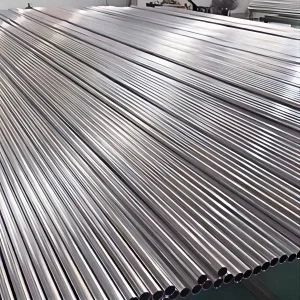
Custom Austenitic steel ASME SA213 · TP310S Manufacturer, Products
-

High-Quality Austenitic Steels 321 • UNS S32100 • 1.4541 Manufacturers, Factories
-

Custom Austenitic steel ASME SA312 · TP316L Manufacturer, Manufacturers
-

High-Quality Austenitic steel ASME SA213 · TP347 Manufacturers, Supplier
-

High-Quality Austenitic Steels 309H • UNS S30909 Product, Products
-

High-Quality Duplex Steels 2205 • S31803/S32205 • 1.4462 Manufacturer, Products
-

High-Quality Austenitic Steels 317L • UNS S31703• 1.4438 Suppliers, Factory
-

High-Quality Austenitic steel ASME SA213 · TP309S Suppliers, Product
The Engineering Role of U-Bend Heat Exchanger Tubes
In modern thermal process engineering, Custom Stainless Steel U-Bend Heat Exchanger Tubes represent a critical mechanical component engineered to withstand severe thermal expansion differentials, high pressure dynamics, and aggressive corrosive fluid environments. Unlike straight tubular configurations that require floating heads or expansion joints to absorb differential thermal growth, U-bent tubes automatically accommodate thermal stresses through their inherent geometric elasticity.
When high-temperature process fluids pass through the tube side of a shell-and-tube heat exchanger or feedwater heater, the longitudinal expansion of the legs is seamlessly absorbed by the U-bend radius ($R$). This design eliminates mechanical fatigue on tube sheets, reduces weld joint count by 50% compared to hairpin loops, and provides a highly reliable barrier against cross-contamination of heat transfer media.
Key TEMA & ASME Manufacturing Standards
- TEMA RCB 2.31: Specifies bending radii tolerances, minimum wall thinning limits ($t_{min}$), and tube leg alignment.
- ASME SA213 / SA213M: Seamless Ferritic and Austenitic Alloy-Steel Boiler, Superheater, and Heat-Exchanger Tubes.
- ASME SA249 / SA249M: Welded Austenitic Steel Boiler, Superheater, Heat-Exchanger, and Condenser Tubes.
- ASME SA688 / SA688M: Seamless and Welded Austenitic Stainless Steel Feedwater Heater Tubes, including post-bend heat treatment.
- ASTM A789 / A789M: Seamless and Welded Duplex Stainless Steel Tubing for General Service.
Why Global EPCs Source Stainless Steel U-Bend Tubes from Chinese Manufacturers
Over the past two decades, China’s industrial stainless steel tube manufacturing sector has transformed from volume-driven production to a global benchmark for metallurgical precision, automated cold-working engineering, and stringent quality governance. Leading Chinese U-bend tube factories combine integrated raw material smelting (AOD/VOD refining) with advanced cold-drawing and bright annealing technologies to supply tier-1 energy projects worldwide.
Full Vertical Integration
Chinese manufacturing hubs leverage seamless integration from raw material mother hollows and master strip coils down to precision bending. This eliminates supply chain latency and ensures complete chemical heat trace integrity.
Advanced Automated Bending
State-of-the-art CNC cold bending equipment ensures exact control over leg ovality, bend angle, and wall thinning. Automatic hydraulic Mandrel bending prevents internal tube wrinkling even at tight $1.5D$ radii.
In-House Heat Treatment
Equipped with continuous roller-hearth protective atmosphere bright annealing furnaces (using pure $H_2$ gas environment), Chinese factories perform localized post-bend stress relieving without surface oxidation or scaling.
Information Gain Note on Wall Thinning Control: Standard cold bending stretches the outer radius (extrados) of the U-tube, causing wall thinning. Chinese Tier-1 mills utilize real-time ultrasonic wall thickness feedback combined with pre-boost hydraulic cold bending technology to limit outer wall thinning to under 10%—significantly better than the TEMA standard allowance of $t_{min} = t_{nom} \times \frac{2R}{2R + D}$.
Stainless Steel, Duplex & Nickel Alloy Selection Guide
Selecting the correct metallurgical grade for U-bend heat exchanger tubes depends on working media temperature, chloride ion concentration, pH levels, velocity, and operating pressure. Below is a comprehensive engineering comparison of primary heat exchanger tube materials:
| Alloy Grade | UNS / EN Standard | Pitting Resistance (PREN) | Primary Corrosion Advantage | Typical Industrial Application |
|---|---|---|---|---|
| 304 / 304L | UNS S30400 / S30403 1.4301 / 1.4307 |
18 - 20 | General oxidation resistance, excellent weldability. | Feedwater heaters, food/dairy evaporators, low-chloride fresh water exchangers. |
| 316 / 316L / 316Ti | UNS S31600 / S31603 1.4401 / 1.4404 / 1.4571 |
23 - 25 | Molybdenum addition resists pitting corrosion in chloride solutions. | Chemical processing, pharmaceutical heat transfer, brackish cooling systems. |
| 317L | UNS S31703 1.4438 |
28 - 30 | Higher Mo content (3-4%) providing superior resistance to sulfurous acid media. | Flue gas desulfurization (FGD), pulp & paper bleaching, chemical condensers. |
| 321 / 321H | UNS S32100 / S32109 1.4541 / 1.4878 |
19 - 21 | Titanium stabilized against intergranular corrosion at 400°C–800°C. | Refinery hydrocrackers, high-temperature exhaust gas heat recovery, steam superheaters. |
| 310S / 309S | UNS S31008 / S30908 1.4845 / 1.4833 |
25 - 27 | High Cr-Ni content delivering exceptional high-temperature oxidation strength up to 1100°C. | Waste heat boilers, petrochemical reboilers, furnace heat exchanger tubes. |
| Duplex 2205 | UNS S31803 / S32205 1.4462 |
34 - 36 | Austenitic-Ferritic dual phase; high yield strength with immunity to chloride stress cracking. | Offshore oil & gas platforms, seawater exchangers, chemical tankers. |
| Nickel Alloy 825 / 625 | UNS N08825 / N06625 2.4858 / 2.4856 |
45 - 52 | Exceptional resistance to reducing/oxidizing acids and severe sour gas ($H_2S$) environments. | Sour gas processing, nuclear waste heat exchangers, sulfuric acid coolers. |
| Titanium Grade 2 | UNS R50400 3.7035 |
N/A (Oxide Film) | Complete immunity to ocean seawater corrosion, micro-fouling, and erosion. | Seawater surface condensers, coastal power generation, desalination plants. |
*PREN (Pitting Resistance Equivalent Number) formula: $\text{PREN} = \% \text{Cr} + 3.3 \times (\% \text{Mo} + 0.5 \times \% \text{W}) + 16 \times \% \text{N}$. Higher numbers indicate superior resistance to localized pitting in marine and chemical environments.
Technological Trends & Decarbonization in Heat Exchanger Manufacturing
1. Transition to Super Duplex & High-Mo Super Austenitics
As global energy infrastructure pushes into harsher environments (deepwater drilling, geothermal energy extraction, and high-pressure hydrogen production), standard 316L tubing is rapidly being upgraded to Duplex 2205, Super Duplex 2507, and 6-Moly alloys (UNS S31254). These alloys allow heat exchanger designers to reduce tube wall thickness due to higher tensile strength, resulting in improved thermal conductivity and lower structural bundle weight.
2. Waste Heat Recovery Units (WHRU) & Energy Efficiency
Global net-zero carbon mandates are driving massive retrofits of industrial plant waste heat recovery systems. U-bend heat exchanger tubes play a key role in recovering high-enthalpy flue gas energy in steel mills, cement kilns, and chemical refineries. The seamless single-pass layout of U-tubes facilitates compact bundle arrangements that maximize heat transfer per cubic meter of shell space.
3. Enhanced Non-Destructive Testing (NDT) Protocols
Modern quality control has shifted from simple hydrostatic testing to multi-frequency Eddy Current Testing (ECT) combined with internal ultrasonic thickness measurement. Critical U-bent zones are tested post-bending to verify that cold working has introduced zero micro-fissures, micro-cracks, or severe permeability variations in the arc area.
4. Bright Annealing in Pure Hydrogen Atmosphere
Traditional open-air annealing produces surface oxide scale that must be removed via acid pickling, creating chemical waste and surface roughness. Leading factories utilize closed-loop pure Hydrogen ($H_2$) bright annealing, producing ultra-smooth internal and external surfaces ($Ra < 0.4 \mu m$) that prevent fluid fouling and scale accumulation inside the U-bend curvature.
Global Procurement Compliance & Inspection Benchmarks
Procurement directors and quality managers at major EPC firms (Engineering, Procurement, and Construction) evaluate U-bend tube suppliers based on strict adherence to international quality standards, traceability, and post-bend processing controls. Below are the mandatory inspection checkpoints executed prior to dispatch:
Post-Bend Solution Annealing
Cold bending induces severe localized strain hardening and residual tensile stresses in the bend zone, rendering austenitic stainless steel highly susceptible to Stress Corrosion Cracking (SCC). Per ASME SA688 and TEMA specifications, the U-bend area plus at least 150mm of adjacent straight legs must undergo electric resistance or induction solution heat treatment at 1040°C–1120°C, followed by rapid quenching.
Dimensional & Ovality Verification
Leg spacing (pitch $P$), leg length tolerance (+3mm/-0mm), and bend area ovality are verified using precision digital gauges. Ovality percentage is strictly controlled via the standard formula:
$$\text{Ovality (\%)} = \frac{D_{max} - D_{min}}{D_{nom}} \times 100 \le 8\%$$
Hydrostatic & Pneumatic NDT
100% of finished U-tubes undergo hydrostatic testing at pressures up to 300 bar (4350 PSI), or differential air-under-water testing (AUWT) at 10 bar. This ensures zero micro-leaks exist across both the straight leg lengths and the bent geometry.
Material Traceability & EN 10204 3.1 / 3.2 Certification
Every shipment of stainless steel U-bend heat exchanger tubes is supplied with an authentic Mill Test Certificate (MTC) according to EN 10204 3.1 (or EN 10204 3.2 with independent third-party witness inspection by SGS, TÜV, Bureau Veritas, or Lloyd's Register). MTCs report original heat numbers, chemical ladle analysis, mechanical tensile/yield test results, hardness values, intergranular corrosion test results (ASTM A262 Practice E), and NDT clearance.
Engineering Applications Across Global Industries
Custom U-bend stainless steel tubes serve as core thermal conduits in specialized high-reliability infrastructure:
Nuclear & Fossil Feedwater Heaters
High-pressure feedwater heaters in thermal power plants utilize ASME SA688 TP304L/TP316L or ferritic SA268 Grade 439 U-tubes to withstand high-velocity steam condensate without stress corrosion cracking or erosion-corrosion.
Petrochemical & Refinery Reboilers
Heavy petroleum fraction reboilers and catalytic cracking units use SA213 TP321H, TP347, or TP310S U-bend bundles to maintain structural integrity under continuous thermal cycling and high sulfur atmospheres.
Marine Desalination & Condensers
Multi-Stage Flash (MSF) and Reverse Osmosis (RO) energy recovery systems employ Duplex 2205, Super Duplex 2507, or Titanium Grade 2 U-tubes to defeat severe marine bio-fouling and localized chloride pitting.
Pharmaceutical & Sanitary Evaporators
Falling film evaporators for biopharmaceutical and dairy production use mechanically polished ($Ra < 0.4\mu m$) or electropolished TP316L U-tubes to prevent bacterial growth and comply with FDA/3-A sanitary guidelines.
Frequently Asked Engineering & Procurement Questions
Direct insights from our metallurgical and quality engineering teams to assist your technical evaluation.
Q1: How is the minimum wall thickness ($t_{min}$) calculated after cold bending U-tubes?
During cold bending, the outer wall (extrados) thins due to tension stretching. According to TEMA standards and ASME SA688, the minimum wall thickness after bending is calculated by: $t_{min} = t_{nom} \times \frac{2R}{2R + D}$, where $t_{nom}$ is nominal wall thickness, $R$ is centerline bend radius, and $D$ is outside tube diameter. Tier-1 factories engineer raw tube wall selection to ensure the finished extrados wall never falls below design code minimums.
Q2: Is post-bend heat treatment mandatory for all stainless steel U-bend tubes?
It depends on the application code and grade. For austenitic grades (304L, 316L) used in feedwater heaters under ASME SA688, stress-relief or solution annealing of the bend area plus 150mm of leg length is mandatory to prevent Stress Corrosion Cracking (SCC). For duplex alloys, heat treatment of the bend is recommended when $R \le 4D$ to restore the 50/50 ferrite-austenite phase balance.
Q3: What are the typical leg length limits and shipping considerations for long U-tubes?
Max unbent straight lengths reach up to 25,000mm (25 meters). After bending, U-tubes with leg lengths up to 12 meters are packaged into custom wooden export boxes equipped with dedicated internal wooden cradles for each tube radius row. This prevents metal-to-metal rubbing, bend distortion, or scratching during sea transportation.
Q4: How does bright annealing differ from standard open-air annealing and pickling?
Bright annealing is performed in an airtight furnace filled with pure Hydrogen gas ($H_2$) atmosphere. It prevents oxygen scaling, resulting in a mirror-like bright surface without requiring chemical acid pickling. Bright annealed tubes feature lower surface roughness ($Ra$), superior cleanliness for oxygen/high-purity service, and improved corrosion resistance.
Specialty Alloys, Titanium & Ferritic Tubing
Advanced materials for extreme chemical service, marine condensers, and high-temperature furnace exchangers.
-

High-Quality Titanium Tubes • Grade 2 • UNS R50400 Factories, Products
-

Custom Nickel Alloy Tubes 825 • UNS N08825 • 2.4858 Suppliers, Product
-

Custom Austenitic Steels 321H • UNS S32109 • 1.4878 Manufacturer, Products
-

High-Quality Ferritic & Martensitic Steels 410 • UNS S41000• 1.4512 Suppliers, Factories
-

High-Quality Austenitic Steels 347 • UNS S34700 • 1.4550 Suppliers, Product
-

Custom Austenitic steel ASME SA213 · TP316LN.UNS S31653 Manufacturers, Factory
-

High-Quality Austenitic steel ASME SA269 · TP304L Suppliers, Product
-

Custom Titanium Tubes • Grade 12 • UNS R53400 Manufacturers, Product
Partner with Tier-1 U-Bend Tube Engineers
Whether you require custom bend radii ($R$), precise leg lengths, localized solution annealing, or third-party EN 10204 3.2 inspection for your upcoming overhaul project, our engineering sales team delivers comprehensive technical review within 24 hours.
