
Featured Austenitic & High-Alloy Tubing Solutions
Explore our engineered line of custom corrosion-resistant tubing, engineered for critical process environments, heat transfer, and mechanical structural applications.
-
 High-Quality Austenitic steel ASME SA269 · TP321 Supplier, ProductsInspect Technical Spec
-
 Custom Austenitic Steels 310H • UNS S31009 Manufacturers, ProductsInspect Technical Spec
-
 High-Quality Super Austenitic Steels 254SMO • UNS S31254 • 1.4547 Factory, FactoriesInspect Technical Spec
-
 High-Quality Austenitic Steels 321 • UNS S32100 • 1.4541 Manufacturers, FactoriesInspect Technical Spec
-
 High-Quality Austenitic steel ASME SA269 · TP316L Manufacturers, FactoriesInspect Technical Spec
-
 High-Quality Austenitic steel ASME SA213 · TP316Ti Suppliers, ProductInspect Technical Spec
-
 High-Quality Austenitic Steels 347 • UNS S34700 • 1.4550 Suppliers, ProductInspect Technical Spec
-
 High-Quality Super austenitic steel ASME SA269 · N08904 Product, ProductsInspect Technical Spec
Global Demand Dynamics for Custom SUS304 Tubing
Analyzing macro-industrial shifts, supply chain resilience, and precision engineering criteria facing OEM procurement officers across North America, Europe, and Asia-Pacific.
In the contemporary industrial ecosystem, the demand for premium-grade SUS304 (UNS S30400 / EN 1.4301) custom stainless steel tubing has transcended commodity volume purchasing. Global Engineering, Procurement, and Construction (EPC) conglomerates, alongside specialized original equipment manufacturers (OEMs), face unprecedented structural pressures: escalating fluid pressure profiles, stringent environmental emissions mandates, aggressive chemical media, and the critical need to eliminate unplanned operational downtime.
SUS304 austenitic stainless steel forms the structural and thermal backbone of modern process infrastructure. Accounting for over 50% of global stainless steel production, its nominal chemical matrix—comprising 18% Chromium and 8% Nickel—delivers an optimal equilibrium of mechanical ductility, intergranular corrosion resistance, cost-efficiency, and thermal stability. However, as process machinery scales in complexity, standard off-the-shelf tubing continuously fails to satisfy critical tolerances, specialized bending radiuses, or stringent surface finish requirements. This micro-gap has driven the strategic necessity for direct mill-partnered custom SUS304 tube suppliers and manufacturing factories.
Total Cost of Ownership (TCO)
Transitioning from standard tubing to custom-engineered SUS304 dimensions reduces scrap rates during tube-sheet expansion by up to 34% and extends mean-time-between-failures (MTBF) in thermal loops.
Supply Chain Risk Mitigation
Global OEMs are consolidating vendor matrices. Preferred SUS304 factories must provide dual-route manufacturing (Seamless vs. Welded & Drawn) backed by raw material heat traceability.
High-Purity & Sanitary Demands
Biopharmaceutical, semiconductor, and hydrogen fuel sectors require electropolished inner bores with zero micro-cracks, preventing bacterial entrapment and gas contamination.
SUS304 Chemical Architecture & Mechanical Thresholds
Comprehensive material comparison between standard SUS304, ultra-low carbon SUS304L, stabilized SUS321, and molybdenum-enhanced SUS316L.
| Grade Designation | UNS / EN Number | Chromium (Cr) % | Nickel (Ni) % | Carbon (C) % Max | Tensile Strength (MPa) | Yield Strength (MPa) | PREN Rating |
|---|---|---|---|---|---|---|---|
| SUS304 (Standard) | UNS S30400 / 1.4301 | 18.00 – 20.00 | 8.00 – 10.50 | 0.07 | ≥ 515 | ≥ 205 | ~ 19.0 |
| SUS304L (Low Carbon) | UNS S30403 / 1.4307 | 17.50 – 19.50 | 8.00 – 12.00 | 0.030 | ≥ 485 | ≥ 170 | ~ 18.5 |
| SUS321 (Ti Stabilized) | UNS S32100 / 1.4541 | 17.00 – 19.00 | 9.00 – 12.00 | 0.08 (Ti 5xC min) | ≥ 515 | ≥ 205 | ~ 19.5 |
| SUS316L (Mo-Bearing) | UNS S31603 / 1.4404 | 16.00 – 18.00 | 10.00 – 14.00 | 0.030 (Mo 2.0-3.0) | ≥ 485 | ≥ 170 | ~ 24.5 |
Technical Deep-Dive: Intergranular Corrosion & Chromium Carbide Kinetics
When standard SUS304 tubing is exposed to temperatures between 450°C and 850°C during welding or elevated thermal service, carbon diffuses toward the grain boundaries and reacts with chromium to precipitate Chromium Carbides ($Cr_{23}C_6$). This mechanism depletes adjacent matrix zones of elemental Chromium below the vital 10.5% passivation boundary, triggering catastrophic intergranular attack. Advanced SUS304 custom manufacturing eliminates this via Bright Annealing at 1040°C–1120°C followed by rapid hydrogen quenching, locking Chromium in solid solution and restoring complete passive film integrity.
Advanced SUS304 Tube Production Engineering
From raw mother hollows and strip coils to high-precision cold pilgered, drawn, and bright annealed finished tubes.
1. Seamless (SMLS) Processing
Hot rotary piercing followed by multi-pass cold pilgering and precision bench cold drawing. Best suited for ultra-high pressure applications (ASME SA213 standard) where longitudinal weld seams are strictly prohibited by code.
2. Welded & Drawn (W&D)
Autogenous TIG/Plasma continuous strip welding followed by sink-drawing or plug-drawing. Yields ultra-tight wall thickness concentricity and smooth inner bore geometry at optimized manufacturing economics.
3. Custom Fabrication & U-Bending
Precision CNC cold bending to tight radius ratios (R=1.5D to 3D) for shell-and-tube heat exchangers (ASTM A688 compliance). Stress-relief heat treatment applied to bend zones to eliminate residual stress corrosion cracking.
Custom SUS304 Application Matrix Across Core Sectors
Tailored engineering specs engineered specifically for high-stress operational environments worldwide.
Heat Exchangers & Condensers
Specified under ASTM A249 / A213. Custom straight lengths up to 25 meters with expanded end-tolerances ensure leak-free tube-to-tubesheet expansion in feedwater heaters and refinery thermal loops.
Food, Beverage & Bio-Pharma
Fabricated to ASTM A270 Sanitary Standards. Internal mechanical polishing up to 400 Grit (Ra < 0.4 µm) combined with electropolishing prevents bio-film accumulation and simplifies CIP/SIP cycles.
Automotive & Transportation
Engineered thin-wall SUS304 tubes for Exhaust Gas Recirculation (EGR) coolers, fuel injection lines, and structural chassis components requiring extreme hydroforming capability.
Hydraulic & Instrumentation Lines
Metric and imperial small-bore tubing manufactured under ASTM A269 with seamless bright annealed finish, guaranteeing zero particle contamination in high-pressure oil/gas control lines.
HVAC, Refrigeration & Heating
Precision coiled SUS304 tubes designed for immersion coils, electric heating element sheaths, and geothermal loop circuits operating under cyclic thermal stress.
Semiconductor & High Vacuum
Ultra-high purity (UHP) seamless SUS304L / 316L tubing subjected to vacuum induction melting (VIM) and electropolishing for corrosive gas delivery systems.
Technology Roadmap: Next-Generation SUS304 Tubing
Discover how advanced factory automation, AI inline NDT, and green steel decarbonization are redefining custom tubing specifications.
The global stainless steel tube manufacturing landscape is undergoing a rapid paradigm shift driven by digital quality tracking and aggressive ESG mandates. Over the coming decade (2025–2035), custom SUS304 tube suppliers are moving beyond traditional metallurgical manufacturing into smart cyber-physical production frameworks:
AI-Powered Inline Defect Detection
Real-time computer vision integration combined with high-frequency laser ultrasonic inspection detects sub-surface micro-voids during tube extrusion at line speeds exceeding 60 meters per minute.
Green Steel Decarbonization
Future-ready mills are adopting Green Hydrogen Electric Arc Furnace (H2-EAF) smelting, reducing the embodied carbon footprint of SUS304 mother hollows by up to 85% without compromising purity.
Sub-Micron Grain Refinement
Advanced thermo-mechanical processing (TMP) creates ultra-fine grain structures (ASTM Grain Size 10+), increasing SUS304 yield strength by 40% while preserving its signature cryogenic toughness.
Quality Assurance & Global Certification Standard
Rigorous multi-stage destructive and non-destructive testing regimes ensuring total compliance with international engineering codes.
Procuring custom SUS304 tubing requires total transparency and compliance verification. Every batch produced by premier manufacturing facilities undergoes stringent testing protocols before export release:
| Testing Category | Standard Specification | Execution Methodology | Pass/Fail Benchmark |
|---|---|---|---|
| Eddy Current Inspection (NDT) | ASTM E426 / EN 10246-2 | 100% inline electromagnetic sensing | Zero artificial notch signals above standard calibration |
| Hydrostatic Pressure Testing | ASTM A1016 / ASME SA1016 | Internal water pressurization calculated via Barlow's Formula | Sustained pressure without weeping, deformation or loss |
| Intergranular Corrosion Test | ASTM A262 Practice E (Monypenny) | Copper-Copper Sulfate-16% Sulfuric Acid boiling test | No cracking under 180° bend test at 5X magnification |
| Dimensional & Wall Profile | EN ISO 1127 / ASTM A1016 | Laser micrometric profiling across 360 degrees | OD / Wall thickness tolerance within ±0.05 mm |
| Mill Test Certification | EN 10204 Type 3.1 / Type 3.2 | Independent 3rd party laboratory endorsement (TÜV, SGS, BV) | Full heat traceability matching original ladles |
Extended Custom Stainless & Alloy Tube Catalog
Explore additional specialized alloy grades, high-temperature heat resistant tubes, and seamless product configurations.
-
 Custom Austenitic Steels 316H • UNS S31609 • 1.4919 Supplier, ProductInspect Technical Spec
-
 Custom Austenitic Steels 316Ti • UNS S31635 • 1.4571 Manufacturer, ProductsInspect Technical Spec
-
 High-Quality Austenitic steel ASME SA213 · TP309S Suppliers, ProductInspect Technical Spec
-
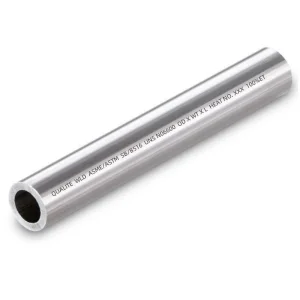 High-Quality Nickel Alloy Tubes 600 • UNS N06600 • 2.4816 Manufacturer, ManufacturersInspect Technical Spec
-
 Custom Austenitic steel ASME SA213 · TP304 Seamless Tube Manufacturer, SupplierInspect Technical Spec
-
 Custom Austenitic steel ASME SA312 · TP321 Suppliers, ProductInspect Technical Spec
-
 High-Quality Austenitic Steels 309H • UNS S30909 Product, ProductsInspect Technical Spec
-
 Custom Nickel Alloy Tubes 400 • UNS N04400 • 2.4360 Manufacturer, ProductsInspect Technical Spec
Frequently Asked Questions: SUS304 Procurement & Engineering
Direct technical answers addressing search intent, metallurgical standards, custom tolerances, and factory production workflows.
What is the key metallurgical difference between SUS304, SUS304L, and SUS316L?
SUS304 contains nominal 18% Cr / 8% Ni with a carbon ceiling of 0.07%. SUS304L restricts carbon to max 0.030%, eliminating carbide precipitation during welding and resisting intergranular corrosion without requiring post-weld heat treatment. SUS316L incorporates 2.0–3.0% Molybdenum (Mo) and higher Nickel, elevating its Pitting Resistance Equivalent Number (PREN) from ~19 to ~24.5, making 316L significantly superior in chloride-rich and marine environments.
Should I specify Seamless (SMLS) or Welded & Drawn (W&D) SUS304 tubing for heat exchangers?
For critical high-pressure heat exchangers governed by ASME SA213 or nuclear codes, Seamless (SMLS) is typically specified due to the absence of longitudinal welds. However, for industrial shell-and-tube exchangers under ASTM A249 / A688, Welded & Drawn (W&D) tubing is widely preferred. Cold drawing after autogenous welding fully recrystallizes the weld zone, offering superior wall thickness uniformity (±5% vs ±10% for seamless) and superior heat transfer efficiency at lower procurement costs.
What custom dimensional tolerances and surface finishes can your factories achieve?
Our specialized cold-drawing mills achieve outside diameter (OD) tolerances down to ±0.03 mm and wall thickness tolerances to ±0.05 mm. Standard outer diameters range from 4.00 mm to 114.30 mm, with wall thicknesses from 0.40 mm to 3.05 mm and straight lengths up to 25 meters. Inner surface finishes range from standard Bright Annealed (Ra ≤ 0.8 µm) down to electropolished high-purity sanitary grades (Ra ≤ 0.25 µm / 10 micro-inch).
How does bright annealing preserve the corrosion resistance of SUS304 tubes?
Bright annealing occurs in a hermetically sealed furnace filled with a reducing hydrogen ($H_2$) or cracked ammonia gas atmosphere at temperatures between 1040°C and 1120°C. This process dissolves internal stresses and precipitates carbides back into the austenitic phase without causing surface oxidation or scale. As a result, the tubing exits the furnace with a mirror-bright reflective finish that retains full passive Chromium Oxide ($Cr_2O_3$) film formation capability.
What quality documentation and mill test certificates accompany international shipments?
Every shipment is accompanied by a certified EN 10204 Type 3.1 Mill Test Certificate detailing exact chemical heat analysis, mechanical tensile and yield testing, hardness numbers, flattening/flaring tests, and 100% NDT inspection results. Independent third-party inspection (EN 10204 3.2) endorsed by TÜV, Lloyd's Register, SGS, or Bureau Veritas is available upon buyer request.
