
UT-Certified Specialty Tubing Catalog (Part 1)
Explore our premier engineered tubular products compliant with ASTM E213, ASME SA213/SA312/SA269, and EN ISO 10893-10 ultrasonic inspection standards.






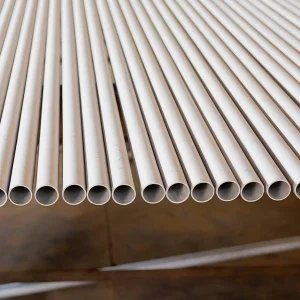

Understanding UT Compliance: The Gold Standard in Non-Destructive Volumetric Tubing Quality
In mission-critical industrial applications—ranging from nuclear steam generators to deepwater subsea hydraulic Umbilicals—tube failure is never an option. Standard hydrostatic or surface eddy current testing alone cannot guarantee full volumetric soundness.
As a leading Custom UT Compliant Specialty Tubing Manufacturer & Supplier, Spezilla Tube Co., Ltd. implements advanced Ultrasonic Testing (UT) per ASTM E213, EN ISO 10893-10, and ASME Section V Article 4 protocols. Unlike surface inspection techniques, high-frequency ultrasonic acoustic waves (typically 5 MHz to 15 MHz) penetrate the full wall volume of seamless and cold-drawn welded stainless steel, duplex, and nickel alloy tubes. This non-destructive testing (NDT) mechanism enables 100% detection of longitudinal, transverse, and sub-surface imperfections, inclusions, micro-fissures, and wall thickness deviations.
Longitudinal & Transverse Flaw Detection
UT testing employs dual-channel shear wave piezo-composite transducers configured to detect both longitudinal splits and transverse micro-cracks in the tubing wall. This guarantees zero leak paths under thermal cycling and extreme pressures.
Continuous Wall Thickness Profiling
Multi-channel ultrasonic compression probes dynamically map wall thickness around the full 360° circumference. Wall eccentricity is monitored to prevent localized pressure stress points in heat exchanger U-bends.
Precision Calibration Notch Acceptance
Our UT equipment is calibrated against certified master tubes with EDM artificial reference notches (N5 or N10 depth rating, equal to 5% or 10% of nominal wall thickness). Any signal exceeding threshold triggers automatic quarantine.
Global Commercial & Industrial Status of UT Compliant Specialty Tubing
The global market for high-integrity specialty steel and nickel alloy tubing is undergoing a paradigm shift driven by decarbonization, high-pressure hydrogen infrastructure, deepsea oil & gas extraction, and next-generation nuclear power plants.
Historically, commercial-grade tubing compliant with standard hydrostatic testing was deemed adequate for basic low-pressure process piping. However, modern process conditions—characterized by high partial pressures of $H_2S$, supercritical $CO_2$ media, extreme thermal shock, and ultra-high purity gas transport—have rendered standard tubing vulnerable to catastrophic hydrogen embrittlement, stress corrosion cracking (SCC), and pinhole rupture.
Energy TransitionHydrogen Infrastructure & Gaseous Storage
High-pressure hydrogen refueling stations operating at 700 bar (10,000 psi) require seamless stainless steel tubing (ASME SA213 TP316L/316Ti) with flawless internal surfaces. UT compliance guarantees the complete absence of internal drawing laps or micro-inclusions that could serve as hydrogen trapping sites.
LNG & CryogenicsFloating LNG (FLNG) Regasification Modules
Cryogenic LNG transport at -162°C requires austenitic and super-austenitic tubing (ASME SA312 TP304L/TP316L, UNS S31254) tested for notch toughness and volumetric integrity. UT inspection prevents propagation of micro-cracks under cryogenic thermal expansion and vibration loads.
Nuclear & DefenseGen III+ SMR Steam Generators
Small Modular Reactors (SMRs) specify high-nickel alloys such as Alloy 825 (UNS N08825) and Alloy 690 under 100% Ultrasonic and Eddy Current combined testing to ensure zero primary-to-secondary coolant leak risk across a 60-year operational life.
- Strict Mandates by Tier-1 EPCs: Global engineering giants (TechnipFMC, Saipem, Bechtel, Petrofac) now universally specify UT compliance for all heat exchanger tubes (ASTM A249 / ASTM A213) installed in critical sour service units.
- Reduction of Life-Cycle Operational Expenditure (OPEX): Replacing failed tubing in offshore production platforms can cost up to 50 times the original tube purchasing price. Premium UT-tested specialty tubing reduces unplanned shutdowns to virtually zero.
- Regulatory Quality Traceability: Compliance with Pressure Equipment Directive (PED 2014/68/EU), AD 2000-W0, and ASME Boiler and Pressure Vessel Code (BPVC) requires EN 10204 3.1 or independent 3.2 certification backed by full UT NDT test records.
Metallurgical Matrix & UT Test Specification Standards
Selecting the right alloy grade and non-destructive testing protocol is crucial for balancing corrosion resistance, mechanical strength, and manufacturing economy.
| Material Family | Common Alloy Grades | UNS / EN Designation | PREN Rating | Applicable Tube Standard | UT Inspection Benchmark |
|---|---|---|---|---|---|
| Austenitic Stainless | TP304L / SA312 TP304L | UNS S30403 / 1.4307 | ∼ 19.0 | ASME SA312 / SA269 | ASTM E213 / Notch N10 |
| Stabilized Austenitic | TP316Ti / 316H / 347H | UNS S31635 / S34709 | ∼ 25.0 | ASME SA213 / SA312 | EN ISO 10893-10 / Class U2 |
| Duplex Stainless | Duplex 2205 | UNS S31803 / S32205 | ≥ 35.0 | ASTM A789 / A790 | ASTM E213 / Notch N5 |
| Super Duplex | Super Duplex 32760 / 2507 | UNS S32760 / 1.4501 | ≥ 42.0 | ASTM A789 / EN 10216-5 | 100% Dual-Axis Shear Wave UT |
| Nickel Superalloy | Incoloy Alloy 825 | UNS N08825 / 2.4858 | ≥ 32.0 | ASTM B163 / B423 / B704 | ASME Sec V Art 4 / Immersion UT |
The Pitting Resistance Equivalent Number (PREN) evaluates a tube alloy's resistance to localized pitting corrosion in chloride-rich environments using the standard formula:
While a higher PREN (e.g., Super Duplex 32760 with PREN > 42) ensures superior thermodynamic resistance to acid chlorides, only 100% Ultrasonic Testing ensures that the material is physically free of micro-voids, severe inclusions, or drawing seams where localized pitting initiation typically accelerates.
Macro Industry Solutions & Localized Application Scenarios
Tailored tubular engineering solutions designed for complex environmental stresses across key regional industrial hubs worldwide.
North American Gulf Coast & Permian Sour Gas Recovery
Challenge: Processing wet, sour gas containing high levels of $H_2S$ and $CO_2$ causes rapid sulfide stress cracking (SSC) in un-inspected welded piping.
Spezilla Solution: Custom seamless and welded-drawn Nickel Alloy 825 (UNS N08825) and Duplex 2205 tubes compliant with NACE MR0175/ISO 15156. Every meter undergoes continuous immersion UT testing to guarantee zero volumetric defects where $H_2S$ gas could collect and initiate cracking.
European Green Energy & Offshore Wind Electrolyzers
Challenge: Offshore green hydrogen electrolyzers require high-pressure tubing operating in highly corrosive marine salt-spray atmospheres with zero gas permeation leakage.
Spezilla Solution: Precision bright-annealed Austenitic 316Ti (1.4571) and Super Austenitic 6Mo (S31254) tubing with controlled internal surface roughness ($Ra < 0.4 \mu m$) and full UT shear wave testing per EN ISO 10893-10 Class U2.
Middle East Desalination & Supercritical Steam Power
Challenge: Multi-stage flash (MSF) desalination plants operate with aggressive hot concentrated brine, while ultra-supercritical boiler feedwater heaters demand high creep strength at 650°C.
Spezilla Solution: Heavy-wall Super Duplex 32760 (1.4501) and Austenitic ASME SA213 TP347H / TP310H tubing subjected to combined Ultrasonic and Hydrostatic testing up to 500 bar to eliminate sub-surface manufacturing flaws.
Precision Manufacturing Route & UT Quality Assurance Flow
From raw mother hollow selection to final non-destructive testing, our production line integrates state-of-the-art cold-reduction technology with real-time digital inspection.
Step 01High-Purity Raw Material Sourcing
We start exclusively with vacuum oxygen decarburized (VOD) or electroslag remelted (ESR) billets and premium cold-rolled stainless strips with controlled low-sulfur content (≤0.005%) to minimize non-metallic inclusion bands.
Step 02Cold Pilgering & Precision Drawing
Multiple-pass cold pilgering and plug drawing refine the grain structure, producing exceptionally smooth internal surfaces and ultra-tight wall thickness tolerances (±5% or better vs standard ±10%).
Step 03In-Line Vacuum Bright Annealing
Heat treatment takes place in pure hydrogen atmosphere continuous furnace lines at temperatures up to 1150°C. This eliminates oxidation scaling while completely restoring intergranular corrosion resistance.
Step 04Full Rotational Ultrasonic Testing (UT)
Tubes pass through high-speed multi-crystal rotary UT probe heads. Shear waves scan longitudinally in clockwise and counter-clockwise directions, while compression waves constantly measure wall thickness.
Step 05Eddy Current (ET) & Hydrostatic Verification
Complemented by encircling-coil ET testing per ASTM E426 to detect superficial surface flaws and hydrostatic pressure testing up to 70 MPa (10,000 psi) to ensure structural burst resistance.
Step 06Comprehensive Mill Certification
Every shipment is furnished with a full EN 10204 Type 3.1 or 3.2 inspection certificate documenting chemical heat analysis, mechanical properties, grain size, flattening/flaring tests, and complete NDT UT charts.
UT-Certified Specialty Tubing Catalog (Part 2)
Discover high-temperature, high-creep resistance austenitic and super-duplex grade specialty tubing solutions tailored to customer drawings.








Technology Roadmap & Future Outlook: Next-Gen NDT & Tubing Engineering
As modern industry pushes operating envelopes toward higher temperatures, hyper-pressures, and zero-carbon fuels, NDT testing and specialty metallurgy are converging into intelligent manufacturing.
AI NDT Signal AnalysisAutomated Defect Recognition (ADR)
Future UT inspection systems will integrate deep-learning neural networks trained on millions of acoustic waveform signals. AI ADR eliminates human inspector fatigue, identifying complex acoustic scattering from micro-voids down to 0.01 mm depth with 99.99% accuracy.
Phased Array UTFull Matrix Capture (FMC / TFM)
Moving from conventional single-element piezo probes to multi-element Phased Array UT (PAUT) with Total Focusing Method (TFM). This technique generates real-time high-resolution 3D volumetric tomographic scans of the tubing wall during high-speed tube transport.
Digital TwinBlockchain-Linked Mill Data Traceability
Every meter of specialty tube will be associated with a cloud-hosted Digital Twin containing its continuous UT thickness log, heat treatment temperature profile, and chemical heat analysis, accessible instantly via laser-etched matrix QR codes.
Frequently Asked Questions (FAQ) & Technical Guidance
Detailed technical responses engineered to clarify procurement specifications, testing standards, and metallurgical selection criteria.
What is the key technical difference between Ultrasonic Testing (UT) and Eddy Current Testing (ET) for specialty tubing?
While both are non-destructive testing (NDT) methods, Eddy Current Testing (ET) relies on electromagnetic induction, making it extremely sensitive to immediate surface and near-surface defects (such as surface scratches, seams, and outer scale). However, ET skin depth effect limits its ability to penetrate thick-walled tubing.
Ultrasonic Testing (UT) uses high-frequency mechanical sound waves that travel completely through the full wall volume of the tube. UT can detect sub-surface inclusions, internal wall laminations, voids, and measure exact wall thickness continuously around the 360° profile. For high-pressure or safety-critical applications (such as ASME SA213 boiler tubes or subsea lines), specifications mandate 100% UT or combined UT + ET testing.
Which standard reference notch specifications are utilized for UT calibration according to ASTM E213?
Under ASTM E213 (Standard Practice for Ultrasonic Testing of Metal Pipe and Tubing), calibration master tubes are manufactured with longitudinal and transverse notches machined via Electric Discharge Machining (EDM) on both the outer surface (OD) and inner surface (ID).
Standard notch depth categories include:
- Notch N5: Depth equal to 5.0% of nominal wall thickness (specified for nuclear, subsea, and ultra-high pressure applications).
- Notch N10: Depth equal to 10.0% of nominal wall thickness (standard commercial grade requirement for heat exchangers per ASME SA213/SA312).
Why is ASME SA213 TP347H preferred over standard TP304H for high-temperature power generation tubing?
ASME SA213 TP347H (UNS S34709) is an austenitic stainless steel stabilized with Niobium (Columbium). The addition of Niobium prevents chromium carbide precipitation at grain boundaries when exposed to elevated temperatures (450°C to 850°C), drastically improving resistance to intergranular corrosion.
Furthermore, TP347H offers significantly higher allowable creep rupture strength at temperatures exceeding 538°C compared to TP304H or TP316H, making it the material of choice for superheaters and reheater coils in power boilers.
How does Nickel Alloy 825 (UNS N08825) compare to Duplex 2205 in sour oil & gas ($H_2S$) environments?
Duplex 2205 (UNS S32205) provides excellent mechanical yield strength (nearly double that of 316L) and strong resistance to chloride stress corrosion cracking up to moderate temperatures. However, its partial pressure limit for sour gas ($H_2S$) exposure is constrained by NACE MR0175 guidelines.
Nickel Alloy 825 (UNS N08825) contains 38%–46% Nickel, 19.5%–23.5% Chromium, and 2.5%–3.5% Molybdenum. This high nickel matrix renders it virtually immune to chloride stress cracking and allows it to withstand severe high-temperature sour conditions with unlimited $H_2S$ partial pressures and high organic acid concentrations.
Can Spezilla manufacture custom non-standard tubing dimensions with full UT compliance?
Yes. Spezilla specializes in custom outer diameters (OD from 4.00 mm to 114.30 mm) and non-standard wall thicknesses (WT from 0.40 mm to 3.05 mm), with continuous straight lengths up to 25.0 meters or coiled configurations.
Our in-house tool shop designs custom pilger dies and drawing plugs to meet precise client drawings, with custom ultrasonic transducer focus setups tuned specifically for non-standard wall-to-diameter ratios.
Partner with a Certified UT Specialty Tubing Manufacturer
Backed by EN 10204 3.1/3.2 certification, ISO 9001 quality management, and complete heat-lot traceability. Contact our engineering sales office in Shanghai today for technical consultations, product datasheets, or custom project quotes.
