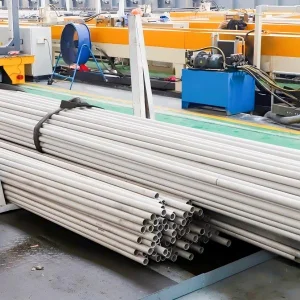
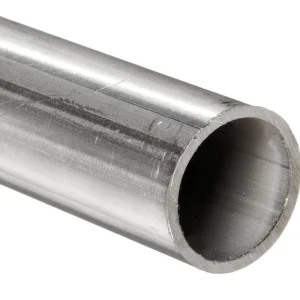
Featured Austenitic & Super Austenitic Alloy Products
Explore our certified mill inventory manufactured to ASTM, ASME, and EN standard specifications.








1. Technical Whitepaper: Metallurgical Profile of 254 SMO (UNS S31254 / 1.4547)
In modern process industries operating under severe chemical stresses, conventional austenitic stainless steels like 304L and 316L rapidly succumb to localized pitting, crevice corrosion, and chloride-induced stress corrosion cracking (CSCC). 254 SMO (UNS S31254 / EN 1.4547) was engineered specifically to bridge the performance and cost gap between standard austenitic grades and high-cost nickel-base alloys.
Classified as a high-molybdenum super austenitic stainless steel, 254 SMO features a chemical structure containing 20% Chromium, 18% Nickel, 6.1% Molybdenum, and 0.20% Nitrogen. This precise alloying chemistry produces an exceptionally high Pitting Resistance Equivalent Number (PREN) ≥ 42.5, guaranteeing superior performance in environments laden with halogens, marine salts, and aggressive mineral acids.
Chemical Composition & Structural Superiority
The remarkable resistance of 254 SMO pipes to localized attack relies on the synergistic interactions between molybdenum and nitrogen within the face-centered cubic (FCC) austenitic matrix. Nitrogen increases mechanical strength without sacrificing ductility, while suppressing the formation of intermetallic phases such as sigma (σ) and chi (χ) during rapid cooling.
| Alloy Grade | UNS / EN | Cr (%) | Ni (%) | Mo (%) | N (%) | PREN Formula Value |
|---|---|---|---|---|---|---|
| 254 SMO | UNS S31254 / 1.4547 | 19.5 - 20.5 | 17.5 - 18.5 | 6.0 - 6.5 | 0.18 - 0.25 | ≥ 42.5 |
| SS 316L | UNS S31603 / 1.4404 | 16.5 - 18.5 | 10.0 - 13.0 | 2.0 - 2.5 | ≤ 0.10 | ~ 24.0 |
| Duplex 2205 | UNS S32205 / 1.4462 | 22.0 - 23.0 | 4.5 - 6.5 | 3.0 - 3.5 | 0.14 - 0.20 | ~ 35.0 |
| Alloy 625 | UNS N06625 / 2.4856 | 20.0 - 23.0 | ≥ 58.0 | 8.0 - 10.0 | - | ~ 51.0 |
2. Macro Industry Solutions & Applied Field Engineering
Deploying 254 SMO piping systems across demanding industrial infrastructures vulnerable to high temperatures, acidic media, and chloride exposure.
Desalination & Reverse Osmosis (SWRO)
In high-pressure seawater reverse osmosis plants, chloride levels exceed 19,000 ppm. 254 SMO seamless pipes serve as high-pressure manifold lines, feed pumps, and energy recovery interconnections, resisting crevice corrosion under high fluid turbulence.
Offshore Oil & Gas Platforms
Topside process systems exposed to marine atmospheres, sour gas ($H_2S$), and high-salinity produced water require piping immune to stress corrosion cracking. 254 SMO guarantees long service life with lower weight than nickel alloys.
Flue Gas Desulfurization (FGD)
Power generation scrubbers utilize 254 SMO for slurry recirculation systems and mist eliminators. The alloy withstands acidic condensates containing hydrofluoric and sulfuric acids formed during sulfur dioxide extraction.
3. Fabrication Guidelines, Metallurgical Welding & Code Compliance
Achieving the rated corrosion resistance of 254 SMO in welded piping fabrications requires adherence to strict thermodynamic processing and filler selection protocols. Because of its high alloy content, improper heat input can lead to micro-segregation of molybdenum in the weld zone, compromising pitting performance.
Over-Alloyed Filler Metal Selection
To compensate for molybdenum segregation during solidification, welding specification codes mandate the use of over-alloyed nickel-base filler metals, such as AWS A5.14 ERNiCrMo-3 (Alloy 625) or ERNiCrMo-4 (Alloy C-276). Autogenous welding (without filler) is strongly discouraged unless followed by a full solution annealing treatment.
Solution Annealing Heat Treatment
Mill heat treatment requires precise water quenching from a solution temperature of 1150°C to 1200°C (2102°F - 2192°F). This rapid thermal cycle re-dissolves any precipitate phases, restoring the uniform single-phase austenitic grain topology critical for maximum mechanical ductility and corrosion resistance.
International Standard Specifications
Spezilla precision 254 SMO pipes are manufactured, tested, and certified in complete alignment with global structural and pressure vessel frameworks:
- ASME SA312 / ASTM A312: Standard Specification for Seamless, Welded, and Heavily Cold Worked Austenitic Stainless Steel Pipes.
- ASME SA249 / ASTM A249: Standard Specification for Welded Austenitic Steel Boiler, Superheater, Heat-Exchanger, and Condenser Tubes.
- ASTM A269 / A270: Tubing for General Service and Sanitary/Hygienic Applications.
- EN 10216-5 / EN 10217-7: European Standard for Seamless and Welded Steel Tubes for Pressure Purposes.
4. Quality Assurance & Regulatory Compliance Guarantee
Verifiable Material Integrity Backed by Independent Inspection and International Certifications.
Full Heat Traceability & 3.1/3.2 MTC
Every length of pipe shipped is traceable back to the raw material heat charge. We provide certified EN 10204 3.1 Mill Test Certificates standard, with independent EN 10204 3.2 third-party inspection (TUV, SGS, Lloyd's Register) upon request.
Non-Destructive Testing (NDT)
100% of manufactured tubes undergo rigorous NDT processing: Hydrostatic pressure testing up to 200 bar, Eddy Current flaw detection (ASTM E426), Ultrasonic wall verification, and positive material identification (PMI) spectrographic verification.
NORSOK M-650 & PED 2014/68/EU
Our production facilities maintain qualification under NORSOK M-650 (Special Material Manufacturers) and compliance with the European Pressure Equipment Directive (PED 2014/68/EU), clearing the path for seamless engineering implementation globally.
5. Smart Factory Integration & Global Supply Chain Resilience
As industrial mega-projects demand tighter delivery timelines and zero-defect quality, Spezilla’s Huzhou production facility leverages Industry 4.0 automation to deliver consistent super austenitic piping solutions.
Automated Cold Drawing & Bright Annealing Lines
Our smart mill integrates automated cold drawing benches equipped with real-time laser micrometer feedback. This closed-loop process achieves tight dimensional tolerances on outer diameter (OD) and wall thickness (WT).
Bright annealing is performed under a protective hydrogen-nitrogen atmosphere, eliminating oxide scale formation and delivering a smooth, mirror-like inner bore surface ($Ra < 0.4 \mu m$) required for ultra-clean process piping.
Supply Chain Control & Raw Material Stability
By establishing long-term strategic raw material agreements with leading master-alloy smelters, Spezilla secures stable supplies of refined nickel, molybdenum, and chromium strip stock. This shields international buyers from market volatility and guarantees reliable delivery schedules for major turn-key projects.
6. Strategic Technical Roadmap & Future Outlook
As global energy transitions accelerate, material demands are expanding beyond conventional petro-chemical boundaries into hydrogen transport, deep-sea mining, and carbon capture infrastructure.
Green Steel & Low-Carbon Production
Spezilla is transitioning its melting and re-heating operations toward electric arc furnaces (EAF) powered by renewable energy sources, targeting a 40% carbon footprint reduction across our super austenitic supply line by 2030.
Hydrogen Economy Compatibility
High-pressure gaseous hydrogen environments present embrittlement risks. Extended research demonstrates that the stable austenitic phase of 254 SMO exhibits low hydrogen diffusivity, positioning it as a preferred material for marine fuel cell transfer piping.
Ultra-Deepwater Thermal Management
Future iterations of 254 SMO focus on refining grain structures to increase yield strength past 550 MPa while maintaining cryogenic toughness down to -196°C for subsea umbilical and Arctic LNG piping systems.
7. Global Procurement Strategy & Total Cost of Ownership (TCO)
For procurement executives and engineering EPC contractors, upfront material cost is only one component of the lifecycle financial model. Selecting the optimal alloy requires evaluating long-term operational expenditure (OPEX) against initial capital outlay (CAPEX).
TCO Advantage vs. Nickel Alloys
While standard 316L requires low initial investment, its failure rate in chloride environments yields high downtime and replacement expenses. Nickel Alloy 625 offers exceptional resistance but at 3 to 4 times the material cost. 254 SMO delivers 90% of Alloy 625's pitting resistance at a fraction of the cost, optimizing project economics.
Export Logistics & Export Packaging
Global orders receive end-cap protective seals, continuous plastic sleeve wrapping, and heavy-duty ISPM-15 compliant seaworthy wooden cases. Strategic proximity to Shanghai Port enables rapid containerized dispatch to major ports worldwide.
8. Frequently Asked Questions (FAQ)
Technical and commercial answers for engineering consultants and procurement leads.
Complete Corrosion-Resistant Product Line
Review our specialized nickel alloy, titanium, and heat-resistant stainless steel product portfolio.