
Grade 316 & High-Performance Alloy Tubing Portfolio
Select from our certified range of seamless, welded, and cold-drawn austenitic, duplex, and titanium piping engineered for aggressive chemical, thermal, and marine environments.


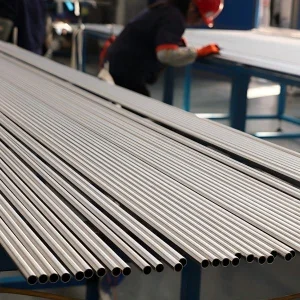




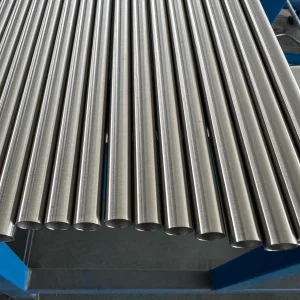
Global Demand Trends & Technical Evolution of 316 Stainless Steel Tubing
The shift toward extreme operational conditions, decarbonized infrastructure, and stringent purity standards has placed Grade 316/316L stainless steel pipes at the core of critical industrial engineering.
Biopharmaceutical & Ultra-Pure Fluids
Modern bioprocessing plants require electropolished ASME BPE compliant 316L stainless steel tubing with surface roughness Ra < 0.38 μm to eliminate bacterial adhesion, bio-film formation, and rouge corrosion in Water-For-Injection (WFI) loops.
Offshore Hydrogen & LNG Transition
Cryogenic storage systems operating at -196°C demand high-nickel austenitic structures. Grade 316/316L retains exceptional ductile-to-brittle impact toughness, preventing catastrophic fracture in liquefied gas conveyance lines.
Severe Halide Marine Environments
Desalination units and coastal power plants rely on 316/316L pipes due to their Molybdenum content, which forms a stable passive oxide layer ($Cr_2O_3 / MoO_4^{2-}$) that resists pitting and crevice corrosion under high chlorination.
Metallurgical Differentiation: Grade 316, 316L, 316H & 316Ti
Choosing the correct alloy sub-variant prevents unexpected field failures such as intergranular sensitization, stress corrosion cracking (SCC), or high-temperature creep deformation.
| Grade Designation | UNS / EN Number | Carbon (C) % | Nickel (Ni) % | Molybdenum (Mo) % | Key Engineering Trait | Primary Standards |
|---|---|---|---|---|---|---|
| TP316 | UNS S31600 / 1.4401 | ≤ 0.08 | 10.0 – 14.0 | 2.00 – 3.00 | General corrosion resistance & structural strength | ASME SA312 / SA213 |
| TP316L | UNS S31603 / 1.4404 | ≤ 0.030 | 10.0 – 14.0 | 2.00 – 3.00 | Immune to sensitization during heavy welding | ASME SA269 / SA312 |
| TP316H | UNS S31609 / 1.4919 | 0.04 – 0.10 | 10.0 – 14.0 | 2.00 – 3.00 | High creep rupture strength above 500°C | ASME SA213 / SA312 |
| TP316LN | UNS S31653 / 1.4429 | ≤ 0.030 | 10.0 – 14.0 | 2.00 – 3.00 (N: 0.10-0.16) | Nitrogen strengthened; enhanced yield strength | ASME SA213 TP316LN |
| TP316Ti | UNS S31635 / 1.4571 | ≤ 0.08 | 10.0 – 14.0 | 2.00 – 3.00 (Ti 5x C) | Titanium stabilized against carbide precipitation | EN 10216-5 / ASTM A312 |
E-E-A-T Metallurgical Insight: The PREN Equation & Chloride Attack
Pitting resistance is quantitatively quantified using the Pitting Resistance Equivalent Number (PREN):
PREN = %Cr + 3.3(%Mo + 0.5%W) + 16(%N)
While standard Grade 304 achieves a PREN of ~19, Grade 316 achieves ~25. This 30% surge in PREN prevents micro-pitting in chloride concentrations up to 1,000 mg/L at ambient temperatures, making 316 the absolute minimal baseline grade for heat exchangers and chemical processing headers.
Global Enterprise Procurement: Quality Assurance & Risk Mitigation
Procuring high-grade 316 stainless steel pipes involves strict compliance checking, third-party verification, and non-destructive testing to eliminate costly site downtime.
Full NDT Verification Protocols
Every industrial pipe lot undergoes 100% Non-Destructive Testing (NDT). This includes Eddy Current Testing (ET) per ASTM E426 to detect subsurface flaws, and Hydrostatic Pressure Testing per ASTM A1016 to confirm structural integrity up to 300 Bar.
EN 10204 3.1 & 3.2 Traceability
Complete melt heat traceability is mandatory. Raw material hollows are validated through Positive Material Identification (PMI) using X-ray fluorescence (XRF) spectroscopy. Mill Test Certificates (MTC) guarantee exact chemical heat analysis and mechanical proof stress.
Dimensional Tolerance Precision
Severe tube-to-tubesheet expansion processes in condenser manufacturing require ultra-tight wall thickness tolerances (±7.5%) and ovality control (<1.0%). Precision cold-drawing (W&D) guarantees concentricity and seamless expansion behavior.
China Industry 4.0: Supply Chain Resilience & Production Efficiency
As global supply chains face volatile raw material costs and shifting trade logistics, Chinese high-end stainless steel manufacturers have embraced Industry 4.0 smart plant automation. By integrating digital twin monitoring, real-time laser wall thickness gauging, and continuous bright annealing furnaces, facility throughput has expanded while maintaining zero-defect production.
- Fully Automated Cold-Pilgering & Precision Drawing Lines
- Hydrogen-Shielded Atmosphere Bright Annealing (No Pickling Scale)
- Direct Port Logistics Hub Proximity (Shanghai / Ningbo Expedited Freight)
- Traceable Green Manufacturing & Recycled Scrap Ratio Compliance
Localized Application Scenarios & Operational Case Analyses
From heavy chemical refineries to high-purity food production lines, 316 stainless steel pipes are specialized across demanding industrial environments.
1. Petrochemical & Phosphoric Acid Refining
In hot organic and fatty acid processing circuits where 304 steel suffers rapid pitting, ASME SA312 TP316L seamless pipes serve as main line headers, resisting acetic acid vapor and dilute sulfuric acid condensation.
2. Power Generation Feedwater Heaters
Supercritical power stations utilize high-temperature ASME SA213 TP316H U-bend heat exchanger tubes. Their increased carbon threshold (0.04 - 0.10%) provides superior long-term stress-rupture strength under extreme thermal cycles.
3. Sanitary Food, Dairy & Brewery Lines
Piping systems carrying acidic juices, beer wort, or dairy solutions require ultra-smooth mechanical inner polishing (180 Grit / 320 Grit / Electropolished) to prevent organic particle buildup and ensure CIP/SIP sterilization success.
Specialty Austenitic & High-Alloy Piping Solutions
Explore additional precision piping inventory including stabilized 321H, nitrogen-enhanced 316LN, high-nickel 825, and super-austenitic 254SMO options.








Frequently Asked Technical & Procurement Questions (FAQ)
Clear, authoritative engineering answers to guide global purchasing decisions for Grade 316 stainless steel pipes.
