
Featured Austenitic & Alloy Tubing Products
Explore our certified mill inventory covering ASTM A213, A249, A312, and specialized EN standards manufactured for ultra-low carbon performance and severe service longevity.




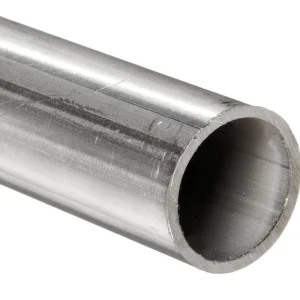



Metallurgical Excellence & Material Science of 316L Tubing
Understanding the chemical composition, thermodynamic stability, and pitting resistance mechanisms that make AISI 316L (UNS S31603 / EN 1.4404) the definitive alloy for severe process environments.
Low Carbon Immunity (C ≤ 0.03%)
The defining characteristic of 316L (where "L" stands for Low Carbon) is its restricted carbon content kept strictly below 0.03%. This prevents chromium carbide precipitation ($Cr_{23}C_6$) along grain boundaries during welding or high-temperature exposure (425°C to 860°C range), eliminating intergranular corrosion susceptibility without requiring post-weld solution annealing.
Molybdenum Passivation Synergy
Featuring an addition of 2.0% to 3.0% Molybdenum (Mo), 316L demonstrates a dramatic increase in Pitting Resistance Equivalent Number (PREN ≥ 23-25) over standard 304/304L grades. The Mo addition stabilizes the passive surface oxide film ($Cr_2O_3$), providing robust defense against localized pitting and crevice corrosion in chloride-laden environments.
Austenitic Phase Stability
With 10.0% to 14.0% Nickel content, 316L maintains a fully face-centered cubic (FCC) austenitic crystal structure down to cryogenic temperatures (-196°C). This ensures high impact toughness, superior cold formability for tight radii U-bends, and non-magnetic permeability in the fully annealed state.
Chemical & Mechanical Specification Matrix (ASTM vs EN Standards)
| Specification / Grade | C (%) Max | Cr (%) | Ni (%) | Mo (%) | Tensile Strength (MPa) | Yield Strength (MPa) | Elongation (%) |
|---|---|---|---|---|---|---|---|
| ASTM A213 TP316L (Seamless Boiler/HE) | 0.030 | 16.0 - 18.0 | 10.0 - 14.0 | 2.00 - 3.00 | ≥ 485 | ≥ 170 | ≥ 35 |
| ASTM A249 TP316L (Welded HE/Condenser) | 0.030 | 16.0 - 18.0 | 10.0 - 14.0 | 2.00 - 3.00 | ≥ 485 | ≥ 170 | ≥ 35 |
| ASTM A269 TP316L (General Service) | 0.030 | 16.0 - 18.0 | 10.0 - 14.0 | 2.00 - 3.00 | ≥ 485 | ≥ 170 | ≥ 35 |
| ASTM A312 TP316L (Seamless/Welded Pipe) | 0.030 | 16.0 - 18.0 | 10.0 - 14.0 | 2.00 - 3.00 | ≥ 485 | ≥ 170 | ≥ 35 |
| EN 1.4404 (X2CrNiMo17-12-2) | 0.030 | 16.5 - 18.5 | 10.0 - 13.0 | 2.00 - 2.50 | 500 - 700 | ≥ 200 | ≥ 40 |
| EN 1.4435 (X2CrNiMo18-14-3) High Mo | 0.030 | 17.0 - 19.0 | 12.5 - 15.0 | 2.50 - 3.00 | 500 - 700 | ≥ 200 | ≥ 40 |
Why Top Global EPCs Source 316L Tubing from Chinese Factories
China's modern stainless steel tube manufacturing ecosystem combines complete supply chain integration with state-of-the-art cold pilgering, continuous bright annealing, and rigorous quality control protocols.
Full Upstream-Downstream Integration
Chinese 316L tube factories operate within tight industrial clusters (such as Huzhou, Zhejiang and Jiangsu hubs) connected directly to top-tier raw material melt shops (TISCO, Tsingshan, Yongxing). Access to premium hot-rolled mother hollows and master strip coils eliminates supply chain bottlenecks and guarantees strict heat chemistry traceability from the start.
Advanced Cold Working & Annealing Lines
Leading Chinese mills employ high-speed multi-roll cold pilgering mills (LG-30, LG-60) and precision hydraulic cold draw benches. Continuous bright annealing furnaces powered by pure Hydrogen ($H_2$) atmospheres heat-treat tubes at 1040°C-1150°C without surface oxidation, achieving bright, mirror-like inner and outer diameters without acid pickling.
Rigorous QA & International Compliance
Export-oriented Chinese factories adhere to zero-defect ISO 9001, PED 2014/68/EU, and IATF 16949 quality systems. Every batch undergoes 100% inline Eddy Current Testing (ECT), hydrostatic pressure verification up to 300 Bar, ultrasonic thickness checks, and intergranular corrosion testing per ASTM A262 Practice E.
Global Industry Solutions & High-Purity Applications
How custom 316L seamless and welded tubing engineered by leading suppliers solves complex thermal, chemical, and hygienic fluid control challenges across key global industries.
Biopharm & High-Purity Process Piping
In ASME BPE compliant pharmaceutical water-for-injection (WFI) loops and cell culture bioreactors, 316L electropolished (EP) tubing prevents bacterial biofilm adhesion. Controlled sulfur content (0.005% to 0.017%) ensures ultra-clean, repeatable orbital welds without rogue micro-fissures.
Petrochemical Heat Exchangers & Condensers
Under ASTM A249 / A213 standards, 316L U-bent tubes are specified for shell-and-tube heat exchangers handling organic acids, sulfurous gas streams, and cooling water. Uniform wall thickness prevents localized hot-spot stress cracking under elevated temperatures.
Offshore Marine & Desalination Skids
Used extensively in reverse osmosis (RO) high-pressure feed lines, instrumentation bundling, and hydraulic power control lines on offshore oil platforms where exposure to marine splash zones and salt spray demands superior resistance to crevice corrosion.
Green Hydrogen & Semiconductor Clean Gas
Ultra-high purity (UHP) 316L stainless steel tubing with smooth internal finish ($Ra \le 0.15 \mu m$) forms the backbone of hydrogen refueling stations and semiconductor fabrication gas distribution networks, resisting hydrogen embrittlement under high pressures (up to 700 Bar).
Industry Trends & Strategic B2B Procurement SOP
Navigating global supply chain shifts, digital material passports, and key evaluation criteria for enterprise procurement officers.
Key Market Trends (2026-2030)
- Transition to Green Steel: Demand for low-carbon footprint 316L tubing refined in EAF (Electric Arc Furnaces) powered by renewable energy.
- Digital Traceability (QR/Blockchain MTCs): Direct QR code laser-etching on tube bodies linking instantly to EN 10204 3.1 Mill Test Certificates.
- Tightened Tolerance Specs: Growing preference for EN ISO 1127 D4/T4 precision dimensions over basic standard commercial tolerances.
Factory Vetting Checklist for Sourcing Officers
- Raw Material Traceability: Verify mother coil/heat billet originates from certified Tier-1 stainless steel mills.
- NDT Equipment Capability: Ensure factory features online multi-channel Eddy Current and Hydrostatic testing stations.
- Third-Party Approvals: Confirm factory audit readiness for Lloyd's Register, TÜV, DNV, Bureau Veritas, or SGS certification.
Frequently Asked Questions by Technical Buyers & Engineers
In-depth answers addressing structural differences, corrosion limits, manufacturing standards, and ordering guidelines.
What is the fundamental practical difference between 316, 316L, and 316Ti tubing?
When should I specify Seamless 316L vs. Welded & Drawn (W&D) 316L Tubing?
What surface finish options are available for industrial 316L tubes, and how are they measured?
What documentation and Mill Test Certificates (MTC) are supplied with Chinese 316L tube orders?
How does 316L tubing perform in seawater or marine environment service?
Explore Additional Specialty Alloys & High-Performance Tubes
Discover our extended line of high-nickel alloys, titanium grades, and stabilized austenitic stainless steel tubes built for extreme operating parameters.








