
Featured Precision Tube Portfolio (Group A)
Explore our certified alloy & stainless steel seamless and welded tubing engineered for severe process environments, nuclear steam generators, and heat exchangers.






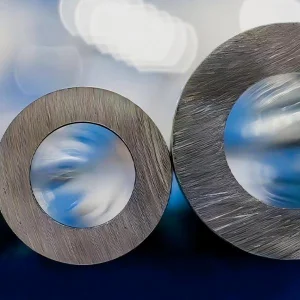

1. Comprehensive Metallurgical Profile: ASME SB163 / UNS N06600 Seamless Tubing
The industrial standard ASME SB163 (UNS N06600 / W.Nr. 2.4816) specifies seamless cold-worked nickel-chromium-iron alloy tubes engineered specifically for service in critical heat-transfer equipment, condensers, steam generator systems, and high-temperature chemical reactors. As a solid-solution strengthened nickel-base alloy containing a minimum of 72.0% Nickel + Cobalt and 14.0–17.0% Chromium, Alloy 600 delivers an unparalleled combination of resistance to high-temperature oxidation, carburization, nitriding, and chloride-induced stress corrosion cracking (SCC).
Under ASME Boiler and Pressure Vessel Code (BPVC) Section II, Part B, SB163 tubes must conform to rigorous dimensional tolerances, mechanical thresholds, and non-destructive examination (NDE) requirements. The unique matrix stability of Nickel Alloy 600 prevents phase transformation under prolonged cryogenic-to-elevated temperature cycles up to 2000°F (1095°C) in oxidizing environments, making it a foundational alloy for nuclear island secondary side heat exchangers, caustic evaporators, and ethylene dichloride (EDC) cracking furnaces.
Provides immune-level resistance to chloride-ion stress corrosion cracking and alkaline caustic environments.
Maintains a protective, adherent Cr2O3 oxide film preventing severe spallation under high-temperature oxidative conditions.
Annealed state provides robust yield behavior (35 ksi / 240 MPa min) with superior ductility for precision expansion into tube sheets.
| Alloy Parameter | UNS N06600 (Nickel Alloy 600) Specification Limit | ASME SB163 Standard Requirement | Engineering Significance |
|---|---|---|---|
| Nickel (Ni) + Cobalt (Co) | 72.0% Minimum | Conforming to ASTM B163 / ASME SB163 | Prevents austenitic-to-ferritic phase degradation; eliminates chloride SCC risk. |
| Chromium (Cr) | 14.0% – 17.0% | Exact Spectrometric Verification | Imparts high-temperature oxidation & sulfur compound resistance. |
| Iron (Fe) | 6.0% – 10.0% | Strict Boundary Control | Enhances hot workability and mechanical toughness while controlling cost. |
| Carbon (C) | 0.15% Maximum (Controlled to ≤0.05% for Nuclear) | Controlled Carbon Grain Boundary Optimization | Mitigates sensitization during welding and high-temp heat treatment. |
| Tensile Strength (Annealed) | ≥ 80 ksi (≥ 550 MPa) | Full Longitudinal Tensile Test per ASTM E8 | Guarantees structural integrity under severe thermal hydraulic pressure. |
| Yield Strength (0.2% Offset) | ≥ 35 ksi (≥ 240 MPa) | Verified via Automated Electronic Extensometer | Prevents permanent plastic deformation under operational thermal stress. |
| Elongation in 2 in. (50mm) | ≥ 30% (Typically 40–50% in Mill Delivery) | Ductility Bend / Flattening Tests Approved | Ensures defect-free cold U-bending, flaring, and tube-to-tubesheet expanding. |
2. Global Enterprise Procurement Demand & Industrial Sector Solutions
The international procurement landscape for ASME SB163 Alloy 600 seamless tubes spans major industrial ecosystems across North America, the European Union, the Middle East, and Asia-Pacific. Tier-1 Engineering, Procurement, and Construction (EPC) contractors and Original Equipment Manufacturers (OEMs) require strict material traceability, custom dimensional tolerances, and zero-defect quality protocols to satisfy the following macro-industrial demands:
Demands ultra-pure, high-temperature heat exchanger tubes for primary and secondary cooling loops. Mill production involves special thermally treated (TT) or mill-annealed (MA) processing to minimize primary water stress corrosion cracking (PWSCC) in nuclear steam generators and pressurizer heaters.
In chlor-alkali and sodium hydroxide (NaOH) concentration plants, standard stainless steels fail rapidly due to caustic stress corrosion cracking. Alloy 600's high nickel content provides virtually immune performance in high-temperature, high-concentration caustic evaporation systems.
Used extensively in radiant tubes, furnace muffles, and ammonia nitriding equipment. Alloy 600 resists ammonia gas absorption at elevated temperatures, preventing embrittlement and catastrophic wall degradation common in standard iron-base heat resistant alloys.
Macro-industry trends show an accelerating shift toward extended service lifetimes (40+ years) in chemical installations. This operational philosophy demands seamless tubing with refined inner-surface roughness (Ra ≤ 0.4 μm / 16 μin) and precise concentricity to eliminate stagnant fluid zones, minimize pressure drops, and prevent localized crevice corrosion beneath fouling layers.
3. Precision Manufacturing Roadmap: From Ingot to Certified SB163 Seamless Tube
Achieving the rigorous dimensional and mechanical standards of ASME SB163 requires an integrated manufacturing sequence. Our mill utilizes vacuum induction melting plus electroslag remelting (VIM+ESR) refined master heat hollows, followed by cold pilgering and bright hydrogen annealing.
Phase 1: VIM+ESR Ingot Preparation & Piercing
Ultra-pure raw nickel and chromium master alloys are melted in Vacuum Induction Furnaces to eliminate trace gas inclusions (O, N, H). Electroslag Remelting (ESR) guarantees isotopic chemical uniformity, minimal micro-segregation, and exceptional hot ductility prior to rotary hot piercing into seamless parent hollows.
Phase 2: Cold Pilgering & Precision Draw Bench Operations
Parent hollows undergo multiple passes of cold pilgering (cold rolling over a tapered mandrel) combined with hydraulic cold drawing. This work-hardening sequence refines the equiaxed grain structure (ASTM Grain Size 7–9), establishing ultra-tight wall thickness tolerances (±7.5% or tighter) and flawless concentricity.
Phase 3: Continuous Bright Annealing (1050°C–1150°C)
To restore optimal ductility and corrosion resistance, tubes pass through an inline, pure dry hydrogen atmosphere (dew point ≤ -50°C) bright annealing furnace. This prevents surface oxidation or carburization, delivering a mirror-like silver surface finish without the need for aggressive acid pickling.
Phase 4: Non-Destructive Testing (NDE) & Quality Certification
100% of manufactured tubes undergo dual NDE inspection: Eddy Current Testing (ASTM E426) for longitudinal/transverse surface defects and Hydrostatic Pressure Testing (or Ultrasonic Testing per ASTM E213) up to 3000 PSI (20.7 MPa) to guarantee pressure boundary integrity under ASME Section III / VIII design rules.
4. Global Commercial Dynamics, Raw Nickel Risk Hedging & Supply Chain Assurance
Procuring high-grade ASME SB163 Nickel Alloy 600 seamless tubing involves navigating London Metal Exchange (LME) nickel price volatility and complex cross-border logistics. Professional manufacturers mitigate commercial buyer risk through flexible metal hedging contracts, strategic raw ingot stockpiling, and standardized international packaging.
| Commercial Metric | Manufacturer Standard Strategy | Buyer Advantage / Benefit |
|---|---|---|
| Raw Material Indexing | LME / SFE Nickel Alloy Surcharge Formula Adjustment | Transparent pricing model protecting procurement budgets against sudden market spikes. |
| Standard Lead Times | Stocked Hollows: 2–3 Weeks | Custom Production: 4–6 Weeks | Rapid dispatch for unplanned refinery turnarounds and scheduled plant overhauls. |
| Export Packaging Protocol | ISPM-15 Heat-Treated Wooden Cases + End Caps + VCI Moisture Barriers | Zero corrosion risk during long-haul sea freight and long-term site warehouse storage. |
| Traceability Framework | Heat Number Hard Stenciled / Laser Marked at 1-Meter Intervals | Instant material identification, preventing grade mix-ups during site fabrication & welding. |
5. International Compliance, Code Certifications & Quality Assurance
To satisfy international regulatory bodies and third-party inspection agencies (TUV, SGS, BV, Lloyd’s Register), our manufacturing processes adhere strictly to global quality frameworks. Every shipment is supplied with an comprehensive inspection documentation package:
Mill Test Certificates detailing actual heat chemistry (ICP-OES analysis), mechanical tensile/yield values, hardness tests (HRB/HV), grain size verification, and NDE test reports. Independent 3.2 inspection witnessed by client-appointed auditors.
Fully compliant with ASME Code Section II Part B SB-163, ASTM B163, ASME Section III (Nuclear Components), ASME Section VIII Div 1 & 2 (Pressure Vessels), and European Pressure Equipment Directive (PED 2014/68/EU Annex I).
Meets NACE MR0175 / ISO 15156 and NACE MR0103 standards for sulfide stress cracking (SSC) and stress corrosion cracking in sour H2S-containing oil and gas processing equipment.
Featured Precision Tube Portfolio (Group B)
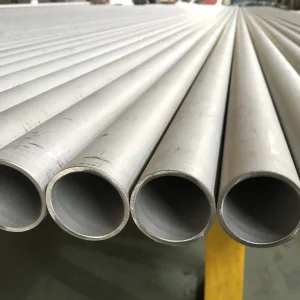
Explore additional high-performance nickel alloy, titanium, super austenitic, and stainless tubing solutions engineered to exact international standards.







6. Engineering Knowledge Base: Frequently Asked Questions (FAQ)
Connect with Our Engineering & Technical Sales Team
Require custom outer diameter tolerances, special mill heat heat-treatments, or EN 10204 3.2 certified ASME SB163 Alloy 600 seamless tubing? Submit your project datasheets for an immediate expert review.
Request Technical Quote & Consultation