
Precision Stainless Steel & Nickel Alloy Tubes
Explore engineered tubing solutions manufactured to ASME, ASTM, and EN standards with complete heat traceability and certified tolerances.




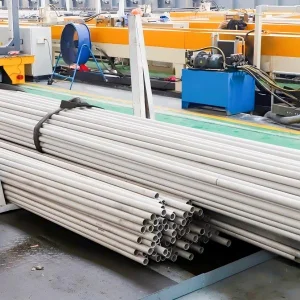



1. Global Industrial Landscape & Demand Drivers for Precision Tubing
In contemporary industrial engineering, precision stainless steel tubing serves as the fundamental vascular infrastructure for high-pressure, ultra-clean, and highly corrosive operating environments. Unlike standard structural piping, precision tubing is characterized by strict dimensional accuracy, highly controlled surface morphology, specialized cold-working processes, and rigorous non-destructive testing protocols.
The global precision stainless steel tubing market is experiencing a structural paradigm shift driven by five key macro-industrial vectors:
Semiconductor & Ultra-Pure Gas Handling
Fab construction demands Seamless Ultra-High Purity (UHP) and Electropolished (EP) stainless steel tubing (316L VIM-VAR) with inner surface roughness Ra ≤ 0.13 µm to prevent particulate entrapment and outgassing.
Pharmaceutical & Bioprocess Systems
Compliance with ASME BPE standards necessitates smooth, mechanically polished and bright-annealed austenitic tubing (316L, 1.4404) that resists biofilm formation and tolerates aggressive CIP/SIP sterilization regimes.
Green Hydrogen & Fuel Cell Infrastructure
High-pressure gaseous hydrogen refueling stations operating at pressures up to 875 bar require specialized high-strength austenitic tubing resistant to hydrogen embrittlement.
Desalination & Offshore Energy
Transition toward Duplex (S32205) and Super Duplex (S32750) alloys driven by the necessity for high Pitting Resistance Equivalent Numbers (PREN ≥ 40) in marine heat exchangers.
The global supply chain for precision tubing has shifted from transactional procurement to integrated technical partnerships. Engineering teams prioritize suppliers capable of guaranteeing mill-to-site heat traceability, zero-defect dimensional consistency, and custom metallurgical tailoring.
2. Material Science, Alloy Grade Matrix & Specifications
Selecting the appropriate precision tube grade involves balancing chemical resistance, yield strength, thermal conductivity, and fabrication characteristics. The table below details key alloy categories, international equivalent standards, PREN indices, and target application profiles.
| Alloy Category | Standard Grade | UNS / EN Designation | PREN Index | Primary Application Profile |
|---|---|---|---|---|
| Stabilized Austenitic | TP321 / TP321H | UNS S32100 / 1.4541 | 18 – 20 | High-temperature heat exchangers, aircraft exhaust systems, thermal processing (prevents intergranular corrosion via Titanium stabilization). |
| High-Moly Austenitic | TP317L | UNS S31703 / 1.4438 | 28 – 30 | Flue-gas desulfurization (FGD), chemical processing handling dilute acids, pulp and paper bleaching lines. |
| Low-Carbon Austenitic | TP304L / TP316L | UNS S30403 / UNS S31603 | 19 – 25 | General instrumentation, food & beverage sanitary lines, hydraulic control lines, pharmaceutical fluid transfers. |
| Super Austenitic | 904L / 6-Moly | UNS N08904 / UNS S31254 | 34 – 43 | Phosphoric acid manufacturing, coastal power plant condensers, high-chloride chemical media. |
| Super Duplex Steel | 2507 / S32760 | UNS S32750 / 1.4410 | ≥ 42 | Offshore oil & gas umbilical lines, subsea manifolds, high-pressure reverse osmosis (SWRO) desalination pumps. |
| Nickel Base Alloys | Alloy 625 / 825 / 800H | UNS N06625 / UNS N08825 | 45 – 52+ | Extreme thermal environments (>800°C), sour gas wells (H2S), nuclear steam generators, waste incineration systems. |
Key Manufacturing Processes: Welded & Drawn vs. Seamless
Understanding the structural difference between tube processing methods is essential for engineering specification:
Cold Drawn Seamless (CDS) Tubes
Produced from solid billet pierced at elevated temperatures and subsequently cold-drawn over a mandrel (plug or floating). Eliminates longitudinal seam welds entirely, rendering them suitable for high-pressure applications (ASME SA213 / SA312) up to critical pressure limits without joint efficiency degradation factors ($E=1.0$).
Welded & Cold Drawn (W&D) Tubes
Manufactured via precision TIG/Plasma automated welding followed by plug or sink drawing. Cold reduction homogenizes the weld microstructure, recrystallizes the grain structure during bright annealing, and delivers exceptional concentricity, superior wall uniformity, and lower cost compared to seamless alternatives.
3. China’s Manufacturing Efficiency & Quality Advantages
The global precision steel tube landscape has evolved significantly over the past two decades. Modern Chinese manufacturing clusters—specifically in Zhejiang and Jiangsu industrial zones—have integrated advanced German and Japanese cold-drawing, pilgering, and bright annealing infrastructure with localized supply chains.
1. Vertical Raw Material Integration
Direct partnerships with primary master-melt stainless steel producers ensure high-purity heat coils with minimal non-metallic inclusions, optimizing cold-workability and polishability.
2. Advanced Bright Annealing (BA)
Continuous atmosphere controlled furnaces utilizing pure hydrogen ($H_2$) atmospheres eliminate oxide scale formation, preserving mirror-bright outer and inner wall surfaces without chemical pickling.
3. Rigorous Quality Assurance
In-line non-destructive testing (NDT), including Multi-Frequency Eddy Current Testing (ECT) per ASTM E426 and Hydrostatic testing up to 300 bar, ensures zero pinhole defects.
This technical capability translates into significant Total Cost of Ownership (TCO) advantages for international buyers. Chinese precision tube mills provide up to 25% to 40% cost efficiency relative to Western European producers while delivering fully compliant EN 10204 3.1/3.2 certified products with significantly shorter production lead times.
4. Global OEM Procurement Intent & Quality Control Frameworks
Procurement directors, piping engineers, and supply chain managers evaluating precision tubing suppliers navigate a complex matrix of regulatory, technical, and commercial criteria. Achieving long-term operational reliability requires evaluating vendors across five critical pillars:
- Codes & Regulatory Approvals: Full compliance with pressure vessel codes including ASME Section II Part A/B, Pressure Equipment Directive (PED 2014/68/EU), AD 2000-W0, and ISO 9001:2015 quality management system certification.
- Dimensional & Surface Tolerances: Strict adherence to ASTM A269 / EN 10305-1 tolerances for Outer Diameter (OD), Inner Diameter (ID), Wall Thickness (WT), and Eccentricity (≤ 5% for critical hydraulic lines).
- Surface Roughness (Ra/Rz): Qualification of internal wall roughness via contact profilometry. Standard mill finish Ra ≤ 0.8 µm, Bright Annealed (BA) Ra ≤ 0.4 µm, and Electropolished (EP) Ra ≤ 0.15 µm.
- Destructive Testing Protocols: Mandatory lot-wise testing encompassing Flaring, Flattening, Reverse Flattening, Tensile, Yield Strength, Hardness (HRB/HV), and Intergranular Corrosion Tests per ASTM A262 Practice E.
- Traceability & Documentation: Provision of mill test certificates (MTC) detailing complete ladle melt heat analysis, positive material identification (PMI), and third-party inspection sign-offs (TUV, SGS, Lloyd's Register).
5. Next-Gen Trends in Precision Tubing Metallurgy
The precision tubing sector is undergoing continuous innovation to meet the demands of extreme industrial applications:
Additive Manufacturing & Co-Extrusion
Development of bimetallic tubes combining corrosion-resistant inner liners (Alloy 625) with high-strength outer structural steel for thermal efficiency in aggressive cracking furnaces.
Ultra-Clean Seamless Coiled Tubing
Continuous orbital-welded or seamless long-length coils (up to 1,000 meters without mechanical joints) designed for subsea chemical injection and hydraulic control lines.
Frequently Asked Questions (FAQ)
Expert answers to common engineering, procurement, and specification inquiries.
Super Duplex, Titanium & Specialty Alloy Solutions
Specialized corrosion-resistant tubing solutions engineered for extreme pressure, thermal, and chemical environments.








Request Custom Engineering Quotes & Mill Certificates
Submit your specific tube dimensions, tolerances, alloy grades, and application standards to our engineering sales team for rapid technical review and competitive quotation.
