
Featured Precision Welded & Drawn Alloy Tubes (Part I)
Explore our primary inventory of ASME SA312, SA213, SA249, Nickel Alloy 800H, Super Duplex S32760, and Grade 1/2 Titanium tubing manufactured to stringent international tolerances.
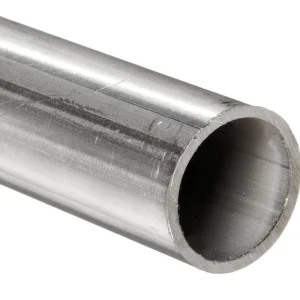







1. Executive Summary & Global Industrial Status of SS Welded Pipes
In modern process industries, thermal management, and power generation infrastructure, high-quality stainless steel (SS) welded pipes and tubes represent an indispensable engineering solution. Historically, seamless tubing was preferred for severe pressure and high-corrosion applications. However, modern metallurgical advancements in autogenous Gas Tungsten Arc Welding (GTAW/TIG), Plasma Arc Welding (PAW), Laser Beam Welding (LBW), and post-weld cold working (Welded & Drawn / W&D technology) have eliminated weld-seam vulnerability. Today, high-precision SS welded tubing equals or exceeds seamless tubing performance across wall uniformity, dimensional concentricity, surface integrity, and overall cost efficiency.
The global commercial landscape for stainless steel, nickel alloy, and titanium welded tubular products is expanding rapidly driven by decarbonization, green hydrogen generation, Liquefied Natural Gas (LNG) transport, ultra-pure semiconductor processing, and sea-water desalination projects. Industrial engineers are shifting away from traditional carbon steel due to lifecycle maintenance costs and catastrophic failure risks. Instead, they specify optimized austenitic (304H, 316L, 317L, 321, 347), duplex/super duplex (S31803, S32205, S32760), nickel alloy (800H, 625, C276), and titanium (Gr.1, Gr.2) welded solutions compliant with ASME, ASTM, and EN standards.
Industry Paradigm Shift: Welded vs. Seamless Tubing
Thanks to full-body cold drawing (DOM) and continuous bright annealing in pure hydrogen atmospheres, modern welded and drawn tubes manufactured under ASTM A249 and ASTM A688 achieve 100% weld joint efficiency ($E=1.0$). They feature precise wall consistency superior to seamless extruded pipes, significantly reducing thermal resistance in heat exchanger bundles.
2. Comprehensive Alloy Selection & Metallurgical Engineering Matrix
Choosing the right welded tube grade requires matching environmental pitting risks, mechanical stress, operating temperature, and chemical media concentration.
Below is an engineering specification benchmark highlighting key chemical features, mechanical limits, and Pitting Resistance Equivalent Number (PREN) values across major industrial alloy families.
| Alloy Class | Grade / UNS | EN Standard | PREN Approx. | Primary Technical Advantage | Key Application Environment |
|---|---|---|---|---|---|
| Austenitic High Temp | TP304H / UNS S30409 | 1.4948 | ~19 | Controlled carbon (0.04-0.10%) for creep strength | Power boilers, superheaters & steam lines |
| Austenitic Nitrated | TP304LN / UNS S30453 | 1.4311 | ~20 | Nitrogen enhanced yield strength & sensitization resistance | Cryogenic equipment, pressure vessels |
| Stabilized Austenitic | TP321 / UNS S32100 | 1.4541 | ~20 | Titanium added ($Ti \ge 5 \times C$) prevents intergranular corrosion | Refinery flare stacks, aircraft exhausts, heat exchangers |
| High Moly Austenitic | TP317 / UNS S31700 | 1.4438 | ~29 | 3-4% Molybdenum for high pitting & acid resistance | Chemical digestion, paper pulp bleaching systems |
| Super Duplex Steel | 32760 / UNS S32760 | 1.4501 | ≥ 42 | W & Cu additions; extreme yield strength & chloride SCC immunity | Offshore oil & gas, seawater cooling, acidic gas extraction |
| Nickel-Iron-Chromium | Alloy 800H / UNS N08810 | 1.4958 | N/A | High nickel content resists oxidation & carburization above 600°C | Ethylene cracking furnaces, petrochemical processing |
| Commercially Pure Ti | Titanium Grade 1 & 2 | 3.7025 / 3.7035 | N/A (Passive Film) | Unrivaled strength-to-weight ratio; absolute seawater immunity | Power station condensers, marine heat exchangers |
3. Manufacturing Process Roadmap & Advanced Testing Quality Control
Converting premium cold-rolled steel coil into certified, ultra-clean tubular products requires continuous multi-stage quality controls.
1. High-Precision Roll Forming & Automatic Welding
Raw strip coils undergo precise edge trimming before continuous roll-forming. Welding is executed via multi-cathode TIG, High-Frequency Induction (HFI), or Plasma Arc Welding under 99.999% pure Argon shielding gas to prevent weld bead oxidation.
2. Cold Working (W&D) & Bead Flattening
To equalize grain structure between weld metal and parent metal, tubes undergo internal/external weld bead rolling or cold drawing over a mandrel (DOM). This yields flawless wall concentricity and smooth inner bore ($Ra \le 0.4 \mu m$).
3. Protective Hydrogen Bright Annealing
Tubes pass through inline continuous bright annealing furnaces at temperatures ranging from 1040°C to 1150°C in a pure hydrogen atmosphere. Rapid cooling restores maximum corrosion resistance while maintaining a mirror-bright surface without oxidation scale.
Non-Destructive Testing (NDT) & Laboratory Verification Protocols
Every individual length of stainless steel welded tube undergoes 100% non-destructive evaluation to verify structural integrity prior to dispatch:
- Eddy Current Testing (ECT): Performed in accordance with ASTM E426 / EN 10246-2 to detect surface and subsurface flaws.
- Hydrostatic Testing: Pressure tested up to 200 bar (or calculated per ASME B31.3) to confirm leak-tight performance.
- Air-Under-Water Testing: Pneumatic testing at 10-15 bar for heat exchanger U-tubes.
- Metallurgical & Mechanical Testing: Tensile strength, yield strength, elongation, flattening, flaring, hardness (HRB/HV), and grain size analysis.
- Corrosion Resistance Verification: Intergranular corrosion testing per ASTM A262 Practice E / Strauss Test.
4. China's Industrial Supply Chain Resilience & Manufacturing Efficiency
How centralized industrial clusters, vertical raw material integration, and advanced automation deliver unparalleled value to international procurement teams.
China's stainless steel tubular industry—centered around primary industrial hubs in Zhejiang (Huzhou, Wenzhou) and Jiangsu—offers unmatched structural advantages to global buyers seeking short lead times, competitive pricing, and uncompromising technical compliance. By locating high-tech welding and cold-drawing mills near tier-one stainless coil smelting facilities (such as Tsingshan, Yongjin, and TISCO), raw material procurement cycles are compressed from weeks to days.
Vertical Raw Material Integration
Direct access to high-purity refined nickel, chromium, and titanium sponge ensures precise chemical composition and low residual impurity levels ($S \le 0.005\%, P \le 0.025\%$).
Rapid Prototype & Custom Sizing
Flexible multi-line forming tooling allows seamless switching between non-standard outer diameters (4.00mm up to 114.30mm) and custom wall thicknesses without heavy tooling surcharges.
Global Export Logistics Hub
Operations centered near Shanghai and Ningbo deep-water ports permit rapid ocean freight, air express, and international multimodal dispatch with full customs documentation.
5. Localized Industrial Application Scenarios & Field Performance
Detailed engineering breakdown of how specific stainless steel, nickel alloy, and titanium welded tube grades operate in real-world critical installations.
A. Thermal Power Plants & Feedwater Heaters
Specified Standards: ASTM A688 / ASME SA688 (Austenitic) & ASTM A803 (Ferritic)
Grade Selection: TP304H, TP316L, TP321, 439
Feedwater heaters require U-bent welded tubes capable of surviving severe steam erosion and cyclic thermal stresses. ASME SA688 TP304H/TP321 tubes undergo post-bending solution annealing in the bend zone to relieve cold-work residual stress and eliminate stress corrosion cracking risks.
B. Marine Condensers & Seawater Desalination
Specified Standards: ASTM B338 / ASME SB338 (Titanium) & ASTM A789 (Duplex)
Grade Selection: Titanium Grade 2, Super Duplex S32760 / S32750
In coastal thermal power stations and reverse-osmosis (RO) desalination plants, high-chloride seawater causes immediate pitting in standard 304/316 steels. Titanium Grade 2 and Super Duplex S32760 welded tubes provide near-infinite longevity under high velocity seawater flow without biofouling degradation.
C. Petrochemical Cracking & High-Temp Processing
Specified Standards: ASTM B515 / ASME SB515 (Nickel Alloys)
Grade Selection: Nickel Alloy 800H (UNS N08810), Alloy 625 (UNS N06625)
Hydrocarbon processing equipment exposed to temperatures above 650°C faces oxidation, carburization, and creep rupture. Nickel Alloy 800H welded tubes contain controlled aluminum and titanium levels, preserving microstructural stability under extreme thermal cycling.
D. Hygienic Food, Beverage & Bio-Pharma Lines
Specified Standards: ASTM A270 / EN 10357 / DIN 11850
Grade Selection: 304L, 316L (Internal Mechanical Polishing / EP $Ra < 0.4 \mu m$)
Sanitary fluid systems demand completely smooth weld seams without micro-crevices where bacteria can colonize. Welded and drawn 316L tubes with bright annealed or electropolished inner surfaces guarantee compliance with FDA and EHEDG hygienic standards.
6. International Compliance, Standards & Third-Party Quality Assurance
Complete alignment with global engineering codes guarantees frictionless procurement, regulatory clearance, and plant operation safety.
Global engineering, procurement, and construction (EPC) contractors require strict verification of material mill test certificates (MTC). All products supplied are documented according to EN 10204 Type 3.1, containing full chemical heat analysis, mechanical property test data, grain size measurements, and non-destructive testing logs traceable to the melt heat number.
Major ASTM / ASME Tubular Specifications Handled
- ASTM A249 / SA249: Welded Austenitic Steel Boiler, Superheater, Heat-Exchanger, and Condenser Tubes.
- ASTM A312 / SA312: Seamless, Welded, and Heavily Cold Worked Austenitic Stainless Steel Pipes.
- ASTM A269 / SA269: Seamless and Welded Austenitic Stainless Steel Tubing for General Service.
- ASTM A688 / SA688: Seamless and Welded Austenitic Stainless Steel Feedwater Heater Tubes.
- ASTM A789 / SA789: Seamless and Welded Ferritic/Austenitic Stainless Steel Tubing for General Service.
- ASTM B338 / SB338: Seamless and Welded Titanium and Titanium Alloy Tubes for Condensers and Heat Exchangers.
Third-Party Inspection (EN 10204 3.2 Clearance)
For mission-critical offshore oil platforms, nuclear installations, and toxic chemical piping, we regularly coordinate with international third-party inspection agencies (TPIAs), including:
7. Technology Roadmap & Future Outlook (Industry 4.0 & Decarbonization)
Innovations driving next-generation stainless steel welded tube manufacturing through smart automation, ultra-pure metallurgy, and zero-carbon processes.
1. AI-Assisted Real-Time Weld Monitoring
Integration of high-speed infrared thermal imaging and acoustic spectrum sensors directly onto TIG and Laser welding heads. Machine-learning algorithms evaluate weld pool stability in real-time, automatically adjusting arc current to eliminate micro-porosity before seam solidifying.
2. Hydrogen-Ready Green Steel Tubes
As global energy systems transition to clean hydrogen, welded tubes must withstand high-pressure gaseous hydrogen embrittlement. Special austenitic grades (TP316LN, 347) are engineered with optimized nickel equivalent values ($Ni_{eq}$) to inhibit hydrogen-induced micro-cracking.
3. Ultra-Pure Electropolishing (EP) Advances
Demand for ultra-high purity (UHP) stainless tubing in sub-nanometer semiconductor fabrication facilities is driving closed-loop electropolishing automation, achieving internal roughness values down to $Ra \le 0.1 \mu m$ with dense chromium oxide passive films ($Cr/Fe \ge 2.0$).
High-Performance Specialty Welded Tubes Inventory (Part II)
Explore our secondary catalog featuring specialized heat-resistant austenitic steels, high-moly 317/316H grades, ASME SA269 precision lines, and Nickel Alloy 625 pressure tubing.








8. Frequently Asked Questions (Technical & Procurement FAQ)
Addressing essential engineering inquiries concerning pressure design, weld seam factor, tolerances, and ordering specifications.
