
High-Specification Thin-Wall Product Lineup (Part I)
Explore our certified precision tubing manufactured to strict wall thickness tolerances, tight concentricity ratios, and superior surface finishes.

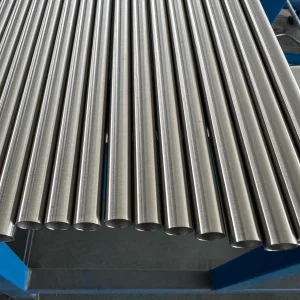






Executive Summary: Defining Thin-Wall Engineering Metrics
In advanced fluid dynamics, thermal exchange systems, and aerospace hydraulic conduits, thin-wall tubing serves as an essential structural component engineered to optimize thermal conductivity while minimizing total component mass.
Technically defined, thin-wall specifications apply to tubing geometries where the ratio of Outside Diameter (OD) to Wall Thickness (WT)—commonly expressed as the D/t ratio—exceeds 20:1, often reaching upwards of 100:1 in high-performance aerospace and semiconductor gas distribution applications. Achieving dimensional stability, structural integrity, and fatigue resistance in such ultra-thin wall geometries requires specialized cold-drawing metallurgy, vacuum bright annealing, and high-frequency non-destructive evaluation (NDE).
When selecting a qualified manufacturer for thin-wall tubing specifications, engineering procurement teams must evaluate material integrity across three key parameters:
1. Concentricity & Eccentricity Control
Wall thickness variation directly compromises burst pressure calculations. Premier mill practices utilize precision cold-pilgering and multi-pass mandrel drawing to maintain wall eccentricity below 5%, ensuring uniform distribution of circumferential hoop stress under cyclic pressure loads.
2. Surface Micro-Roughness (Ra)
Thin-wall tubing often operates under high-velocity laminar or turbulent flow regimes. Controlled bright annealing in a 100% pure hydrogen atmosphere preserves passivation layer purity, preventing localized pitting and reducing inner surface roughness down to Ra < 0.2 µm (8 µin).
3. Grain Boundary Stability
Cold work hardening during thin-wall reduction must be precisely offset by solution annealing. Exact thermal holding cycles prevent chromium carbide precipitation at grain boundaries, safeguarding austenitic (316L/304L) and nickel alloy (Alloy 600/825) matrix integrity against intergranular corrosion (IGC).
Macro-Industry Solutions & Engineering Integration
High-quality thin-wall tubing solves critical thermal management, weight reduction, and fluid delivery challenges across advanced global industries.
Aerospace & Defense Hydraulic Actuation
In aircraft environmental control systems (ECS) and hydraulic fuel lines, weight minimization is paramount. Thin-wall Titanium Grade 2 (UNS R50400) and Grade 12 (UNS R53400) seamless tubes provide an exceptional strength-to-weight ratio. Withstanding working pressures up to 3,000 PSI while cutting system weight by 40% compared to standard-wall stainless steel, these specifications meet rigorous AMS and MIL-T parameters.
Semiconductor Ultra-High Purity (UHP) Delivery
Sub-nanometer microchip manufacturing relies on gas delivery systems free of metallic ion contamination and outgassing. Electropolished 316L (1.4404) thin-wall tubing—featuring wall thicknesses as thin as 0.51 mm to 0.89 mm—delivers a mirror finish (Ra < 0.13 µm) required for ultra-pure specialty gases like silane, ammonia, and NF3.
Green Hydrogen & Fuel Cell Stacks
Hydrogen embrittlement poses severe risks to pipeline and electrolyzer bundle integrity. Super Duplex 2507 (UNS S32750) and Austenitic 316H thin-wall tubes maintain high ductility and fatigue resistance under cyclic high-pressure hydrogen charging, mitigating micro-fissuring at temperatures ranging from cryogenic conditions up to 550°C.
High-Duty Thermal Power & Heat Exchangers
Heat transfer effectiveness is inversely proportional to wall thickness. Utilizing thin-wall ASME SA213 TP316L, ASME SA249 TP304L, and Nickel Alloy 600 tubing in shell-and-tube heat exchangers enhances heat flux coefficient ($U$-value) by up to 18%, significantly lowering thermal resistance across the tube wall boundary.
Thin-Wall Material Selection Matrix & Mechanical Performance
Comparing key technical metrics, corrosion resistance indexes (PREN), and international standards for thin-wall alloy specifications.
| Alloy Grade | UNS / EN Designation | Standard Specs | Yield Strength (MPa) | PREN Value | Primary Industrial Application |
|---|---|---|---|---|---|
| Austenitic 316L | UNS S31603 / 1.4404 | ASTM A213 / A249 / A269 | ≥ 220 | 23.0 - 25.0 | Pharmaceutical, Food & Beverage, Heat Exchangers |
| Austenitic 316H | UNS S31609 / 1.4919 | ASTM A213 / ASME SA213 | ≥ 205 | 23.0 - 25.0 | High-Temperature Steam Systems, Superheaters |
| Austenitic 316Ti | UNS S31635 / 1.4571 | EN 10216-5 / ASTM A269 | ≥ 240 | 23.0 - 25.0 | Chemical Processing with Titanium Stabilization |
| Duplex 2205 | UNS S31803 / 1.4462 | ASTM A789 / EN 10217-7 | ≥ 450 | 32.0 - 35.0 | Marine Coolers, Chloride-Rich Process Lines |
| Super Duplex 32760 | UNS S32760 / 1.4501 | ASTM A789 / A790 | ≥ 550 | ≥ 40.0 | Offshore Desalination, Sour Gas Lines |
| Nickel Alloy 600 | UNS N06600 / 2.4816 | ASTM B163 / B167 | ≥ 240 | N/A (High Ni) | Nuclear Steam Generators, Nitric Acid Production |
| Nickel Alloy 825 | UNS N08825 / 2.4858 | ASTM B163 / B423 | ≥ 240 | 31.0 - 34.0 | Sulfuric Acid Evaporators, Oil Field Downhole |
| Titanium Grade 2 | UNS R50400 / 3.7035 | ASTM B338 / ASME SB338 | ≥ 275 | Immune to Cl⁻ | Power Plant Condensers, Seawater Heat Exchangers |
Global Market Trends & Supply Chain Engineering
Understanding how global factory capacities, regional compliance norms, and raw material dynamics impact precision thin-wall tube procurement.
The global precision tubing market has shifted noticeably toward specialized, lightweight thin-wall configurations. Driven by strict energy efficiency standards, operators in North America, Western Europe, and Asia-Pacific are increasingly replacing heavy-wall seamless pipes with cold-drawn, bright-annealed thin-wall tubing. This engineering transition yields lower fluid pressure drop, superior heat transfer coefficients, and significantly reduced structural framing weights.
The Shift to Cold-Drawn Welded & Drawn (W&D) Solutions
Historically, seamless tubing (such as ASTM A213) was specified for critical pressure lines. Modern automated TIG/Laser welding combined with cold drawing (sink drawing and mandrel plug drawing) has redefined performance standards. Cold-drawn welded-and-drawn tubing (ASTM A249 / ASTM A269) delivers exceptional wall uniformity, near-zero ovality, and tighter dimensional tolerances than seamless tubing at a 20-30% lower cost.
During the cold drawing step, the weld seam undergoes heavy plastic deformation, promoting full recrystallization during bright annealing. This results in a homogeneous metallurgical structure where the weld zone's mechanical strength and corrosion resistance match the parent metal.
Regional Regulatory & Manufacturing Benchmarks
Global supply chains demand full compliance across multiple regulatory standards:
- North America: Strict adherence to ASME Boiler and Pressure Vessel Code (BPVC) Section II, ASTM A213, A249, A269, and SB338 specs.
- European Union: Pressure Equipment Directive (PED 2014/68/EU) combined with AD 2000-W0 qualification and EN 10217-7 / EN 10216-5 testing protocols.
- Asia-Pacific: High volume demand for ultra-clean BA/EP tubing matching JIS G3459 and SEMI F19/F20 standards for semiconductor fabs.
Advanced Manufacturing Technology & Quality Assurance
Inside a modern precision tube mill: From raw strip strip-forming to multi-pass cold drawing and zero-defect NDT testing.
1. Precision Strip Forming & Orbital Welding
Manufacturing starts with high-purity cold-rolled steel or nickel alloy strip. Automated multi-stage roll forming shapes the strip into a precise hollow. Automated orbital TIG or high-frequency laser welding creates a continuous seam without adding filler metal (autogenous welding).
2. Multi-Pass Mandrel Drawing & Sinking
To reduce wall thickness to fine tolerances (e.g., 0.40 mm to 0.89 mm), the tube is drawn through tungsten carbide dies over precision internal plugs or floating mandrels. This step enhances yield strength while achieving fine dimensional tolerances.
3. Continuous Hydrogen Bright Annealing
Cold working introduces micro-strains in the crystal lattice. Tubes pass through continuous inline furnace chambers at temperatures between 1,040°C and 1,180°C under pure hydrogen (H2) shielding gas, fully restoring corrosion resistance and grain ductility without surface oxidation.
4. Non-Destructive Testing (NDT) Protocol
Every meter of thin-wall tube undergoes non-destructive inspection. Differential-coil Eddy Current Testing (ECT) per ASTM E426 detects minute longitudinal cracks, pinholes, or wall thinning. Hydrostatic testing at pressures up to 300 bar or air-under-water testing confirms total leak integrity.
5. Mechanical & Metallurgical Validation
Destructive batch testing includes Flaring (expanding tube OD by 20-30% without splitting), Flattening, Reverse Flattening (to check weld seam ductility), Grain Size determination (ASTM E112), and IGC testing per ASTM A262 Practice E.
6. Full Traceability & Certification
Final products are marked with heat numbers, mill identifiers, dimensions, and specifications. Every shipment includes EN 10204 3.1 or 3.2 Material Test Certificates (MTC), verified by third-party agencies such as TÜV, DNV, or Lloyd's Register on request.
Localized Application Scenarios & Real-World Performance
Examining actual engineering field implementations where custom thin-wall specifications solved aggressive corrosion and thermal stress challenges.
Middle East Offshore Seawater Desalination
Environment: High-salinity Arabian Gulf seawater at 45°C with heavy sulfide contamination.
Specification: Thin-wall Titanium Grade 2 (UNS R50400) welded tubing, 19.05 mm OD × 0.71 mm WT, ASTM B338.
Performance Result: Replacing 90/10 Cu-Ni alloy tubes with thin-wall titanium eliminated pitting corrosion, reduced tube bundle weight by 52%, and extended heat exchanger operational lifespan to over 25 years with zero corrosion-induced downtime.
North American Specialty Chemical Processing
Environment: 60% concentration Sulfuric Acid ($H_2SO_4$) reboilers operating at 120°C.
Specification: Custom Nickel Alloy 825 (UNS N08825) cold-drawn seamless tubing, 25.4 mm OD × 1.24 mm WT, ASTM B163.
Performance Result: The titanium-stabilized high-Ni/Cu alloy formulation resisted severe pitting and stress-corrosion cracking, boosting thermal recovery efficiency by 14% over standard-wall options.
European Green Energy Hydrogen Electrolyzer
Environment: High-pressure proton exchange membrane (PEM) hydrogen cell cooling system.
Specification: Super Austenitic UNS S31254 (6Mo / 1.4547) thin-wall tubing, 12.7 mm OD × 0.89 mm WT, EN 10216-5.
Performance Result: Exceptional PREN (> 43) prevented localized crevice corrosion near support plates while safely containing high-pressure hydrogen gas under continuous thermal cycling.
High-Specification Thin-Wall Product Lineup (Part II)
Discover additional high-alloy thin-wall tubing options manufactured for specialized high-temperature, severe chemical, and ultra-clean environments.








Comprehensive Technical Questions & Answers
Addressing critical engineering questions regarding wall thickness tolerances, burst pressure dynamics, quality assurance, and alloy selection.
For thin-wall tubing where the Outside Diameter to Wall Thickness ratio ($D/t$) is greater than 20, **Barlow's Formula** provides a dependable mathematical approximation:
P = (2 × S × t) / D
Where P represents internal burst pressure (PSI or MPa), S is the material's allowable design stress (or ultimate tensile strength), t is the nominal wall thickness, and D is the outside diameter. For conservative safety design, ASME BPVC rules recommend applying a safety factor of 3.5 to 4.0 relative to yield stress.
Our standard manufacturing tolerances for thin-wall stainless steel and nickel alloy tubing exceed standard ASTM/EN minimums:
- Outside Diameter (OD): ±0.05 mm (±0.002 in) for OD < 25.4 mm; tightening to ±0.025 mm upon customer request.
- Wall Thickness (WT): ±7.5% nominal wall (compared to standard ASTM ±10% or ±12.5%).
- Ovality / Out-of-Roundness: Kept within 50% of total OD tolerance band.
- Straightness: Better than 1.0 mm per meter (1:1000).
Conventional open-air annealing produces an oxide scale that must be removed via chemical acid pickling. In thin-wall tubing (e.g., 0.40 mm to 0.71 mm wall), acid pickling runs the risk of uneven surface metal removal, localized intergranular pitting, and hydrogen embrittlement. Continuous hydrogen bright annealing maintains a 100% dry H2 reducing atmosphere (dew point < -50°C), restoring grain structure while leaving the tube surface chemically clean and shiny without metal mass loss.
Every shipment is accompanied by a full EN 10204 3.1 Material Test Certificate documenting ladle chemical analysis, tensile strength, yield strength, elongation, hardness, grain size, flattening/flaring test results, and NDT eddy current / hydrostatic verification. EN 10204 3.2 certification (with independent third-party witnessing by TÜV, Lloyd's, or DNV) is available upon request prior to production.
Duplex 2205 (UNS S32205) features roughly double the yield strength of 316L (≥ 450 MPa vs. ≥ 220 MPa). This higher strength allows engineers to specify a significantly thinner wall thickness (e.g., 0.89 mm Duplex 2205 replacing 1.65 mm 316L) while maintaining identical working pressure ratings. This reduces tube bundle weight and raw material cost while increasing resistance to chloride-induced stress corrosion cracking (SCC).
