
Featured Specialty Alloy & Titanium Tubes
Explore our high-performance welded and seamless tubes engineered to survive high-pressure, thermal-shock, and severely corrosive industrial environments.

High-Quality Super austenitic steel ASME SA269 · N08904 Product, Products

Custom Nickel Alloy Tubes 825 • UNS N08825 • 2.4858 Suppliers, Product

Custom Austenitic steel ASME SA213 · TP347H Product, Products
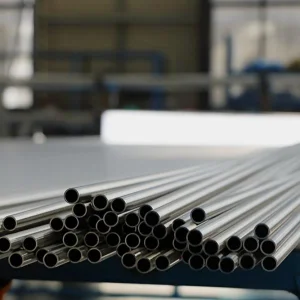
High-Quality Austenitic steel ASME SA213 · TP321 Manufacturer, Supplier

High-Quality Austenitic steel ASME SA269 · TP304L Suppliers, Product

Custom Austenitic Steels 309S • UNS S30908 • 1.4833 Factories, Products

High-Quality Austenitic steel ASME SA213 · TP310H Supplier, Suppliers

Custom Titanium Tubes • Grade 12 • UNS R53400 Manufacturers, Product
Industry Evolution: The Shift to Thin-Wall Welded Titanium Tubing
How automated arc welding and precision cold rolling revolutionized power generation surface condensers and chemical thermal management.
Over the past three decades, the global power generation, petrochemical, and seawater desalination sectors have undergone a fundamental paradigm shift in thermal exchanger material specification. Historically, heavy-wall seamless copper-nickel alloys (such as Cu-Ni 70/30 and Cu-Ni 90/10) and seamless stainless steels dominated shell-and-tube condensers. However, persistent challenges regarding pitting corrosion, erosion-corrosion under high-velocity seawater flow, stress corrosion cracking (SCC), and biofouling forced global EPC contractors and plant operators to seek superior metallurgical alternatives.
The emergence of high-speed, fully automated Gas Tungsten Arc Welding (GTAW/TIG) and Plasma Arc Welding (PAW) combined with continuous online Eddy Current Testing (ECT) allowed **Welded Titanium Tubing** (specifically ASTM B338 Grade 2) to supersede seamless products. Welded titanium tubes offer unmatched dimensional uniformity, tighter wall-thickness tolerances (±5%), zero wall eccentricity, and superior internal surface smoothness (Ra ≤ 0.4 μm). These physical attributes significantly improve overall heat transfer coefficients while drastically reducing raw material mass and total capital expenditure (CAPEX).
35% - 50% CAPEX Reduction
Thin-wall welded titanium tubing (e.g., 0.5mm to 0.71mm WT) achieves equivalent or higher pressure ratings compared to heavy-wall copper-nickel tubes, reducing titanium raw material tonnage and total freight costs dramatically.
Zero Seawater Corrosion
Titanium forms a self-healing, microscopic TiO2 oxide passive film instantaneously upon exposure to oxygen, rendering it virtually immune to pitting, crevice corrosion, and microbiologically influenced corrosion (MIC) in marine environments.
40+ Year Lifecycle Reliability
Unmatched mechanical integrity under severe fluid vibration, steam impingement, and thermal cycling guarantees zero unscheduled plant outages due to condenser tube failure over a multi-decade operational lifespan.
Metallurgical Classification & Engineering Specifications
Detailed chemical, mechanical, and physical breakdown of commercially pure (CP) titanium grades and titanium alloys utilized in industrial tubing manufacturing.
Titanium Grade Deep Dive (ASTM B338 / ASME SB338)
As a leading titanium tube manufacturer, Spezilla processes cold-rolled titanium strip coil into longitudinal welded tubes utilizing inert gas shielding (argon 99.999% purity) to eliminate hydrogen, oxygen, and nitrogen embrittlement in the weld zone. The primary titanium grades utilized include:
- Titanium Grade 1 (UNS R50250): The lowest strength, most ductile commercially pure titanium. Preferred for extreme cold-forming applications, deep drawing, and plate-fin heat exchangers where maximum formability is mandated.
- Titanium Grade 2 (UNS R50400): The universal "workhorse" of industrial heat exchangers and surface condensers. Striking an optimal balance between yield strength (min 275 MPa), tensile strength (min 345 MPa), and excellent cold flaring/bending characteristics.
- Titanium Grade 3 (UNS R50550): Higher strength CP titanium specified for pressure vessels, structural tubulars, and piping systems requiring elevated mechanical load bearing without added alloying elements.
- Titanium Grade 7 (UNS R52400): CP Titanium micro-alloyed with 0.12% to 0.25% Palladium (Pd). Provides exceptional resistance to reducing acids (hydrochloric, sulfuric, phosphoric) and crevice corrosion in high-temperature chloride solutions (>120°C).
- Titanium Grade 12 (UNS R53400): Advanced Titanium-Molybdenum-Nickel alloy (Ti-0.3Mo-0.8Ni). Offers superior strength at elevated temperatures up to 300°C and enhanced crevice corrosion resistance in hot brine without the cost premium of palladium.
| Material Grade | UNS / Standard | Tensile Strength (MPa) | Yield Strength (MPa) | Thermal Conductivity (W/m·K) | Max Velocity in Seawater | Relative Corrosion Rate in Brine |
|---|---|---|---|---|---|---|
| Titanium Grade 2 | UNS R50400 / ASTM B338 | ≥ 345 | 275 - 450 | 21.9 | > 20 m/s (No Erosion Limit) | < 0.001 mm/year (Immune) |
| Titanium Grade 7 (Ti-Pd) | UNS R52400 / ASTM B338 | ≥ 345 | 275 - 450 | 21.9 | > 20 m/s (No Erosion Limit) | < 0.0005 mm/year (Extreme Acid) |
| Titanium Grade 12 (Ti-Mo-Ni) | UNS R53400 / ASTM B338 | ≥ 485 | ≥ 345 | 19.0 | > 20 m/s (No Erosion Limit) | < 0.001 mm/year (Hot Brine) |
| Super Duplex 2507 | UNS S32750 / EN 1.4410 | 750 - 1000 | ≥ 550 | 14.2 | ~ 5 - 7 m/s | < 0.01 mm/year (Conditional) |
| Copper-Nickel 70/30 | UNS C71500 / ASTM B111 | ≥ 360 | ≥ 125 | 29.0 | ≤ 3.5 m/s (Erosion Prone) | 0.02 - 0.05 mm/year |
Macro Industrial Solutions: Application Engineering
Deploying engineered titanium tubular solutions across mission-critical infrastructure worldwide.
1. Thermal & Nuclear Power Surface Condensers
In modern steam turbine condenser systems operating on coastal brackish or seawater cooling circuits, steam-side ammonia attack and tube-end inlet erosion-corrosion represent major failure modes for copper-based tubes. Spezilla's ASTM B338 Grade 2 thin-wall welded tubes (0.5mm - 0.71mm WT) eliminate tube failures, providing high heat transfer rates and allowing higher cooling water velocities (>3 m/s) to clean bio-film without mechanical erosion.
2. Seawater Desalination Plants (MSF, MED, SWRO)
Thermal desalination technologies, including Multi-Stage Flash (MSF) and Multi-Effect Distillation (MED), expose heat exchanger bundles to concentrated hot seawater brine up to 110°C. Welded Titanium Grade 2 and Grade 12 tubes exhibit total immunity to chloride pitting, crevice corrosion, and scaling under intense thermal evaporative cycles, guaranteeing 30+ year maintenance-free operation.
3. Chemical & Petrochemical Processing
In chlor-alkali production, Purified Terephthalic Acid (PTA) synthesis, nitric acid production, and organic synthesis, aggressive media such as wet chlorine gas, nitric acid, chlorate solutions, and organic acids destroy standard stainless steel. Titanium Grade 2 and palladium-stabilized Grade 7 welded tubes prevent catastrophic leaks, protecting multi-million dollar chemical reactors.
4. Offshore Oil & Gas and Marine Heat Exchangers
Subsea platforms, FPSO vessels, and marine heat exchangers require materials with ultra-high strength-to-weight ratios and resilience against hydrogen sulfide (H2S), carbon dioxide (CO2), and turbulent seawater. Welded titanium tubes meet stringent NORSOK M-650 specifications, providing light-weight, space-saving tubular solutions for offshore topside equipment.
Localization, Regulatory Compliance & Quality Assurance
Ensuring full heat traceability, rigorous NDT testing, and absolute adherence to global EPC procurement mandates.
Global procurement directors and quality assurance managers demand complete transparency, robust technical documentation, and bulletproof compliance from titanium tubing factories. Spezilla operates under certified ISO 9001:2015, ISO 14001, and Pressure Equipment Directive (PED 2014/68/EU) quality management systems.
Rigorous Quality Control & NDT Testing Suite
Every single titanium tube leaving our factory line undergoes rigorous non-destructive and mechanical testing strictly adhering to ASTM B338 / ASME SB338 guidelines:
- Online Eddy Current Testing (ECT): Conducted per ASTM E426 continuously across 100% of the tube weld seam and parent body to detect longitudinal micro-fissures, pinholes, and internal discontinuities.
- Hydrostatic Testing & Pneumatic Leak Test: Every tube is pressurized up to 20 MPa hydrostatically or subjected to 1.5 MPa underwater air pressure testing to verify zero structural leakage.
- Pneumatic Reverse Bend & Flaring Tests: Mechanical verification confirming weld ductility; tube samples must flare up to 20% of inside diameter without cracking or seam separation.
- Dimensional & Wall Uniformity Verification: Laser micrometers measure OD and WT at 0.01mm precision, ensuring complete compliance with design heat exchanger tubesheet hole tolerances.
- Material Certification: Issued with full heat traceability back to raw titanium sponge chemistry via authentic EN 10204 3.1 Mill Test Certificates (3.2 Independent Third-Party Inspection by Lloyd's Register, TÜV, or DNV available upon request).
Technology Roadmap: The Future of Titanium Tubing
Pioneering advancements in continuous laser welding, AI weld monitoring, and green hydrogen infrastructure compatibility.
1. High-Speed Fiber Laser Welding
Transitioning from traditional GTAW to narrow-gap fiber laser welding. Reduces weld heat-affected zone (HAZ) by 60%, maintaining parent-metal grain size and boosting micro-hardness uniformity across the seam.
2. AI-Driven Real-Time Weld Pool Monitoring
Integrating optical pyrometers and neural network vision systems to analyze molten pool geometry at 1,000 frames per second, automatically adjusting arc current and shielding gas flow to eliminate weld porosity instantly.
3. Ultra-Thin Wall Tubing (0.4mm WT)
Engineering hyper-precise cold drawing and annealing processes to yield commercial 0.4mm wall titanium tubes, maximizing thermal heat flux for high-efficiency evaporators in green hydrogen electrolysis plants.
Technical FAQ: Frequently Asked Procurement & Engineering Questions
Expert answers addressing design standards, corrosion limits, welding integrity, and ordering specifications.
1. Why choose Welded Titanium Tubing over Seamless Titanium Tubing for heat exchangers?
Welded titanium tubing (ASTM B338) offers significant technical and economic advantages over seamless tubes for heat exchanger service. Due to being cold-formed from high-precision strip coil, welded titanium tubing exhibits extremely uniform wall thickness (±5% vs ±10-15% for seamless), excellent concentricity, superior internal surface finish (Ra ≤ 0.4 μm), and virtually unlimited continuous straight lengths up to 25 meters. Furthermore, modern GTAW/Laser automated welding combined with 100% online Eddy Current Testing produces a weld seam equal in strength and corrosion resistance to the parent metal, at a 20%-35% lower purchase cost.
2. What is the maximum allowable operating temperature for Titanium Grade 2 in seawater?
Titanium Grade 2 demonstrates exceptional resistance to pitting and general corrosion in seawater at temperatures up to 260°C (500°F). However, for crevice corrosion resistance under tight gasket surfaces or bio-fouling deposits, Grade 2 is generally recommended for temperatures up to 80°C (176°F). For operating temperatures exceeding 80°C in hyper-saline brine or acidic environments, Titanium Grade 7 (Ti-Pd) or Titanium Grade 12 (Ti-Mo-Ni) should be specified to eliminate crevice attack.
3. How does Spezilla ensure protection against hydrogen embrittlement during manufacturing?
Hydrogen embrittlement in titanium occurs when hydrogen gas diffuses into the crystal matrix, forming brittle titanium hydrides. Spezilla mitigates this by maintaining strict controls during heat treatment: annealing is performed in high-vacuum furnaces (≤ 10^-4 Torr) or under ultra-pure inert Argon gas atmosphere (99.999%). Furthermore, incoming strip coils and finished tubes undergo chemical analysis to guarantee hydrogen content remains strictly below the ASTM B338 maximum limit of 0.015% (150 ppm).
4. What non-destructive tests (NDT) are performed on ASTM B338 Welded Titanium Tubes?
Every single tube produced undergoes 100% Non-Destructive Testing. This includes continuous Eddy Current Testing (ECT) per ASTM E426 / ASTM E215 to detect surface and internal flaws, alongside Pneumatic Underwater Leak Testing at 1.5 MPa or Hydrostatic Testing per ASME SA338 requirements. For critical nuclear or aerospace applications, Ultrasonic Testing (UT) per ASTM E213 and X-ray Radiography of the weld seam are performed.
5. Can welded titanium tubes be bent into U-shapes for shell-and-tube heat exchangers?
Yes. Welded Titanium Grade 1, Grade 2, and Grade 7 tubes possess high ductility and are routinely cold-bent into tight U-bend configurations per ASTM B338 / ASME SB338. Post-bending stress relief annealing in a vacuum atmosphere is applied to the bend leg and transition zones when specified by the engineering datasheet to eliminate residual bending stresses.
6. What documentation accompanies a shipment of Spezilla titanium tubes?
All orders are dispatched with comprehensive quality documentation, including an original EN 10204 3.1 Mill Test Certificate detailing exact heat numbers, ladle chemical analysis, room temperature mechanical test results (Tensile, Yield, Elongation), flaring/flattening test compliance, NDT inspection logs, and dimensional verification reports. EN 10204 3.2 certificates endorsed by independent inspection agencies (TÜV, Lloyd's, DNV, SGS) are provided upon contract request.
Complete High-Performance Tubular Product Range
Explore our extensive inventory and custom fabrication capabilities across stainless steel, nickel alloys, and titanium grades.

High-Quality Austenitic steel ASME SA213 · TP316Ti Suppliers, Product

High-Quality Titanium Tubes • Grade 3•UNS R50550 Factories, Product
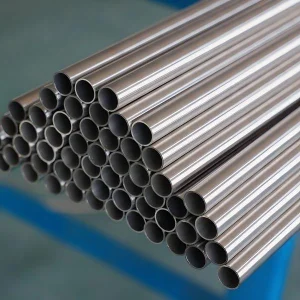
High-Quality Austenitic steel ASME SA213 · TP304H Manufacturer, Products

Custom Austenitic steel ASME SA213 · TP316LN.UNS S31653 Manufacturers, Factory
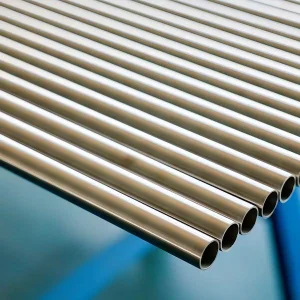
High-Quality Austenitic steel ASME SA213 · TP347 Manufacturers, Supplier

High-Quality Austenitic Steels 317L • UNS S31703• 1.4438 Suppliers, Factory
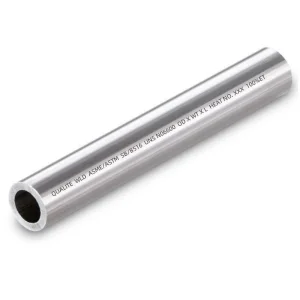
High-Quality Nickel Alloy Tubes 600 • UNS N06600 • 2.4816 Manufacturer, Manufacturers
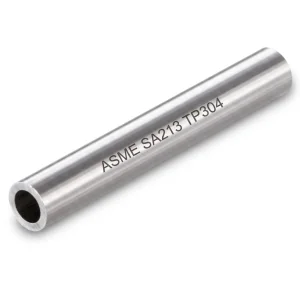
Custom Austenitic steel ASME SA312 · TP304 Stainless Steel Pipe Manufacturers, Supplier
Partner with Spezilla for Uncompromising Titanium Quality
Submit your engineering datasheets, dimensional requirements, or project RFQs directly to our metallurgical engineering team. We provide rapid technical evaluations, custom size manufacturing, and mill-direct competitive pricing.
