
Featured Austenitic & Special Alloy Piping Products
Premium grade corrosion-resistant pipes and tubing engineered to ASTM, ASME, and EN standard specifications.

Custom Austenitic steel ASME SA312 · TP321 Suppliers, Product

High-Quality Austenitic steel ASME SA269 · TP304L Suppliers, Product

Custom Austenitic Steels 316L • UNS S31603 • 1.4404 Manufacturer, Factories
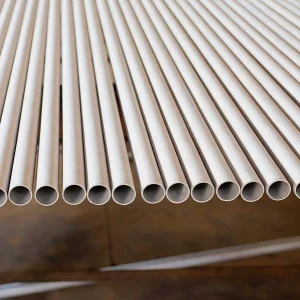
Custom Super austenitic steel ASME SA213 · S31254.SMO254 pipe Manufacturers, Products

Custom Austenitic steel ASME SA213 · TP347H Product, Products
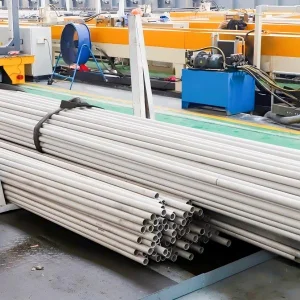
Custom Austenitic steel ASME SA213 · TP317L Supplier, Suppliers

High-Quality Nickel Alloy Tubes 825 • UNS N08825 • 2.4858 Manufacturers, Products

Custom Austenitic steel ASME SA312 · TP304L Suppliers, Factories
1. Metallurgical Science & Engineering Specifications of 316L Pipes
Understanding the microstructural advantages of UNS S31603 / EN 1.4404 in aggressive fluid transport environments.
Type 316L (UNS S31603 / EN 1.4404) represents the standard low-carbon molybdenum-bearing austenitic stainless steel used extensively in process piping systems worldwide. The inclusion of Molybdenum (2.0% – 3.0%) substantially elevates the alloy's resistance to localized chemical attack, specifically pitting and crevice corrosion in halide-rich (chloride) solutions, compared to standard 18/8 chromium-nickel steels such as 304 and 304L.
The "L" designation signifies "Low Carbon" ($\text{Carbon} \le 0.03\%$), a critical metallurgical requirement designed to prevent intergranular carbide precipitation during thermal cycles such as welding or stress relief. When standard 316 ($\text{Carbon} \le 0.08\%$) is welded, chromium carbides ($\text{Cr}_{23}\text{C}_6$) precipitate along grain boundaries in the Heat-Affected Zone (HAZ) between $425^\circ\text{C}$ and $860^\circ\text{C}$ ($800^\circ\text{F} - 1500^\circ\text{F}$). This phenomenon depletes chromium adjacent to grain boundaries, creating localized galvanic couples susceptible to severe intergranular corrosion (weld decay). 316L effectively eliminates chromium depletion, maintaining complete immunity to intergranular attack without requiring post-weld solution annealing.
PREN Performance
Pitting Resistance Equivalent Number (PREN) ranges from 23.0 to 25.5, ensuring superior performance in brackish water, marine mist, and industrial chemical solutions.
Microstructural Stability
Full face-centered cubic (FCC) austenitic structure maintained through optimized Nickel (10.0% - 14.0%) alloying, offering non-magnetic response and cryogenic toughness.
HAZ Corrosion Immunity
Controlled low-carbon chemistry guarantees complete avoidance of chromium carbide precipitation in heavy-wall pipe welding operations.
Chemical Composition & Mechanical Property Benchmarks
Leading high-quality 316L pipe manufacturers control chemistry within precise tolerances to balance weldability, corrosion resistance, and mechanical strength. Below is the standardized chemical and mechanical profile defined by ASME SA312 / ASTM A312 and EN 10217-7 / EN 10216-5:
| Element / Property | ASTM A312 / ASME SA312 TP316L | EN 10216-5 / 1.4404 | Engineering Significance |
|---|---|---|---|
| Chromium (Cr) | 16.0 – 18.0 % | 16.5 – 18.5 % | Forms passive oxide film ($\text{Cr}_2\text{O}_3$) for basic corrosion protection |
| Nickel (Ni) | 10.0 – 14.0 % | 10.0 – 13.0 % | Stabilizes austenitic structure, enhances ductility and toughness |
| Molybdenum (Mo) | 2.00 – 3.00 % | 2.00 – 2.50 % | Provides pitting and crevice corrosion resistance in chloride environments |
| Carbon (C) | ≤ 0.030 % | ≤ 0.030 % | Prevents intergranular precipitation during thermal welding cycles |
| Nitrogen (N) | ≤ 0.10 % | ≤ 0.11 % | Increases yield strength without sacrificing intergranular corrosion resistance |
| Yield Strength (0.2% Offset) | ≥ 170 MPa (25 ksi) | ≥ 220 MPa | Determines maximum allowable pressure stress in piping design |
| Tensile Strength | ≥ 485 MPa (70 ksi) | 520 – 670 MPa | Ensures structural integrity under high pressure and thermal loading |
| Elongation (in 2 inches / 50mm) | ≥ 35 % | ≥ 40 % | High formability for bending, flaring, and pipe manipulation |
2. Global Market Dynamics & Industrial Procurement Trends
Analyzing macroeconomic drivers, regional specification shifts, and global supply chain strategies for 316L piping systems.
The global demand for high-quality 316L pipes is experiencing structural expansion driven by the global energy transition, stringent environmental regulations, and the rapid scale-up of biopharmaceutical and semiconductor manufacturing hubs worldwide. Industrial engineering, procurement, and construction (EPC) contractors are increasingly shifting procurement focus from initial capital expenditure (CAPEX) to total lifecycle operational expenditure (OPEX), where 316L offers significant longevity advantages over standard carbon and lower-alloy steels.
Green Hydrogen & Clean Energy Transition
The global shift toward green hydrogen production via electrolysis requires immense quantities of high-purity 316L piping for deionized water lines, electrolyte fluid circulation, and medium-pressure hydrogen transport, due to 316L’s exceptional resistance to hydrogen embrittlement at ambient and sub-zero temperatures.
Ultra-High Purity (UHP) Semiconductor Expansion
Next-generation semiconductor fabrication plants require 316L piping subjected to specialized Electropolishing (EP) to achieve surface roughness levels of $Ra \le 0.25\,\mu\text{m}$ ($10\,\mu\text{in}$). Procurement teams require manufacturers capable of providing strict trace-element control and cleanroom packaging.
Regional Procurement Demand Drivers
- North America (ASME / ASTM Focus): Heavy reliance on ASME SA312 TP316L seamless and welded pipes for shale gas processing, chemical plants, and LNG export terminal expansion projects. Compliance with CRN (Canadian Registration Number) and ASME Boiler and Pressure Vessel Code (BPVC) is mandatory.
- Europe & UK (EN / PED Focus): Demand is dominated by offshore wind substation cooling lines, chemical modernization under REACH standards, and food/beverage processing systems compliant with EN 10217-7 and Pressure Equipment Directive (PED 2014/68/EU).
- Asia-Pacific (Rapid Infrastructure Growth): Mega-scale desalination plants, biopharmaceutical hubs in Singapore and India, and industrial chemical complexes in China driving massive volumetric procurement for seamless and large-diameter EFW 316L pipes.
3. Macro Industry Engineering Solutions & Applications
Comprehensive application frameworks demonstrating how 316L piping solves complex corrosion and pressure challenges.
Petrochemical & Refining
Challenge: Organic acids, sulfur compounds, and chloride-laden cooling media cause rapid wall thinning in carbon steel.
Solution: Heavy-wall ASTM A312 TP316L seamless pipes provide localized pitting resistance and long-term mechanical reliability under elevated temperatures up to $500^\circ\text{C}$.
Pharmaceutical & Biotech
Challenge: Microbial growth, biofilm formation, and contamination in Water-For-Injection (WFI) systems.
Solution: ASME BPE compliant 316L tubing with mechanical polishing ($Ra \le 0.4\,\mu\text{m}$) or electropolishing ($Ra \le 0.25\,\mu\text{m}$), fully passivated to ensure zero ion contamination.
Offshore Marine & Desalination
Challenge: Severe chloride pitting, crevice corrosion from stagnant seawater, and salt spray exposure.
Solution: 316L high-molybdenum pipes used in low-pressure reverse osmosis (RO) feed lines, fire main systems, and topside process piping on offshore oil rigs.
Seamless vs. Welded Manufacturing Route Comparison
Selecting between seamless (SMLS) and welded (Welded & Drawn / EFW) 316L pipes requires balancing design pressure requirements, wall thickness uniformity, and economic factors:
| Parameters | Seamless 316L Pipe (ASTM A312 / A213) | Welded & Drawn 316L Pipe (ASTM A249 / A269) | Electric Fusion Welded (EFW) Heavy Wall |
|---|---|---|---|
| Manufacturing Process | Hot extrusion or cold pilgering from solid billet | Automatic TIG/Laser welded from strip, cold drawn over mandrel | Plate formed and submerged arc or plasma arc welded |
| Weld Joint Factor ($E$) | $E = 1.0$ (No longitudinal seam) | $E = 1.0$ (Cold worked & 100% NDT) | $E = 0.85 - 1.0$ depending on RT inspection |
| Wall Thickness Tolerance | $\pm 10\% - 12.5\%$ variability | Ultra-precise ($\pm 5\%$) wall uniformity | Standard mill plate tolerance ($\pm 7.5\%$) |
| Concentricity | Moderate concentricity | Exceptional concentricity & bore smoothness | High dimensional stability |
| Cost & Availability | Higher cost; ideal for extreme high-pressure lines | Cost-effective for heat exchangers & sanitary systems | Economical for large diameter (> 8 inch NB) lines |
4. Quality Assurance, Compliance & Global Support
Rigorous non-destructive testing, international certification, and localized logistical frameworks.
Industrial piping failures in chemical or power plants carry catastrophic financial and environmental risks. Quality assurance protocols at accredited 316L pipe manufacturing facilities follow a strict multi-stage verification matrix starting from raw material heat qualification to final shipping inspection.
Non-Destructive Testing (NDT) Suite
- Eddy Current Testing (ECT): 100% inline electromagnetic testing per ASTM E426 to detect surface and subsurface seam defects.
- Hydrostatic Testing: Every pipe length subjected to internal hydraulic pressure according to ASME A999 / SA999 without leakage.
- Ultrasonic Testing (UT): Full 360-degree wall thickness verification and volumetric flaw detection per ASTM E213.
- Radiographic Testing (RT): 100% X-ray inspection of welded seams for heavy-wall EFW pipes.
Global Compliance & Certification
- EN 10204 Type 3.1 & 3.2: Certified chemical analysis and mechanical testing reports with full heat traceability back to original steel melt. Third-party inspection (TUV, DNV, SGS, Lloyd's) available.
- ASME Stamp & PED 2014/68/EU: Material compliance for pressure equipment operated in European and North American jurisdictions.
- NACE MR0175 / ISO 15156: Compliance for sour oil & gas service environments containing hydrogen sulfide ($H_2S$).
5. Technical Roadmap & Future Outlook (2026–2035)
Next-generation advancements in metallurgical processing, smart piping, and sustainable steel manufacturing.
Green Steel Smelting
Transitioning melt shops to Direct Reduced Iron (DRI) powered by 100% green hydrogen, reducing the carbon footprint of 316L pipe production by up to 75% by 2030.
IoT-Enabled Smart Piping
Integration of surface-mounted micro-sensors and ultrasonic transducer arrays to provide real-time, non-intrusive monitoring of internal wall loss and localized pitting.
Advanced Surface Nanotechnology
Atomic Layer Deposition (ALD) coatings on 316L interior walls to achieve super-hydrophobic and anti-fouling surfaces for bioprocessing and marine heat exchangers.
6. In-Depth Engineering & Procurement FAQ
Comprehensive answers to critical technical queries evaluated by metallurgical and process piping engineers.
The primary difference lies in the maximum carbon content: 316 has a maximum carbon content of 0.08%, whereas 316L restricts carbon to a maximum of 0.030%. In heavy welding applications, high carbon levels lead to chromium carbide precipitation ($\text{Cr}_{23}\text{C}_6$) at grain boundaries within the heat-affected zone (HAZ), creating localized chromium-depleted zones that are susceptible to intergranular corrosion (weld decay).
Because 316L virtually eliminates carbon carbide precipitation, it is specified for all welded piping infrastructure where post-weld solution annealing is impractical. 316L is preferred in chemical, pharmaceutical, and marine environments. Standard 316 may offer slightly higher elevated-temperature creep strength, but 316L dual-certified material (316/316L) bridges this gap for standard operational temperatures.
304L contains 18% Chromium and 8% Nickel, providing solid general atmospheric corrosion resistance. However, in environments containing chloride ions ($\text{Cl}^-$)—such as seawater, salt spray, or industrial process fluids—chloride ions break down the protective passive oxide layer ($\text{Cr}_2\text{O}_3$), causing rapid localized pitting and crevice corrosion.
316L contains 2.0% to 3.0% Molybdenum (Mo). Molybdenum significantly stabilizes the passive oxide film, increasing the resistance to localized breakdown and accelerating re-passivation if the film is mechanically or chemically damaged. This raises the Pitting Resistance Equivalent Number (PREN) from approximately 19.0 (in 304L) to 24.0+ (in 316L), allowing reliable service in chloride concentrations up to 1,000 ppm at ambient temperatures.
While both specifications cover 316L material, their intended engineering applications and regulatory scopes differ substantially:
- ASTM A312 / ASME SA312: Standard specification for seamless, straight-seam welded, and heavily cold-worked welded austenitic stainless steel pipes. Designed for high-temperature and general corrosive service in pressure piping systems governed by ASME B31.3 or ASME Section VIII pressure vessel codes. Pipe sizes are defined by Nominal Pipe Size (NPS) and Schedule wall thickness (e.g., NPS 2 Schedule 40S).
- ASTM A269 / ASME SA269: Standard specification for seamless and welded austenitic stainless steel tubing for general service, instrumentation, and control lines. A269 focuses heavily on dimensional tolerances (specified by exact Outside Diameter and Wall Thickness) and surface finish requirements, but does not mandate hydrostatic testing unless specifically requested by the purchaser.
Yes. 316L maintains an fully austenitic face-centered cubic (FCC) crystal structure down to absolute zero ($0\text{ K}$ / $-273^\circ\text{C}$). Unlike ferritic or carbon steels, which undergo a ductile-to-brittle transition at sub-zero temperatures, 316L exhibits excellent impact toughness and high ductility at cryogenic temperatures down to $-196^\circ\text{C}$ (liquid nitrogen) and $-162^\circ\text{C}$ (Liquid Natural Gas - LNG).
Charpy V-notch impact testing at $-196^\circ\text{C}$ typically yields lateral expansion well in excess of code requirements ($> 0.38\text{ mm}$ / $15\text{ mils}$), making ASTM A312 TP316L seamless and welded pipes a preferred material choice for LNG loading arms, fuel gas supply lines, and cryogenic storage facilities.
For high-purity pharmaceutical, biotechnology, and semiconductor gas/liquid delivery systems, specifying the correct internal surface finish is critical to prevent bacterial entrapment and biofilm growth. Mechanical polishing alone leaves microscopic peaks and valleys. Therefore, engineers specify an ASME BPE SF4 or SF5 finish:
- Bright Annealed (BA): Heat treated in a vacuum or controlled hydrogen atmosphere to preserve a bright, smooth oxide surface.
- Electropolished (EP): An electrochemical process that selectively dissolves surface microscopic high points, producing a mirror-like surface roughness of $Ra \le 0.25\,\mu\text{m}$ ($10\,\mu\text{in}$). Electropolishing enriches the surface film with Chromium ($\text{Cr}/\text{Fe} \ge 1.5$), providing optimal corrosion resistance and passivity.
Welding 316L pipe should be performed using Gas Tungsten Arc Welding (GTAW/TIG) for the root pass to ensure a smooth interior bead profile, followed by GTAW or Shielded Metal Arc Welding (SMAW) for fill passes. An argon backing gas purge ($99.999\%$ purity) is mandatory during root pass welding to prevent backside oxidation ("sugar formation") which severely degrades corrosion resistance.
The recommended matching filler metal is ER316L (bare wire) or E316L (covered electrodes). When welding 316L to carbon steel, a over-alloyed filler metal such as ER309L or ER309LMo must be used to accommodate dilution without forming brittle martensitic phases.
Specialty Alloy & Titanium Tube Offerings
Explore our complete inventory of titanium, high-temperature nickel alloy, and specialized austenitic products.

Custom Titanium Tubes • Grade 12 • UNS R53400 Manufacturers, Product

Custom Austenitic Steels 321H • UNS S32109 • 1.4878 Manufacturer, Products
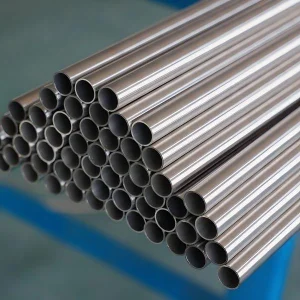
High-Quality Austenitic steel ASME SA213 · TP304H Manufacturer, Products

High-Quality Austenitic Steels 321 • UNS S32100 • 1.4541 Manufacturers, Factories

High-Quality Austenitic Steels 304H • UNS S30409 • 1.4948 Manufacturer, Supplier

High-Quality Austenitic Steels 309H • UNS S30909 Product, Products

Custom Nickel Alloy Tubes 400 • UNS N04400 • 2.4360 Manufacturer, Products

Custom Austenitic Steels 309S • UNS S30908 • 1.4833 Factories, Products
Request Technical Consultation & Mill Quotations
Submit your project datasheets or MTO (Material Take-Off) to our senior metallurgy and engineering team for mill-direct pricing, dimensional verification, and quality compliance guidance.
