
Featured EN 10217-7 Compatible Pipe & Tube Product Portfolio (Top Selection)





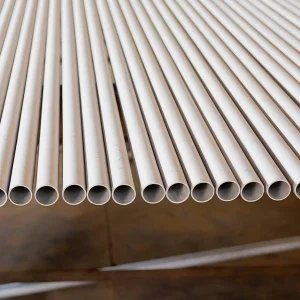


Executive Overview: The Standard for Critical Pressure Systems
The EN 10217-7 standard governs technical delivery conditions for welded stainless steel tubes designed for circular cross-section pressure and corrosion-resistant applications. As modern process industries push boundaries in operating pressure, temperature limits, and chemical aggressiveness, selecting a certified EN 10217-7 stainless steel pipe supplier becomes a fundamental pillar of plant safety, regulatory compliance under the European Pressure Equipment Directive (PED 2014/68/EU), and overall life-cycle cost optimization.
This technical whitepaper provides engineering teams, procurement managers, and plant operators with an exhaustive breakdown of EN 10217-7 specification parameters, metallurgical grades (austenitic, super-austenitic, and duplex alloys), advanced automated welding methodologies, Non-Destructive Testing (NDT) criteria, and China's strategic manufacturing resilience.
1. Architectural Framework of European Standard EN 10217-7
EN 10217-7 specifically addresses welded steel tubes for pressure purposes made of stainless steel. Understanding the nuanced architectural split within this standard—primarily the differentiation between Test Category 1 (TC1) and Test Category 2 (TC2)—is vital for risk mitigation in high-hazard process environments.
Test Category 1 (TC1)
Designed for standard industrial pressure lines and utility systems. TC1 requires basic visual inspection, dimensional verification, tensile testing, and non-destructive eddy-current testing for longitudinal defects. It serves standard heat exchanger applications, low-pressure chemical transfer, and municipal water purification modules.
- Eddy current testing per EN ISO 10893-2.
- Tensile & flattening or drift expanding tests.
- Standard EN 10204 3.1 Certification.
Test Category 2 (TC2) — Critical Service
Mandatory for high-hazard, elevated-temperature, and ultra-high-pressure equipment regulated under PED Category II, III, and IV. TC2 demands rigorous non-destructive testing, including mandatory ultrasonic weld seam examination or radiography, impact testing at sub-zero temperatures (for low-temperature applications), and elevated temperature tensile property validation.
- 100% Weld seam ultrasonic testing per EN ISO 10893-11.
- Charpy V-notch impact testing down to -196°C.
- Third-party inspection endorsement (EN 10204 3.2).
Chemical Composition & Material Grade Matrix (EN 10217-7 vs ISO / ASTM)
Selecting the correct stainless steel designation requires precise alignment between European EN numbers, EN steel names, and equivalent global standards such as UNS or ASTM A249/A312.
| EN Steel Name | EN Steel Number | UNS Equivalent | PREN Value | Key Mechanical Properties (Yield Rp0.2 / Tensile Rm) |
|---|---|---|---|---|
| X2CrNi19-11 | 1.4306 / 1.4307 (304L) | S30403 | 18.0 - 20.0 | ≥ 200 MPa / 500–700 MPa |
| X2CrNiMo17-12-2 | 1.4404 (316L) | S31603 | 23.1 - 25.5 | ≥ 220 MPa / 520–670 MPa |
| X2CrNiMo18-14-3 | 1.4435 (316L High-Mo) | S31603 | 26.0 - 28.5 | ≥ 220 MPa / 520–670 MPa |
| X6CrNiTi18-10 | 1.4541 (321) | S32100 | 18.5 - 21.0 | ≥ 210 MPa / 500–730 MPa |
| X6CrNiMoTi17-12-2 | 1.4571 (316Ti) | S31635 | 23.1 - 26.0 | ≥ 220 MPa / 520–690 MPa |
| X2CrNiMoN22-5-3 | 1.4462 (Duplex 2205) | S31803 / S32205 | 33.0 - 38.0 | ≥ 450 MPa / 650–880 MPa |
Information Gain Note: Pitting Resistance Equivalent Number (PREN = %Cr + 3.3x%Mo + 16x%N) dictates severe environment survivability. For sour gas, marine offshore heat exchangers, and high-chloride pulp bleaching, EN 10217-7 Duplex 1.4462 or Super Austenitic 1.4547 (254SMO) provides up to double the operational longevity compared to conventional 1.4404 (316L).
2. Precision Manufacturing Routes, Welding Technologies & NDT Protocols
The manufacturing process of EN 10217-7 pipes determines their structural integrity, dimensional tolerances (D3/T3 or D4/T4 precision classes), and weld joint factor ($z = 1.0$). Premier Chinese factories utilize fully automated, cleanroom-grade cold-forming and welding production lines.
Advanced Automated Welding
Utilizing Multi-Cathode TIG (Tungsten Inert Gas), Plasma Arc Welding (PAW), or state-of-the-art Fiber Laser Welding without filler metal (autogenous welding). Laser welding minimizes the Heat-Affected Zone (HAZ), reducing intergranular carbide precipitation and preserving peak corrosion resistance.
Bright Annealing (Heat Treatment)
Solution annealing in a 100% pure Hydrogen gas environment at temperatures ranging between 1040°C and 1120°C, followed by rapid quenching. This process completely redissolves chromium carbides into the austenitic matrix, eliminating internal stress and producing a scale-free, mirror-bright surface finish.
Cold Redrawing & Bead Working
For seamless-equivalent performance, tubes undergo internal weld bead rolling or cold drawing (W&D route). This mechanical working aligns the crystal structure across the weld seam, eliminating internal step height and delivering uniform concentric wall thickness.
Comprehensive Quality Assurance & NDT Workflow
Every EN 10217-7 tube manufactured for global delivery undergoes a mandatory sequence of quality checks to verify pressure containment integrity:
Stage 1: Raw Material Chemical Verification
Optical Emission Spectrometry (OES) and Positive Material Identification (PMI) on 100% of incoming mother coils to guarantee strict low-carbon and alloy chemistry compliance.
Stage 2: In-Line Eddy Current Testing (ECT)
Continuous online eddy current monitoring per EN ISO 10893-2 detects longitudinal pinholes, micro-fissures, and weld discontinuities at line speeds up to 60 m/min.
Stage 3: Offline Hydrostatic Pressure Testing
100% hydrostatic testing up to 250 bar (or calculated test pressure per EN 10217-7 formula $P = 2ST/D$) held for a minimum dwell time of 5 seconds to verify absolute pressure tightness.
Stage 4: Metrology, Surface Roughness & Destructive Verification
Bore gauge laser scanning, inner surface roughness ($Ra < 0.4 \mu m$ for hygienic lines), flattening, drift expanding, and intergranular corrosion testing according to EN ISO 3651-2 (Method A/B).
3. Global Industrial Landscape & Commercial Dynamics
The global transition toward sustainable energy, green hydrogen infrastructure, and regionalized chemical manufacturing has transformed the procurement dynamics of stainless steel pressure pipes. Historically dominated by European mills, the global market for EN 10217-7 certified pipes has experienced a paradigm shift.
European Union Demand
Driven by strict environmental directives and aging industrial asset modernization, European EPCs require PED-compliant 1.4404 and 1.4571 tubes for district heating networks, pharmaceutical facilities, and offshore wind power conversion platforms.
North American & Middle Eastern Growth
While ASTM standards predominate in North America, dual-certified EN 10217-7 / ASTM A249 pipes are increasingly specified by global engineering firms executing cross-border modular skid packages, LNG export terminals, and desalination plants in the GCC region.
Cost vs. Performance Optimization
Modern laser-welded EN 10217-7 TC2 pipes offer a 20% to 35% cost advantage over seamless EN 10216-5 pipes while providing superior wall thickness uniformity, tighter outside diameter tolerances, and identical pressure retaining safety factors under PED guidelines.
4. China’s Supply Chain Resilience & Modern Factory Efficiencies
China has evolved into the world's primary engine for high-end stainless steel tubing production. Strategic investments in fully integrated raw material clusters, advanced metallographic laboratories, and continuous automatic tube mills enable Chinese manufacturers to deliver unmatched supply chain reliability and technical excellence.
1. Vertical Raw Material Integration
Leading Chinese EN 10217-7 suppliers maintain direct strategic partnerships with mega-scale upstream stainless steel melt shops (such as Tsingshan, TISCO, and ZPSS). This guarantees immediate access to high-purity, low-inclusion stainless steel strip coils, insulating projects against global raw material shortages and volatile nickel/molybdenum price swings.
2. Scale & Rapid Turnaround Efficiency
With multi-line continuous laser welding, high-speed bright annealing furnaces, and automated online eddy-current inspection systems operating 24/7, tier-1 Chinese factories achieve lead times of 15–25 days for standard EN 10217-7 orders, compared to 12–16 weeks typical of traditional Western mills.
3. Rigorous Quality Control Systems
Equipped with state-of-the-art testing centers certified under ISO/IEC 17025, Chinese factories execute complete metallurgical, mechanical, and non-destructive evaluations in-house. Independent third-party inspection organizations (TÜV Rheinland, Lloyd's Register, Bureau Veritas, SGS) routinely conduct factory audits and issue EN 10204 3.2 co-signed mill test certificates.
4. Customized Logistics & Global Support
From specialized seaworthy wooden case packaging and plastic end capping to custom length cutting up to 25 meters for heat exchanger U-bend configurations, Chinese suppliers deliver tailored turnkey logistics that streamline job-site installation across Europe, Asia, and the Americas.
5. Localized Application Scenarios & Field Engineering Deployments
The engineering flexibility of EN 10217-7 pipes manifests across a vast spectrum of industrial operating environments. Below are localized technical deployment scenarios where specific alloy choices under EN 10217-7 yield optimal long-term operational efficiency:
European Hygienic Food & Dairy Processing
In Northern and Central Europe, EN 10217-7 grade 1.4404 (316L) with internal surface polishing ($Ra < 0.4 \mu m$) and orbital-weldable ends is widely specified for pasteurization loops and CIP (Clean-In-Place) lines. Smooth bore finishes eliminate bacterial trap sites while resisting organic acid exposure.
Chemical & Petrochemical Acid Transfer Lines
For aggressive organic and inorganic acid handling in German and Benelux chemical parks, titanium-stabilized 1.4571 (316Ti) or high-molybdenum 1.4435 pipes are deployed under TC2 guidelines. Titanium stabilization prevents sensitization during field welding, eliminating the risk of intergranular corrosion along pipe joints.
Coastal Desalination & Seawater Cooling Networks
In Middle Eastern and Mediterranean coastal utilities, standard austenitic grades succumb rapidly to chloride pitting. Here, EN 10217-7 Duplex 1.4462 (2205) and Super Duplex 1.4410 (2507) pipes are installed in high-pressure reverse osmosis (RO) header racks, offering complete resistance to pitting corrosion in hypersaline environments.
6. Technical Roadmap & Future Outlook (2025–2035)
The stainless steel tubing industry is undergoing a digital and ecological transformation. Future advancements in EN 10217-7 production will focus on decarbonization, smart manufacturing, and ultra-high-performance metallurgy.
2025–2027: Green Steel & Zero-Carbon Manufacturing Integration
Transition to 100% Electric Arc Furnace (EAF) melting powered by renewable energy, utilizing high-scrap ratios to reduce embodied carbon footprint ($CO_2$ intensity $< 0.5$ t/t steel). EPD (Environmental Product Declaration) certificates will become mandatory alongside EN 10204 MTCs.
2027–2030: AI-Driven Real-Time Weld Quality Optimization
Integration of real-time computer vision, infrared thermography, and machine-learning algorithms directly into laser welding heads. AI algorithms will continuously analyze melt pool dynamics, automatically adjusting laser power and shield gas flow to eliminate weld defects in real-time.
2030–2035: Lean Duplex & Ultra-High-Strength Alloys
Widespread adoption of high-strength lean duplex grades (e.g., 1.4162 / UNS S32101) under EN 10217-7, enabling a 30% reduction in pipe wall thickness while maintaining equivalent pressure containment ratings, significantly cutting structural weight in green hydrogen transportation piping networks.
7. Regulatory Compliance, PED Certification & E-E-A-T Quality Commitment
Demonstrating Authoritativeness and Trustworthiness (E-E-A-T) in industrial pressure component supply requires strict adherence to international regulatory frameworks. An authentic EN 10217-7 stainless steel pipe supplier must provide verified documentation validating both factory capability and material traceability.
Pressure Equipment Directive (PED 2014/68/EU)
EN 10217-7 is a harmonized European standard. Compliance automatically fulfills the Essential Safety Requirements (ESR) of Annex I of PED 2014/68/EU. Materials supplied must be backed by a certified Quality Management System audited by a European Notified Body (TÜV, DNV, LR).
AD 2000-Merkblatt W2 / W10 Certification
For pressure equipment operating in Germany and Central Europe, factory accreditation according to AD 2000-W2 (austenitic steels) and W10 (low-temperature service) ensures that tubes withstand dynamic thermal stresses and pressure cycles without catastrophic failure.
Mill Test Certificate (EN 10204 3.1 & 3.2)
Every shipment is accompanied by an original EN 10204 3.1 Mill Test Certificate detailing actual heat chemistry, tensile strength, yield stress, elongation, hardness, NDT results, and hydrostatic test records. Independent 3.2 inspection co-signed by an authorized inspector is available upon contract request.
8. Frequently Asked Questions (Technical & Procurement FAQ)
Answer: EN 10217-7 governs welded stainless steel tubes for pressure purposes, produced from precision cold-rolled strip using automated welding techniques (TIG, Laser, Plasma). EN 10216-5 governs seamless stainless steel pressure tubes produced via hot extrusion or cold drawing of solid billets. Welded EN 10217-7 tubes provide superior wall thickness uniformity, tighter tolerances, faster delivery, and lower cost while meeting identical design stress factors ($z=1.0$) when tested to Test Category 2 (TC2).
Answer: TC2 must be specified whenever the tubing is destined for high-hazard pressure vessels, high-temperature boilers, cryogenic tanks, or PED Category II-IV systems carrying hazardous fluids. TC2 mandates 100% non-destructive examination of the weld seam via ultrasonic testing (or radiography) and elevated-temperature property verification, providing maximum operational safety.
Answer: Grade 1.4404 (316L) utilizes an ultra-low carbon content ($C \le 0.030\%$) to prevent intergranular chromium carbide precipitation during welding. Grade 1.4571 (316Ti) incorporates Titanium as a stabilizing element ($Ti \ge 5 \times \%C$). While 1.4571 offers slightly higher tensile strength at temperatures exceeding 400°C, 1.4404 provides superior weld polishability, lower inclusions, and easier orbital welding for hygienic applications.
Answer: Yes. Provided the Chinese factory holds a valid PED 2014/68/EU Material Manufacturer Certificate issued by a recognized European Notified Body (e.g., TÜV, DNV), and supplies EN 10204 3.1 or 3.2 mill certificates, the pipes carry full regulatory approval for installation across all EU member states.
Answer: Standard EN 10217-7 tolerances are D3/T3 ($\pm 0.75\%$ OD, $\pm 10\%$ WT). For heat exchangers, boilers, and instrumentation lines, suppliers can produce to precision class D4/T4 ($\pm 0.50\%$ OD, $\pm 7.5\%$ WT) or tighter custom tolerances upon agreement.
Answer: Bright annealing in an inert pure Hydrogen environment restores full ductility, relieves stresses induced by cold forming/drawing, and eliminates surface oxide scales without the need for chemical pickling. This creates an ultra-clean, mirror-smooth surface that dramatically reduces fouling and pitting initiation in high-purity fluid lines.
Extended Alloy & Custom Specification Tubing Portfolio (Bottom Selection)





Partner with a Certified EN 10217-7 Stainless Steel Tube Leader
Whether you are designing a high-pressure heat exchanger network under PED 2014/68/EU or procuring bulk 1.4404/1.4462 tubes for municipal desalination, our technical engineering team is ready to deliver fully tested, mill-certified EN 10217-7 stainless steel pipe solutions tailored to your exact project parameters.
