High-Performance Seamless Pipes & Special Alloy Tubing
Explore our precision-manufactured seamless products designed for critical fluid conveyance, heat exchangers, and chemical processing.


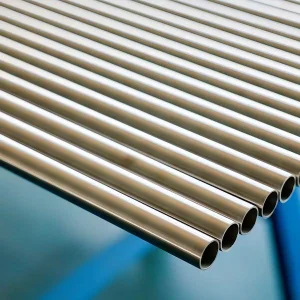





Global Landscape of High-Quality Seamless Stainless Pipe Manufacturing
In modern process engineering, energy conversion, and heavy industrial chemistry, the operational structural integrity of fluid and gas conveyance systems remains a paramount priority. High-quality seamless stainless pipe manufacturers represent the cornerstone of critical infrastructure reliability. Unlike welded piping, which inherently introduces longitudinal heat-affected zones (HAZ) susceptible to stress corrosion cracking (SCC) and metallurgical phase heterogeneity, seamless stainless pipes are extruded and cold-worked from solid round steel billets to yield a continuous, monolithic tubular structure with isotropic mechanical properties.
The macroeconomic industrial dynamic surrounding seamless stainless tubing has underwent a profound paradigm shift. Driven by the global acceleration of LNG regasification plants, deepwater subsea extraction, green hydrogen electrolysis infrastructure, supercritical thermal power generation, and ultra-high-purity chemical processing, global enterprise procurement teams demand piping products that go far beyond basic ASTM or EN dimensional compliance. Sourcing directors require precise microstructural control, documented Pitting Resistance Equivalent Numbers (PREN), verified grain boundary chemistry, and total heat traceability from molten steel to final non-destructive testing (NDT).
Procurement Directives for Severe Service Environments
When selecting seamless stainless pipes for elevated temperature or aggressive chemical media, mechanical yield strength alone is insufficient. Engineers must evaluate creep-rupture strength at temperature, intergranular carbide precipitation resistance during thermal cycling, and localized pitting kinetics in chloride-laden media.
Seamless Manufacturing Mechanics & Technological Trends
How advanced cold-pilgering, precision solution annealing, and micro-alloy stabilization elevate seamless pipe integrity.
Multi-Roll Cold Pilgering Mechanics
Modern seamless manufacturing utilizes multi-roll cold pilgering processes over stationary tapered mandrels. This cold-working mechanism achieves extreme wall-thickness reductions up to 75% in a single pass, refining grain structures, improving surface roughness ($Ra < 0.4 \mu m$), and eliminating wall eccentricities commonly observed in traditional cold drawing.
Ultra-Clean Bright Annealing
To eliminate surface oxidation without acid pickling, seamless pipes undergo continuous bright annealing in pure hydrogen or cracked ammonia shielding atmospheres at temperatures exceeding 1050°C to 1150°C. This rapidly dissolves chromium carbides back into the austenitic matrix, securing maximum corrosion resistance and passive film integrity.
Titanium & Niobium Stabilization
Advanced austenitic grades such as ASME SA213 TP347 (Niobium stabilized) and SA269 TP321 (Titanium stabilized) form stable metallic carbides at high temperatures. This prevents chromium depletion along grain boundaries, mitigating intergranular corrosion (IGC) during long-term exposure in the 450°C–850°C sensitization range.
Supply Chain Resilience, Automation & Cost Efficiency
Combining fully integrated raw material smelting, cyber-physical cold rolling lines, and automated real-time NDT quality controls.
The global seamless stainless pipe procurement landscape has shifted toward high-capacity, technology-driven manufacturing hubs. Leading Chinese specialty tube manufacturing enterprises have embraced Industry 4.0 frameworks, seamlessly integrating raw billet heating control, real-time laser wall thickness gauging, ultrasonic defect detection, and digital material test certificate (MTC) generation.
By establishing vertically integrated production loops—from initial electric arc furnace (EAF) smelting with Argon Oxygen Decarburization (AOD) refining to cold pilgering and automated bright annealing—Chinese manufacturing centers provide unmatched supply chain agility. Enterprise global buyers benefit from reduced production lead times, tight dimensional tolerances ($0.05mm$ OD/WT variance), and substantial total-cost-of-ownership (TCO) optimization without compromising stringent European (EN) or American (ASTM/ASME) standards.
AOD Billets & Vacuum Degassing
Ultra-low impurity steel melt stock ensures minimal non-metallic inclusions, optimizing pipe ductility and pressure containment capabilities.
Hot Extrusion & Piercing
High-tonnage hydraulic presses pierce solid round billets at precise hot-working temperatures, establishing the initial seamless tube hollow.
Smart Cold Reduction
Digitalized cold-pilgering mills continuously monitor feed velocity, roll pressure, and mandrel concentricity to maintain exact wall ratios.
100% NDT & Hydro-Testing
Integrated online Eddy Current Testing (ECT), Ultrasonic Testing (UT), and high-pressure hydrostatic proofing verify tube soundess.
Seamless Stainless Steel & Special Alloy Grade Matrix
A comprehensive metallurgical reference guide comparing standard chemical compositions, temperature capabilities, and international standards.
| Alloy Grade | UNS / EN Designation | Primary Standards | Service Temp. Limit | PREN Rating | Core Application Environments |
|---|---|---|---|---|---|
| Austenitic 304 / 304L | S30400 / 1.4301 S30403 / 1.4307 |
ASTM A213, A312, SA269 EN 10216-5 |
-196°C to 800°C | PREN ~ 19 | General fluid conveyance, food processing, architectural tubing. |
| Austenitic 316L / 316Ti | S31603 / 1.4404 S31635 / 1.4571 |
ASTM A213, SA269, A312 EN 10216-5 |
-196°C to 850°C | PREN ~ 25 | Chloride-bearing chemical lines, marine instrumentation, heat exchangers. |
| Austenitic 317L | S31703 / 1.4438 | ASTM A213, A312 ASME SA213 |
Up to 800°C | PREN ~ 29 | Pulp and paper bleaching systems, flue-gas desulfurization (FGD). |
| Stabilized 321 / 321H | S32100 / 1.4541 S32109 / 1.4878 |
ASTM A213, SA269 EN 10216-5 |
Up to 900°C | PREN ~ 19 | Refinery hydrotreating, high-temperature heat exchangers, aircraft exhausts. |
| Stabilized 347 / 347H | S34700 / 1.4550 S34709 / 1.4551 |
ASME SA213 TP347 ASTM A213, A312 |
Up to 950°C | PREN ~ 20 | Power boiler superheaters, heavy chemical processing, radiant tubes. |
| Refractory 310H / 310S | S31009 / 1.4845 S31008 / 1.4841 |
ASME SA213 TP310H ASTM A312 |
Up to 1150°C | PREN ~ 26 | Thermal power plants, furnace burner tubes, petrochem pyrolysis lines. |
| Super Austenitic 904L | N08904 / 1.4539 | ASME SA269, A213 EN 10216-5 |
Up to 400°C | PREN ~ 36 | Sulfuric acid production, phosphoric acid evaporators, seawater cooling. |
| Nickel Alloy C276 | N10276 / 2.4819 | ASTM B622, B619 ASME SB622 |
Up to 1040°C | PREN ~ 68 | Extreme reducing media, wet chlorine gas, severe chemical reactors. |
| Nickel Alloy 625 | N06625 / 2.4856 | ASTM B444, SB444 EN 10216-5 |
-196°C to 1000°C | PREN ~ 52 | Subsea umbilical lines, aerospace propulsion, offshore sour gas wells. |
| Nickel Alloy 800 / 800HT | N08800 / 1.4876 N08811 / 1.4959 |
ASTM B407, SB407 EN 10216-5 |
Up to 1100°C | PREN ~ 22 | Ethylene cracking furnaces, nuclear steam generators, industrial heating. |
Global Enterprise Sourcing Criteria for Seamless Piping
Key audit benchmarks every EPC contractor and procurement director must verify prior to supplier qualification.
1. Material Test Certificate (EN 10204 3.1 / 3.2)
Enterprise procurement requires mill test reports linked via heat numbers to raw billet sources. MTCs must detail chemical heat analysis, mechanical tensile/yield data, flattening/flaring tests, hardness testing, and intergranular corrosion test results (ASTM A262 Practice E).
2. Hydrostatic Proof Testing & Defect Limits
Seamless pipes intended for high-pressure boilers or subsea applications must undergo 100% hydrostatic testing at pressures calculated according to ASME B31.3. Alternatively, calibrated Ultrasonic Testing (UT) per ASTM E213 ensures zero internal inclusions or longitudinal flaws.
3. Dimensional Tolerances & Wall Concentricity
Tight control over wall thickness variance is critical for automatic field orbital welding. Modern specifications demand wall tolerance within +15%/-0% or tight cold-pilgered limits of +/-7.5%, minimizing internal misalignment during pipe joint assembly.
Where Seamless Stainless Steel & Nickel Pipes Perform
Engineered applications across heavy industry, renewable energy, subsea extraction, and chemical processing.
Petrochemical & Hydrocarbon Refineries
Used extensively in hydrocracking, sulfur recovery units (SRU), and polythionic acid environments. Grades such as ASME SA213 TP347 and TP321H resist high-temperature hydrogen attack (HTHA) and prevent intergranular stress corrosion cracking during maintenance turnarounds.
Supercritical Boilers & Power Generation
In ultra-supercritical (USC) thermal power plants, superheater and reheater tubing experiences extreme steam temperatures exceeding 600°C. Refractory grades like ASME SA213 TP310H provide high creep-rupture strength and fireside oxidation resistance.
Offshore Marine & Subsea Flowlines
High-pressure subsea hydraulic control lines and umbilical tubing rely on seamless Nickel Alloy 625 and Super Austenitic 904L. These alloys withstand severe pitting corrosion and crevice corrosion under high hydrostatic pressure in seawater.
Chemical Reactor Vessels & Acid Synthesis
Severe reducing chemical processes involving wet hydrochloric acid, sulfuric acid, or chlorination processes require extreme alloy resistance. Seamless Nickel Alloy C276 (UNS N10276) delivers unparalleled corrosion immunity across aggressive media.
Green Hydrogen Storage & Conveyance
High-pressure gaseous hydrogen storage lines demand seamless stainless tubing free of micro-porosity to prevent hydrogen embrittlement. Cold-worked 316L / 316LN seamless pipes provide excellent structural integrity under 70MPa+ pressure cycling.
Nuclear Island Piping Systems
Primary coolant loops and steam generator tubing require seamless piping manufactured under strict ISO/ASME nuclear quality assurance regimes, featuring minimal cobalt residuals and flawless grain boundary purity.
Seamless Stainless Pipe Technical & Sourcing Q&A
Expert insights addressing key metallurgical, structural, and procurement inquiries from global engineers.
Seamless stainless pipes are formed from solid round billets without any longitudinal weld seam. This eliminates the heat-affected zone (HAZ), which can exhibit altered microstructure, residual thermal stresses, and micro-segregation. Consequently, seamless pipes offer isotropic circumferential hoop strength, higher burst pressure ratings, and superior resistance to cyclic pressure fatigue and stress corrosion cracking (SCC).
When standard austenitic stainless steels (like 304 or 316) are exposed to temperatures between 450°C and 850°C, chromium combines with carbon to form chromium carbides along grain boundaries. This depletes the adjacent matrix of protective chromium (sensitization), rendering it vulnerable to intergranular corrosion. Titanium (in TP321) and Niobium (in TP347) have a higher affinity for carbon than chromium. They form stable TiC or NbC carbides, keeping chromium fully in solution to preserve the passive surface film.
PREN is a quantified metallurgical formula based on chemical composition: PREN = %Cr + 3.3(%Mo + 0.5%W) + 16(%N). It indicates a material's localized pitting resistance in chloride-rich environments (e.g., seawater or chemical solutions). Standard 304L has a PREN of ~19, 316L has ~25, 904L reaches ~36, while Nickel Alloy C276 exceeds 68, offering total immunity to chloride-induced pitting under most severe industrial conditions.
Bright annealing occurs in an enclosed, inert hydrogen or argon furnace environment. Because no oxygen is present, no heavy oxide scale forms on the inner or outer pipe surfaces. This eliminates the need for aggressive chemical acid pickling, yielding an ultra-smooth surface finish ($Ra < 0.4 \mu m$), superior internal cleanliness, and preserved dimensional concentricity essential for high-purity and sanitary applications.
EN 10204 3.2 certification requires independent third-party inspection (such as Lloyd's Register, TÜV, or DNV). The independent inspector physically verifies heat numbers, witnesses mechanical destructive tests, reviews NDT charts, and co-signs the official mill certificate alongside the manufacturer's quality manager, providing ultimate verification for offshore, nuclear, or severe chemical projects.
High-Temperature Alloys & Super Austenitic Tubing
Explore our extended series of Nickel Alloy 625, 800HT, 600, and ASME SA213 stainless steel grades.