
Explore our flagship high-pressure stainless steel, duplex, and titanium tubing products engineered for extreme fluid management, high burst pressure resistance, and zero-defect compliance with ASME, ASTM, and EN standards.

High-Quality Duplex Steels 2205 • S31803/S32205 • 1.4462 Manufacturer, Products
View Product Details



High-Quality Austenitic Steels 304H • UNS S30409 • 1.4948 Manufacturer, Supplier
View Product Details


In modern fluid power control, high-pressure actuation, and chemical dosing systems, stainless steel hydraulic tubing serves as the fundamental arterial conduit. Operating under continuous cyclic pressures often exceeding 690 bar (10,000 PSI), subjected to severe mechanical vibration, thermal shock, and highly aggressive media, precision hydraulic tubing cannot afford a single point of failure. The transition from legacy carbon steel lines to advanced corrosion-resistant alloys (CRAs) has accelerated across global industrial sectors, driven by demand for total system reliability, reduced maintenance downtime, and extended operational lifespans in subsea oilfields, heavy machinery, chemical plants, and aerospace flight control systems.
The global hydraulic tubing market is undergoing a structural evolution. Key drivers include stringent decarbonization initiatives, offshore energy exploration in deepwater basins, and the miniaturization of high-performance hydraulic systems requiring tighter bending radii and thinner wall tolerances without compromising structural integrity. Procurement engineering teams no longer evaluate tubing solely on cost per meter; total cost of ownership (TCO), pitting resistance equivalent numbers (PREN), fatigue resistance, and certified heat-traceability dominate global vendor qualification frameworks.
Selecting the correct metallurgical composition is paramount when specifying hydraulic tubing for hazardous or harsh environments. The table below delineates the chemical, mechanical, and thermodynamic attributes of key alloy grades manufactured by Spezilla Tube Co., Ltd.
| Alloy Grade | UNS / EN Designation | PREN Rating | Yield Strength (MPa) | Tensile Strength (MPa) | Primary Application Domain |
|---|---|---|---|---|---|
| 304L Austenitic | UNS S30403 / 1.4307 | ~19.0 | ≥ 210 | ≥ 520 | General industrial hydraulics, machine tool fluid actuation |
| 316L Austenitic | UNS S31603 / 1.4404 | ~25.0 | ≥ 240 | ≥ 550 | Marine fluid lines, chemical process control instrumentation |
| 321H / 347H Austenitic | UNS S32109 / S34709 | ~20.5 | ≥ 220 | ≥ 550 | High-temperature hydraulic lines, power plant steam actuation |
| Duplex 2205 | UNS S32205 / 1.4462 | ≥ 35.0 | ≥ 450 | ≥ 650 | Offshore subsea control lines, high-pressure chloride environments |
| Super Austenitic 254SMO | UNS S31254 / 1.4547 | ≥ 43.0 | ≥ 300 | ≥ 650 | Desalination high-pressure lines, sour gas handling systems |
| Nickel Alloy 825 | UNS N08825 / 2.4858 | ≥ 31.0 | ≥ 240 | ≥ 580 | Sulfuric and phosphoric acid hydraulic control loops |
| Titanium Grade 1 | UNS R50250 / 3.7025 | N/A (Passive Film) | ≥ 170 | ≥ 240 | Ultra-lightweight aerospace hydraulics, seawater cooling loops |
To determine the maximum theoretical internal working pressure ($P$) for seamless hydraulic tubing, design engineers apply Barlow’s Formula modified with a safety factor ($S$):
Where t = nominal wall thickness, D = outside diameter, and S = maximum allowable stress (typically 1/3 or 1/4 of ultimate tensile strength depending on ASME B31.3 or DIN 2413 design codes).
In hydraulic systems exposed to ambient marine environments or chemical vapors, standard 304 lines suffer chloride-induced pitting. The Pitting Resistance Equivalent Number (PREN) formula guides material selection:
For subsea umbilical control lines and high-salinity offshore platforms, Duplex 2205 (PREN ≥ 35) or Super Duplex 2507 (PREN ≥ 42) completely eliminates chloride stress corrosion cracking risk.
Spezilla Tube Co., Ltd. utilizes integrated manufacturing technologies to yield hydraulic tubing with precise concentricity, smooth internal bore surfaces, and uniform mechanical properties across the entire length of the tube.
Mother hollows undergo multiple cold pilgering and plug drawing passes. Cold working reduces grain size and refines the crystalline lattice structure, imparting exceptional tensile yield strength while maintaining strict dimensional tolerances down to ±0.05 mm on OD and WT.
To eliminate internal stress without surface oxidation, our tubing passes through continuous inline bright annealing furnaces under a 100% pure hydrogen atmosphere at temperatures up to 1080°C. This process guarantees an oxide-free, bright, and highly reflective surface finish (Ra < 0.4 µm).
Every meter of hydraulic tubing undergoes 100% Eddy Current Testing (ECT) per ASTM E426 and Hydrostatic Testing up to 1000 bar. Internal bore cleanliness is flushed and capped to meet ISO 4406 Class 12/9/6, preventing valve seat contamination in electro-hydraulic actuators.
Tailoring hydraulic tubing to application-specific operational stresses requires deep domain knowledge across multiple industrial sectors:
Subsea umbilical control lines operate at depths reaching 3,000 meters under hydrostatic sea pressures and hyperbaric conditions. Spezilla supplies seamless Duplex 2205 and Super Duplex 2507 hydraulic coiled tubing lengths exceeding 10,000 meters without transverse welds, mitigating risk in subsea chemical injection and hydraulic well-head control.
Weight reduction combined with ultimate burst resistance defines aerospace hydraulic requirements. Titanium Grade 1 and 321H high-strength austenitic tubing deliver an optimal strength-to-weight ratio, enduring severe cyclic hydraulic pressure spikes (3,000 to 5,000 PSI) and extreme thermal fluctuations from -55°C to +175°C.
Excavators, mining rigs, and mobile cranes demand hydraulic tubing resistant to heavy shock loads, mechanical stone impacts, and vibration fatigue. Bright annealed 316L and 304L tubes with superior cold bendability allow tight 90° bends without ovality or wall thinning, preventing high-pressure line failure.
Ultra-high purity (UHP) chemical delivery systems demand smooth interior surfaces to eliminate particle traps and micro-contamination. Electropolished (EP) and bright annealed Super Austenitic 254SMO and 317L tubes ensure chemical inertness when dosing aggressive acids, solvents, and corrosive gases.
Navigating cross-border procurement of industrial tubing requires strict adherence to international regulatory compliance, material traceability, and standardized certification practices. Spezilla Tube Co., Ltd. provides comprehensive documentation suites with every shipment.
Every shipment is backed by EN 10204 3.1 Mill Test Certificates detailing chemical heat analysis, mechanical tensile/yield testing, hardness, flattening, flaring, and NDT reports. Independent EN 10204 3.2 inspection by Lloyd’s Register, TUV, or DNV is provided upon request.
For sour oil and gas service containing hydrogen sulfide ($H_2S$), hydraulic tubing materials undergo specialized heat treatments to satisfy NACE MR0175 hardness thresholds (e.g., < 22 HRC for Duplex alloys), preventing sulfide stress cracking (SSC) in subsea installations.
Our manufacturing facilities operate under ISO 9001:2015 and Pressure Equipment Directive (PED) 2014/68/EU certification, ensuring full authorization for deployment within European Union member states and ASME Boiler & Pressure Vessel Code (BPVC) projects globally.
As global industries shift toward green hydrogen production, carbon capture and storage (CCS), and ultra-high-pressure hydraulic systems, Spezilla is investing in next-generation tube manufacturing techniques:
Development of specialized austenitic compositions with optimized nickel equivalents to mitigate hydrogen-assisted micro-cracking in high-pressure (70 MPa / 100 MPa) hydrogen fueling station hydraulic actuation loops.
Advanced electropolishing (EP) techniques yielding surface roughness profiles below Ra 0.15 µm, vital for semiconductor chemical vapor deposition (CVD) equipment and ultra-clean pharmaceutical fluid transport.
Research into embedding thin-film fiber-optic Bragg grating sensors along the external wall of hydraulic tubes to enable real-time strain, pressure spike, and temperature monitoring in critical subsea actuation loops.
Browse our extensive inventory of super austenitic, nickel alloy, and specialized high-temperature stainless steel tubing engineered for severe chemical, thermal, and mechanical environments.

High-Quality Super Austenitic Steels 254SMO • UNS S31254 • 1.4547 Factory, Factories
View Product Details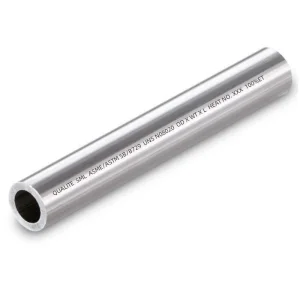





High-Quality Nickel Alloy Tubes 825 • UNS N08825 • 2.4858 Manufacturers, Products
View Product Details
High-Quality Nickel Alloy Tubes 800HT • UNS N08811 • 1.4959 Manufacturer, Product
View Product DetailsIn-depth technical clarifications addressing common engineering queries regarding hydraulic tubing specification, fitting compatibility, pressure ratings, and surface finishes.
