
Precision Austenitic & Special Alloy Tubing Portfolio
Factory-direct corrosion-resistant tubing produced under EN 10204 3.1/3.2 certification, fully compliant with ASME SA269, SA213, and ASTM A249 standards.
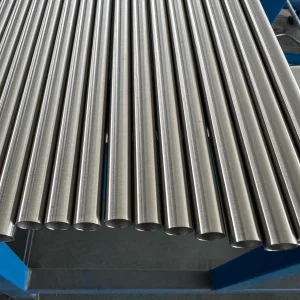
High-Quality Austenitic steel ASME SA269 · TP316L Manufacturers, Factories
View Product Specs
High-Quality Nickel Alloy Tubes 276 • UNS N10276 • 2.4819 Suppliers, Products
View Product Specs
Custom Nickel Alloy Tubes 800 • UNS N08800 • 1.4876 Manufacturer, Products
View Product Specs
High-Quality Nickel Alloy Tubes 600 • UNS N06600 • 2.4816 Manufacturer, Manufacturers
View Product Specs
Custom Austenitic Steels 316Ti • UNS S31635 • 1.4571 Manufacturer, Products
View Product Specs
Custom Nickel Alloy Tubes 20 • UNS N08020 • 2.4660 Supplier, Product
View Product Specs
Custom Austenitic Steels 310H • UNS S31009 Manufacturers, Products
View Product Specs
High-Quality Super Austenitic Steels 254SMO • UNS S31254 • 1.4547 Factory, Factories
View Product SpecsChemical Composition & Pitting Resistance Equivalent (PREN) Dynamics
Understanding why 316-grade austenitic stainless steel remains the globally preferred choice for fluid handling systems operating in chloride-rich and aggressively corrosive micro-environments.
The Molybdenum Advantage (2.0% – 3.0% Mo)
Grade 316 stainless steel differs fundamentally from basic 18/8 304 alloys due to the deliberate addition of molybdenum. Molybdenum significantly enhances resistance to localized chloride pitting and crevice corrosion. It acts by stabilizing the chromium oxide passive layer, preventing passive film breakdown under halide exposure.
- Significantly reduces pit initiation rates in marine and chemical salt solutions.
- Low carbon variant (316L, C ≤ 0.030%) prevents intergranular carbide precipitation during welding.
- Titanium-stabilized 316Ti (UNS S31635) offers superior elevated-temperature structural strength.
PREN Mathematical Index & Pitting Mechanics
The Pitting Resistance Equivalent Number (PREN) provides a quantitative benchmark for alloy selection in halide environments. Calculated via PREN = %Cr + 3.3(%Mo) + 16(%N), Grade 316 consistently scores between 23.0 and 25.5, outperforming Grade 304 (approx. 19.0).
- Exhibits excellent corrosion fatigue threshold under cyclic pressure loads.
- Resists crevice corrosion under gaskets, clamps, and tube-to-tubesheet joints.
- Maintains mechanical ductility at cryogenic temperatures down to -196°C (-320°F).
| Alloy Grade | UNS / EN Number | Carbon (C) | Chromium (Cr) | Nickel (Ni) | Molybdenum (Mo) | PREN Value |
|---|---|---|---|---|---|---|
| 316 | UNS S31600 / 1.4401 | ≤ 0.08% | 16.0 - 18.0% | 10.0 - 14.0% | 2.00 - 3.00% | ~ 24.2 |
| 316L | UNS S31603 / 1.4404 | ≤ 0.03% | 16.0 - 18.0% | 10.0 - 14.0% | 2.00 - 3.00% | ~ 24.2 |
| 316Ti | UNS S31635 / 1.4571 | ≤ 0.08% | 16.0 - 18.0% | 10.5 - 13.5% | 2.00 - 2.50% | ~ 23.5 |
| 316H | UNS S31609 / 1.4919 | 0.04 - 0.10% | 16.0 - 18.0% | 10.0 - 14.0% | 2.00 - 3.00% | ~ 24.2 |
| 317L | UNS S31703 / 1.4438 | ≤ 0.03% | 18.0 - 20.0% | 11.0 - 15.0% | 3.00 - 4.00% | ~ 29.5 |
Global Procurement Dynamics & Strategic Sourcing Demands
How leading EPC contractors, process equipment OEMs, and industrial distributors mitigate lead-time volatility, eliminate technical compliance risks, and optimize Total Cost of Ownership (TCO).
Total Cost of Ownership (TCO) Optimization
Procuring low-grade tubing based solely on initial purchasing cost introduces catastrophic lifecycle risks. Micro-cracks, gauge variations, or improper heat treatment can result in premature system failure, unintended plant downtime, and expensive fluid leaks. Factory-certified 316 tubing ensures multi-decade service life with negligible maintenance overhead.
Regulatory Certification & Traceability
Modern international tenders demand seamless material traceability. Certified manufacturers must provide EN 10204 3.1 or independent 3.2 Inspection Certificates, verifying heat identification numbers, ladle melt chemical analyses, tensile strengths, yield points, elongation metrics, and non-destructive test results.
Regional Standard Harmonization
Global projects require dual-certified tubing that bridge North American (ASTM/ASME) and European (EN/ISO) frameworks. Manufacturing lines configured for ASME SA269 / SA213 and EN 10217-7 / EN 10216-5 allow cross-border deployment without redundant compliance testing.
Macro-Industry Solutions & Application Frameworks
High-precision 316 SS tubing engineered to meet strict fluid dynamic, thermal transfer, and hygienic standards across critical global sectors.
Pharmaceutical & High-Purity Biotechnology
Used extensively in Clean-In-Place (CIP) and Steam-In-Place (SIP) systems, WFI (Water for Injection) distribution loops, and bioprocess lines. Requires ASME BPE compliant electro-polished (EP) inner surfaces (Ra ≤ 0.25 μm) to eliminate microscopic bacterial traps and biofilm formation.
Marine, Subsea & Offshore Oil & Gas
Deployed in hydraulic control lines, subsea umbilicals, chemical injection skids, and deck equipment. 316/316L seamless tubing resists marine atmospheric salt spray, high pressure surge spikes, and continuous vibration fatigue in harsh saltwater environments.
Chemical Processing & Heat Exchangers
Specified for shell-and-tube condensers, feedwater heaters, and reactor cooling coils. High thermal conductivity combined with stress-corrosion cracking resistance ensures steady heat transfer rates when exposed to organic acids, sulfates, and industrial solvents.
Clean Energy, Hydrogen & Fuel Cells
In high-pressure hydrogen refueling infrastructure and fuel cell stacks, 316L tubing is selected for its exceptional resistance to hydrogen embrittlement. Precision cold drawing ensures smooth internal bores and uniform wall thickness to resist high pressure gas cycling.
Food, Dairy & Beverage Processing
Bright annealed (BA) sanitary tubing compliant with 3-A Sanitary Standards and DIN 11850. Non-reactive, non-corrosive contact surfaces ensure taste neutrality, zero metal leaching, and easy cleaning under automated sanitization procedures.
Precision Instrumentation & Hydraulic Lines
Seamless impulse lines and manifold connections for pressure transmitters, flowmeters, and control valves. Tight dimensional tolerances (OD ± 0.05 mm) enable leak-free integration with compression tube fittings.
Factory Process Roadmap & Quality Inspection Matrix
From raw hollow stock to finished, bright-annealed straight lengths and coils: a completely integrated, quality-controlled production sequence.
Raw Stock & Heat Selection
Ladle-refined stainless steel hollows sourced exclusively from top-tier steel mills undergo SPECTRO chemical analysis and PMI testing to verify element balance before processing.
Cold Pilgering & Precision Drawing
Cold working via multi-roll pilger mills or floating mandrel bench drawing reduces outside diameter and wall thickness, ensuring concentricity and fine grain structure refinement.
Bright Solution Annealing
Continuous inline heat treatment in a 100% pure hydrogen protective atmosphere at 1040°C – 1150°C. Redissolves chromium carbides without oxidation, eliminating the need for pickling.
Comprehensive NDT Suite
100% full-body Eddy Current Testing (ET per ASTM E426), Hydrostatic testing up to 300 bar, Pneumatic under-water testing, and dimensional micrometer laser checks before packaging.
Seamless (SMLS) vs. Welded & Cold Drawn (W&D) Technical Choice
Selecting between seamless and welded & drawn 316 tubing depends on design codes, pressure limits, and economic requirements. Seamless tubing (ASTM A213 / A269) provides a homogeneous wall structure free from longitudinal weld seams, making it ideal for ultra-high-pressure applications (> 400 bar) and critical nuclear/aerospace services. Welded & Cold Drawn tubing (ASTM A249 / A688) utilizes cold working after autogenous TIG/Laser welding to fully recrystallize the weld seam, yielding superior wall thickness uniformity, exceptional concentricity, and lower procurement costs for heat exchangers and condensers.
Market Dynamics & Future Technological Outlook
Tracking international demand shifts, sustainability mandates, decarbonization goals, and next-generation alloy manufacturing trends.
Sustainable Steel & Green Manufacturing
Global decarbonization initiatives are driving the industrial sector toward reduced carbon footprint stainless steel production. Modern tube mills utilize Electric Arc Furnaces (EAF) powered by renewable energy, combined with closed-loop acid recycling and hydrogen-shielded bright annealing furnaces that eliminate chemical waste emissions.
Ultra-High Purity (UHP) Micro-Tubing Trends
As semiconductor fabrication plants and green hydrogen electrolyzers expand globally, demand for UHP 316L VIM+VAR (Vacuum Induction Melted + Vacuum Arc Remelted) tubing is accelerating. Future technical roadmaps focus on reducing non-metallic inclusions and achieving inner wall roughness under Ra 0.13 μm.
Quality Assurance, Local Support & International Standards
Rigorous multi-stage factory acceptance tests (FAT) backed by global logistical capabilities and third-party inspection oversight.
Full Factory Traceability
Every tube is stenciled continuously with grade, standard, dimensions, heat number, and manufacturer logo. Digital heat records are archived for 10 years to support ongoing maintenance audits.
Third-Party Inspection Ready
Seamless coordination with international inspection bodies including TÜV, SGS, Lloyd's Register, Bureau Veritas, and DNV for Witness Hydro-testing, PMI chemical verification, and MTC 3.2 endorsement.
Custom Fabrication & Export Packaging
Offers tailor-made processing including U-bent heat exchanger tubes per ASTM A688, orbital weld end preparation, coiled long-length tubing, and seaworthy wooden box packaging with rust-inhibitor wrapping.
Frequently Asked Technical & Procurement Questions
Expert responses to critical engineering, metallurgical selection, and order specification questions.
Complementary Austenitic, Ferritic & Alloy Solutions
Explore our full line of heat-resistant, high-temperature, and specialized structural tubing engineered for demanding process conditions.

High-Quality Austenitic Steels 304H • UNS S30409 • 1.4948 Manufacturer, Supplier
View Product Specs
Custom Austenitic Steels 316H • UNS S31609 • 1.4919 Supplier, Product
View Product Specs
Custom Austenitic Steels 321H • UNS S32109 • 1.4878 Manufacturer, Products
View Product Specs
Custom Austenitic Steels 309S • UNS S30908 • 1.4833 Factories, Products
View Product Specs
Custom Ferritic & Martensitic Steels 405 Stainless Steel Tubes, UNS S40500, 1.4002 Suppliers, Products
View Product Specs
High-Quality Austenitic Steels 347 • UNS S34700 • 1.4550 Suppliers, Product
View Product Specs
High-Quality Austenitic steel ASME SA269 · TP304L Suppliers, Product
View Product Specs
