
Featured High-Performance Nickel Alloy & Stainless Products
Explore our primary certified alloy coil and tubing inventory manufactured under rigorous ASTM/ASME/EN specifications with complete heat traceability.







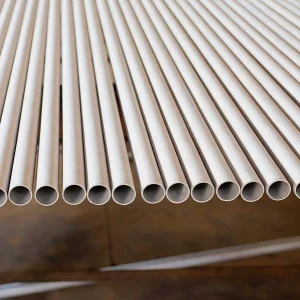
The Evolution of Corrosion-Resistant Coiled Alloy Infrastructure
In modern extreme-service energy extraction, chemical synthesis, and subsea hydraulic architectures, traditional jointed tubing systems represent an unacceptable risk profile due to mechanical thread wear, localized crevice corrosion at connections, and operational latency. Continuous high-performance corrosion resistant nickel alloy coiled tubing has revolutionized industrial fluid delivery.
High-Pressure Downhole Energy
Oilfield operators encountering High-Pressure, High-Temperature (HPHT) regimes combined with aggressive sour gas ($H_2S$) and wet $CO_2$ mandate continuous jointless alloy strings. Nickel alloy coils (Incoloy 825, Inconel 625, Hastelloy C-276) eliminate downhole connection points where stress corrosion cracking (SCC) typically initiates.
Subsea Umbilical Lines
Deepwater off-shore production relies heavily on continuously spooled nickel alloy capillary tubing for chemical injection (methanol, glycol, scale inhibitors). Wall integrity, uniform concentricity, and defect-free orbital welds ensure uninterrupted hydraulic signal transfer at sea bottom depths exceeding 3,000 meters.
Process Plant Optimization
Chemical processing installations utilizing continuous coiled heat exchangers reduce thermal fatigue points and flow turbulence. Eliminating mechanical flanged joints inside aggressive acid reactors drastically minimizes fugitive emissions and catastrophic failure modes.
Metallurgical Profile & Engineering Grade Comparison
Selecting the exact nickel alloy matrix requires evaluating the thermodynamic interactions of chromium, molybdenum, iron, and nickel under specific chemical, mechanical, and thermal pressures. Below is an engineering grade selection overview for severe service coiled tubing applications.
| Alloy Grade | UNS / EN Designation | Nominal Composition (%) | PREN Rating | Max Temp Range | Primary Corrosion Defense | Key Downhole / Industrial Service |
|---|---|---|---|---|---|---|
| Incoloy 825 | UNS N08825 / 2.4858 | Ni 38-46, Cr 19.5-23.5, Mo 2.5-3.5, Fe Bal | ~31.0 | -29°C to 540°C | Sulfuric/Phosphoric acids, Chloride SCC | Capillary tubing, chemical injection, oilwell logging |
| Inconel 625 | UNS N06625 / 2.4856 | Ni 58 Min, Cr 20-23, Mo 8-10, Nb 3.15-4.15 | ~51.0 | -196°C to 982°C | Pitting, crevice, fatigue, extreme chloride brine | Subsea umbilical lines, high-pressure injection, aerospace |
| Hastelloy C-276 | UNS N10276 / 2.4819 | Ni Bal, Cr 14.5-16.5, Mo 15-17, W 3-4.5 | ~68.0 | Cryogenic to 1040°C | Severe wet chlorine, $H_2S$ sour gas, ferric salts | Ultra-deep HPHT sour wells, severe acid treatment strings |
| Incoloy 800H/800HT | UNS N08810 / N08811 | Ni 30-35, Cr 19-23, Fe 39.5 Min, Al+Ti | ~22.0 | Up to 1100°C | High-temperature oxidation, carburization, creep | Heat exchangers, high-temp steam injection strings |
| Super Austenitic 6Mo | UNS S31254 / 1.4547 | Fe Bal, Cr 19.5-20.5, Ni 17.5-18.5, Mo 6-6.5 | ~43.0 | Up to 400°C | Seawater pitting, bleach plants, brackish water | Desalination coiled heat exchangers, marine control lines |
Pitting Resistance Equivalent Number (PREN) Dynamics
The PREN value ($\text{PREN} = \%\text{Cr} + 3.3(\%\text{Mo} + 0.5\%\text{W}) + 16\%\text{N}$) serves as a critical mathematical filter for engineers specifying tubing for marine or sour reservoir environments. Alloys such as Hastelloy C-276 and Inconel 625 achieve PREN values well above 50, guaranteeing localized passivation even when submerged in oxygen-depleted high-saline downhole fluids.
Sulfide Stress Cracking (SSC) Mitigation
Under NACE MR0175 / ISO 15156 guidelines, sour oilfield environments containing dissolved hydrogen sulfide ($H_2S$) cause catastrophic atomic hydrogen embrittlement in standard austenitic steels. Nickel-base alloys maintain a stable face-centered cubic (FCC) crystal structure, preventing hydrogen trapping and eliminating risk of instantaneous brittle fracture during spool fatigue cycles.
Continuous Manufacturing Routes & QA Quality Standards
Manufacturing premium continuous coiled tubing demands specialized metallurgic controls from raw strip slitting to final spooling. Our partner mills employ state-of-the-art cold-drawing, inert atmosphere bright annealing, and full-length nondestructive testing (NDT).
Strip Forming & Orbital Welding
Cold-rolled high-purity nickel strip undergoes continuous precision roll-forming. Edge preparation is monitored via optical laser tracking prior to Gas Tungsten Arc Welding (GTAW / TIG) or High-Frequency Induction (HFI) welding without filler metal, creating a homogenous autogenous joint.
Plug & Sink Cold Drawing (CWR)
To eliminate the heat-affected zone (HAZ) microstructural gradient, the welded tube is subjected to continuous Cold Worked and Redrawn (CWR) processes over precision dies and internal plugs. This aligns grains, achieves ultra-tight wall thickness tolerances ($\pm 0.05\text{ mm}$), and smoothes the internal bore to $Ra < 0.4 \mu\text{m}$.
Hydrogen Bright Annealing
Continuous inline bright annealing takes place inside a 100% pure hydrogen atmosphere furnace at temperatures up to 1180°C with dew points below -50°C. This completely recrystallizes the work-hardened structure, dissolves intermetallic precipitates, and delivers a pristine, oxide-free surface finish.
Comprehensive Non-Destructive Testing (NDT) Protocol
Every continuous reel of coiled nickel tubing undergoes 100% mandatory quality verification to ensure zero defects over multi-kilometer continuous lengths:
- Eddy Current Testing (ECT): Full 360-degree encircling coil inspection per ASTM E426 to detect transverse and longitudinal micro-cracks.
- Hydrostatic Proof Testing: Pressure testing up to 15,000 PSI (103 MPa) held for verified hold-times to confirm burst integrity.
- Ultrasonic Wall Verification: Continuous wall thickness mapping ensuring zero localized thinning during cold drawing.
- Dimensional Geometry: Ovality and outer diameter precision tracking ensuring seamless spooling on standard workover reels.
Localized Application Scenarios & Global Industry Footprint
From arctic offshore installations in Norway to high-salinity desert fields in the Middle East and chemical mega-complexes across North America, nickel alloy coiled tubing delivers tailored performance.
Downhole Capillary & Velocity Strings
In mature natural gas wells suffering from liquid loading or severe salt precipitation, small-diameter continuous coiled lines ($0.25\text{ inch}$ to $0.625\text{ inch}$ OD) in Incoloy 825 are permanently hung inside the production tubing. They continuously inject foaming agents, corrosion inhibitors, or scale dissolvers directly into the pay zone while preserving full production flow area.
Geothermal Energy Extraction
Geothermal power plants tapping deep hypersaline aquifers encounter extremely aggressive brines packed with heavy metals, silicates, and dissolved gases ($H_2S$, $CO_2$) at temperatures above 250°C. Coiled tubing in Hastelloy C-276 provides the required immunity against pitting and crevice attack where standard 316L or duplex stainless steels fail within weeks.
Subsea Hydraulic & Chemical Control Lines
Subsea Christmas trees and manifold systems require multi-bore umbilicals containing encapsulated high-pressure lines. Inconel 625 continuous coiled tubes act as the central nervous system for deepwater wells, transmitting high-pressure hydraulic fluid to actuate subsea safety valves (SSSVs) with zero risk of fluid contamination.
Industrial Heat Exchangers & Reboilers
Chemical processing units manufacturing organic acids, fluorochemicals, or agrochemicals deploy continuously spooled nickel alloy coils inside steam reboilers and condensers. Eliminating shell-and-tube mechanical tube-to-tubesheet joint leaks protects critical catalyst beds downstream from water ingress.
Localized Support, Verification & International Standards
Spezilla aligns all coiled alloy manufacturing processes with strict international quality frameworks, providing total procurement peace of mind for EPC contractors, engineering OEMs, and asset integrity managers.
EN 10204 3.1 & 3.2 Traceability
Every shipment is furnished with full EN 10204 3.1 Mill Test Certificates detailing exact chemical heats, mechanical tensile/yield properties, hardness profiles, grain size verification, and NDT compliance. Third-party inspection (TPI by DNV, BV, SGS, Lloyds) for EN 10204 3.2 is available on request.
International Code Compliance
Our manufacturing lines operate under audited ISO 9001:2015 quality management systems. Materials fully satisfy ASTM B515 (Welded UNS N08825/N06625), ASTM B704 (Welded & Drawn Nickel Alloy Tubes), ASTM B163 (Seamless Condenser Tubes), API Spec 5CRA, and NACE MR0175/ISO 15156.
Logistics & Reel Protection
Coiled tubing is supplied on heavy-duty wooden or steel reels engineered for continuous pay-out operations. Tubing ends are hermetically purged, nitrogen-charged, and sealed with heavy protective end-caps to prevent moisture or particulate contamination during ocean freight.
Technical Roadmap & Future Coiled Tubing Innovations
As energy transition requirements, deepwater exploration, and carbon capture initiatives expand, the metallurgical demands placed on continuous alloy coiled tubing are accelerating.
Integration of distributed temperature (DTS) and distributed acoustic sensing (DAS) optical fiber strands inside continuous nickel alloy capillary tubing. This enables real-time downhole reservoir pressure, temperature, and structural strain mapping during active acidizing operations.
Development of next-generation cold-worked nickel-cobalt-molybdenum continuous tubing achieving yield strength exceeding $160\text{ ksi}$ ($1100\text{ MPa}$) while preserving critical $H_2S$ stress-cracking immunity under API 5CRA standards for ultra-deep 10,000+ meter wells.
Optimization of continuous alloy coils for high-pressure gaseous hydrogen injection and supercritical $CO_2$ transport. Microstructural control prevents hydrogen embrittlement at pressures above 700 bar in carbon sequestration systems.
Frequently Asked Technical & Procurement Questions
Detailed answers to critical engineering, manufacturing, and specification queries surrounding nickel alloy coiled tubing.
What is the primary operational advantage of continuous coiled tubing over jointed tubing strings?
Continuous coiled tubing eliminates threaded mechanical couplings, which represent the weakest structural points in traditional strings. Threaded joints are prone to crevice corrosion, fluid leakage under high pressure, and mechanical thread stripping. Continuous coils can be deployed and retrieved significantly faster through a blowout preventer (BOP) stack without tripping individual pipe joints, drastically reducing rig site intervention time.
How does Spezilla guarantee seam weld integrity in continuous long-length coiled tubes?
Seam integrity is ensured through a multi-stage process: 1) High-precision orbital TIG welding under pure argon shielding; 2) Continuous cold-drawing over internal mandrels (CWR), which mechanically aligns the weld grain structure with the base metal; 3) Full-length inline bright annealing in a hydrogen atmosphere to homogenize microstructures; and 4) 100% full-length Eddy Current Testing (ECT) combined with hydrostatic proof testing per ASTM E426 and ASTM B704 standards.
Should I select Incoloy 825, Inconel 625, or Hastelloy C-276 for downhole sour gas service?
Grade selection depends on partial pressures of $H_2S$ and $CO_2$, chloride concentration, temperature, and presence of elemental sulfur. Incoloy 825 is cost-effective for moderate sour service (up to 260°C and moderate $H_2S$). Inconel 625 is recommended when higher pitting resistance (PREN > 50) and tensile fatigue resistance are needed. Hastelloy C-276 is the premier solution for extreme sour wells containing high concentrations of elemental sulfur, wet $H_2S$, and temperatures exceeding 300°C.
What size ranges and continuous reel lengths can be manufactured?
Outer diameters (OD) range from 4.00 mm (0.156 in) capillary lines up to 114.30 mm (4.50 in) heavy coiled strings, with wall thicknesses spanning 0.40 mm to 3.05 mm. Continuous reel lengths can exceed 25,000 meters (82,000 feet) on a single continuous spool depending on outer diameter and wall thickness specifications.
What quality certifications and material test reports are supplied with orders?
All orders ship with standardized EN 10204 3.1 Mill Test Certificates (MTC) detailing melt heat numbers, full ladle chemical composition, mechanical yield/tensile/elongation testing, hardness data, dimensional logs, hydrostatic test pressures, and NDT inspection reports. Independent third-party inspection (EN 10204 3.2 certified by DNV, Bureau Veritas, or SGS) is routinely supplied upon contract specification.
Complete Specialized Alloy & Stainless Steel Solutions
Discover additional certified tube families including heat-resistant austenitic, stabilized titanium, and high-temp nickel alloys engineered to exact project requirements.








