
Featured Stainless Pipe & Alloy Tubing Catalog
Explore our certified range of austenitic, super duplex, super austenitic, and nickel alloy tubes manufactured to ASTM, ASME, and EN standard specifications.

High-Quality Austenitic steel ASME SA213 · TP309S Suppliers, Product

High-Quality Super Duplex Steels 32760 • S32760 • 1.4501 Manufacturers, Suppliers

High-Quality Austenitic steel ASME SA213 · TP347 Manufacturers, Supplier
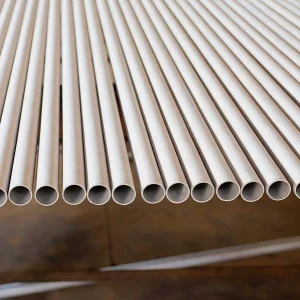
Custom Super austenitic steel ASME SA213 · S31254.SMO254 pipe Manufacturers, Products

High-Quality Super Austenitic Steels 904L • UNS N08904 • 1.4539 Suppliers, Factory

High-Quality Duplex Steels 2205 • S31803/S32205 • 1.4462 Manufacturer, Products

High-Quality Super Austenitic Steels 254SMO • UNS S31254 • 1.4547 Factory, Factories

Custom Austenitic steel ASME SA213 · TP316H Manufacturers, Products
1. Global Commercial & Industrial Landscape for Advanced Tubing Solutions
Analyzing critical macroeconomic trends, energy transitions, and infrastructure demands reshaping alloy steel pipe procurement worldwide.
In an era defined by aggressive decarbonization mandates, accelerating industrial automation, and expanding process intensification, the global reliance on high-quality stainless steel pipes, duplex tubing, nickel alloys, and titanium piping solutions has reached unprecedented levels. Industrial process facilities, thermal exchange plants, offshore platforms, and pharmaceutical bioprocess complexes no longer view tubular products as simple fluid conduits. Rather, they are engineered structural components operating at the absolute limits of temperature, mechanical stress, and aggressive chemical exposure.
Modern infrastructure projects face severe operational challenges: handling sour gas with elevated H₂S and CO₂ partial pressures, cooling power plants using raw brackish seawater, conveying ultra-pure gases for semiconductor fabrication, and storing cryogenic liquid natural gas (LNG) at -162°C. These demanding environments have rendered standard commercial carbon steel or basic 304-grade tubing obsolete for critical infrastructure. Engineering teams today require high-performance materials such as super-austenitic steels (e.g., 254SMO, 904L), super duplex alloys (e.g., UNS S32760, S32750), and nickel-iron-chromium formulations (e.g., Alloy 800/800H) to eliminate catastrophic wall degradation, stress-corrosion cracking (SCC), and unexpected plant outages.
Furthermore, global supply chain vulnerabilities have driven engineering, procurement, and construction (EPC) contractors to re-evaluate vendor selection. Reliability is no longer judged solely by initial mill price per metric ton. It is defined by total cost of ownership (TCO), strict metallurgical traceability, verifiable EN 10204 3.1/3.2 certifications, zero-defect quality control, and rapid lead-time execution. As global manufacturing hubs shift toward intelligent, lean manufacturing frameworks, top-tier Chinese stainless pipe factories have emerged as essential strategic partners, combining world-class metallurgical research with unmatched production agility and vertical integration.
2. Metallurgical Matrix & Advanced Materials Engineering
Understanding alloy compositions, PREN metrics, phase balances, and corrosion mechanisms for precision pipe selection.
Selecting the optimal pipe or tubing alloy requires deep technical insight into alloy chemistry, microstructural stability, and mechanical behavior under thermal cycling. The fundamental metric used by corrosion engineers to evaluate localized pitting and crevice corrosion resistance in chloride-rich media is the Pitting Resistance Equivalent Number (PREN), expressed by the standardized formula:
PREN = %Cr + 3.3(%Mo + 0.5 %W) + 16(%N)
| Alloy Classification | Common UNS / EN Designation | Nominal Chemical Profile | PREN Rating | Primary Industrial Strength |
|---|---|---|---|---|
| Austenitic Standard | TP304L / TP316L (1.4307 / 1.4404) | 18Cr-8Ni / 16Cr-10Ni-2.5Mo | 19 – 24 | General fluid conveyance, food processing, structural tubing. |
| High-Temp Austenitic | TP309S / TP310S / TP347 / TP316H | 23Cr-13Ni / 25Cr-20Ni / Nb-stabilized | 20 – 26 | High-temperature scaling resistance up to 1100°C, creep resistance. |
| Duplex Stainless | 2205 / UNS S31803 / S32205 (1.4462) | 22Cr-5Ni-3Mo-0.18N | 35 | High mechanical strength, exceptional chloride SCC immunity. |
| Super Duplex Steel | 32760 / S32760 / 2507 (1.4501 / 1.4410) | 25Cr-7Ni-4Mo-0.28N-W-Cu | > 42 | Seawater cooling, subsea oil & gas, high-pressure desalination. |
| Super Austenitic | 904L / 254SMO (UNS N08904 / S31254) | 20Cr-25Ni-4.5Mo-1.5Cu / 20Cr-18Ni-6Mo | 36 – 43 | FGD scrubbers, phosphoric acid production, pulp bleach plants. |
| Nickel Superalloys | Incoloy 800H / Inconel 625 / Hastelloy C276 | High Ni-Cr-Mo Matrix | 50 – 68 | Extreme heat, severe oxidizing/reducing chemical synthesis. |
Austenitic & Stabilized Stainless Grades
Standard 300-series grades offer unmatched ductility, cold formability, and toughness at cryogenic temperatures. Stabilized variants like ASME SA213 TP347 (niobium-addition) and TP321 (titanium-addition) prevent chromium carbide precipitation at the grain boundaries during high-temperature service (450°C–850°C), eliminating intergranular corrosion risks in boiler superheaters and steam reheaters.
Duplex & Super Duplex Dual-Phase Metallurgy
By engineering a precise 50/50 balance of ferrite and austenite microstructures, duplex grades (2205) and super duplex alloys (S32760 / 1.4501) deliver yield strengths roughly double those of conventional austenitic pipes. This superior strength permits wall thickness reductions in pressure vessel bundles, drastically lowering total skid weight while offering absolute resistance to chloride-induced stress corrosion cracking.
Super Austenitic & Nickel Alloy Engineering
When chloride concentrations exceed seawater levels, or when handling hot concentrated sulfuric and hydrofluoric acids, standard stainless steels fail rapidly. Super austenitic alloys like 254SMO (6% Mo) and nickel alloys such as Incoloy 800 (UNS N08800) maintain structural integrity under extreme heat and corrosive attack, filling the gap between standard stainless and pure reactive metals.
3. Precision Manufacturing Engineering & Quality Verification
Inside the mill: From raw strip & billet forming to hydrogen bright annealing and rigorous non-destructive testing.
Achieving dimensional perfection, ultra-smooth inner bore surface roughness (Ra < 0.4 µm), and consistent mechanical properties across 25-meter tube lengths requires state-of-the-art mill machinery and uncompromising process discipline.
Cold Pilgering & Precision Drawing (W&D)
Our facility utilizes heavy-duty cold pilgering mills and multi-pass precision cold drawing benches. Welded & Drawn (W&D) processing completely recrystallizes the weld seam zone under intense compressive plastic deformation. This ensures seamless-like grain continuity, tight wall tolerance (±5%), and extraordinary concentricity required for automated orbital welding on job sites.
Hydrogen Bright Annealing (BA) Heat Treatment
To eliminate internal stress induced during cold working and restore full corrosion resistance, tubes are passed through continuous atmosphere-controlled bright annealing furnaces operating up to 1150°C in pure dry hydrogen (dew point < -50°C). This process prevents oxidation scaling, leaving a mirror-bright, oxide-free surface finish without requiring hazardous chemical acid pickling.
100% Non-Destructive Testing (NDT) Assurance
Every single length of pipe undergoes mandatory non-destructive inspection. Automated Eddy Current Testing (ECT) per ASTM A1016 scans for sub-surface pinholes and longitudinal flaws, while hydrostatic pressure testing up to 300 bar verifies pressure boundary integrity. For high-pressure steam and nuclear lines, Ultrasonic Testing (UT) is performed across 100% of the pipe wall volume.
4. China Supply Chain Resilience & Factory Cost-Efficiency
Unlocking competitive advantages through industrial cluster integration, raw material scale, and advanced automation.
Over the past two decades, China has evolved from a volume producer of standard commodity steel into the global epicenter of specialized alloy pipe manufacturing and technological innovation. The concentration of raw material refining, continuous casting mills, precision tool makers, and testing laboratories within specialized industrial clusters—such as the Huzhou-Shanghai manufacturing corridor—delivers unmatched supply chain synergies.
Vertical Integration & Raw Material Access
By maintaining long-term strategic contracts with tier-one master stainless steel melt shops (Tsingshan, Baosteel, TISCO), Spezilla guarantees direct traceability to clean, argon-oxygen-decarburized (AOD) refined steel heats. This raw material security protects global clients from spot market volatility and ensures ultra-low sulfur and phosphorus content for optimum weldability.
Advanced Automation & Lean Manufacturing
Our modernized production lines integrate real-time laser wall thickness gauging, multi-torch automatic TIG/Plasma welding heads, and digital ERP tracking. This high degree of automation yields exceptional production speeds, lower labor overhead per ton, and uniform batch-to-batch consistency that meets or exceeds European and North American mill benchmarks.
Rapid Customization & Global Export Port Logistics
Located within short transit distances to Shanghai and Ningbo deepwater ports, our supply chain is optimized for rapid container loading, sea-freight packaging, and custom air shipments. Whether supplying standard 6-meter straight stock or complex U-bent heat exchanger bundles packed in wooden crates, lead times are compressed by up to 40% compared to Western competitors.
5. Localized Application Scenarios & Engineering Field Reports
Examining how customized stainless and alloy pipes perform in real-world critical infrastructure across global regions.
Middle East Desalination & Sour Gas Extraction
In Persian Gulf thermal multi-stage flash (MSF) and reverse osmosis (RO) seawater desalination facilities, standard 316L tubes suffer crevice corrosion within months. By upgrading high-pressure pump lines and heat recovery exchangers to Super Duplex UNS S32760 / 1.4501 and 254SMO, service lifespans are extended to over 30 years with zero chloride pitting incidents under continuous 45°C seawater exposure.
North American Petrochemical Refinery Cracking
A major Gulf Coast olefins plant required immediate replacement of tube bundles in high-pressure feed-water heaters operating under ASME SA213 TP347 and TP316H specifications. Spezilla delivered custom U-bend tube bundles with 100% hydro-testing and bright annealed finishes in under 4 weeks, preventing a estimated multi-million dollar unplanned refinery shutdown.
European Green Hydrogen & Cryogenic LNG Terminals
Hydrogen electrolysis units and LNG regasification facilities require pipes capable of withstanding extreme cryogenic thermal shock down to -196°C without undergoing ductile-to-brittle transition. Our low-carbon austenitic SA213 TP304LN and nickel alloy 800 tubes maintain extraordinary Charpy V-notch impact energy values, ensuring zero embrittlement risks.
6. Technology Roadmap & Future Metallurgy Outlook
Pioneering next-generation tubular innovations: From Industry 4.0 smart pipes to zero-carbon green steel processing.
As industrial systems push toward higher efficiency, higher pressures, and reduced carbon footprints, the technology driving stainless pipe manufacturing continues to evolve rapidly. Spezilla is actively investing in research and development initiatives designed to transform traditional piping into intelligent, ultra-sustainable infrastructure assets.
Smart Sensing Tubing Systems
Embedding micro-fiber-optic strain and temperature sensors directly along the exterior wall or within double-wall tubing channels. This enables real-time structural health monitoring, early micro-leak detection, and predictive maintenance analytics for subsea oil manifolds and high-risk chemical reactors.
Zero-Carbon Green Steel Sourcing
Transitioning raw material procurement toward hydrogen-direct-reduced-iron (H2-DRI) steelmaking processes. By powering induction furnaces and bright annealing equipment with renewable solar and wind energy, future tube production will cut embedded carbon emissions by over 80%.
Extreme-Environment Superalloys
Developing high-entropy alloy (HEA) tubing formulations capable of maintaining tensile strength at temperatures exceeding 1200°C while resisting molten salt corrosion in next-generation concentrated solar power (CSP) and Gen-IV nuclear reactors.
7. Localized Technical Support, Quality Assurance & Compliance
Ensuring global engineering standards compliance, third-party verification, and localized technical guidance.
Compliance with stringent international standards is non-negotiable when manufacturing pipes for pressure-retaining applications. Spezilla operates an integrated Quality Management System certified to ISO 9001, ISO 14001, and ISO 45001. Every production lot is fully traceable from the original steel mill melt heat number down to the final bundle tag.
| Standard Specification | Scope & Application Focus | Mandatory Quality Verification Tests |
|---|---|---|
| ASTM A213 / ASME SA213 | Seamless Ferritic and Austenitic Alloy-Steel Boiler, Superheater, and Heat-Exchanger Tubes | Tension test, Hardness test, Flattening test, Flaring test, NDT (Eddy Current or Hydrostatic). |
| ASTM A249 / ASME SA249 | Welded Austenitic Steel Boiler, Superheater, Heat-Exchanger, and Condenser Tubes | Weld decay test (ASTM A249 S7), Reverse bend test, Flange test, Eddy current examination. |
| ASTM A269 / A312 | Seamless and Welded Austenitic Stainless Steel Tubing / Piping for General & Corrosive Service | Dimensional checks, Intergranular corrosion test (ASTM A262 Practice E), Hydrostatic verification. |
| EN 10217-7 / EN 10216-5 | Welded / Seamless Steel Tubes for Pressure Purposes - Technical Delivery Conditions | EN 10204 3.1 Mill Test Certificate, 3.2 Third-Party Inspection (TÜV, SGS, Bureau Veritas, Lloyd's). |
| NACE MR0175 / ISO 15156 | Petroleum and Natural Gas Industries - Materials for use in H2S-containing environments | Hardness testing (< 22 HRC max for 2205 duplex), microstructural ferrite content verification (35-55%). |
Our engineering sales offices in Shanghai provide 24/7 technical consultation for international clients, helping EPC engineers specify exact wall tolerances, customize U-bend heat exchanger drawings, select appropriate surface polishing levels (grit 180 to 400), and arrange independent third-party witnessing prior to dispatch.
Specialized Alloy & Nickel Tubing Series
Discover our complete line of high-temperature nickel alloy tubes, custom austenitic pipes, and specialized stainless grades.

Custom Nickel Alloy Tubes 800 • UNS N08800 • 1.4876 Manufacturer, Products

Custom Austenitic steel ASME SA213 · TP304LN Manufacturer, Factory

High-Quality Austenitic steel ASME SA269 · TP321 Supplier, Products

High-Quality Austenitic Steels 317L • UNS S31703• 1.4438 Suppliers, Factory

High-Quality Austenitic steel ASME SA213 · TP321 Manufacturer, Supplier

Custom Austenitic steel ASME SA213 · TP304L Supplier, Factories

Custom Austenitic Steels 316H • UNS S31609 • 1.4919 Supplier, Product

Custom Austenitic Steels 309S • UNS S30908 • 1.4833 Factories, Products
8. Frequently Asked Questions (Industrial Q&A)
In-depth technical answers addressing procurement, metallurgy, welding, testing, and delivery inquiries.
Q1: What is the technical difference between standard welded tubing and Welded & Drawn (W&D) tubing?
Standard welded tubing is roll-formed from strip steel and welded autogenously (TIG/Plasma), maintaining the weld bead microstructure. Welded & Drawn (W&D) tubing undergoes cold plastic working (drawing through a die and over a mandrel) after welding. This cold deformation recrystallizes the weld seam during bright annealing, yielding uniform grain structure, seamless-like wall tolerances (±5%), continuous mechanical strength, and superior surface smoothness ideal for heat exchangers under ASTM A249/A688 standards.
Q2: How does Spezilla ensure protection against Intergranular Corrosion (IGC) in high-temperature grades like TP347 and TP321?
IGC occurs when chromium carbides precipitate at grain boundaries during heat exposure, depleting chromium in adjacent areas. In grades like TP347 (stabilized with Niobium) and TP321 (stabilized with Titanium), Nb or Ti binds preferentially with carbon to form stable carbides. Furthermore, Spezilla conducts mandatory heat treatment annealing above 1040°C followed by rapid quenching, and verifies compliance via ASTM A262 Practice E corrosion testing on every batch.
Q3: What are the pressure expansion advantages of Super Duplex 32760 compared to 316L in seawater reverse osmosis?
Super Duplex UNS S32760 possesses a minimum yield strength of 550 MPa, roughly double that of 316L (205 MPa). This higher strength allows design engineers to reduce pipe wall thickness while maintaining identical ASME pressure vessel ratings. Combined with a PREN > 42, S32760 completely eliminates pitting corrosion and stress-corrosion cracking in high-pressure seawater piping up to 70 bar.
Q4: What documentation is included with an EN 10204 3.1 Mill Test Certificate (MTC)?
An EN 10204 3.1 MTC issued by Spezilla includes full chemical ladle and product analysis, mechanical test results (tensile, yield, elongation, hardness), flattening and flaring test records, grain size determination, non-destructive test results (Eddy Current & Hydrostatic pressure), heat treatment temperature charts, and dimensional inspection verification. EN 10204 3.2 certificates co-signed by independent third parties (e.g., SGS, TÜV) are provided upon request.
Q5: Can Spezilla manufacture custom U-bend heat exchanger tubes with specific radius tolerances?
Yes. Spezilla specializes in bending straight stainless, duplex, and nickel alloy tubes into precise U-configurations according to ASTM A688 / A789 and client drawings. We perform localized stress-relief annealing on the bent section for austenitic grades, followed by 100% hydrostatic testing of the U-bend zone to ensure zero micro-cracking.
Q6: What surface roughness finishes (Ra) can be achieved for sanitary and high-purity applications?
For standard industrial heat exchanger tubes, mill bright annealed (BA) surface finish achieves Ra ≤ 0.4–0.6 μm. For pharmaceutical, food & beverage, and semiconductor sanitary tubing (ASTM A270), we offer mechanical polishing up to 400 grit (Ra ≤ 0.4 μm) and electro-polishing (EP) achieving internal surface roughness Ra ≤ 0.25 μm.
Q7: What are the typical export lead times and shipping packaging options?
Standard order lead times range between 15 to 30 days depending on grade and quantity. Products are wrapped in protective plastic sleeves, end-capped with polyethylene plugs, and bundled in fumigated seaworthy wooden boxes or steel-framed crates to guarantee zero transit damage during ocean freight.
Q8: How does Spezilla support EPC contractors with technical consultation during tender bidding?
Our Shanghai technical team assists contractors by reviewing tender datasheets, recommending optimal material equivalents (e.g., matching EN standards to ASTM equivalents), optimizing wall thickness for cost savings, and providing early mill test reports and sample coupons for third-party lab verification.
