
Precision Alloy & Stainless Steel Tubing Portfolio
Explore our certified product series engineered for heat exchangers, high-pressure instrumentation, chemical plants, and corrosive service environments worldwide.

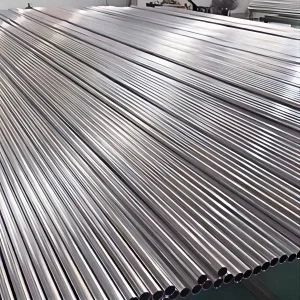






Technical Foundations of Thin-Wall Stainless Steel Tube Welding
In ultra-precision engineering applications, welding thin-wall stainless steel tubing (typically defined by wall thicknesses ranging from 0.15 mm to 1.50 mm) demands exceptional metallurgical control, localized thermal management, and flawless Gas Tungsten Arc Welding (GTAW/TIG) or Laser Beam Welding (LBW) execution. Unlike heavy-wall piping where thermal mass absorbs heat input, thin-walled tubing exhibits extreme thermal sensitivity. Excessive heat input leads to burn-through, severe grain growth in the Heat-Affected Zone (HAZ), loss of corrosion resistance, and geometric distortion.
Top-tier Chinese manufacturers have revolutionized thin-wall tubing production through automated orbital welding and continuous laser seam welding technologies. By implementing inert purge gas backings (typically 99.999% purity Argon or Argon-Hydrogen mixtures), factories eliminate internal weld bead oxidation ("sugar formation"), preserving the critical chromium-oxide passive layer necessary for resisting aggressive pitting and crevice corrosion.
Orbital TIG & Laser Welding
Automated closed-loop orbital welding heads ensure 360-degree weld uniformity with computer-controlled current pulsing. High-power fiber lasers achieve narrow weld width-to-depth ratios, minimizing the HAZ microstructural disruption.
Intergranular Corrosion Protection
By utilizing titanium-stabilized grades (e.g., TP321, TP316Ti) or extra-low carbon variants (304L, 316L), chromium carbide precipitation along grain boundaries is suppressed during rapid thermal cycles.
Cold-Drawn Bead Reduction
Post-welding, tubes undergo precision cold drawing over a mandrel (Welded & Drawn / W&D process). This completely homogenizes the weld seam, yielding seamless-like mechanical strength and continuous wall concentricity.
Material Selection Matrix for Thin Stainless & Special Alloy Tubes
Selecting the optimal alloy for thin-wall welded tubing requires evaluating corrosive chemical exposure, operating temperatures, pressure ratings, and fabrication constraints. The table below provides an engineering cross-reference for key stainless steel, super austenitic, nickel alloy, and titanium tube grades.
| Alloy Grade | UNS / EN Standard | PREN Rating | Max Operating Temp | Primary Industrial Application |
|---|---|---|---|---|
| 304L Austenitic | UNS S30403 / 1.4307 | ~ 19.0 | 800°C (1472°F) | Sanitary food & beverage, instrumentation lines, architectural tubing. |
| 316L Austenitic | UNS S31603 / 1.4404 | ~ 25.0 | 870°C (1600°F) | Pharmaceutical processing, marine fluid transport, chemical heat exchangers. |
| 321 / 321H Stabilized | UNS S32100 / 1.4541 | ~ 19.5 | 900°C (1652°F) | Aerospace exhaust manifolds, high-temperature boiler superheaters. |
| 310S High-Temp | UNS S31008 / 1.4845 | ~ 26.0 | 1150°C (2102°F) | Furnace heating elements, thermal processing sheaths, radiant tubes. |
| 254SMO Super Austenitic | UNS S31254 / 1.4547 | ≥ 43.0 | 400°C (752°F) | Desalination plants, offshore oil platforms, seawater cooling systems. |
| Inconel Alloy 625 | UNS N06625 / 2.4856 | ≥ 50.0 | 980°C (1796°F) | Severe chemical waste processing, marine propulsion, aerospace ducting. |
| Titanium Grade 12 | UNS R53400 / 3.7105 | N/A (Passive Film) | 300°C (572°F) | Brine evaporators, chemical plants with hot nitric acid or chloride salts. |
Competitive Advantages of Chinese Thin Stainless Steel Tube Manufacturers
China has emerged as the global epicenter for precision stainless steel tubing manufacturing. Leading Chinese industrial clusters—located across Zhejiang, Jiangsu, and Guangdong provinces—integrate raw material steelmaking, precision strip cold-rolling, tube welding, bright annealing, and global export logistics into unified, high-efficiency supply chains.
Full Supply Chain Integration
From high-purity master heat coils sourced from premier mills (such as Tsingshan, TISCO, and Baosteel) to final bright-annealed coil or straight tubes, integrated supply chains lower raw material procurement lead times and eliminate third-party markup.
State-of-the-Art Bright Annealing
Factories feature continuous hydrogen bright annealing furnaces operating above 1050°C. This stress-relieves cold-worked tubing without surface oxidation, maintaining a mirror-like finish without requiring harmful acid pickling.
Rigorous QA & International Compliance
Modern Chinese facilities maintain ISO 9001, ISO 14001, PED 2014/68/EU, and IATF 16949 certifications. Every production batch is backed by comprehensive EN 10204 3.1 or 3.2 Mill Test Certificates with 100% heat traceability.
Macro Industry Trends & Technological Innovations
The demand for ultra-thin, highly consistent stainless steel tubing is accelerating rapidly across emerging high-tech sectors. As global decarbonization initiatives expand and micro-electronics scale down, precision tubing manufacturers must innovate rapidly.
1. Hydrogen Energy & Fuel Cell Tubing
High-pressure hydrogen refueling stations and fuel cell stacks require specialized thin-walled 316L/316Ti stainless steel tubes capable of resisting hydrogen embrittlement at working pressures up to 70 MPa (700 bar).
2. Micro-Channel Heat Exchangers (MCHEs)
Next-generation HVAC and thermal management systems rely on micro-thin stainless tubing (wall thickness < 0.3 mm) to maximize thermal transfer surface area while dramatically reducing refrigerant charge volume.
3. Semiconductor Ultra-High Purity (UHP) Gas Lines
Fab plants demand internal electropolished (EP) thin-wall tubing with roughness values as low as Ra < 0.13 µm to prevent particulate entrapment and outgassing during toxic and pyrophoric gas distribution.
Localized Engineering Application Scenarios
Thin stainless steel tubing serves as a critical structural and fluid-conducting element across a broad spectrum of industrial environments:
Medical & Biomedical Devices
Surgical needles, endoscopy sheaths, hypodermic tubing, and diagnostic sampling probes manufactured from 304L/316L with sub-millimeter outer diameters and tightly controlled wall concentricity.
Aerospace & Defense Fluid Lines
Hydraulic control lines, pitot tubes, and fuel injection nozzles operating under high vibration, temperature extremes, and strict weight-reduction targets utilizing TP321H or Inconel 625 tubing.
Automotive Exhaust & Sensors
EGR (Exhaust Gas Recirculation) cooler tubes, oxygen sensor sheaths, and turbocharger oil lines manufactured from heat-resistant 309S, 310S, or ferritic 409/439 stainless steel.
Global Procurement Demand & Quality Inspection Protocols
International EPC contractors and corporate procurement managers must enforce stringent quality assurance standards when sourcing bulk thin-wall stainless tubing. Below is the essential technical compliance checklist required for verifying supplier capabilities:
Non-Destructive Testing (NDT)
100% Online Eddy Current Testing (ASTM E426 / EN 10246-2): Detects longitudinal weld defects, pinholes, and micro-cracks without disrupting continuous production line velocity.
Mechanical Deformation Testing
Flattening & Flaring (ASTM A1016): Sample tube sections undergo 90-degree expansion flaring and full flattening testing to guarantee zero weld seam cleavage under severe post-forming operations.
Hydrostatic & Pneumatic Proofing
Underwater Bubble & Hydro Pressure Test: Tubes are subjected to internal pressures exceeding calculated working stresses (up to 20 MPa) or underwater air leakage tests at 1.0 MPa to guarantee zero micro-porosity.
Specialized Austenitic & Nickel Alloy Products
Browse the remaining high-performance product lineup certified under ASME SA213, SA269, ASTM A312, and EN standards for mission-critical installations.
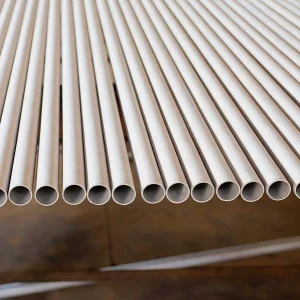







Frequently Asked Questions (Q&A)
Comprehensive answers to common procurement, metallurgical, and manufacturing questions regarding thin-wall welded stainless steel tubing.
Thin-wall stainless steel tubing generally refers to tubes where the ratio of outer diameter (OD) to wall thickness (WT) exceeds 20:1, or where wall thickness ranges between 0.15 mm and 1.50 mm. Our mill produces precision thin-wall tubing with ODs ranging from 4.00 mm to 114.30 mm and wall thicknesses starting at 0.40 mm up to 3.05 mm, held to tight dimensional tolerances (±0.05 mm on OD and ±10% on WT).
As-Welded tubes are roll-formed from cold-rolled strip and longitudinally welded via TIG/Laser without post-weld wall reduction. Welded & Drawn (W&D) tubes undergo cold drawing over a plug or mandrel post-welding, which fully homogenizes the weld microstructure, removes the internal weld bead, improves surface finish (Ra < 0.4 µm), and enhances pressure rating to match seamless tubing at a significantly lower production cost. Seamless tubes are manufactured from solid round billets without any weld seam, specified for extreme pressure service under ASTM A213.
Weld seam corrosion is prevented through three primary metallurgical controls: 1) Utilizing low-carbon raw materials (C ≤ 0.030% for 316L) or titanium-stabilized grades (321) to prevent chromium carbide precipitation; 2) Continuous internal purge shielding using 99.999% high-purity argon gas during welding; and 3) Post-weld continuous bright annealing in pure hydrogen atmospheres at 1040°C–1120°C, followed by rapid cooling to fully redissolve any precipitated phases.
Thin-wall heat exchanger tubing is manufactured and certified according to ASTM A249 / A249M (Welded Austenitic Steel Boiler, Superheater, Heat-Exchanger, and Condenser Tubes), ASTM A269 (General Service), ASTM A688 (Feedwater Heater Tubes), EN 10217-7 (Welded Steel Tubes for Pressure Purposes), and DIN 17457. All shipments are accompanied by EN 10204 3.1 Mill Test Certificates incorporating chemical analysis, mechanical property verification, NDT eddy current results, and flattening/flaring test reports.
Yes. Thin-wall tubing (OD 4 mm to 25.4 mm) can be supplied in continuous bright-annealed control coils up to several thousand meters in length without orbital joint welds. Coiled tubing minimizes installation fittings and leak risks in downhole oil & gas capillary lines, chemical injection umbilical bundles, and refrigeration cooling circuits.
Standard bright-annealed (BA) thin tubing achieves an internal and external surface roughness of Ra ≤ 0.4 µm (16 µin). For high-purity semiconductor, pharmaceutical, and sanitary food applications, tubes undergo mechanical polishing (MP) or electropolishing (EP) to reach internal roughness levels of Ra ≤ 0.25 µm down to Ra ≤ 0.13 µm (5 µin).
Request Technical Data & Bulk Procurement Quotes
Consult with our engineering team for customized alloy selection, thin-wall tolerance validation, mill test certificates, and factory-direct pricing for your project specifications.
